Spend some time talking with experienced vegetable gardeners, and they’re likely to give you a similar piece of advice: only grow what you actually eat. After all, why bother to grow peas if no one in your household likes to eat them?
Nearly every global culture eats garlic in their cuisine. However, for some reason, most home gardeners don’t grow it. After talking with experienced gardeners in my area and researching the best ways to grow garlic in the South, I’m sharing some basic tips to plant and grow garlic this fall.
Learning how to grow garlic isn’t complicated. With a few guidelines, you can learn how to plant garlic in the fall.
This article contains affiliate links. If you purchase through these links, I may earn a commission at no additional cost to you. This article is not sponsored by any of the growers mentioned.
Why Grow Garlic in Your Garden
If you ask me about my vegetable garden plans in March, you’ll probably get a very enthusiastic response. After being cooped up inside over winter, I’m always eager to get the ball rolling for my spring and summer veggies.
On the other hand, if you came back and asked me about my garden again in August, I might sound a little burned out. Weeks of watering, controlling weeds and pests, and daily harvesting leave me more than ready for a break.
Since garlic planting arrives around the time when I’m tired of the garden chores, it’s a good thing that garlic isn’t as demanding as tomatoes or squash. After giving my garden beds a rest for a few weeks in early fall, I’m able to plant garlic and do a bit of basic tending until it’s ready to harvest the following summer.
Many gardeners consider garlic to be a low-maintenance plant. Beyond maintaining appropriate moisture level and applying a nitrogen fertilizer in the spring, it doesn’t require daily supervision.
Many of the bugs and animals that are attracted to our summer gardens find garlic to be undesirable. With fewer pest problems during the longest part of its growing season, it only requires intermittent checking to make sure the plants are healthy.
Garlic is a crop that can easily store for many months if it has been cured properly. This makes it an excellent crop to consider this fall. Before you start, the most important thing to know is which growing zone you’re in.
Growing Zones and Garlic Varieties
Garlic is planted in mid to late fall. It loves to grow in cold weather. In fact, garlic requires a process called vernalization to form the individual cloves of garlic within the bulb. It’s important to know how many days your area gets of cold weather below 40 degrees, which can be found by determining your growing zones. (To find your growing zone, click HERE.)
In addition to cold temperatures for vernalization, it’s good to know the number of daylight hours and air temperatures typical for your growing zone. Once you determine your growing zone, you’ll be able to decide which varieties of garlic to plant and when you should plant them.
Growing zones 3-7
Cooler growing zones often see the most success with hardneck varieties of garlic. Generally, garlic is planted about two weeks before the first frost dates in these zones, but gardeners should compare recommendations for specific varieties in their exact zone. Hardneck varieties of garlic grow hard stems that form scapes or flowers in warm weather. Hardneck garlic sometimes has a stronger, spicier flavor. After harvesting, it can usually be stored for 3-6 months.
Growing zones 8-10
Warmer climates usually grow softneck varieties of garlic but sometimes see favorable results with hardneck varieties as well. Planting times vary in these growing zones, with some as early as October, and others through mid-December. If you’re planning to grow garlic in these warmer zones, you’ll need to check if your growing zone requires steps for extra chilling time.
In contrast to hardneck varieties, softneck varieties of garlic have soft stems. Softneck garlic is often milder and sweeter. These are the varieties that you may have seen pictures of garlic bulbs braided together. After a proper curing time, softneck garlic can be stored for up to 12 months.

Whether you’re using hardneck or softneck garlic, you can order it online or purchase it from many reputable companies. This year I ordered from Southern Seed Garlic. Another option for seed garlic is Eden Brothers. Once you know your growing zone and which kind of garlic you’re going to plant, you’ll need to follow a few steps to get a healthy garlic harvest.
How to Plant Garlic in the Fall
I usually tend to be a rule breaker when it comes to gardening. However, when it comes to garlic, there are a few guidelines that are important when considering how to plant garlic in the fall.

- Find the right garden spot – Garlic should be planted in well-draining soil with full-sun exposure. Choose a spot that won’t stay wet or dark throughout the day. Another consideration when selecting a spot is to avoid one that recently grew anything from the onion family, which may inhibit proper garlic growth.
- Garlic takes several months to grow. Select an area of your garden that you won’t need for any other crops during that time.
- Prepare your soil – Garlic prefers soil that drains well and allows it to properly form bulbs. If your soil is clay or compacted, consider amending it with loamy or composted material, which will help with drainage and nutrients.
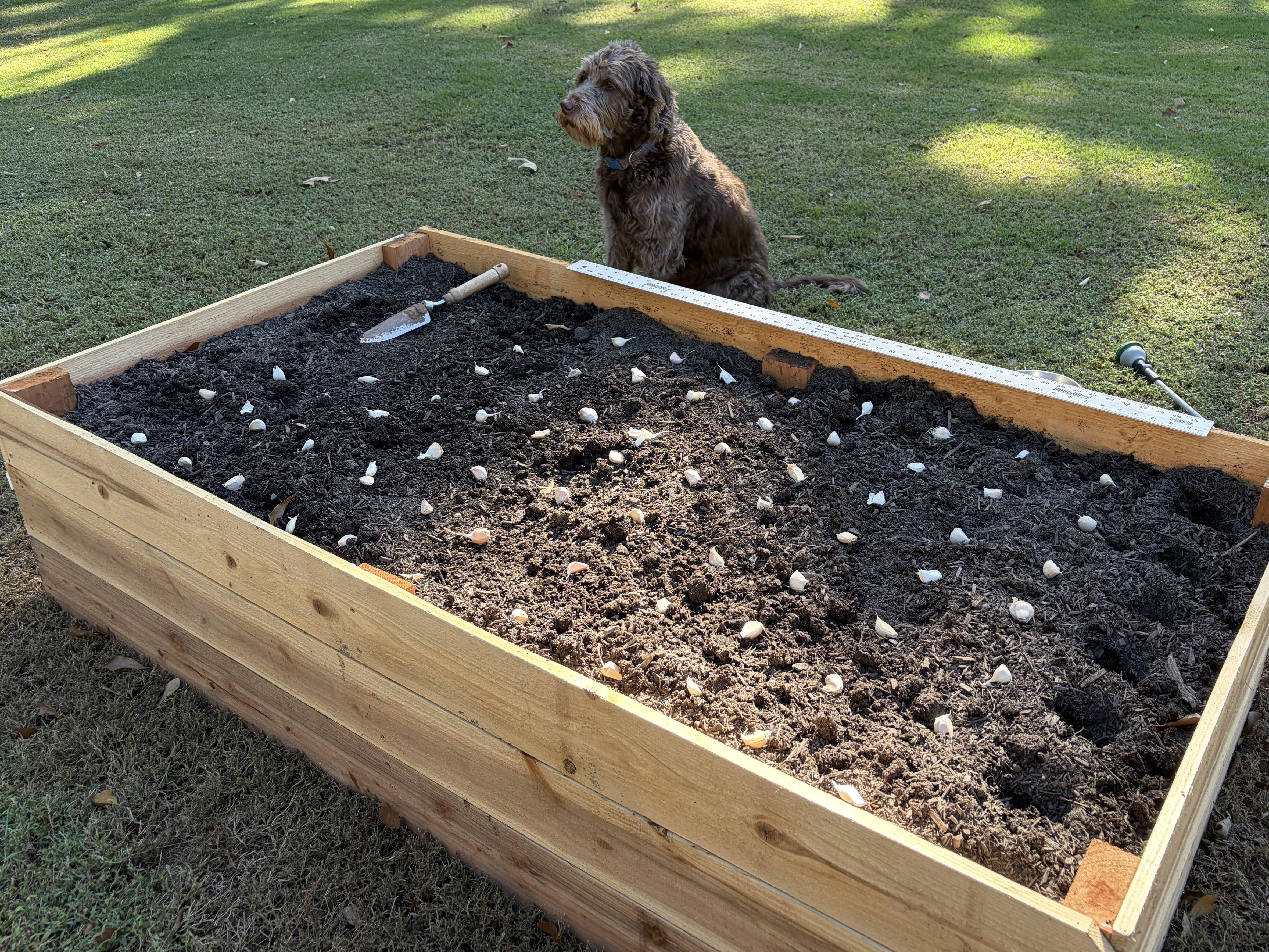
- When you’re ready to plant, gently separate your garlic bulb into individual cloves, but don’t remove the papery peel from the clove. Cloves should be planted with the root side down and the pointy end skyward. In general, garlic cloves do well being planted 6 inches apart and 1-3 inches deep. However, check your supplier’s recommendations for the varieties you’re planting.
- Once your garlic cloves have sprouted, you can apply a loose layer of mulch around the sprouts, such as shredded leaves or pinestraw. Mulch will keep your soil temperature and moisture regulated, as well as preventing weeds.
- Harvesting your garlic depends on your growing zone and the variety you’re growing. Your garlic is ready to harvest when one-third to one-half of the leaves have died back.
- The final step to keeping garlic in your pantry for months to come is to cure it. Before adding newly harvested garlic to your pantry storage, leave it for two to three weeks in a warm, shady, ventilated place.

Why We Chose a Raised Bed for Garlic
When we added garlic to our garden, we decided it was best for our situation to use a raised bed. A raised garden bed can be an ideal way to grow garlic for several reasons.
Many areas of the South don’t have ideal soil for growing garlic. Soil with too much clay can prevent proper drainage and keep bulbs from correctly forming. Soil with too much sand may dry out too quickly. By using a raised bed, you’ll be able to control the quality of the soil and the moisture level for your garlic.
Since garlic can take several months to mature, we recently added a dedicated raised garden bed just for the garlic. We used a method called hügelkultur, which allows organic matter to gradually break down and enrich the soil.
Many gardeners choose to plant garlic directly in the ground. However, garden boxes can solve common problems gardeners experience when growing their own garlic.
If you’d like to learn how to easily and cheaply build your own raised garden boxes, check out our guide HERE.
Chances are that some of your favorite recipes call for fresh garlic. When you grow your own garlic, it’s simply a quick trip to the pantry, instead of a car ride to the grocery store.
With a little planning and a bit of patience, you can learn to grow your own garlic this fall.

Check out these other reader favorites:
- How to Build a Raised Garden Bed with Cedar Fence Pickets
- Fall Garden Prep: Essential Tasks for a Beautiful Start to Spring
- How to Grow Zinnias in a Southern Cutting Garden
- How to Grow Herbs in the South: A Guide for the Southern Kitchen