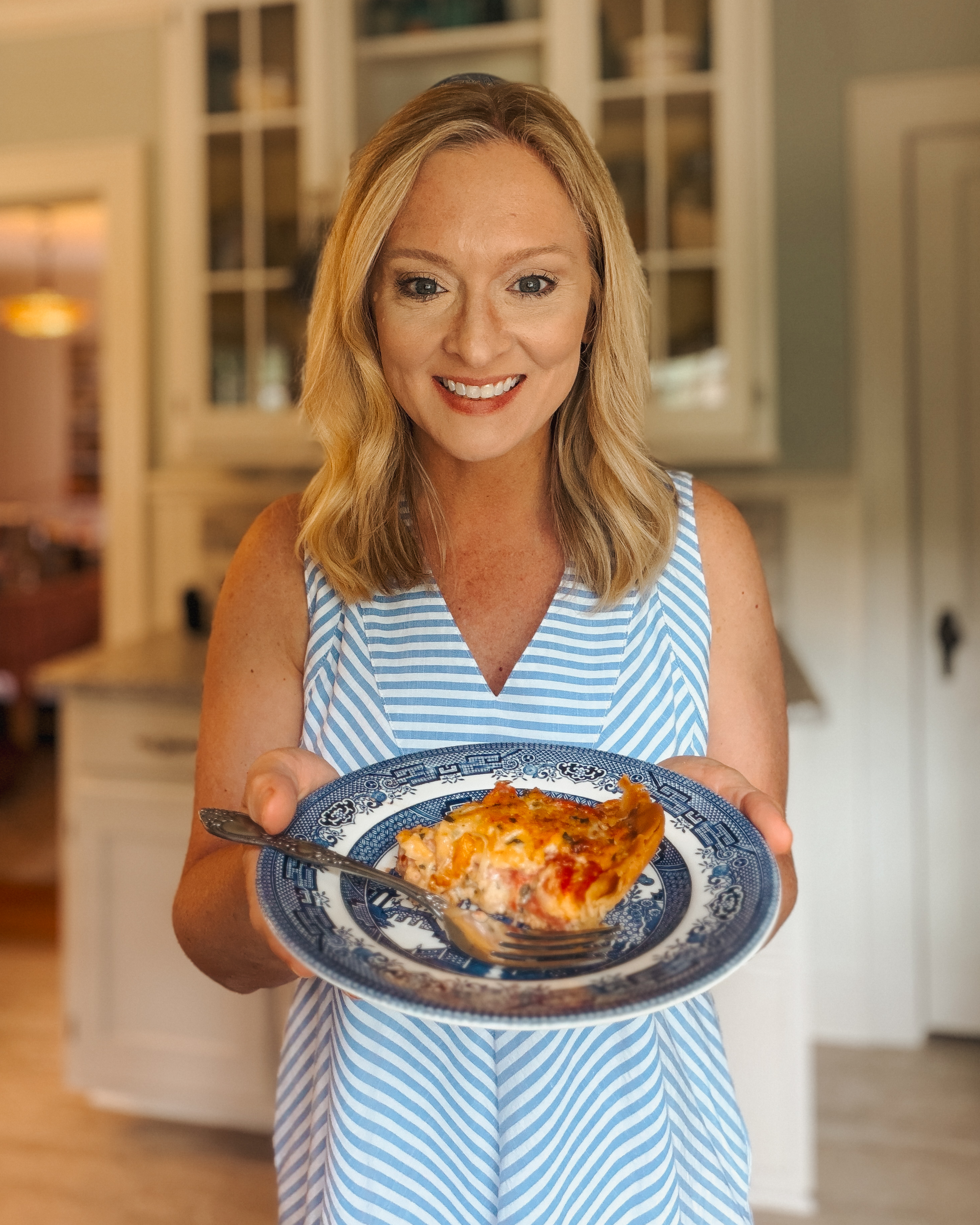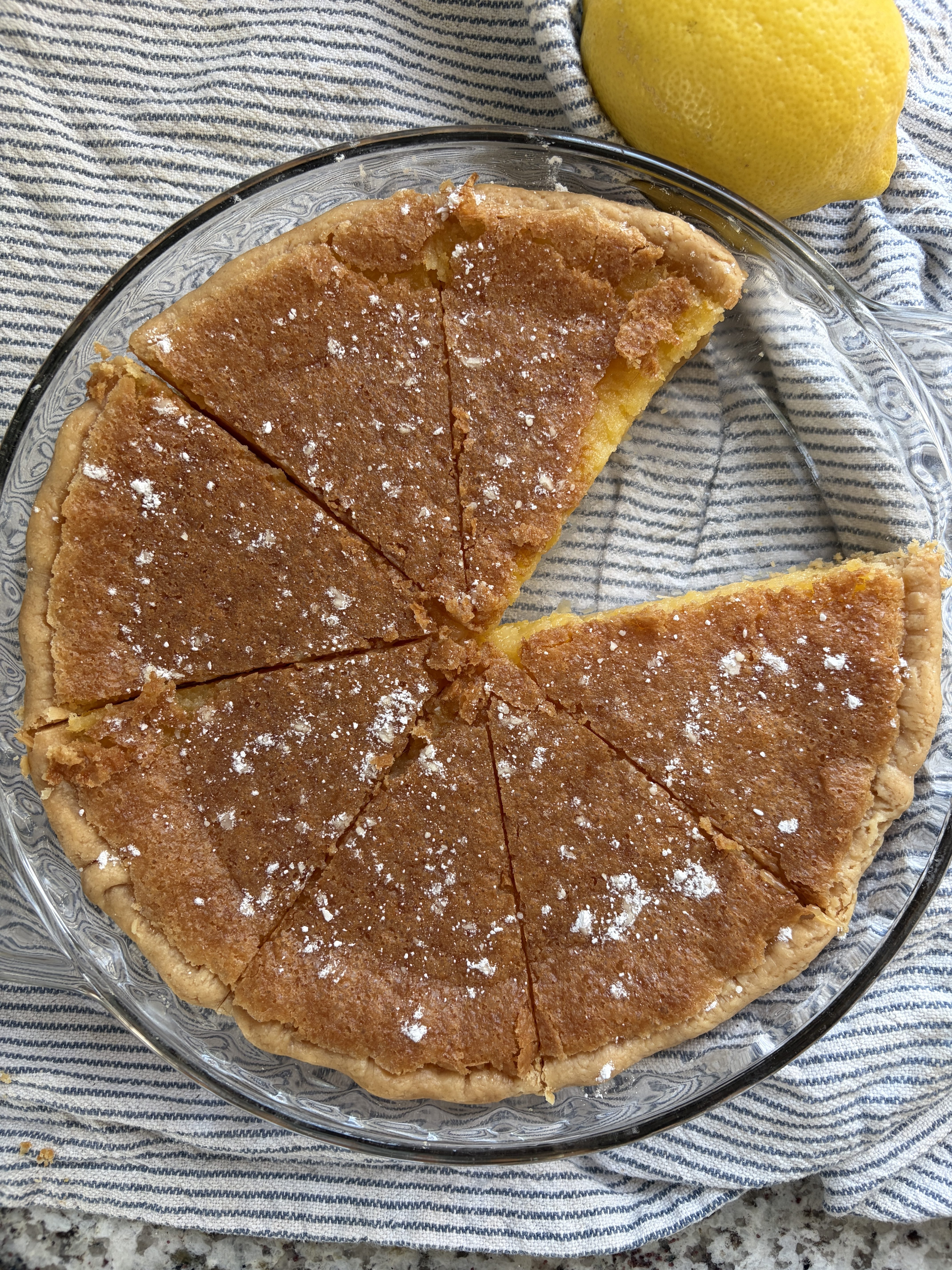
Lemon chess pie with slice removed

Lemon Chess Pie: A Classic Southern Recipe That Still Belongs on Today’s Table

In the decades that I’ve been collecting antiques, I’ve never forgotten the first piece of antique furniture that I fell in love with. It was a primitive pie safe with wood worn so soft from daily use that it felt like butter when I ran my hands across it.

The latch had been opened and closed so many times that the wood around the knob had grown deeper and darker. I’ve always wondered what kind of pies filled its shelves, and I think that surely a lemon chess pie was among the offerings.

Fresh lemons in natural light for lemon chess pie
Fresh lemons are essential for the bright flavor of a classic lemon chess pie.

I recently came across a classic chess pie recipe in a 1941 Southern cookbook I found at a local library sale. The recipe was rich, simple, and written in a way that assumed you already knew your way around a kitchen.

Encountering that recipe in the vintage cookbook brings to mind a Southern lemon chess pie recipe. Bright and satisfying, with a smooth custard filling and the tang of fresh lemon, it’s a pie that feels both simple and enduring on the table.

This article may contain affiliate links. If you choose to purchase through these links, I may earn a small commission at no additional cost to you.

What Makes a Chess Pie a Chess Pie

Chess pies are quintessentially Southern. There are varying opinions as to the origin of the name, but one of them says that it derived from “chest pie.” Chest, meaning that it could be kept in a pie safe at room temperature without spoiling.

All chess pies share a few basic ingredients to form a custard-like filling. Eggs, butter, and sugar are used in each version, and flavors like lemon, chocolate, and coconut are common because of how they cut the sweetness in this very decadent dessert.

Although all chess pies have a few basic ingredients in common, they often have many differences. Some use cornmeal, and some use flour. I’ve seen recipes that use neither. Some use buttermilk, cream, or no milk at all.

Why Lemon Chess Pie Feels Like Spring in the South

Chess pies are eaten all year long, but a chess pie made in the spring simply must be lemon. Spring brings brighter days and warmer temperatures, and a Southern lemon chess pie is the perfect dessert for this time of year.

Lemon freshens the taste buds and awakens our senses. Lemon zest and juice cut through the richness of the sugar and decadence of the butter, which bring a brightness to the dessert.

Why This Is the Lemon Pie to Start With

I know there are people out there who don’t like lemon; I just haven’t met them yet. Since most people love lemon desserts, a classic Southern lemon chess pie recipe is a good place to start.

Chess pies aren’t complicated. With a careful hand, you’ll be rewarded with a delicious pie.

Ingredients You Likely Have on Hand

Chess pies are made with ingredients you probably already have on hand.

Ingredients for lemon chess pie including eggs, butter, and lemons
Simple ingredients come together to create a classic Southern lemon chess pie.
  • Eggs – allow them to come to room temperature first
  • Butter
  • Sugar – regular white sugar is best
  • Fresh lemons are crucial to the quality of this recipe
  • Cornmeal is traditionally used in many chess pies and acts as a thickening agent.
  • Pie Crust – I use premade pie crust to keep this recipe simple, but you can use homemade as well.
Mixing lemon chess pie filling
Whisk the filling until smooth before baking.

Lemon Chess Pie Recipe

This lemon chess pie recipe keeps the ingredients simple while relying on fresh lemon, eggs, butter, and careful cooling for the proper texture.

Lemon chess pie with slice removed
Abby Smolarsky

Lemon Chess Pie

A classic Southern lemon chess pie with a smooth custard filling, balanced with fresh lemon and a slightly set, golden top.
Prep Time 15 minutes
Cook Time 1 hour
Rest Time 4 hours
Total Time 5 hours 15 minutes
Servings: 8 slices
Course: Dessert
Cuisine: Southern

Ingredients
  

  • 1 unbaked 9-inch pie crust (store-bought or homemade)
  • 1 ½ cups granulated sugar
  • ½ cup (1 stick) butter, melted and slightly cooled
  • 4 large eggs
  • ¼ cup fresh lemon juice
  • 1 Tbsp lemon zest
  • 1 Tbsp fine cornmeal
  • 1 Tbsp all-purpose flour
  • pinch salt

Equipment

  • 9-inch pie dish
  • Mixing bowl
  • Whisk
  • Measuring cups and spoons
  • Parchment paper
  • Pie weights or dried beans

Method
 

Parbake the crust
  1. Preheat oven to 375 °F
  2. Line the pine crust with parchment paper and fill with pie weights or dried beans
  3. Bake for 10-12 minutes
  4. Remove weights and parchment, then let the crust cool for 10-15 minutes.
Prepare the filling
  1. Reduce oven temperature to 325 °F
  2. In a mixing bowl, whisk together the sugar and melted butter until smooth
  3. Add the eggs one at a time, mixing well after each addition
  4. Stir in the lemon juice, lemon zest, cornmeal, flour, and salt until fully combined
Rest the filling
  1. Let the mixture sit for 10 minutes to allow the cornmeal to hydrate
Bake the pie
  1. Pour the filling into the parbaked crust
  2. Place the pie on the lower-middle rack of the oven
  3. Bake for 60-70 minutes, until the edges are set and the center has a slight jiggle
Cool completely
  1. Remove from the oven and let cool at room temperature for at least 4 hours, or overnight
  2. The filling will continue to set as it cools

Notes

  • Use fresh lemon juice; bottled juice will not give the same flavor
  • The pie is done when the center moves slightly but is not liquid
  • Avoid overbaking; the filling will firm as it cools
  • A parbaked crust helps prevent a soft or soggy bottom
  • Fine cornmeal is recommended for the best texture
This lemon chess pie is simple in ingredients but rewards careful baking and proper cooling for the best texture.
Lemon chess pie with slice removed
A properly set chess pie will slice cleanly once cooled.
Close-up of lemon chess pie filling texture
The filling should be smooth, set, and slightly custard-like.

What Matters Most When Baking a Chess Pie

Classic chess pies have simple ingredients and uncomplicated directions; however, there are a few key steps that simply must not be skipped to have a successful pie.

Parbaking pie crust with weights for chess pie
Parbaking the crust helps prevent a soft or soggy bottom.

Par-bake your crust before adding the filling. This helps prevent a soft or soggy bottom and ensures the center sets properly.

Rest the filling for ten minutes prior to baking. My traditional recipe uses cornmeal. Cornmeal is included as a thickening agent. When the filling rests for ten minutes prior to baking, the cornmeal has time to absorb liquid and begin to thicken properly.

Bake your pie in the lower 1/3 of your oven. Baking your pies in the lower portion of your oven will make sure that the crust and filling are properly cooked in the center of the pie.

For the filling to fully set, the pie must cool on the counter for a minimum of four hours but overnight is best. When you remove the pie from the oven, the center will appear slightly set, but still a little jiggly. As the pie cools, it will fully set.

Chess pies can be made with pre-made crust or a crust you make from scratch. I like chess pies because of the simplicity, so I opt to use pre-made refrigerated pie dough that is rolled. If you like to keep ingredients on hand so that you can prepare something in a pinch, pre-made pie dough can be kept in your refrigerator or freezer.

Only use fresh lemons when you’re making a Southern lemon chess pie. The quality of your pie will be noticeably better, and the lemon zest is an important ingredient that shouldn’t be skipped.

How to Serve Lemon Chess Pie

Chess pies are best served at room temperature, like pumpkin pies and pecan pies.

You can garnish a Southern lemon chess pie with a dusting of powdered sugar and top each slice with homemade whipped cream as you serve them.

Slice of lemon chess pie with whipped cream
Serve with a dollop of whipped cream for a simple finish.

Frequently Asked Questions About Lemon Chess Pie

Lemon chess pie cooling on counter
Allow the pie to cool completely so the filling can fully set.

Why is the top of my pie brown?

Classic chess pie recipes have a high ratio of sugar in them. The top of your pie will caramelize and often crackle, similar to what takes place with a crème brûlée.

Can I make it ahead?

Yes, and you should. Chess pies must be allowed to cool properly before slicing, or you’ll end up with a runny pie. You can make this pie up to two days ahead of time.

Why is my pie runny?

There are a few reasons why a Southern lemon chess pie could turn out runny. Make sure you rest your filling for ten minutes prior to baking, measurements are followed precisely, and you allow it to cool for the proper amount of time.

Does it need refrigeration?

Old-fashioned chess pies can safely be kept on the counter for up to three days. For the safest food conditions, refrigerate your pie after two days.

Can I freeze it?

You can freeze this lemon chess pie by taking a few steps to prevent it from drying out or getting freezer burned. First wrap your pie completely in plastic wrap and then wrap the pie completely in aluminum foil. Freeze for up to one month.

A Pie That Doesn’t Need Reinventing

I’m not a fan of changing things just for the sake of change itself. I take the expression, “If it ain’t broke, don’t fix it,” to heart. I know when I see something that’s been perfected by generations before me, and one such thing is lemon chess pie.

Just like my vintage 1941 cookbook shows, chess pies have been baked by Southerners for many years. There’s no need to reinvent the chess pie, because it’s already been perfected.


I’ve linked useful kitchen items here if you’d like to try this recipe.

If you enjoyed this recipe, be sure to check out these other reader favorites:

A Southern Sweet Potato Pie Recipe from a Vintage Southern Cookbook

Thanksgiving Breakfast Ideas: Easy and Delicious

Zesty Pickled Carrots (Easy Refrigerator Pickle Recipe)

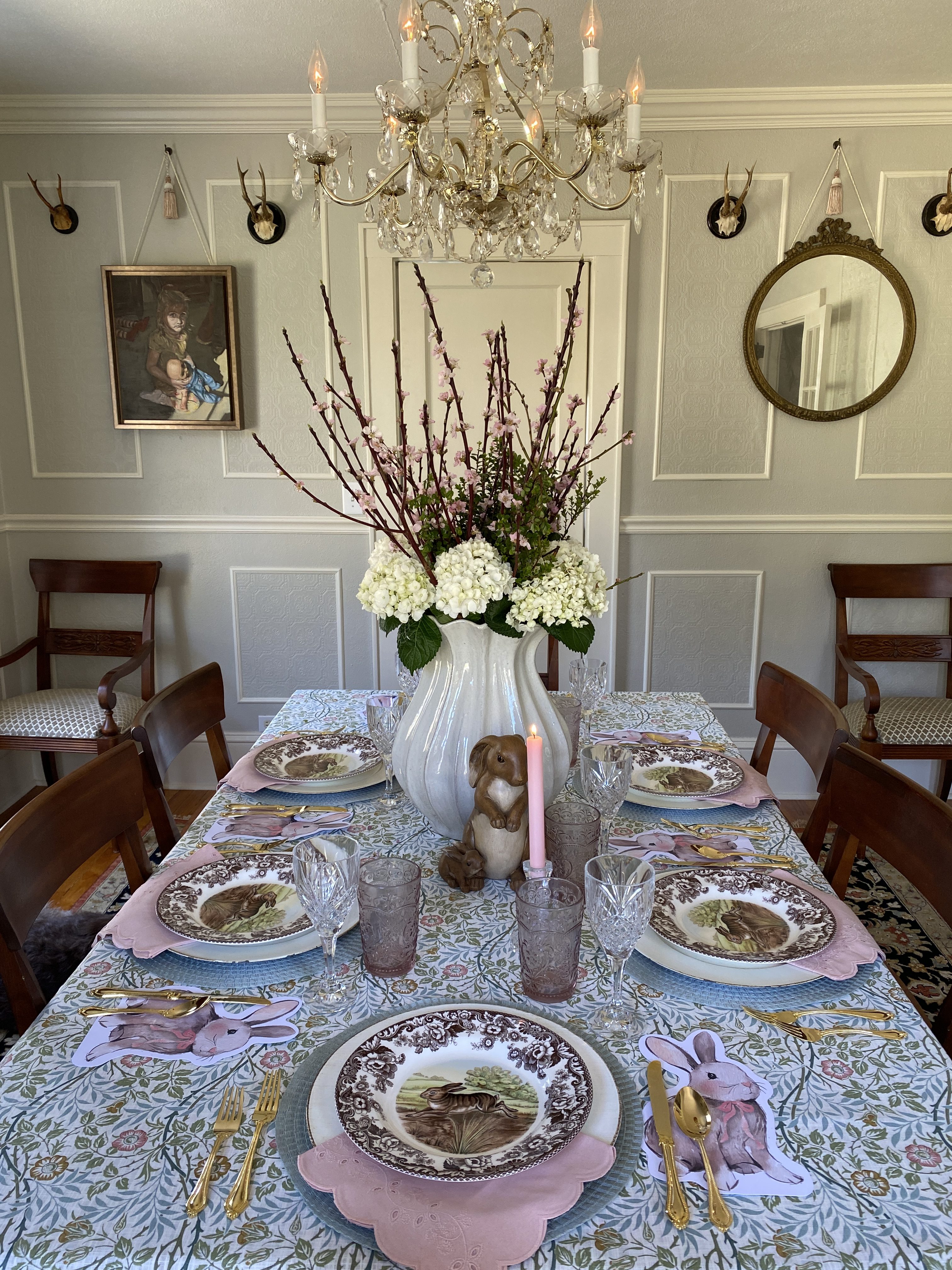
Classic spring easter table setting with layered vintage and new tableware, pink linens, crystal glassware, and floral centerpiece

A Beautiful Easter Table: How to Set a Classic Spring Easter Table

An Easter Table Set with Intention

In the South, there isn’t a great thaw of ice and snow at the end of winter. Our spring thaw is more of a metaphysical one. We are starved for the changing angles of the sun after months of darkness searching for signs of spring: velvety buds, chartreuse sprouts, and fervent birdsong. Winter may keep us indoors, cocooned in thick blankets, but when spring arrives, we are liberated from the imprisonment of cold and darkness.

As a culture, Southerners aren’t solitary people. Warmer temperatures and longer days in spring give us opportunities to show hospitality and connect with others. Naturally, when Easter arrives, it’s an occasion to reunite with our friends and family around the Easter table to share a meal.

Easter is the perfect time to set the table with a mixture of new and collected pieces. Your Easter table setting can be planned beautifully by layering thrifted, collected, and new elements. Here’s how to build a layered, classic Easter table using a mix of things you already own, and perhaps a few new additions.

Easter table setting with vintage rabbit dinnerware, pink napkins, gold flatware, and spring floral centerpiece
A classic Easter table layered with vintage rabbit dinnerware, soft spring linens, and a gathered floral centerpiece.

This article may contain affiliate links. If you choose to make a purchase through one of these links, I may earn a small commission at no additional cost to you.

Start with a Foundation You Love

Spring gives us our greatest inspiration with soft pastel colors, new life, and warmer temperatures. The first step in creating a beautiful design is to consider your foundation, the tablecloth. The tablecloth sets the color palette and anchors the rest of the table.

When choosing a tablecloth for Easter, consider one that is neutral or one that brings in soft, seasonal colors. Choose a tablecloth that can be used for multiple occasions, not just one day.

The Easter table setting in this article uses a classic William Morris design, Sweet Briar. This pattern brings in soft pinks and greens on a cream background with occasional brown accents. These colors, reminiscent of spring, will be incorporated throughout the rest of the table setting.

Layering Pieces for a Collected, Timeless Look

After selecting a tablecloth, consider ways to create a layered look on the Easter table. Layering pieces over the tablecloth creates visual interest and depth to the design.

Layered easter table place setting with woven placemat, charger, rabbit dinner plate, pink napkin, and gold flatware
Layering a placemat, charger, and patterned plate creates depth and gives an Easter table setting a collected feel.

Layers can be achieved in many ways. Take inspiration from the colors and textures in the tablecloth and begin to build each place setting with intention.

I’ve selected a woven placemat, which adds texture and pulls in color found in the tablecloth. On top of each placemat, I layered an off-white charger. The off-white color creates a soft contrast to highlight the next layer. Finally, on top of the charger sits the focal point plate. These Spode Woodland Rabbit dinner plates are a classic design. The colors from the plate pick up colors from the previous layers, especially our tablecloth. Creamy white, pink, soft green, and chocolate brown; the color palette is cohesive from our base to the top plate.

Consider using elements for each layer of the place setting that have varying textures and tones. Doing so will create a visually interesting space at the table that makes each guest feel special sitting in front of it.

How to Mix Vintage and New Without It Feeling Disjointed

Often a collected table setting feels much more interesting than one where everything has been purchased all at once. Using pieces collected over time feels polished and approachable.

When shopping, keep in mind colors and materials that work well throughout the year. For this Easter table setting, gold flatware was purchased in an online auction years ago. The gold brings in a warm tone on the table that reflects the temperatures of spring, but it can also be used at Thanksgiving and Christmas.

The off-white chargers were recently found at a thrift store for one dollar each. These were fabulous finds because they can be used in endless scenarios throughout the year.

The woven placemats were purchased many years ago on clearance, and it’s wonderful that they pick up the same color found in the tablecloth, which was purchased new this year.

The soft pink napkins were new this year and selected specifically to bring the pink from the flowers on the tablecloth to another layer of the place setting.

Each of these pieces, new, found and old, tie to each other to create a cohesive design.

Choosing Glassware That Feels Special But Practical

Don’t be afraid to integrate everyday pieces into your Easter table setting. Pink drinking glasses repeat the pink found in the tablecloth and dinner napkins. If your everyday pieces complement your tablescape, by all means, use them.

Glassware is another opportunity to layer pieces that you have found, collected, or purchased new. Clear Godinger crystal wine glasses pair with pink drinking glasses to create a subtle seasonal layer.

Easter table setting with crystal wine glasses, pink water glasses, and a lit taper candle centerpiece
Mixing crystal and colored glassware adds warmth and interest to a classic Easter table.

When mixing glass styles on the table, be sure the styles work well with each other and the other elements being used so that the tone is cohesive. Often glassware styles can be bridged with other pieces. Clear glass candlesticks with pink taper candles unite the pink and clear drinkware on the table.

Adding Simple Easter Touches Without Overdoing It

Nearly everything in this tablescape design is versatile. The tablecloth, napkins, and items in the plate stack could be used anytime in spring or even for Mother’s Day. Adding a few restrained touches to the table can show that it’s Easter without overwhelming the design.

Easter table setting detail with rabbit place card, gold flatware, pink napkin, and vintage-style dinner plate
Simple seasonal details, like a rabbit place setting, add charm without overwhelming the table.

In this case, simple die-cut paper rabbit decorations are placed under each knife and spoon. These simple touches can be discarded after the meal. Understated elements effortlessly communicate the occasion without cluttering the design.

Let the Flowers Be Effortless

Flowers for the Easter table don’t need to be elaborate. Often, something from the yard in a simple vase is enough. For this table, branches from an Eastern Red Bud tree were cut to bloom indoors. The pink flowers reflect the shades of pink used throughout the tablescape.

Spring easter table centerpiece with white hydrangeas, flowering branches, and pink taper candle
A simple spring centerpiece with seasonal branches and soft blooms brings height and movement to the table.

I share more about spring arrangements and using branches in this article.

A Simple Formula for Your Own Easter Table

If you’re not sure where to begin, or you’re overwhelmed with planning a special Easter table setting, here are a few simple steps that you can use to recreate this look in your own home.

  1. Start with a soft base – Select a tablecloth or runner that gives you a strong foundation and inspiration to layer other elements on top.
  2. Layer texture – At each place setting, use pieces like placemats, chargers, and different sizes of plates to create a beautiful scene in front of every guest.
  3. Mix one vintage element – A collected piece that tells a story brings character and depth to your Easter table. Try using a vintage deviled egg plate, candlesticks, or silver tray to bring some character to the table.
  4. Repeat a color – This Easter table setting uses pink, green, cream, and brown in various ways. Let the colors in your tablecloth or feature plate guide the color palette that repeats on your table.
  5. Add one seasonal detail – Keep your Easter table setting enjoyable and classic. Too much holiday décor can visually clutter the table. Choose one seasonal detail to take the focus.
  6. Finish with simple flowers – Flowers are synonymous with spring. Whether you purchase a simple bouquet from the grocery store, or you cut a bunch of daffodils from the yard, simple flowers are the perfect touch for your Easter table.

A Table Meant to Be Lived In

While it is satisfying to see a well-laid Easter table, the goal is to gather with friends and family around the table for a meal. The Easter table is more than a lovely work of art to fill a dining room. It’s meant to be used and lived in. Each person seated at the table should be considered more precious than the items used to decorate it.

When you’re planning your Easter table setting, consider how each guest will feel seated at your table. It’s important to make sure everyone feels comfortable and relaxed enough to want to come back.

If you’re looking for help with your Easter menu while you’re planning your tablescape, check out this article on the Southern Easter menu.

In Closing

The thing about a collected design style is that it takes time. Your table doesn’t need to be perfect to invite others in. While a beautifully set table is a nice thing to have, those gathered around it will remember the food, laughter, and love most of all.

Don’t wait until you have the perfect pieces to create a place for laughter to linger.

Happy Easter!

Southern Easter dinner ideas featuring traditional holiday dishes like ham, deviled eggs, potato salad, ambrosia, and pineapple cake.

The Southern Easter Menu: Classic Southern Easter Recipes for a Traditional Holiday Meal

A Classic Southern Easter Menu

Easter is one of the most celebrated days of the year in the South. For weeks beforehand, mothers will have been busy curating their family’s church attire: Little boys in seersucker john-johns, girls in white patent leather Mary Janes and lace gloves, fathers in their madras bowties, and mothers in their newest dresses. The whole family will be looking their best at church on Easter Sunday.

While church is the main event at Easter, lunch afterwards is a very close second. Dining room tables across the South will be set with nearly identical dishes that make up a traditional Southern Easter menu. Easter is another reminder of how Southern culture gathers around the table. From the big city to the town with no stoplight, you can believe that these dishes will appear year after year.

A glazed ham anchors the table, while dishes like deviled eggs, potato salad, and ambrosia appear almost by tradition every year. Are there variations? Of course there are. In my own home, we prefer homemade chicken salad on croissant rolls instead of ham. A lighter meal can still feel festive and familiar.

These tried-and-true dishes delight everyone at the table, from the youngest family members to the young-at-heart. While every family may have small variations, most Southern Easter menus share a familiar collection of dishes.

Southern Easter menu with traditional holiday dishes including ham, deviled eggs, potato salad, ambrosia, pineapple cake, and sweet tea.
A Southern Easter menu filled with traditional dishes often served across the South.

The Centerpiece: A Glazed Easter Ham

Brown sugar glazed ham served for Easter dinner
A glazed ham is the traditional centerpiece of many Southern Easter tables.

Ham is traditionally the main dish served on Easter. At first glance, it may seem like a big undertaking to prepare one. However, many families will bake the ham ahead of time. Baking the ham the day before makes meal preparation easier when families return home from church.

Try this Southern Easter recipe for ham: Southern Living Brown Sugar Bourbon Glazed Ham

Southern Potato Salad

Classic Southern potato salad with mustard and eggs
Southern potato salad is a must-have side dish for Easter and spring gatherings.

Southern potato salad isn’t reserved for Easter alone. You can find it on the table at nearly every Southern gathering. Potato salad perfectly complements ham, and it’s always a crowd-pleaser.

Southern potato salad is different from other potato salads with the addition of a few ingredients:

  • Mustard – Yellow prepared mustard is included in the salad dressing.
  • Eggs – Chopped hard-boiled eggs are added.
  • Relish – Either sweet or dill pickle relish is included, according to preference.
  • Mayonnaise – Southern potato salad has a mayonnaise-based dressing, instead of a vinegar and oil base found in other parts of the country.

Pro Tip: The flavor of potato salad improves when it’s chilled overnight. Try making it the day before!

Looking for a potato salad recipe for your Southern Easter menu? Try this one by Grits & Pinecones.

Deviled Eggs

deviled eggs garnished with paprika
Deviled eggs are a classic appetizer on Southern Easter tables.

While ham may be the star of the Easter table, the deviled eggs will be the first thing completely eaten. Deviled eggs are an extremely popular appetizer and side dish in the South. So much so, that a crystal deviled egg plate is usually placed on a bride’s wedding registry.

Easter is the perfect time of year to make these due to the tradition of dyeing Easter eggs. Making deviled eggs is the perfect way to use up leftover eggs.

Deviled eggs don’t have to be boring. There are many ways to get creative with this Southern Easter recipe. Try some of these fun add-ins:

  • Chopped bacon
  • Caviar
  • Chives
  • Pickled onions
  • Smoked paprika, instead of regular

Check out this deviled egg recipe that I shared in a previous article, which shows how you can change the deviled egg color by using a little beet juice before you cut them.

Ambrosia

Traditional Southern ambrosia fruit salad with coconut
Ambrosia is a nostalgic Southern dish often served during holidays and family gatherings.

The word ambrosia means food of the gods. And my goodness, it sure tastes heavenly. Of all of the foods on our Southern Easter menu, ambrosia may be the most controversial. (Is it a salad or a dessert? What is the best recipe?)

Ambrosia is a nostalgic Southern fruit salad. It typically includes canned mandarin oranges, crushed pineapple, coconut, and marshmallows. From there, we begin to see that there are many versions, each family passing down their favorite. As I tell my family, “There are many versions of ambrosia out there, but mine is the right one.”

Here’s the recipe I use in my Southern Easter menu.

Pineapple Upside-Down Cake

Pineapple upside-down cake is a classic Southern dessert. The brown sugar and pineapple found in this cake complement the brown sugar and pineapple used in other dishes on our Southern Easter menu.

Like many of the other dishes on our menu, pineapple upside-down cake is a bit nostalgic, maybe even a little retro. It’s always fun to flip the pan and reveal the cake right-side-up.

Pro Tip: Traditionally pineapple upside-down cake is prepared in a cast iron skillet in the oven. However, it’s easily adapted to cook in many forms, like a 9 x 13” rectangular pan, round pans, or even cupcakes.

Want to add this Southern Easter recipe to your menu? Here’s a great version from Southern Living.

Sweet Tea and Lemonade

Southern sweet tea and lemonade served in glasses
Sweet tea and lemonade are refreshing beverages perfect for Easter gatherings.

In the South it’s standard to have at least two beverages available for the dining table at Easter: sweet tea and lemonade. It’s not unusual for family members of all ages to have sweet tea with their meal, but for those avoiding caffeine, lemonade is a great option.

Here are some easy recipes for each:

Pro tip: If you aren’t familiar with Southern sweet tea, there’s one important step that sometimes gets missed. It’s crucial to add the sugar while the tea is still hot. Adding sugar to cold tea creates a different drink entirely, and not necessarily one that Southerners want.

Preparing a Southern Easter Menu Ahead of Time

Something that everything on our Easter menu has in common is that it can be prepared ahead of time. Chances are that families will be returning home to eat after a hectic morning getting ready for church. Family members could even be meeting them there to share the meal. Preparing your recipes ahead of time will make for a more relaxing Easter afternoon.

If you’re planning your table setting too, you can find more ideas in my Easter table article.

In Closing

This Easter, I hope you take the time to start or continue a tradition with your family or friends. Perhaps you share a potluck meal where each person brings a dish, or maybe your family has favorite foods that appear on the table year after year. Whether you follow a traditional Southern Easter menu or serve something entirely your own, I hope your table is filled with good food, love, and laughter.

Happy Easter

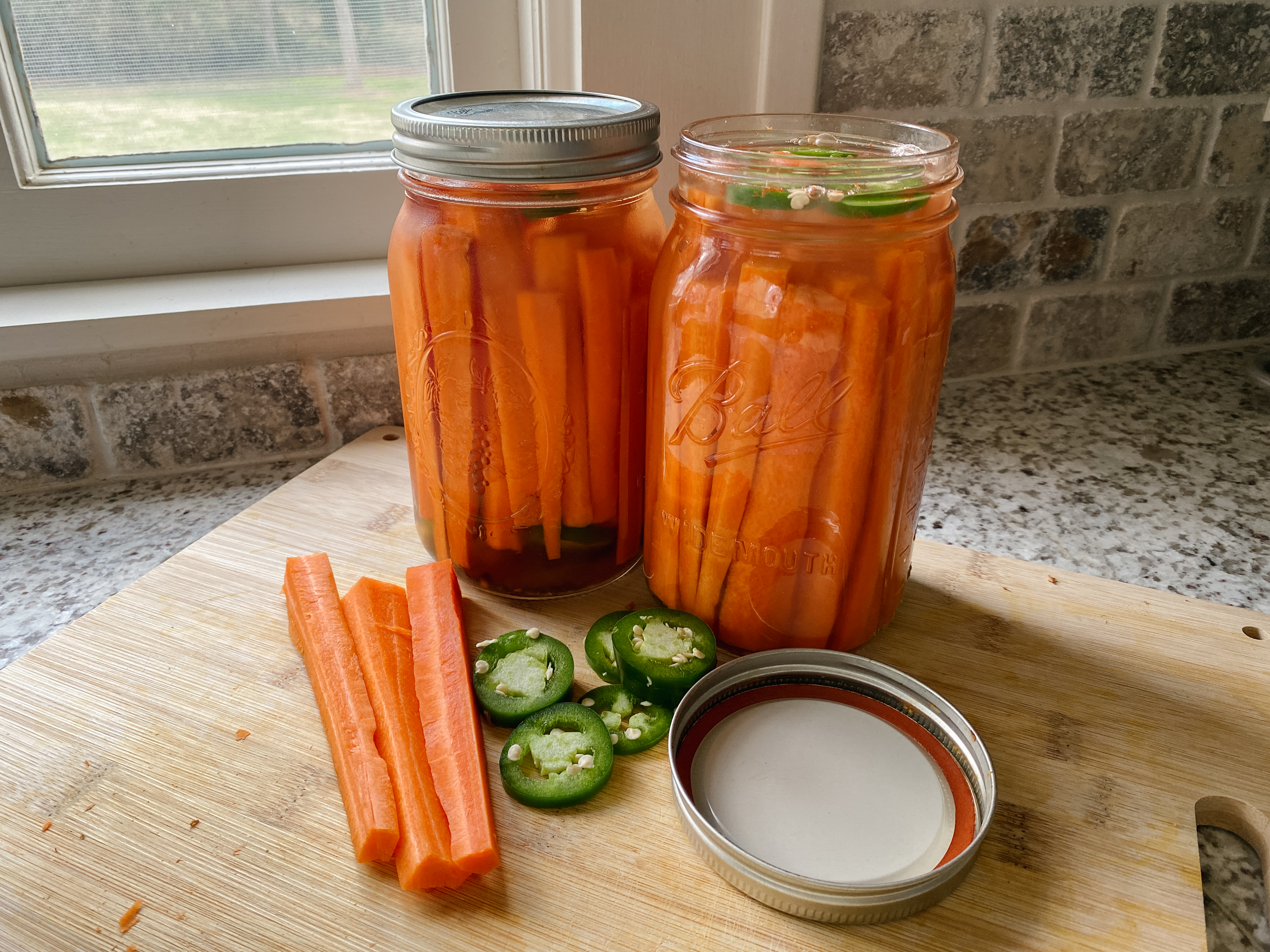
jars of zesty pickled carrots with jalapeño slices on a kitchen counter

Zesty Pickled Carrots (Easy Refrigerator Pickle Recipe)

Last summer I shared my favorite refrigerator pickle recipe with you. The truth of the matter is that my family loves all kinds of pickles. By popular request, today I’m sharing my zesty pickled carrot recipe with you for the first time.

This article may contain affiliate links. If you purchase through these links, I may earn a small commission at no additional cost to you.

Why we love Zesty Pickled Carrots

It may surprise you to know that when I met Mr. Belle Antiquarian, he was an extremely picky eater. I, on the other hand, will eat almost anything. Being the youngest of four, I knew that I couldn’t afford to be picky or the other kids would eat my share, too. And so our marriage began; him eating almost nothing, and me enjoying it all.

Over the course of our marriage, my husband has come a long way in his willingness to try, and even enjoy, different kinds of foods. So when he enjoyed my zesty pickled carrot recipe, it quickly became a regular in our food rotation.

These zesty refrigerator pickled carrots are crisp, bright, and lightly spicy with garlic, black peppercorns, and fresh jalapeno. They are easy to make in under 15 minutes and develop even more flavor after a day in the refrigerator.

In Southern kitchens, quick refrigerator pickles have long been a simple way to add brightness to a meal; crisp vegetables, a tangy brine, and a little patience in the refrigerator are all it takes.

peeled whole carrots and carrot peels on a cutting board preparing to make pickled carrots
Fresh carrots are peeled and cut into sticks before being packed into jars.

Key Ingredients

These pickled carrots are made with similar ingredients as my cucumber refrigerator pickles, with a few changes. Once you make them, you’ll want to keep a few ingredients on hand so that you make them easily any time you get a hankering for a batch:

carrot sticks, sliced jalapeños, garlic, and peppercorns for zesty pickled carrots
Carrots, jalapeño, garlic, and whole peppercorns give these pickles their bright flavor.
  • Whole, Unpeeled Carrots: Don’t try to take a shortcut by using peeled baby carrots. Those are treated with a solution to prevent them from going bad, and it also prevents them from absorbing the pickling brine. I buy whole carrots in a bag from Aldi or Costco, and it only takes a few seconds to get them peeled and cut into sticks.
  • Jalapeno: This may be the one ingredient that keeps people from even trying this recipe. I don’t know the science behind why, maybe it’s the sugar, but we’ve never had a batch of these carrots come out spicy – just zesty with depth of flavor from the jalapeno. Use half or remove the seeds if you’re worried about the heat.
  • Fresh Garlic: not jarred garlic; fresh.
  • Whole Peppercorns: Ground pepper isn’t going to work for this. You need whole peppercorns.
  • Salt: Whatever kind you like. I happened to use pink Himalayan salt in mine.
  • Sugar
  • Vinegar
  • Water
pouring hot pickling brine into jars of carrots and jalapeños
A simple hot vinegar brine transforms fresh carrots into crisp refrigerator pickles.

Tips and Variations

Once you get the hang of this brine for the zesty pickled carrots, you may want to start experimenting with pickling other things. We frequently use this brine to pickle fresh asparagus. In the spring when you can find thicker stalks of asparagus, it’s the perfect time to make some zesty pickles. Red onions are another favorite pickled veggie at our house.

This recipe will make one quart-sized jar of zesty refrigerator pickles. Since these aren’t shelf stable, and they’ll only be kept in the fridge, you can use an old (cleaned) spaghetti sauce jar to make your pickles if you don’t have a canning jar.

Not sure if you have the supplies you need to make zesty pickled carrots? I’ve linked the very basic essentials to help you get started on my LTK, click HERE.

jars of homemade refrigerator pickled carrots with fresh jalapeño slices
After a day in the refrigerator, the carrots become tangy, crisp, and full of flavor.

How to Store Zesty Pickled Carrots

These pickles must be kept in the refrigerator, and they’ll last for up to one month. For the best flavor, allow them to chill for at least 24 hours before eating them. If you can wait 2-3 days, they’ll taste even better.

What to serve them with

Most of the time these zesty pickled carrots get eaten straight from the jar when we’re feeling a little peckish. They’re so good that they only last a couple of days before they’re gone. However, these would go well as a side dish for a casual sandwich lunch or light dinner. I would also happily serve them as a cocktail hour appetizer.

How to Make Zesty Pickled Carrots

Making zesty pickled carrots is surprisingly simple. Fresh carrots are packed into a jar with garlic, peppercorns, and sliced jalapeno, then covered with a hot vinegar brine. After a day in the refrigerator, the carrots become crisp, tangy, and full of flavor.

jars of zesty pickled carrots with jalapeño slices on a kitchen counter
Abby Smolarsky

Zesty Pickled Carrots

These zesty refrigerator pickled carrots are crisp, bright, and lightly spicy with garlic, black peppercorns, and fresh jalapeño. They are easy to make in under 15 minutes and develop even more flavor after a day in the refrigerator.
Prep Time 10 minutes
Cook Time 5 minutes
Total Time 15 minutes
Servings: 4 servings
Course: condiment, Side Dish
Cuisine: American
Calories: 45

Ingredients
  

  • 1 pound carrots, peeled and cut into sticks
  • 1 small jalapeno, thinly sliced
  • 1 cup white vinegar
  • 1 cup water
  • ¼ cup sugar, adjust to taste
  • 1 Tbsp sea salt, kosher salt, or pickling salt
  • 1 clove garlic, minced
  • ¼ tsp whole black peppercorns

Equipment

  • 1 Quart sized glass jar with lid
  • Saucepan
  • Sharp knife
  • Cutting board

Method
 

  1. Pack the carrots tightly into a clean, sealable glass jar, leaving about ½ inch headspace at the top. Trim carrot sticks as needed to fit your jar.
  2. Add the minced garlic, black peppercorns, and jalapeno slices to the jar, distributing them evenly around the carrots.
  3. In a small saucepan, combine the vinegar, water, sugar, and salt. Bring the mixture to a boil.
  4. Reduce the heat and simmer for about 2 minutes, stirring until the sugar and salt are completely dissolved.
  5. Carefully pour the hot brine over the carrots until they are fulling submerged. Leave about ¼ inch headspace at the top of the jar.
  6. Allow the jar to cool completely at room temperature, then seal with a lid and place in the refrigerator.
  7. Refrigerate for at least 24 hours before eating. Flavor improves after 2 to 3 days.

Notes

  • These carrots are refrigerator pickles and are not shelf stable. Store in the refrigerator and keep the carrots submerged in the brine. They will keep for up to one month.
  • Adjust spice level by adding more or fewer jalapeno slices or removing the seeds for milder heat.
  • You can use this brine recipe for all sorts of pickled vegetables. I also like to use it with pickled asparagus and red onions.
  • Failure to let the jars cool completely before refrigerating them can result in the glass cracking due to rapid temperature changes. You don’t want to clean up a brine-y mess in the refrigerator – let them cool!
Zesty pickled carrots in mason jars with jalapeño slices, an easy refrigerator pickled carrot recipe
Crisp, garlicky zesty pickled carrots made with fresh carrots, jalapeño, and a simple vinegar brine. This easy refrigerator pickle recipe comes together in minutes and develops even more flavor overnight. A bright, tangy addition to sandwiches, charcuterie boards, or a Southern lunch plate.
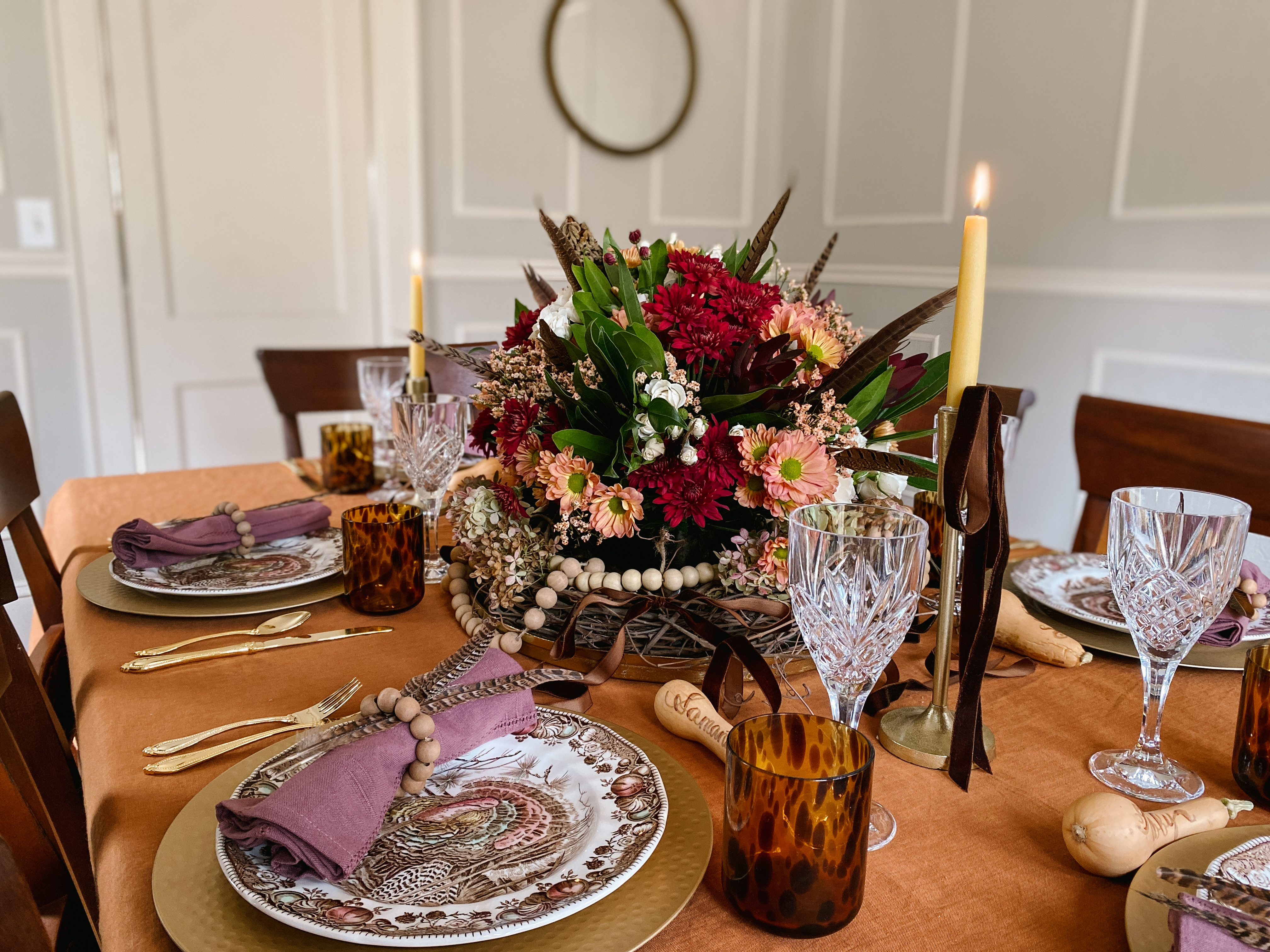
Vintage Thanksgiving table with turkey plates, fall flowers, and amber glassware on a rust-colored tablecloth.

Set a Beautiful Thanksgiving Table with Vintage Turkey Dishes

As I walked around our dining room, setting the Thanksgiving table with vintage turkey dishes, I find myself thinking about the moments yet to come. I smooth the linen tablecloth before placing the next plate down, and I am filled with joy just thinking that my family will soon gather together for Thanksgiving. There’s something special about preparing for the people you love. I’m looking forward to the time we’ll spend time over the Thanksgiving meal catching up with each other’s lives, sharing memories from the past, and talking about our plans for the future.

The plate in front of each person around the table will be filled with our favorite foods: turkey, cornbread dressing, sweet potato casserole, macaroni and cheese, and green beans. For a time, we won’t even be able to see the decorations on the plate. As the meal progresses, we’ll talk and we eat our food, and the familiar turkey design will reappear.

These plates hold more than the food on Thanksgiving. Years from now, the sight of them will help us to remember the memories of people we cherish and the times we spent together over a special meal.

This article contains affiliate links. As an affiliate, I may earn a small commission on qualifying purchases—at no additional cost to you.

Woman holding a vintage Johnson Brothers turkey plate in a Southern dining room decorated for Thanksgiving.
Sharing a favorite from my collection: Johnson Brothers “His Majesty” Thanksgiving china.

The Heart of a Southern Table

Years ago, I found a nearly complete set of vintage turkey dishes at an estate sale. The set was “His Majesty” by Johnson Brothers, and as soon as I saw it, I knew that I wasn’t going to leave the estate sale without it. I spent my entire budget that day to get the set.

Each year since that estate sale, we set our Thanksgiving table with vintage turkey dishes. Yes, they’re festive. But more than that, they’ve become part of our family’s story.

Maybe your family doesn’t set your Thanksgiving table with vintage turkey dishes. Every home has its own heirlooms, whether passed down or recently found. I would guess that there is something that returns to your table each year, whether it’s a familiar platter, a pie dish, or even a favorite casserole pan.

Southern dining room decorated for Thanksgiving with vintage turkey plates, plate wall, and warm candlelight.
A view of the dining room, where vintage and heirloom pieces set the scene for Thanksgiving dinner.

The History and Charm of Turkey China

Thanksgiving has been observed in the United States since the 1600s. It’s interesting to note that sometimes Thanksgiving was observed more than once in a year, and other times it didn’t even occur in autumn.

After Abraham Lincoln declared Thanksgiving a national holiday in 1863, English potteries like Spode and Mason’s began designing special china patterns for the American table, each featuring the proud bird itself.

Hundreds of years before disposable dinner plates began to appear at Thanksgiving gatherings, families were setting their tables with special Thanksgiving china to celebrate their special meal. Traditional Thanksgiving turkey plates endure in popularity even today for the nostalgia they carry and the way they link us to generations who gathered before us.

I wonder if those old English potteries every imagined that turkey dishes would adorn so many American Thanksgiving tables.

How to Set a Heritage-Inspired Table

We often plan the Thanksgiving food well in advance, but neglect to plan how we’ll set the table until it’s time to eat. With a little planning, this can be a simple and enjoyable task that creates a special experience for your guests.

When it’s time to dress the table, here’s how I make it easy but memorable:

  • Start with a Foundation: Choose a tablecloth made of quality materials in a neutral color. Doing so will give you a tablecloth that will last for multiple occasions for years to come. A neutral color will work for different holidays, and it will let the china patterns shine.
  • Layer with Meaning: Consider using a mixture of new and vintage pieces for balance. We want to use and enjoy our vintage pieces, but we don’t want to create an uncomfortable “museum” atmosphere for our guests. If you haven’t found vintage pieces you like or that fit your budget, think about using new pieces that echo vintage motifs, such as transferware-inspired borders or classic harvest scenes. Many of the vintage Thanksgiving turkey patterns are still produced today.
Product collage featuring Johnson Brothers His Majesty turkey plate, pewter charger, tortoise flatware, amber glassware, plaid napkins, and silver turkey serving bowl.
Mixing heirloom china with timeless textures and warm metals creates a collected Southern Thanksgiving table.
  • Bring in Seasonal Touches: Look to nature for ways to make your Thanksgiving table festive. Even when we’re on a budget, nature often gives us just what we need to decorate. Magnolia stems, pears, and dried hydrangeas are traditional Southern accents that can be easily found outdoors. Creating a special table doesn’t have to be about perfection. We can tell a story with gathered and found objects as well.
  • Blend Collections Gracefully: If you’re just starting your turkey plate collection, you may not have a full set of dinnerware to use yet. Don’t be afraid to mix and match your plates with solid dishes. If you have different partial sets, it can also be lovely to use them together.
Product collage showing gold chargers, brown vintage turkey plate, amber glass, wood candlesticks, brown linens, and gold turkey napkin rings.
A classic Thanksgiving table with golden tones, wood accents, and vintage turkey china for a timeless holiday look.

If you’d like to see how I’ve styled our Thanksgiving table through the years, you can revisit two earlier tables I’ve shared. Each one tells a different story:

Thanksgiving place setting with Johnson Brothers turkey plate, plum napkin, gold flatware, and amber glass.
A close-up of a Thanksgiving place setting layered with gold flatware, plum linen, and vintage turkey china.

A Table that Tells a Story

Every good Southerner knows how to spin a tale, and the pieces on our table become conversation starters. The table becomes a living scrapbook with items collected over the years. Perhaps your forks were passed down from a great aunt, or you found your plates on a cross-country road trip. Regardless of its origins, each piece holds a memory worth sharing.

People often tell me things like, “I wish my family did that growing up” or “We never did that at our house.” I’m here to tell you that it’s not too late.

Maybe it’s time for your family to write a new story. We forge new traditions with our families and loved ones by both honoring our heritage and the people present at our tables now. Every tradition starts somewhere; sometimes all it takes is a single plate.

Overhead view of Thanksgiving table with vintage turkey dishes, floral centerpiece, and amber glassware.
An overhead view of the Thanksgiving table layered with vintage plates, gathered florals, and family traditions.

In Closing

The truth about Thanksgiving is that the turkey is usually in the oven longer than it is on the table. Long after the last slice of pie is eaten, the memory of the table and the stories told around it are what propel us forward as a family.

The beauty of a Southern home is that we are united by what endures. The secret is that we get to choose what endures. I hope you’ll take this Thanksgiving as an opportunity to begin a new tradition or continue an old one with love and intention.


Explore More From this Series

If you enjoyed this article on setting your Thanksgiving table with vintage turkey dishes, we invite you to explore more from the series. Each article in this series celebrates the beauty of Southern living through the seasons. You can find the full collection on the homepage under Home for the Holidays: A Southern Season of Charm.

Whole Southern sweet potato pie styled with vintage silverware, linen napkins, and fall table setting.

A Southern Sweet Potato Pie Recipe from a Vintage Southern Cookbook

(Part of the “Home for the Holidays: A Southern Season of Charm” series)

This article contains affiliate links. As an Amazon and LTK affiliate, I may earn a small commission if you make a purchase through my links, at no extra cost to you.

A Taste of Southern Nostalgia

Most people might guess that a typical Southern Thanksgiving meal would include a favorite Southern sweet potato pie recipe. But the truth is, I hadn’t found one that I really liked until now. Today I’m sharing this treasured recipe that I uncovered, just in time for Thanksgiving. It’s part of this year’s Home for the Holidays: A Southern Season of Charm series, where we’re celebrating meaningful traditions and nostalgic Southern flavors.

A few months ago, while I was thrifting, I stumbled across The Deep South Cookbook, by Southern Living in 1976. I mentioned in an earlier article with my Chicken Mull recipe, that it’s important to me that we keep our Southern cultural recipes alive. So, when I found this cookbook that was full of recipes from a by-gone era, I simply couldn’t leave it behind. (And the fact that it was only $1 was icing on the cake!)

Today we’re making a recipe that I discovered on page 55 of The Deep South Cookbook, which is Harvest Sweet Potato Pie. This recipe was submitted by Shirley Wise of Richmond, Virginia.

As the cookbook states, this recipe was “home-tested, so you can be sure of delicious dining!”

Abby Smolarsky holding The Deep South Cookbook by Southern Living, 1976, inspiration for a vintage Southern sweet potato pie recipe.
Abby with The Deep South Cookbook (Southern Living, 1976), the vintage treasure where she found this classic Harvest Sweet Potato Pie recipe.

A Cookbook Worth Keeping

This cookbook is far from beautiful. The cover decoration is an unmistakably mid-century scene with candles and a platter of roasted poultry. By modern standards, it’s almost an unappetizing image. But after opening the cover of the cookbook, it’s a pure delight. Beyond discovering the Southern sweet potato pie recipe, there are hundreds of other traditional recipes to explore.

The book is divided into states in the Deep South. Each section begins with a brief introduction and history of food in that state. Following the introduction, the pages are filled with simple, approachable recipes for home cooks. Each recipe was written and submitted by real Southern women whose names appear beside that recipe.

I won’t be experimenting with “South Georgia Squirrel Stew,” but today we’re going to make the Southern sweet potato pie recipe. After I share the recipe, I’ll also include a few modern changes that you could make to enhance the nostalgic Southern flavors for your pie this Thanksgiving.

Whole Southern sweet potato pie styled with vintage silverware, linen napkins, and fall table setting.
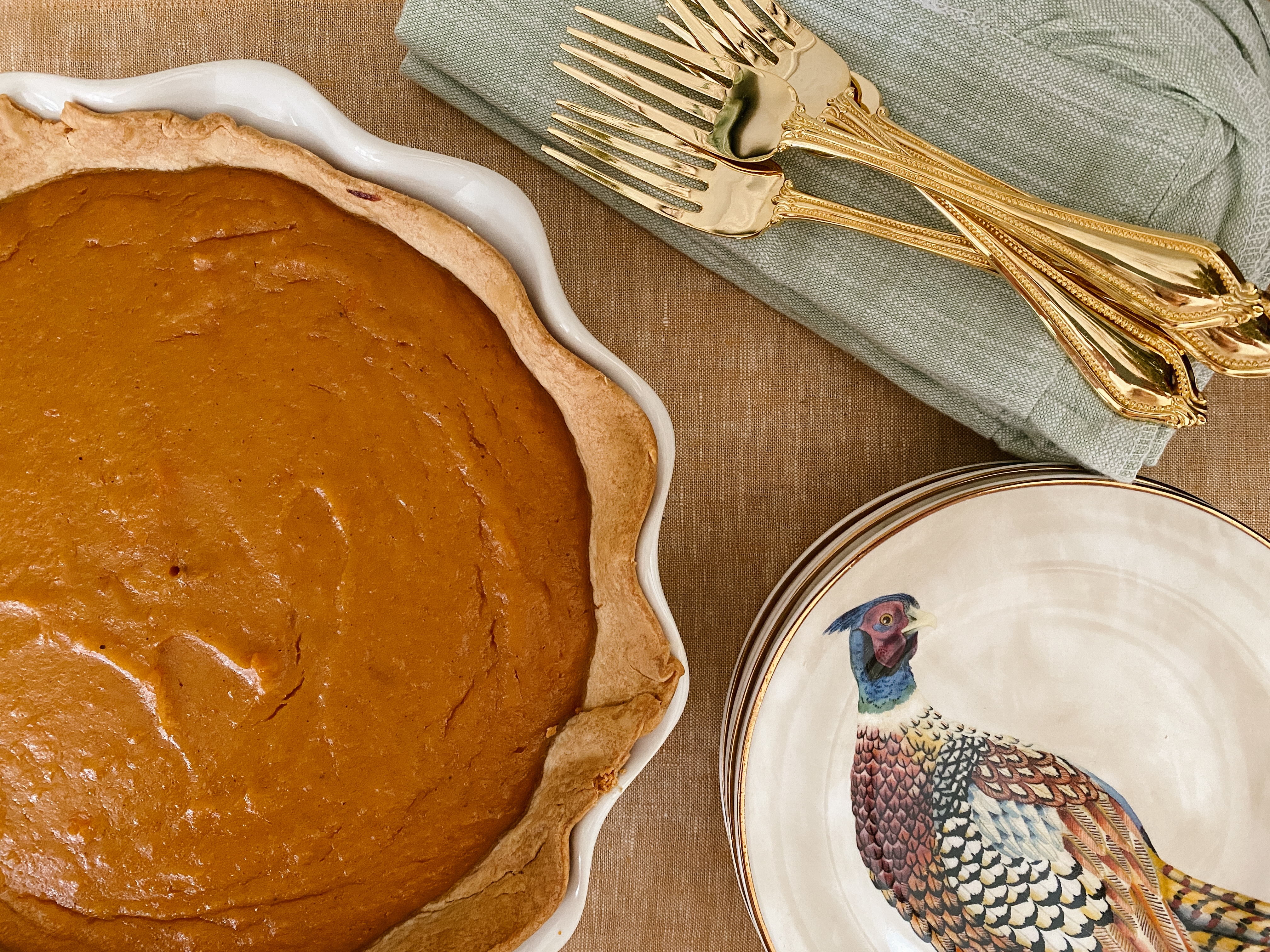
A classic Southern sweet potato pie, styled simply with vintage silverware and linens for a timeless holiday table.

The Original Harvest Sweet Potato Pie

Whole Southern sweet potato pie styled with vintage silverware, linen napkins, and fall table setting.
Belle Antiquarian (adapted from The Deep South Cookbook, 1976)

Harvest Sweet Potato Pie

A classic Southern sweet potato pie inspired by a 1976 recipe from The Deep South Cookbook, a Southern Living publication. This simple and comforting dessert highlights the timeless flavors of sweet potatoes, cinnamon, and milk in a flaky crust. It is a vintage favorite that feels just as welcoming on today’s holiday table as it did generations ago.
Prep Time 20 minutes
Cook Time 45 minutes
Total Time 1 hour 5 minutes
Servings: 8 servings
Course: Dessert
Cuisine: Southern

Ingredients
  

  • 1 ¾ cups mashed sweet potatoes
  • 1 tsp salt
  • 1 ½ cups milk
  • 2 eggs
  • 1 cup sugar
  • 1 tsp cinnamon
  • 1 unbaked pie shell

Method
 

  1. Preheat over to 350 degrees.
  2. Combine all of the filling ingredients in a bowl, then beat until smooth.
  3. Pour into the pie shell.
  4. Place on the center rack and bake at 350°F for about 45 minutes, or until a knife inserted near the center comes out clean and the filling is just set. Begin checking at 30 minutes, as baking times may vary.

Notes

For a richer flavor, substitute part or all of the milk with buttermilk or evaporated milk. If using buttermilk, reduce the salt to ½ teaspoon and use 1¼ cups instead of 1½ cups. You can also replace half of the white sugar with light brown sugar for a hint of molasses. Try adding ¼ teaspoon nutmeg and a splash of vanilla extract for a more aromatic pie. Bake until the center is just set, then cool completely before slicing. Serve with lightly sweetened whipped cream or a sprinkle of cinnamon sugar for a classic Southern finish.
The recipe above is printed exactly as it appeared in The Deep South Cookbook (Southern Living, 1976). Baking times may vary depending on oven type, pie dish material, and the moisture level of your sweet potatoes. Begin checking for doneness at 30 minutes and continue baking until the center is fully set, about 45 minutes total.

Modern Touches for Today’s Kitchen

With only a few ingredients, and even fewer steps to pull this recipe together, I imagine that Mrs. Shirley Wise of Richmond, Virginia, made many of these pies in her time. As much as I love following a recipe exactly as it was written, I also enjoy experimenting with subtle changes that reflect today’s kitchens and ingredients.

To modernize and customize this recipe for my family, I made a few substitutions and additions. The Southern sweet potato pie recipe is delicious just as Mrs. Wise wrote it, but with a few changes, we can introduce a touch of warmth and brightness that is suitable for modern holiday tables.

Here are the ways I updated this Southern sweet potato pie recipe:

  • 1¼ cups buttermilk (instead of milk, reduce salt) – for tang and creaminess.
  • ½ cup white sugar + ½ cup light brown sugar – adds depth and warmth.
  • 1 teaspoon vanilla extract – enhances sweetness naturally.
  • ¼ teaspoon nutmeg – classic holiday spice that pairs well with cinnamon.
  • ½ teaspoon orange zest (optional) – brightens the flavor slightly; use sparingly so it doesn’t overpower the custard.

Optional variation: add 1 tablespoon melted butter to the filling for extra richness.

Slice of Southern sweet potato pie served on a fall plate with vanilla ice cream dusted with cinnamon.
A slice of sweet potato pie served with a scoop of vanilla ice cream and a touch of cinnamon — simple, classic Southern comfort.

Serving and Styling

While this pie is simple enough to throw together for a casual meal with the family, it’s also a thoughtful addition to holiday gatherings. We always set up a dessert buffet in our dining room for Thanksgiving, and this Southern sweet potato pie recipe will be included this year. (I’m already looking forward to enjoying a slice with a hot cup of coffee!)

I served mine in a white ceramic pie dish with some simple linen napkins and vintage silverware that I found at an estate sale. I used some fall themed plates and added a small scoop of high-quality vanilla ice cream on the side.

If you’d like to recreate this setup, here are a few of my favorite pieces and some of the kitchen tools I used while baking.

Southern-style kitchen counter with vintage pie plate, rolling pin, glass prep bowls, and a stand mixer surrounded by baking tools used to make a sweet potato pie.
Timeless kitchen essentials that make holiday baking a pleasure. Simple tools, classic materials, and a touch of Southern charm.

Why These Recipes Still Matter

When is the last time you ate sweet potato pie for dessert? Have your kids ever tasted it? Our country enjoys many different cultures throughout the different regions across our great land. In the North you’d probably expect to find cheesecake. In the Midwest, we would probably eat scotcheroos.

Unless we do something to preserve our traditions, they will continue to meld into one indistinguishable, bland culture that has forgotten the spice and flavors of the people who live in each region.

When I found this cookbook and came up with the idea of sharing one of the recipes, I intentionally looked for one that had very few ingredients. Anyone can make pie recipe, even a beginner home cook.

This holiday season, I hope you’ll slow down, honor the stories behind your favorite recipes, and make a little space in your kitchen for history to live again. Whether you’re baking with family, sharing dessert with friends, or simply enjoying a quiet slice with coffee, this sweet potato pie is a delicious reminder of how good the simplest things can be. And Mrs. Shirley Wise, if you’re out there, I loved your pie.

Explore More from This Series

Each article in this series celebrates the beauty of Southern living through the seasons. You can find the full collection on the homepage under Home for the Holidays: A Southern Season of Charm.

Each article in this series celebrates the beauty of Southern living through the seasons. You can find the full collection on the homepage under Home for the Holidays: A Southern Season of Charm.

how to roast a pie pumpkin plus the best pumpkin muffin recipe

How to Roast a Pie Pumpkin (Plus The Best Pumpkin Muffin Recipe)

Somewhere along the way of making foods convenient, we seem to have overcomplicated the simplest of kitchen tasks. It’s easy to learn how to roast a pie pumpkin (sometimes called a sugar pumpkin) to use in your holiday baking, and you’ll be rewarded with the best tasting pumpkin for your favorite recipes.

Welcome back to the newest installment in our holiday series, Home for the Holidays: A Southern Season of Charm. Today I’m sharing the simple steps to roast your own pie pumpkins, which brings out the sweetest, richest flavors of the season. You’ll learn how to make pumpkin puree, talk about ways to store it, and explore how to cook with it. I’ll also link my family’s favorite pumpkin muffin recipe, and I know you’ll love it as well.

The other articles in this series are linked below. I hope you’ll browse through other reader favorites at your leisure.

What Is a Pie Pumpkin?

When I’m making homemade pumpkin puree, I usually opt for sugar pie pumpkins. Sugar pie pumpkins look just like the kind that you’d buy to carve a jack-0’-lantern, but they are much smaller. Sugar pie pumpkins are easily split into two to fit inside your oven to bake. But if you’re feeling adventurous, there are many varieties of edible pumpkins that provide rich, sweet flesh for cooking. You can see other types of edible pumpkins on the image that I’ve created below, and if you want to research more about edible pumpkins, you may enjoy this book.

There are many varieties of edible pumpkins. Flavors range from mild to savory to sweet.
Sugar pie pumpkins are smaller and sweeter than carving pumpkins — perfect for homemade purée.

How to Roast a Fresh Pie Pumpkin (Step-by-Step Guide)

If you’ve ever wondered how to roast a pie pumpkin at home instead of using canned puree, this simple guide walks you through each step.

Roasting a fresh pumpkin to make puree is a beginner-friendly kitchen task. All you need are a few kitchen tools and a little bit of time. Here you can see all the steps and equipment you’ll need, plus a few tips for storing and using your pumpkin puree. Keep reading for a link to my family’s favorite pumpkin muffin recipe!

how to roast a pie pumpkin plus the best pumpkin muffin recipe
Abby | Belle Antiquarian

Homemade Pumpkin Puree

Rich, smooth, and naturally sweet homemade pumpkin puree. Perfect for pies, muffins, soups, and all your favorite fall recipes.
Prep Time 10 minutes
Cook Time 50 minutes
Servings: 2 cups puree
Course: Side Dish

Ingredients
  

  • 1 Pie pumpkin (also called sugar pumpkin) about 2 ½ to 3 pounds
  • 1-2 tsp Olive or avocado oil. Optional, for lightly brushing the cut sides before roasting
  • 1 pinch Salt. Optional, helps draw out moisture and deepen flavor
  • Water for blending, as needed. Start with 1-2 tablespoons

Equipment

  • 1 Sharp chef's knife for safely cutting the pumpkin in half.
  • 1 Large cutting board sturdy and non-slip to handle round produce.
  • 1 Metal spoon or scoop to remove seeds and stringy pulp.
  • 1 Baking sheet a rimmed sheet pan to catch any caramelized juices while roasting.
  • 1 Parchment paper or silicone baking mat for easy cleanup and even roasting.
  • 1 High-speed blender or food processor to create smooth, creamy puree.
  • 1 Rubber spatula to scrape down the sides while blending.
  • 1 Glass storage containers or freezer-safe bags to portion and store your puree for later use.

Method
 

  1. Preheat the oven to 375*F (190*C). Line a rimmed baking sheet with parchment paper or a silicone baking mat.
  2. Prepare the pumpkin. Using a sharp chef's knife, carefully cut the pie pumpkin in half from top to bottom. Scoop out the seeds and stringy pulp with a spoon. (Save the seeds for roasting later, if desired.)
  3. Roast the pumpkin. Place the halves cut-side down on the prepared baking sheet. Brush lightly with oil, if using. Roast for 45-50 minutes, or until the flesh is tender when pierced with a fork.
  4. Cool slightly. Remove the baking sheet from the oven and let the pumpkin cool until easy to handle, about 10-15 minutes.
  5. Scoop and blend. Scoop the soft pumpkin flesh from the skin and transfer it to a blender or food processor. Blend until smooth, adding water one tablespoon at a time if needed to reach your desired consistency.
  6. Store for later use. Spoon the puree into airtight containers. Refrigerate up to 1 week or freeze in 1-cup portions for up to 3 months.

Notes

  • Storage: Keep fresh pumpkin puree in an airtight container in the refrigerator for up to 1 week, or freeze it in 1-cup portions for up to 3 months. Thaw overnight in the fridge before using.
  • Pumpkin Type: This recipe is best with pie pumpkins (also called sugar pumpkins). Avoid large carving pumpkins; they’re watery and less flavorful.
  • Texture Tip: For extra-smooth puree, blend roasted pumpkin in a high-speed blender or food processor while still slightly warm.
  • How to Use: Substitute homemade puree cup-for-cup for canned pumpkin in pies, breads, muffins, and soups.
  • Tip: Use a sturdy sheet pan, silicone baking mat, and a good immersion blender for effortless roasting and blending.
  • Make-Ahead Idea: Roast multiple pumpkins at once, cool completely, and freeze the extra puree to save time during the holidays.

This post may contain affiliate links. As an Amazon Associate and LTK Creator, I may earn a small commission if you purchase through my links.

Roast until the skins wrinkle and the flesh is fork-tender — that’s when the flavor is at its peak.

Cozy Pumpkin Muffin Recipe

Once your kitchen smells like roasted pumpkin, put that fresh puree to good use in some soft, spiced pumpkin muffins.

It’s not an exaggeration when I say that our kids absolutely adore my pumpkin muffins. They ask for them every fall, and a batch will usually only last us a couple of days. Now that we’re empty-nesters, they still request pumpkin muffins. I recently made a batch and gave them all to my daughter to take back to college.

If you have a big family, hungry teenagers, or you like to meal prep, these pumpkin muffins freeze well. Cool them completely and place them into freezer bags before storing them for future use.

There’s a reason the recipe is called The Best Pumpkin Muffins, because they really are! You can find the recipe linked here.

Serving Suggestions and Variations

Although the pumpkin muffins are perfect just as they are, it’s always fun to play around with fall flavors and different add-ins. We sometimes use chocolate chips, golden raisins, dried cranberries, or a streusel topping.

When you bake these pumpkin muffins with fresh pumpkin puree, the flavor and color will be a little richer than canned pumpkin. This small change makes a huge difference.

If you love pumpkin muffins like we do, try pairing them with a hot cup of cinnamon tea or a cream cheese spread.

In Closing

I hope that you see just how easy it is to make your own pumpkin puree by roasting a small sugar pie pumpkin. Before we get into the hectic holiday rush, take an hour this weekend to make some pumpkin puree for your fall pies, bread, and muffins. (Just pop it in your freezer until you need it!)

This holiday season we’re sharing recipes, traditions, and timeless décor in each of the Home for the Holidays articles. Be sure to bookmark Belle Antiquarian, subscribe below, and follow me on Instagram and Pinterest as we journey Home for the Holidays this season.

Home for the Holidays: A Southern Season of Charm

Previous: Natural Fall Décor: Simple Ways to Bring the Outdoors In

Next: A Classic Sweet Potato Pie Recipe from a Vintage Southern Cookbook

For the full Home for the Holidays archive, go here.

Homemade pumpkin purée — smooth, rich, and ready for your favorite fall baking recipes.
Bowl of creamy Chicken Mull served in white enamelware, garnished with cracked pepper and surrounded by saltine crackers

A Southern Classic for Fall: How to Make Chicken Mull

A Regional Recipe Worth Discovering

Welcome to the fourth installment of my fall series, Falling for Home: A Weekly Autumn Journal. Throughout this weekly Friday series, we’re embracing a slow, intentional rhythm of Southern living rooted in home, heritage, and the kind of traditions that make fall in the South unforgettable.

Today’s article is all about Chicken Mull. I encourage you to use the ingredients that you already have on hand and your favorite pot, as well as to invite friends and neighbors into your home to share it with you this fall.

What Is Chicken Mull? A Brief Southern History

Although I’ve lived in Georgia my whole life, I hadn’t heard of Chicken Mull until moving to the greater Athens, Georgia area. One chilly fall afternoon, someone mentioned that it was Chicken Mull season, and I’ve been intrigued by this creamy, comforting stew ever since.

Chicken Mull is a traditional Southern fall recipe that is usually made with only 3 ingredients: water, chicken, and saltine crackers. The ingredients may be simple, but the flavor is anything but.

Chicken Mull finds its roots in the Carolinas, as well as a very specific region of Northeast Georgia. In fact, Athens, Georgia has often claimed to have invented this Georgia Chicken Mull recipe. (Locals will warn you not to confuse it with Chicken Muddle, which is an entirely different thing.)

Historically, Chicken Mull was more than just a dish. A Chicken Mull was the name of the gathering where the Chicken Mull was eaten. This would have been a church or community event held in the fall, and the Chicken Mull would have fed a large crowd.

Ingredients You’ll Need

While the basic Chicken Mull recipe uses just three ingredients, today I am using the Southern Living version that includes some herbs, heavy whipping cream, and hot sauce. To make my version of Chicken Mull, I’m using cast iron Dutch ovens, a fine-mesh strainer, wooden utensils, and sturdy kitchen tongs. This is a fun dish to serve in vintage enamelware dishes or handled soup bowls…  something that feels as nostalgic as the recipe itself.

Chicken Mull Recipe (Stovetop)

Bowl of creamy Chicken Mull served in white enamelware, garnished with cracked pepper and surrounded by saltine crackers
Abby Smolarsky | Belle Antiquarian

Chicken Mull (A Classic Northeast Georgia Stew)

A creamy, comforting Southern classic, Chicken Mull is a beloved fall tradition in Northeast Georgia. Made with slow-simmered chicken, rich broth, crushed saltines, and a splash of cream, this humble stew is a must-try recipe for chilly evenings. Serve with extra crackers and hot sauce for a taste of Athens heritage in every spoonful.
Prep Time 15 minutes
Cook Time 1 hour 45 minutes
Total Time 2 hours
Servings: 6 people
Course: Main Course
Cuisine: Southern
Calories: 420

Ingredients
  

  • 1 3-4 lb whole chicken
  • 2 large yellow onions unpeeled and quartered
  • 4 celery stalks roughly chopped, about 2 cups
  • 5 cups water
  • 4 cups chicken broth
  • 1 Tbsp kosher salt
  • 1 Tbsp whole black peppercorns
  • 5 fresh thyme sprigs
  • 5 garlic cloves
  • 2 dried bay leaves
  • 1 sleeve saltine crackers crushed, plus more for serving
  • 1 cup heavy whipping cream

Equipment

  • 5.5-quart Dutch oven or large stockpot
  • Fine-mesh strainer
  • Tongs
  • Blender
  • Large wooden spoon
  • Ladle
  • Cutting board

Method
 

  1. In a 5 ½-quart Dutch oven, add the chicken, onions, celery, water, broth, salt, peppercorns, thyme, garlic, and bay leaves.
  2. Bring to a simmer over medium-high heat, then reduce to medium-low and cover. Simmer for about 1 hour, or until the chicken is cooked through and brother is flavorful. Skim fat as needed.
  3. Remove the chicken and let cool slightly. Shred the meat, discarding skin and bones.
  4. Strain the broth through a fine-mesh strainer into a clean Dutch oven. Discard solids.
  5. Bring the strained broth to a simmer over medium-low heat. Stir in crushed cracker and cook for 3 minutes until slightly thickened.
  6. Carefully blend half the broth mixture until smooth (about 20 seconds), then return to the pot.
  7. Stir in the heavy cream and shredded chicken. Cook uncovered over medium-low, stirring occasionally, until heated through (about 10-15 minutes.)
  8. Serve hot with extra crackers and optional hot sauce.

Notes

Don’t Skip the Strain: Straining the broth may seem like an extra step, but it creates the signature smooth base that sets this version apart from other chicken stews. Make-Ahead Friendly: Chicken Mull reheats beautifully the next day. Some even say it’s better after the flavors have had time to meld. Store in an airtight container in the fridge for up to 3 days.

The Palette of Chicken Mull

There’s a warmth to Chicken Mull that goes beyond the post. It’s the colors of autumn comfort. For this week’s post, I’ve created a coordinating color palette that captures the creamy whites, golden butter tones, and soft sage of the ingredients and atmosphere. You’ll find this same palette in everything from vintage kitchen tools to enamel cookware, and I’ve linked a few timeless pieces below.

Whether you’re styling your kitchen or hosting your own mull supper, these pieces bring the coziness of fall to life.

A Dish That Feels Like Home

I live in an area of the South that has changed rapidly over the last 40 years. Folks from all over the world moved here to call this place home. While we welcome new cultures and diversity, I noticed a while ago that many of our beloved Southern traditions were fading like steam rising from a warm bowl, slowly disappearing into memory. Many researchers will tell you that our accents are disappearing. As we discussed in a previous article, our Southern hospitality that we are known for is starting to dampen. So when I discovered this recipe that neither I, nor anyone in my family had ever heard of, I was really excited to revive this regional recipe from Athens, Georgia cuisine.

Whether you’re a Southern peach or you hail from some other wonderful place on this planet, I hope that you will remember your roots and keep your culture alive for future generations.

So many of you messaged me on Instagram that you loved our summer recipes that we shared. I invite you to make this recipe for Chicken Mull, or to share your version with me! Tag me on Instagram so we can share a virtual bowl of stew together.

Invitation to Return

Thank you for joining me with this week’s article from my series Falling for Home. Each Friday from August through September, we’ll meet here at BelleAntiquarian.com to reflect on a slow, intentional rhythm of seasonal living, rooted in tradition, home, and memory. Join me next Friday as we explore The Collected Kitchen, a celebration of antique charm, practical warmth, and the soulful heart of the Southern home.


Explore More from Falling for Home: A Weekly Autumn Journal

This article is part of my Falling for Home series. Be sure to check out these reader favorites:


You can subscribe here to receive new articles, seasonal inspiration

How to Style Vintage Blue and White China for Summer Entertaining

A Season of Graceful Gatherings

As I stand at the kitchen sink washing dishes after dinner, I notice that the light is fading just a few minutes earlier each day. The hands of autumn are stretching to steal the daylight hours as we creep closer to the start of a new season. I look down at the dish in my hands, a blue willow dinner plate, and I’m reminded that while our time this summer is slipping away, some things remain ageless, like my favorite blue and white dishes… always in style, always familiar.

Today is the final installment of the Old-Fashioned Summer Saturdays series. Over the past few weeks, we have touched on timeless summer traditions, seasonal recipes, and vintage-inspired living. I hope that I have inspired you to seek your roots and remember traditions. Although we live in a world moving at warp speed with innovations, we can enrich our lives in traditional ways to improve the quality of our daily living.

If you’ve found your way here via Pinterest, Google, or Instagram… welcome! I invite you to check out the other segments in this series, which can be found linked at the bottom of this article.

Why Blue and White Never Goes Out of Style

My soon-to-be-21-year-old daughter moved into a new apartment at school this fall, and I sent her off with a set of six blue willow dinner plates. Something that I love about Gen Z is their enthusiasm for thrifting and appreciation for vintage. Sam spent weeks browsing thrift and antique stores to furnish her home in her personal, unique style. She has the capability to go online and buy many of these things new, but she prefers to find pieces with a story, better quality materials, and (usually) a better price point. She took a set of blue willow dishes made by English Ironstone Transferware because of their weight and durability. We didn’t find anything modern that compared to the style and quality of these vintage plates.

If you’ve followed me on Instagram for a while, you’ve seen me use my Churchill Blue Willow plates time and time again. I have featured them at holidays like Christmas, Easter, Independence Day, and Thanksgiving. Today I want to show them to you in a different light, as they were meant to be: the quintessential everyday dinnerware. While I do love how beautiful my blue willow plates look in the china cabinet, they are everyday elegance that I encourage you to take out and use.

Summer Styling Tips with a Twist

If you love blue and white transferware, but you don’t know how to get started using it or how to integrate it into your everyday dinner service, I have several simple styling tips for you.

  • Any pattern of blue and white transferware pairs beautifully with natural textures like seagrass, rattan, and wicker. I like using my seagrass chargers and rattan napkin rings to help transform these dishes from feeling too precious to use, to becoming a part of your everyday elegance.
  • Something fun about blue and white transferware is that different patterns are often combined to create a full set. For example, Churchill Blue Willow and Myott Finlandia are two patterns that complement each other well. In addition, Staffordshire Liberty Blue and Meakin Blue Nordic make a nice combination. Pick up a plate here and there while you’re on your thrifting and antiquing adventures. It won’t be long before you have a complete set of blue and white dinnerware, and you’ll have a unique story for each piece.
  • Another way I like to incorporate pieces from my blue and white transferware collection is to use the larger serving bowls on my kitchen counter as fruit bowls. This way, they aren’t hidden away, and I get to enjoy them every day.

Invest Once, Use for a Lifetime

My first stop at any estate sale is the kitchen or dining room sideboard. I love to hunt for blue and white transferware to add to my collection, and maybe add a few to Sam’s collection too! Buying second hand is an approachable and affordable way to get started.

If I could go back and give myself some advice when I was just starting out, I would say to invest at the very beginning with dishes that are timeless and well made. Instead of following trends that try to convince you to switch patterns every few years, I want to encourage you to go with something everlasting.

Whether you’re collecting family pieces or starting your own legacy, here are a few timeless sets worth exploring:

From Summer to Fall: The Beauty of Longevity

Today I’ve shared with you how I incorporate my Blue Willow dishes into everyday casual dining for summer. As we begin to transition into fall, I’ll add touches of amber glass vases, dried florals, and maybe some velvet ribbon as a napkin ring.
Today concludes the Old-Fashioned Summer Saturdays Series. I hope you’ll find your way back here next week as I start a new series called Falling for Home. In the meantime, remember that Summer is fleeting, but style like this… it lingers, season after season.

Explore More from Old-Fashioned Summer Saturdays

This article is part of my Old-Fashioned Summer Saturdays series, where I share timeless inspiration for warm-weather living. Be sure to check out these reader favorites:

Timeless Red, White, and Blue Decor Ideas for the Porch
Heirloom Tomato Dreams
Classic Summer Whites: Timeless Linen Dresses and Southern Style Staples
Refrigerator Pickles—A Southern Summer Staple
Simple Garden Joys
Old-Fashioned Strawberry Shortcake Cake
Creating a Cozy Summer Reading Spot
You can subscribe here to receive new articles, seasonal inspiration, and vintage-style favorites delivered right to your inbox.

I’m often asked for sources for my favorites blue and white items. I’ve rounded them up in one place in my LTK shop, which you can view and shop HERE or click the photo below.

Abby holds a plate of strawberry shortcake.

Old-Fashioned Strawberry Shortcake: A Southern Classic for Summer Gatherings

If there’s one thing the South is known for, it’s good old-fashioned Southern hospitality. And while we may be known for it, it’s no secret that it’s a practice slowly fading from modern culture. Between the rise of social media and the quieting effects of social distancing, our homes aren’t as open to guests as they once were. Today I’m sharing a recipe for old-fashioned strawberry shortcake cake.

This recipe is part of my Old-Fashioned Summer Saturdays series, a weekly look at timeless summer traditions, seasonal recipes, and vintage-inspired living. This week we’re in the kitchen, adapting a tried-and-true recipe found in How to Cook Like a Southerner by Johnnie Gabriel.

If you’ve found your way here via Instagram, Pinterest, or Google, I hope you’ll explore the other articles in this series, which are linked at the end of this article.

Rediscovering the Art of Visiting

As a child, my mother often took us along when she went “visiting.” Visiting meant stopping by the home of a friend or neighbor on a Saturday or Sunday afternoon to catch up on news, share a story or two, and enjoy a little company.

It wasn’t planned. It wasn’t perfect. But it was personal.

Sometimes we stayed for an hour or two, simply catching up. Other times, the conversations were more meaningful…the kind you didn’t want little ears overhearing in the vestibule after church.

Visiting was a verb. We would say, “We’re going visiting this afternoon.” And our hosts would graciously open their doors to welcome us in.

Today, with Pinterest boards and Instagram reels showcasing elaborate charcuterie boards and styled cocktail bars, it’s easy to feel like hosting must be an event. But back then, our hosts weren’t serving sparkling lemonade in etched glasses or arranging cheese by country of origin.

If we were offered anything at all, it might have been a slice of Sara Lee pound cake from the freezer or some saltine crackers with cheddar. And it was more than enough.

With a little preparation and the right mindset, hospitality can still be simple, meaningful, and joyful. You don’t need a Pinterest-worthy home to host a friend or two, just an open heart and a bit of forethought.

A hand holding a heart shaped strawberry in front of a blurry background of many other strawberries.
A heart-shaped strawberry, freshly picked and ready for shortcake. Sometimes the sweetest details are the smallest.

Create a Signature Summer Dish

One easy way to take the stress out of hosting? Choose a signature dish.

When you’re known for something, it becomes your calling card. With this recipe, guests will know that if they stop by your house during the summer, they’re likely to enjoy Strawberry Shortcake Cake.

“It’s what she’s known for.”

Near our home in North Georgia, we’re fortunate to have dozens of small, family-owned farms that offer strawberry picking each spring. These are the reddest, juiciest berries I’ve ever tasted.

Since my children were in strollers, we’ve made it a tradition to pick them by the bucketful, enough to enjoy fresh and still have plenty to freeze for later. Keeping berries in the freezer means I can recreate this dessert any time a guest drops by.

Why This Version Works

You’ll love this twist on a Southern classic for its slightly sweet, cake-like texture that offers the nostalgia of strawberry shortcake without the fuss of difficult biscuits. After years of experimenting, this recipe is my favorite. It’s simple, consistent, and always delicious.

an overhead view of a jadeite green bowl of sliced strawberries on a kitchen counter. The corner of a blue and white striped kitchen towel can be seen.
Sweet and simple in a vintage jadeite bowl; summer memories often start in the kitchen.

Host with Less Stress: Make-Ahead Tips

The easiest way to simplify hosting is by being prepared.

Here are two simple ways to do that:

  1. Keep pantry staples on hand—flour, sugar, baking soda, and vanilla extract, plus frozen strawberries and whipped topping or cream in the fridge.
  2. Make the cake ahead of time. After baking and cooling, wrap it well and freeze. When you need it, just thaw, warm, and serve with strawberries and cream. (Full instructions included in the recipe notes.)
an overhead view of an 8x8 square glass baking dish that is buttered and floured, along with a jadeite green batter bowl full of raw cake batter.
Preparing the cake for strawberry shortcake; a buttered dish and jadeite bowl make summer baking feel special.

The Power of a Personal Tradition

By creating a signature dish that’s always ready, you’re doing more than preparing a dessert. You’re establishing a tradition, one your guests will remember fondly.

Years from now, they’ll say, “Remember how she always served her homemade Strawberry Shortcake Cake every summer?”

A strawberry shortcake dessert on a jadeite green plate.
The finished dish, ready to share. A summer classic that tastes like tradition.

Recipe (keep reading for more details)

A slice of old-fashioned strawberry shortcake ready to serve
Abby Smolarsky | Belle Antiquarian

Strawberry Shortcake Cake

A classic Southern strawberry shortcake cake adapted from How to Cook Like a Southerner by Johnnie Gabriel. Tender cake layers, sweetened strawberries, and fresh whipped cream make this an easy, nostalgic dessert for summer gatherings. Includes make-ahead and freezer-friendly tips.
Prep Time 15 minutes
Cook Time 30 minutes
Chill/Rest Time 6 hours
Total Time 6 hours 45 minutes
Servings: 9 servings
Course: Dessert

Ingredients
  

  • 3 one-pound cartons fresh strawberries washed, hulled, and sliced (or frozen)
  • ¾ cup granulated sugar for strawberries or to taste
  • ½ cup milk
  • 1 Tbsp butter
  • 2 large eggs
  • 1 cup granulated sugar for cake
  • 1 tsp vanilla extract
  • 1 cup sifted all-purpose flour
  • 1 tsp baking powder
  • ¼ tsp salt
  • 2-3 cups heavy cream
  • ¼-⅓ cup powdered sugar optional

Equipment

  • Stand mixer with paddle attachment
  • 8 x 8-inch baking pan
  • Mixing bowls
  • Saucepan
  • Wire cooling rack

Method
 

  1. Six to eight hours before serving, place strawberries in a large bowl and sprinkle with sugar. Cover and refrigerate until syrupy.
  2. Preheat oven to 350 °F. Grease and flour an 8 x 8-ince baking pan.
  3. Heat milk and butter in a small saucepan over medium-low heat until butter melts
  4. Beat eggs in a stand mixer with paddle attachment until thickened. Add sugar and vanilla; beat well.
  5. In a small bowl, stir together flour, baking powder, and salt. Add to egg mixture and mix on low speed.
  6. With mixer running on low, slowly add warm milk mixture. Mix just until combined.
  7. Pour batter into prepared pan and bake 25 to 30 minutes, until a tester inserted in the center comes out clean.
  8. Cool in a pan 10 minutes, then turn out onto a wire rack to cool completely.
  9. Whip cream in a chilled bowl, gradually adding powdered sugar if desired, until soft peaks form.
  10. Cut cake into 9 equal pieces. Slice each horizontally. Assemble with strawberries, syrup, and whipped cream. Garnish with a strawberry slice if desired.

Notes

Using Frozen Strawberries: Thaw completely and drain excess liquid. Simmer strawberries for 10 to 15 minutes until softened and syrupy. Cool before serving.
Make-Ahead and Freezer Instructions: Wrap cooled cake tightly in plastic wrap and then foil. Freeze up to 2 months. Thaw at room temperature for 1 to 2 hours. For best texture, warm unwrapped cake in a 300* oven for 10 to 15 minutes before serving.
Abby holds a plate of strawberry shortcake.

Vintage Finds for a Strawberry Summer

Strawberries have long symbolized the sweetness of summer. Over the years, I’ve collected countless vintage and antique pieces featuring strawberry motifs, many of which have found their way into my kitchen.

I’ve rounded up a curated collection of vintage and new strawberry-themed items in my LTK shop for you to browse. From berry bowls and tea towels to charming serving pieces, these finds add a bit of timeless cheer to your summer table.

A Gentle Invitation to Open Your Home

I hope this week’s article encourages you to open your home the way our mothers and grandmothers once did.

Let friends and neighbors know they’re welcome by simply saying, “Please stop by anytime. I’d love for you to try my Strawberry Shortcake Cake this summer.”

Southern hospitality doesn’t have to be old-fashioned if we choose to make it part of our everyday lives.

Friends, may your summer days be sweet, and your doors always open to good company.

Explore More from Old-Fashioned Summer Saturdays

This article is part of my Old-Fashioned Summer Saturdays series, where I share timeless inspiration for warm-weather living. Be sure to check out these reader favorites:

Timeless Red, White, and Blue Decor Ideas for the Porch
Heirloom Tomato Dreams
Classic Summer Whites: Timeless Linen Dresses and Southern Style Staples
Refrigerator Pickles—A Southern Summer Staple
Creating a Cozy Summer Reading Spot
Blue and White China for Summer Entertaining
Simple Garden Joys


You can subscribe here to receive new articles, seasonal inspiration, and vintage-style favorites delivered right to your inbox.