herbs planted in terracotta pots arranged on steps near a kitchen door in a Southern home

How to Grow Herbs in the South: A Guide for the Southern Kitchen

A Kitchen That Begins Outdoors

The morning sun is streaming through the windows as I open the kitchen door to reach for herbs growing in terracotta pots just outside. It takes me less than a minute to snip some chives for our eggs and pinch some basil for our lunch later. Herbs are something I use almost every day, and most people don’t realize how simple it can be to learn how to grow herbs in the South.

Homegrown herbs add a lot more than flavor to our food; they add a connection to the way we cook and eat each day. Learning how to grow herbs in the South is something anyone can do. You can cook differently, without changing much at all.

This article may contain affiliate links. If you choose to purchase through these links, I may earn a small commission at no additional cost to you.

fresh culinary herbs including parsley basil sage chives and lavender arranged on a wooden surface
A simple mix of herbs, gathered and used in everyday cooking.

The Best Herbs to Grow in a Southern Garden

The South has a long growing season, which means we can grow a wide variety of herbs successfully. There are a few key things to keep in mind before deciding which ones are best for your garden.

Everyday Culinary Herbs to Keep on Hand

The most common herbs to grow are ones that you’ll use frequently in your own cooking.

Basil is one of the most common herbs to grow in the Southern garden. It’s extremely easy to grow, and it appears often in summer dishes. Pinch leaves from the top of your basil plant as you need them.

Parsley is another garden favorite. It tolerates heat well and can survive mild winters in the Southern climate. Harvest parsley for your recipes by trimming the outer stems.

Chives are a beginner-friendly herb if you want to start an herb garden. They can be cut frequently, and even the flowers are edible.

Heat-Tolerant Herbs That Thrive in Southern Climates

The Southern summer heat is something to consider when you start an herb garden in the South. Heat-tolerant herbs will thrive and reward you with abundant flavor.

Plants like rosemary, thyme, and oregano prefer full, direct sun. These are heat and drought tolerant options if you’re looking for plants that do well under the Southern sun.

sage growing in a raised bed with lettuce and tomato plants in a Southern garden
Sage adds structure to a raised bed and pairs well with both vegetables and heartier dishes.

Herbs to Grow with Care in the South

There are a few herbs to carefully consider before deciding to include them in your Southern herb garden.

Mint is a favorite herb for gardeners to pick up at the garden center, but it should be planted with extreme care. Due to its aggressive growing habits, mint should never be planted directly into the ground. Mint is best planted in a pot and can even be grown indoors.

We often think of cilantro in dishes with summer tomatoes and jalapeños. However, cilantro is a cool season crop in the South. While you may see it being sold in the garden center each spring, in the South it is best planted in the fall.

Dill is a popular companion plant for summer garden vegetables, but it does have a few attributes to consider. Dill tends to bolt in extreme heat, and it can attract unwanted pests like aphids.

How Southern Climate Affects Herb Growth

The Southern climate makes it possible to grow herbs for much of the year, but it also requires a closer look at heat, sun, and moisture.

Understanding Sun, Heat, and Humidity in the South

Plants are often described as needing full sun or partial shade. The tags on many popular garden herbs will call for full sun. However, full sun in the South is vastly different than full sun in other parts of the country.

In the peak of summer, full sun can be damaging to some garden plants. Look into whether your plants could benefit from some afternoon relief from the heat by giving them shade cloths or finding an area that is screened from harsh sun at the end of the day.

The humidity is also something to consider in many areas of the South. When humidity is high, plants tend to stay wet, and that’s not a good thing.

Common Challenges When Growing Herbs in the South

A few common problems while growing herbs can be easily avoided by taking some preventative measures.

mint and lemon balm growing in a terracotta pot with visible plant issues in a Southern garden
Mint and lemon balm can grow quickly, but they also require attention to water and airflow in the Southern heat.

Bolting can occur if a plant gets stressed by too much heat or light. To keep plant production focused on foliage, and not flowers, check to make sure it is placed in the right light exposure.

Powdery mildew is very common, but it can be avoided by watering at the base of the plant and avoiding the leaves. Be sure to leave enough space in between plants so that air can circulate to dry leaves off properly.

Our instinct is to keep our plants watered, but overwatering can lead to big problems, including root rot. Research what kind of watering your herbs prefer. Some, like mint, prefer the soil to be moist. Others, like oregano, prefer dry soil.

Where to Plant Herbs: Pots, Raised Beds, or In-Ground

Sometimes the hardest part is deciding where to plant herbs. Depending on your soil and the space you have available, consider which of these options is best for you.

Growing Herbs in Pots Near the Kitchen

My favorite place to grow herbs is right outside the kitchen. I pick up terracotta pots as I’m out and about at thrift stores and estate sales. It’s so convenient to grab a handful of fresh mint right outside your kitchen door.

“Out of sight, out of mind,” often applies to the garden. When you can easily see your herbs from the room you spend most of your time in, you’re more likely to use them and remember to water them.

herbs planted in terracotta pots arranged on steps near a kitchen door in a Southern home
Keeping herbs close to the kitchen makes them part of everyday cooking.

Planting Herbs in Raised Beds for Better Drainage

We may be blessed with a long growing season in the South, but many of us also deal with difficult clay soil. One solution is to create raised garden beds with soil more suitable for plants to spread their roots and receive nutrients.

portrait view of basil and parsley growing in a raised bed with tomato plants
A raised bed allows herbs and vegetables to grow together in a manageable space.

Amend raised garden beds with aged manure and natural composted materials to give your herbs the best chances to succeed.

Growing Herbs In-Ground for Long-Term Growth

There are a few herbs that thrive when planted directly into the ground. Hardy herbs that can withstand mild winters and drought conditions are the best choices for planting in-ground.

Rosemary and lavender can live for ten to fifteen years in the right growing conditions. Oregano can live for five to seven years as a perennial shrub.

How to Use Fresh Herbs in Everyday Cooking

Once the herbs are growing well, they naturally become part of what’s happening in the kitchen each day.

Cooking with What You Grow

The easiest way to use your fresh herbs is by swapping them out for dried herbs in recipes you already use and love. A roasted chicken with fresh sage or rosemary is a simple way to add depth without changing the dish.

Fresh herbs elevate everyday recipes like salads and roasted potatoes. Even a stick of softened butter can be transformed by mixing finely chopped herbs into it.

One of my favorite ways to use fresh herbs is also one of the simplest. Fresh tomato slices layered with mozzarella, basil leaves, and balsamic glaze are the simplest way to use what’s growing outside.

Building Flavor with Fresh Herbs

If you plant several kinds of herbs, you’ll have countless ways to create flavor combinations. A simple way to think about combing herbs is that woody herbs pair well with other woody herbs, and soft herbs pair well with other soft herbs.

Another way to combine herbs is to think about regional cuisines. Italian dishes often use a combination of basil, oregano, and sage. A delicious herb combination for fish is dill, tarragon, and lemon balm.

Use your favorite recipes as a guide for combining herbs and adding depth of flavor to your everyday dishes.

How to Start an Herb Garden in the South

Before you head to the garden center to buy seeds or plants, here are a few quick considerations to give you the most successful results for growing herbs in Southern climates.

herbs in plastic nursery pots placed closely together on outdoor steps before planting
Starting with a few herbs from the garden center is often the easiest way to begin.
  • Soil type matters. Clay or poorly draining soil may be better suited to pots or raised beds.
  • Water needs vary. Some herbs prefer dry soil, while others need consistent moisture.
  • Light exposure should be considered carefully, especially in areas with intense afternoon sun.
  • Determine what you’ll use. There’s no point in planting herbs that you won’t use. Stick to what you normally cook with.
  • Evaluate accessibility to the kitchen. Plant your herbs in a spot that is easy to reach when you’re cooking.

I’ve put together a simple, one-page guide you can keep on hand as you plan your herb garden.

I’ve linked helpful items here if you’d like to learn how to grow herbs in the South.

A Kitchen That Feels Lived In

Every time I bring herbs into my kitchen, I feel a little bit like a magician. The sprig of fragrant mint that I use in my summer garden sangria is just the trick I needed to create a refreshing treat to share with my neighbors on the patio during a hot summer evening.

Let herbs be your little magic tricks from the garden in your kitchen this summer. All you need is a little pot, a little sun, and the right amount of water for the herbs you choose.

fresh herbs from a Southern garden including parsley dill sage basil and chives spread on a wooden surface
A mix of herbs gathered from the garden, ready to be used in the kitchen.

If you’re learning how to grow herbs in the South or planning your next meal, you may also enjoy:

Southern Garden Sangria: A Vintage-Inspired Summer Sip

Fall Garden Prep: Essential Tasks for a Beautiful Start to Spring

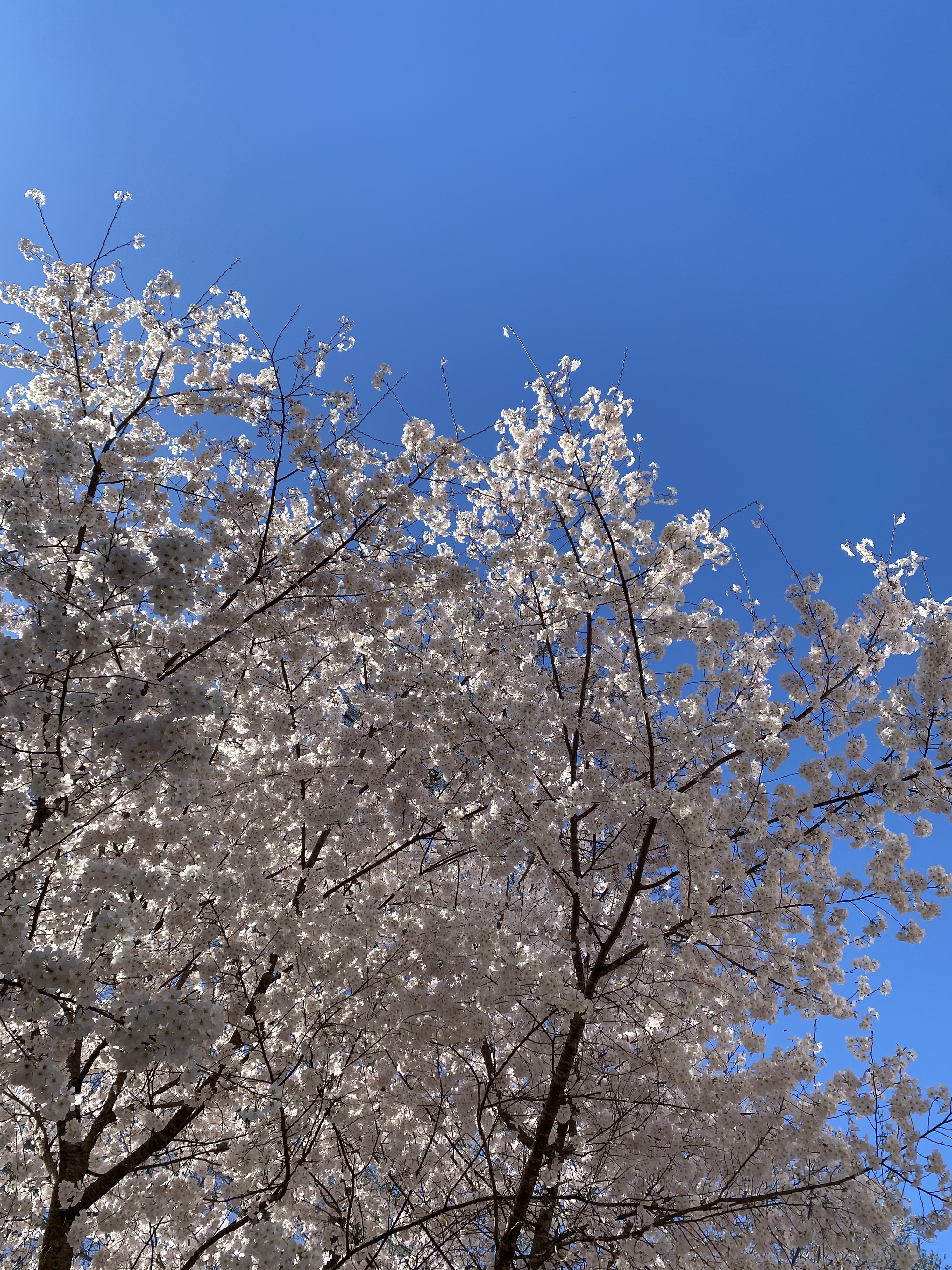
cherry blossom tree in bloom against blue sky for spring floral arrangements inspiration

Spring Branches in Bloom: Easy Spring Floral Arrangements from the Garden

Bringing Spring Indoors with Simple Branch Arrangements

When spring arrives, you’re likely to find something unusual in my car. Open the glove box, and you’ll find a pair of bypass pruners tucked between a stack of old church bulletins and a handful of well-used lip glosses.

Don’t mistake these garden tools for personal protection, but as a sign of the season. Across the South, branches are just beginning to bud, and it becomes second nature to keep pruners close at hand.

In this region, flowering trees and woody perennials offer some of the most beautiful materials for spring floral arrangements. When branches are cut just before they bloom and brought indoors, they make a big impact that can rarely be replicated with store-bought flowers.

A row of bright yellow forsythias in the yard may draw attention outdoors, but a few thoughtfully clipped branches can create an even more remarkable display inside your home.

This article may contain affiliate links. If you choose to shop through them, I may earn a small commission at no additional cost to you.

Why Branches Make the Most Beautiful Spring Floral Arrangements

We love a decorative moment created by a dainty vase filled with early spring daffodils, but have you met her flamboyant older sister, the blooming branches? Budding branches cut from the yard to bloom inside make a dramatic statement to take center stage in your spring décor.

Blooming branches are perfect for spring floral arrangements for a variety of reasons. These stems can be displayed on their own as a complete flower arrangement, or used to create structure when paired with additional flowers and greenery.

When cut and cared for properly, branch arrangements can last for weeks in your home. These blooms are longer lasting than many of the cut flowers found in other spring flower arrangements.

We think the top reason to love blooming branches in an arrangement is that they’re cost effective. You can often cut them from your own yard or a friend’s for free.

With just a few branches, you can create an arrangement that feels both effortless and intentional.

The Best Flowering Branches for Spring Arrangements

If you’re deciding which plants will provide you with beautiful flowers, keep an eye out for these showy bloomers in your yard or local nursery.

close up of cherry blossom branches in a spring floral arrangement indoors
A close look at delicate cherry blossoms, one of the easiest branches to bring indoors for spring arrangements.

Eastern Redbud Tree

The Eastern Redbud tree can be found in many areas of the United States. It’s extremely successful in the southeastern region, and it’s one of the first signs of spring in the South.

The Eastern Redbud has showy flowers in various shades of magenta pink. It’s a striking choice when you want an arrangement that feels both seasonal and distinctive.

Forsythia

Forsythia is a woody shrub often seen used in borders, roadways, and city parks. The bright yellow flowers are unmistakable.

Forsythia is one of the earliest bloomers, sometimes called “Easter tree.” If you want to force Forsythia buds to bloom indoors, you’ll need to start looking for buds very early in the season.

Japanese Cherry Tree

Cherry blossoms are synonymous with spring throughout the world. The blooms can vary from pale to saturated pink.

Japanese cherry trees bloom sometime between March and April. In our experience, these are especially long lasting when forced indoors.

Dogwood Tree

These native trees are often found at the edges of wooded areas. You may not even know you have one in your yard until it blooms in spring.

Dogwood blooms can be seen in varying shades from creamy white to bright pink. The stems tend to be more delicate than others on this list, giving arrangements a softer, more relaxed shape.

Magnolia

Magnolia is often associated with summer blooms in the South. However, there are many spring blooming cultivars.

Look for varieties such as ‘Jane,’ ‘Ann,’ and ‘Butterflies’ if you’re selecting a spring-blooming tree for your garden.

A Note from the Garden

Another favorite bloomer that works well to force indoors is Spirea. These delicate and airy blooms are a wonderful addition to your spring floral arrangements.

One to avoid: We advise against using Bradford Pear. While beautiful, the blooms create an offensive fish-like odor. This invasive tree is structurally weak and not one to include in your garden.

How to Force Flowering Branches in Early Spring Arrangements

Once you’ve identified a spring blooming tree or shrub in your yard, there are just a few simple steps before you can enjoy them indoors.

spring branch arrangement in glass vase by window with natural light
A simple vase of flowering branches brings natural light and softness into the room.

Choose branches before they bloom.

Depending on when your buds bloom naturally outdoors, start looking at your branches in late winter to early spring. Once you see buds are fully formed, it’s time to cut your branches.

Cut with intention.

There are a few things to consider when deciding which branches to cut. Look for small, healthy branches with an abundance of buds on them. Avoid cutting branches larger than appropriate for your vessel. Take cuttings from several areas of the plant so that you don’t cause damage or create a noticeable hole.

Using sharp pruners, create a clean, angled cut on your stem. Doing so will prevent damage to the host plant and give your buds a healthy start in the vase.

Bring them into warm water.

To encourage your buds to bloom, place them into slightly warm or room temperature water. Avoid giving them water that is too hot or cold. Give your branches fresh water every few days.

Encourage the branches to open.

A variety of methods can be used to encourage your branches to open. One method is to use your pruners to create a vertical split at the end of each stem. Another method is to use a floral hammer to lightly crush the end of each stem.

This step is optional, but it can help encourage the buds to open more quickly.

Give them time in the right place.

After you’ve cut your stems and placed them in water, find a nice spot away from direct light and heat. It may take anywhere from a couple of days to a couple of weeks, but with proper care and conditions, your buds will bloom indoors.

Once the branches begin to open, the arrangement itself becomes simple.

How to Create Easy Spring Flower Arrangements with Branches

Now that you’ve collected your spring blooming branches, there are a few simple steps to follow for a beautiful floral arrangement.

how to arrange spring branches indoors in a vase by a window with natural light
How to arrange spring branches indoors for a simple, natural arrangement using just a few cut branches and a vase.

What You’ll Need

Step-by-Step Arrangement

Choose a vessel that supports the branches.

Your branches will be taller and heavier than flowers typically used in spring flower arrangements. Be sure to select a vase that will be able to support their height and weight without tipping over.

Trim branches to scale.

Compare the size of your vase to the length of your branches. You’ll want to make sure that buds are above and branching from the top of the vase.

Make a clean cut to shorten your branches to the ideal size for your particular vessel.

Clear the lower stems.

Using sharp pruners, trim away any lower stems, leaves, and buds that will be below the water line. Remove any bulky lower stems that will crowd the vase.

Start with your strongest branches.

Beginning with your biggest branches first, begin to place your strongest stems into the vase. Use several of these to create a structure that will support the smaller stems.

Layer naturally and step back.

After creating structure with your larger branches, begin filling in the arrangement with smaller stems.

Be sure to occasionally turn your vase to add stems at all angles. Step back regularly to look for any areas that need additional branches.

Styling Notes for a Natural Look

Due to the nature of spring blooming branches, your floral arrangement will likely have an organic, asymmetrical form. Look at your arrangement from a distance and determine if the shape is nicely arranged while keeping with the characteristics of the stems.

These types of spring floral arrangements should feel gathered, not arranged. Let the branches be the statement in your design.

styling spring branch arrangement at home with flowering branches in a white vase
Styling a simple spring branch arrangement at home using flowering branches and garden greenery.

Where to Style Spring Floral Arrangements in Your Home

Once your arrangement is complete, placement becomes just as important as the arrangement itself.

I enjoy placing a vase of cherry blossom branches on my kitchen counter. Since I’m in this room several times a day, I’m able to see the natural progression of the buds turning into beautiful flowers.

This year I created a spring flower arrangement for my Easter table. I purchased this extra-large vase recently, and it was the perfect vessel for an arrangement I created with some eastern redbud branches from my backyard.

We also enjoy bringing in some Japanese cherry buds to bloom on our fireplace mantel each year at the start of spring. They would even look beautiful on an entry table to impress your guests as they come in the door.

spring centerpiece with flowering branches and white hydrangeas on dining table
A layered spring centerpiece using flowering branches and seasonal blooms for a full table arrangement.

A Simple Way to Welcome Spring into Your Home

If you can look out your window and see branches beginning to bloom, you already have everything you need.

With a simple pair of pruners and a bit of patience, you can bring that same beauty indoors and enjoy it for weeks to come.

Flower arrangements don’t have to be expensive or difficult to be beautiful. A few carefully chosen branches can transform a room, bringing in a sense of the season that feels both natural and lasting.


If you enjoyed this article on how to create an early spring floral arrangement from your garden, you’re invited to stay awhile and read some of the other spring articles from Belle Antiquarian. Here are a few others we suggest:

A Beautiful Easter Table: How to Set a Class Spring Easter Table

The Southern Easter Menu: Classic Southern Easter Recipes for a Traditional Holiday Meal

How to Create a Thanksgiving Floral Arrangement

Fall Garden Prep: Essential Tasks for a Beautiful Start to Spring

fall garden prep: essential tasks for a beautiful start to spring belleantiquarian.com

Fall Garden Prep: Essential Tasks for a Beautiful Start to Spring

If you’re anything like me, fall garden prep is the last thing you want to think about right now. Gardening feels fresh and full of promise in spring and early summer, but somewhere near the end of September, my enthusiasm wanes.

It’s fall, and the daylight is growing shorter, which means I’m spending more time indoors. The air feels softer, and the garden smells faintly of drying leaves and damp soil. I can no longer see bright red tomatoes growing from my kitchen window. And there are no zinnias or cosmos ready to fill vases throughout our home.

This time of year, the Southern garden is quietly in the background asking for attention, while I neglect to give it a passing glance.

Welcome back to the newest installment of Home for the Holidays: A Southern Season of Charm. Today I’m talking about essential tasks for cultivating a healthy garden so that it’s ready for planting when spring arrives. If you’re just joining me from Google, Pinterest, LTK, or Instagram, I invite you to browse the other articles in this series, which can be found linked at the end of this article.

Note: This article contains affiliate links, which help support Belle Antiquarian at no extra cost to you.

Southern Timing: Why Fall Garden Prep Matters

In the South, gardening is often a year-round activity. There’s still plenty of time to grow many cooler weather crops. But for most gardeners, we are putting our garden beds to sleep for the winter. We’re preparing for the beginning of next year’s garden by performing essential fall garden prep.

It’s important to evaluate what your garden needs now in order to have a successful growing season next year. Now that the temperatures have cooled off a bit, it’s the perfect time to spend outside looking at your soil, cleaning tools, preventing diseases from spreading, and planning changes for the next year. It’s even a wonderful time to plant cool-weather crops like garlic and shallots.

If I wait too long to take care of my fall garden prep, the rush of holidays and gatherings will be here. Pretty soon, there will be Christmas cards to address, gifts to wrap, and cookies to bake. If the garden is going to be attended to, it needs to be now. It’s time to prepare the garden for spring.

Hand holding dried zinnia flower heads for seed saving during fall garden prep.
Zinnia blooms at the end of their season — drying beautifully for seed saving and next year’s planting.

Ornamental Garden Care: Peonies and Perennials

Fall is the ideal time to plant many flowering perennials, shrubs, and trees. Planting in the fall allows plants to establish their root systems. The plants won’t be injured or stressed from direct sunlight with high temperatures. The soil is still warm enough to encourage root growth, but less daylight and cooler temperatures prevent the plant from sprouting upwards.

If you’ve been following me for a while, you know that one of my favorite plants to grow is the peony. In the South, the best time to plant peonies is in the fall. Peonies grow from tuberous roots that prefer to settle into cool, well-drained soil. The best place to purchase peony tubers in the fall is from a reputable online retailer. Most big-box stores sell peonies in the spring, which is not their ideal planting time. If you’re looking for quality tubers, I’ve had good success ordering from Eden Brothers.

A few tips for planting peony tubers this fall:

  • Plant shallowly, with eyes no more than 1-2 inches deep.
  • Choose a sunny, well-drained spot.
  • Avoid disturbing roots once established.

If you already have peonies planted, fall is also time to perform routine care for them. Peonies are low maintenance plants, but they do need a little care to keep them healthy and happy.

Peony tubers labeled with garden tags for fall planting.
Peony tubers labeled with garden tags for fall planting. (We recommend copper tags.)

Here are a few recommended fall care tips for peonies:

  • Cut foliage to the ground after frost.
  • Remove debris to prevent fungal issues.
  • Mulch lightly, especially in exposed areas.

If you still have other types of blooms in the garden worth saving, such as hydrangeas, you might enjoy my article on Gathering Baskets & Dried Blooms. It shares simple ways to preserve flowers for use in arrangements and décor.

Pro Tip: When cutting back peonies, always clean your pruners between plants to prevent fungal spread. If you’re planning new roots, mark the spots now with tags like this; once spring foliage emerges, you’ll be glad you did.

Helpful Items:

Kitchen Garden Care: Rest, Mulch, and Plan Ahead

This year we had a successful kitchen garden with tomatoes, cucumbers, beans, squash, pumpkins, and peppers. The summer garden has finished growing, and now it’s time to take care of some essential tasks. I want to make sure next year’s garden is just as bountiful as this year’s was.

I begin by pulling out and removing any remaining plants and weeds. I’ll add compost or aged manure and mix it lightly into the soil. I’ll finish my garden beds off with a layer of leaves that I’ve raked up from the yard. The leaves will act as mulch to help prevent erosion and weeds.

Woman turning soil in raised garden bed during fall garden prep to mix in compost before winter.
Turning the soil to add compost before the raised beds rest for winter.

Now is the time to clean and store your garden tools. Your tools will last for years if you take a little time to oil wooden handles, clean blades, and sharpen edges before storing.

I also use this time to reflect on what worked this year, and what I may want to do differently in the future. I’ll order seed catalogs to peruse over the cold winter days when I’m dreaming of warmer weather. I’ll also start to map out and plan what I want to plant in the spring.

Pro Tip: You can reference an earlier article HERE that I shared on rotating crops in raised beds, one of the simplest ways to keep your garden soil healthy.

Helpful Items:

Fall garden prep checklist for Southern gardens showing essential tasks like mulching, pruning, and tool care — Belle Antiquarian seasonal guide.
A simple fall garden prep checklist for Southern gardeners — BelleAntiquarian.com

For a printable version of this checklist, click the button below.

When the work is done and the tools are set aside, there’s a calm that settles over the garden, a quiet knowing that everything is in its place.

Woman watering peas growing in raised beds during fall garden prep in a Southern garden.
Watering cool-weather peas, one of the easiest fall crops in the South.

Container & Porch Gardens

One last place that I want to give attention to in the gardens this fall will be the garden planters. I use my planters for annuals, and it’s getting too cold for the plants that have spent their summer bringing cheerful color to the porch and deck. I’ll use annuals like pansies, violas, and ornamental cabbage to give them a cool-weather refresh. Be sure to clean your planters and check for cracks before you use them again.

Spruce up your garden planters now so that by the time you host guests for the holidays, the plants have grown and filled in the pots. Take care of your planters now, and you’ll shorten your to-do list before guests arrive.

Autumn porch planter with pansies and ornamental cabbage for fall garden refresh.

Pro Tip: Before the first frost, water container plants deeply and group them together near a wall or porch corner. The shared warmth and protection help them weather sudden cold snaps.

Helpful Items:

A Ritual of Readiness

Fall and winter are slow seasons for gardeners. And thank goodness, because the holidays are filled with a hustle and bustle that can feel chaotic. Now is the perfect time to take care of your fall garden prep. It prevents small stresses from piling up when the holidays get busy. You’ll be happier and able to enjoy the festivities with those around you.

Just as we prepare our hearts and homes to welcome guests inside this holiday season, caring for your garden this fall can be seen in a similar way. When frost glistens on the garden beds, you’ll rest easily knowing your work is done. Your garden, like your heart, is ready for the season ahead. The garden can sleep soundly this winter, and so can you.

Home for the Holidays: A Southern Season of Charm

Be sure to check out these other reader favorites from the series! You can also subscribe here to make sure you never miss a new article.

Previous: How to Roast a Pie Pumpkin (Plus The Best Pumpkin Muffin Recipe)

Next: A Classic Sweet Potato Pie Recipe from a Vintage Southern Cookbook

For the full Home for the Holidays archive, go HERE.

10 Tools to Prep Your Fall Garden - shop these items
10 Tools to Prep Your Fall Garden – Click to shop these items.

Gathering Baskets & Dried Blooms: A Gentle Transition into Fall

Welcome back to the second installment of Falling for Home: A Weekly Autumn Journal. This series is all about falling in love with our homes again. Each week you’ll find inspiration to embrace your space by layering beauty, warmth, and meaning into everyday life as we move slowly through fall.

Each Friday you’ll find a new article to explore seasonal touches, décor, traditions, heirlooms, and a peaceful atmosphere. You’re invited to enjoy ideas that feel timeless, not trendy.

Today’s installment is all about noticing the beauty that is still blooming and gathering it in simple, meaningful ways.

The Beauty in the Gathering

As we approach the end of summer, our daily rhythm begins to shift. Each day the sun rises just a few minutes later, which slows our mornings down as the world outside lingers in stillness a little longer. We are entering the season of gathering, and everything from football games to bonfires will soon bring us together for connection, warmth, and celebration.

The zinnia patch that I planted early in the spring is dwindling to just a bloom here and there, instead of the dozens that seemed to emerge overnight a few weeks ago. I begin to look around at my gardens through a new lens, as I survey what I can save to enjoy inside during the coming months.

The baskets that I used a few weeks ago to harvest tomatoes, cucumbers, and melons are now going to be used to gather the things of beauty in my garden. This beauty will feed our souls as we softly begin to shift towards an inward season – gathered in the kitchen as we cook together, sitting beside the fire reading, or watching our favorite team make a touchdown. We’ll also begin to look inward as well, as we do when the days get darker and the air a bit colder.

A Time to Tend and Tuck Away

At the transition from summer to fall there are opportunities to honor the plants that brought beauty and life into our summer spaces. The zinnias and cosmos that delighted the bees can now be gathered for seed saving and future seasons. Saving flower seeds from zinnias and cosmos is one of the most satisfying and sustainable garden rituals for late summer. If saving seeds isn’t something that fits into your schedule, take advantage of the last few blooms by tucking tiny bouquets into unexpected places like a powder room or a nightstand.

This year I will be drying blooms from allium, lavender, and limelight hydrangeas growing in my backyard gardens. The allium and hydrangeas will be placed into vases to dry. I will tie the lavender into little bundles to use in various ways over the next few months.

A few things that will come in handy if you want to try your hand at saving seeds:

The Quiet Power of Baskets

If you’ve been following me on Instagram stories, you know that I sometimes joke about how Ken thinks that I have too many baskets. I love baskets for many reasons. They add texture to spaces in ways that other objects don’t. They’re both beautiful and utilitarian… we always need things to hold other things, so why not use a beautiful basket? Even better if it is time-worn and handmade. What a way to honor the original maker than to reuse what they spent their time and energy creating.

I use baskets in my home to hold books and blankets. I have a tray-shaped basket on my nightstand to hold items that I sometimes use while I’m relaxing in the evening, like a heating pad or a linen eye pillow for evening relaxation. And, of course, there’s always a harvest basket hanging beside the door out to my garden that I can take as I head to gather whatever each season has to offer in my backyard gardens.

Rather than grouping baskets in a way that feels cluttered, try hanging a group of 3 on an empty wall, or use a basket on a bookshelf to hold bookmarks and card games. One of my favorite ways to use baskets is underneath tables, like an entry table or nightstand, to fill the empty spaces with texture and purpose.

Historically baskets are a symbol of abundance, care, and hospitality. Remember Little Red Riding Hood, carrying a basket to her grandmother? Or the picnic basket at the heart of every good summer memory? Adding a basket to your space is a nod to the storied symbolism of baskets through time.

Gentle Blooms in Quiet Corners

Once you have dried your cut flowers, or purchased them from your favorite retailer, there are a number of ways to use them throughout your décor. You’ll notice that the colors of your stems have likely dulled and become a bit more muted than they were in the peak of their season. This blends seamlessly into fall décor when we combine the dried stems with materials such as linen textiles, ceramic and clay vases, and woven baskets.

A vase of dried limelight hydrangeas on your mantel or a basket of dried lavender on your bathroom counter is a nod to the transition of seasons we are currently in. What a metaphor for life – these flowers have changed, softened, and yet remain beautiful in their new season.


Each week during the Falling for Home series I am featuring a paint color palette inspired by the topic we discussed. Gathering Baskets and Dried Blooms inspired me to create an earthy and botanical palette. Inspired by dried flowers and vintage baskets, this paint palette is perfect for early fall layering.

Living Beautifully Through the Shift

In life we will experience many periods of transition. We can look back and realize that change didn’t happen all at once; it was gradual and slow.  The change between seasons happens in a similar way. What an abrupt and unsettling disturbance it would be if we didn’t ease into fall. We certainly would be troubled if one week it was 90 degrees and daylight until 9 p.m. every day, and then it dropped to 50 degrees and dark by 6. As the temperatures gradually cool and daylight slowly decreases, allow yourself to gently transition into this new season as well. We don’t have to rush into the holiday season. What a relief it will be to let your home breathe and the beauty of autumn to slowly gather throughout your home. Just as we gently transition our home décor for fall, we can allow our routines and energy to shift with the season.

Shop Late Summer and Early Fall Favorites for Your Home

I’m often asked to share my favorite finds of the season. Here you’ll see items that I use in my own home, as well as others that I have carefully curated for you. To see more, either find my LTK shop HERE or click the image below,

Invitation to Return

Thank you for joining me with this week’s article from my series Falling for Home. Each Friday from August through September, we’ll meet here at BelleAntiquarian.com to reflect on a slow, intentional rhythm of seasonal living, rooted in tradition, home, and memory. Join me next week for The Velvet Season, a sensual post full of texture, depth, and richness.

Today I’ve shared what I gather during this time of year. What have you gathered this week to treasure – blooms, memories, or moments? I’d love to hear from you in the comments below.


Explore More from Falling for Home: A Weekly Autumn Journal

This article is part of my Falling for Home series. Be sure to check out these reader favorites:


You can subscribe here to receive new articles, seasonal inspiration, and vintage-style favorites delivered right to your inbox.

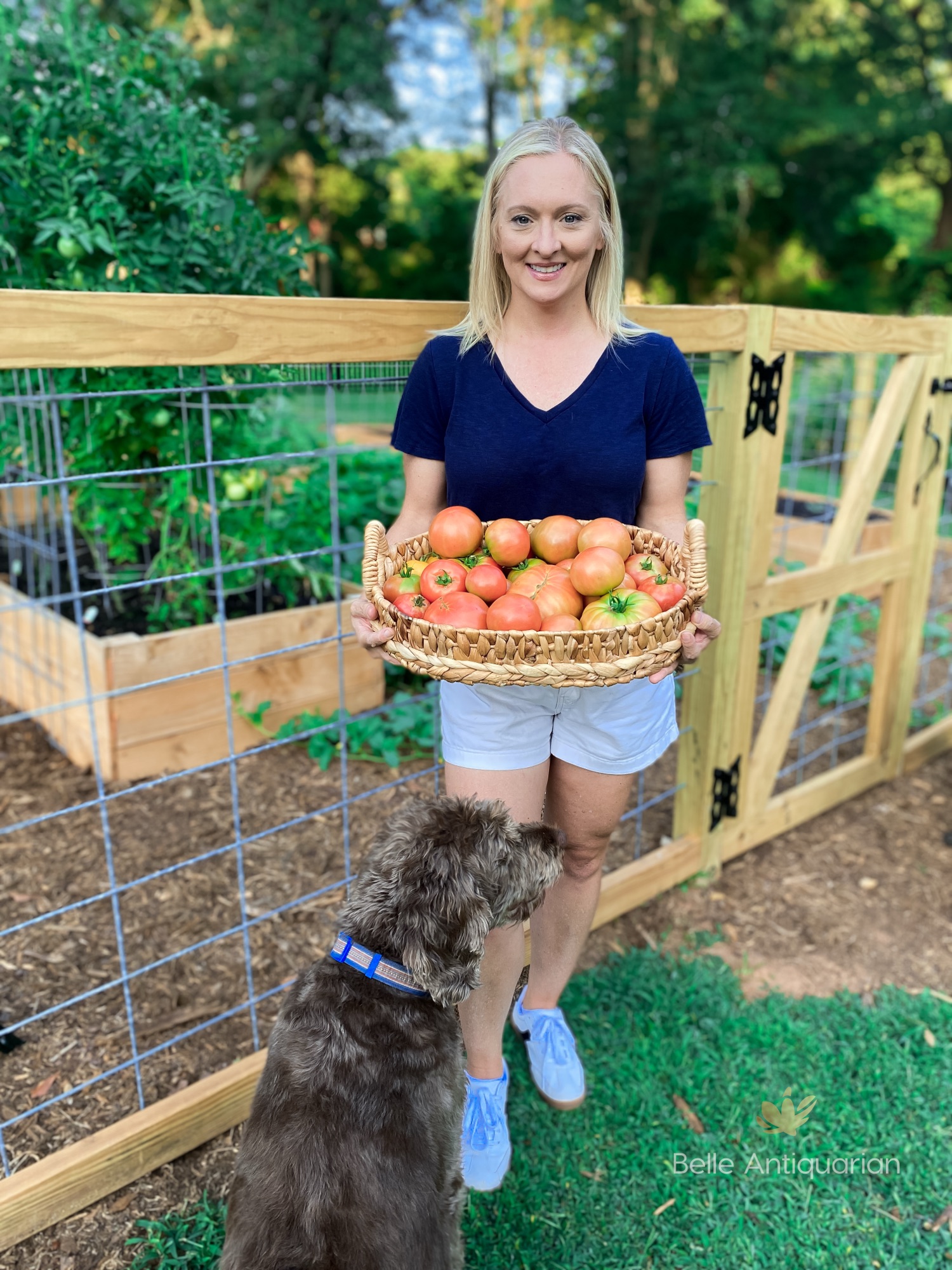
A woman, Abby, stands in front of her garden holding a large basket full of tomatoes. There is a brown dog by her side.

Simple Garden Joys: Everyday Moments from a Southern Summer Garden

The Heart of a Southern Garden

I have found that there are few things in life as empowering as gardening. The humbling act of placing a tiny seed into rich, dark soil, watering it, and waiting for the sun to penetrate the earth…only for a pair of green leaves to emerge a few days later is a series of small miracles. Knowing that I have the capability to do this, regardless of anything else happening in the world, is a grounding force.

As a child I watched my mother use a rototiller to turn the soil and create her own garden in our backyard. I was awe-struck at the zucchini, yellow squash, and corn she grew. She told me the names of the wildflowers she planted: Black-eyed Susans, Bachelor’s Buttons, and Zinnias. I witnessed that by simply placing seeds in dirt, my mother had the power to make things grow. What I didn’t know then is that gardening would grow to become an important part of my life.

This article is part of my Old-Fashioned Summer Saturdays series, a weekly look at timeless summer traditions, seasonal recipes, and vintage-inspired living. This week we’re in the garden, talking about the simple joys that gardening will enrich your life with. Gardening, especially in a Southern backyard, offers more than food or flowers…it offers a sense of peace, purpose, and tradition.

If you’ve found your way here via Instagram, Pinterest, or Google, I hope you’ll take the time to check out the other articles in this series, which you will find linked at the end.

Morning Stillness & Rituals

In the South we are fortunate to have an incredibly long growing season. I begin my planting in February, and by the time July and August arrive, I find myself tending the garden in the early morning or late evening to avoid the sweltering heat. Not long after the sun rises, I make my way to my vegetable garden with a steaming cup of coffee in one hand, dragging the hose behind me with the other.

As I water the thirsty soil around my tomatoes and honeydew melon, there are no cellphone alerts or sounds from the morning news. It has become a time of stillness, peace, and meditation. I lose track of time as I breathe slower and think clearly. My early morning garden routine has become a quiet ritual, an antidote to a busy world and the heartbeat of my Southern summer days.

The thing is, gardening is something that anyone can do. With a little patience, you can create a garden to cultivate as an act of self-care. Whether you have a large backyard, a small deck at an apartment, or just a sunny window, I encourage you to plant a few seeds and become their caretaker.

The Joy of Tending

There is something sacred about working in the garden with your hands. In the rhythm of pulling weeds, tying up tomato vines with old twine, and gently snipping herbs for supper, I find a quiet joy that asks for nothing but presence. My garden is home to heirloom varieties passed down through generations. Cherokee Purple tomatoes, Rattlesnake pole beans, and Mammoth sunflowers stand taller than me by August. These plants, chosen with care, are more than produce; they’re a living thread between the past and present. Gardening reminds me that growth isn’t just about the harvest. It’s about showing up, getting your hands dirty, and tending to something with love.

Unexpected Visitors

As a result of tending a garden, I feel a gentle responsibility for the other visitors that come as a result of this habitat that I’ve created. Every year I breathe a sigh of relief when the pollinators arrive, because they are an integral part of gardening success. I look to see how many varieties of bees are moving from flower to flower. This year I have seen Common Eastern Bumble Bee, Western Honey Bee, and Blueberry Digger Bee.

The butterflies arrive a bit later in the season when the high temperatures settle in. The American Lady and Eastern Tiger Swallowtail flit by quickly as they search for nectar in nearby flowers.

In the evening, the song of the Cicadas starts soft and low, but by the time the sun sets, the Fall Southeastern Dusk-singing Cicadas are loudly calling in unison to each other. It is the song of a Southern summer night.

As I walk though the garden, past the cucumbers and beans, these creatures and I…the toads, bees, birds, and even the bats…we are all together, living on this marvelous earth, depending on one another for food, safety, and cooperation.

Gathering the Harvest

There have been years when I have not harvested a single tomato. The squirrels got to them before they started to blush, or the soil I planted them in wasn’t healthy. This year I planted a new bed full of zinnia seeds, and the results were disappointing, to say the least.

In other years, like this year, I am begging neighbors to take grocery bags full of cucumbers so that they don’t go to waste. (We made pickles more times this year than I ever have before.)

Regardless of the Southern summer harvest, there is joy simply in the act of gardening homegrown vegetables. The process of caring for something other than yourself turns into just that, caring for yourself. Gardening is both self-less and soul-sustaining.

A woman, Abby, stands in front of her garden holding a large basket full of tomatoes. There is a brown dog by her side.

A Garden is Never Just a Garden

Gardening feels like it is a huge part of who I am. It is something that I think about even on the cold, dark days of winter. I have wondered, though, would I still have followed this path if I hadn’t witnessed my mother gardening? My Great Aunt Fern was a gardener into her 90s, so is this something in my DNA?

Maybe the idea of a Tomato Hornworm has you swearing that you will never plant a Cherokee Purple heirloom tomato within 500 miles of your house. Maybe you’re not “outdoorsy.” That’s okay, but I encourage you to figure out what you ARE interested in that brings you simple joy. And I’m willing to bet that it’s not glowing back at you from a screen.

Whether you’re planting tomatoes or simply sitting among the blooms, slowing down with nature invites you to notice life again.

Explore More from Old-Fashioned Summer Saturdays

This article is part of my Old-Fashioned Summer Saturdays series, where I share timeless inspiration for warm-weather living. Be sure to check out these reader favorites:

Timeless Red, White, and Blue Decor Ideas for the Porch
Heirloom Tomato Dreams
Classic Summer Whites: Timeless Linen Dresses and Southern Style Staples
Refrigerator Pickles—A Southern Summer Staple
Creating a Cozy Summer Reading Spot
Old-Fashioned Strawberry Shortcake Cake
Blue and White China for Summer Entertaining
You can subscribe here to receive new articles, seasonal inspiration, and vintage-style favorites delivered right to your inbox.

I often get asked to recommend things that I use while gardening. You can find the items I recommend in my LTK shop HERE, or you can click the image below to be taken directly there.

Essential Books for Cut Flower Gardening Success

This article contains ads and commissionable links.

We’re nearing the end of October, and most people aren’t thinking about flowers and sunshine. However, if you want to have a bounty of cut flowers this spring and summer, now is the time to plan. In some cases, now is the time to get seeds and plants into the ground.

Spring Flowers of Larkspur and Aster used to decorate for Easter

There are many excellent resources on the internet to use when you’re planning a flower garden. But in my opinion, nothing beats a book in hand. There’s something about an actual book that is just inspirational and motivational. I have quite a few gardening books on my bookshelf, but today I want to share just a few of the flower gardening books that have become my favorites over the years. You can find the entire list as a group in my LTK storefront, or you can click the individual titles below to be taken directly to the website.

The Little Book of Cut Flower Gardening This is a small, but surprisingly helpful little book. It would make a great gift for someone just starting their flower growing journey. It gives applicable tips, and at the end gives a brief overview of some commonly grown cut flower varieties.

Peonies for Perpetual Profit Even if you aren’t planning to grow peonies for profit, and most people aren’t, this book gives valuable knowledge for growing peonies successfully. It also gives a list of peony varieties and descriptions so that you can choose the varieties best suited for your own garden.

In Bloom Is an excellent book for going a little deeper into the types of flowers you should grow for a well-rounded bouquet. It explains different shapes of flowers in a bouquet, varieties of flowers, and containers to arrange flowers in.

Seasonal Flower Arranging: Fill Your Home with Blooms, Branches, and Foraged Materials All Year Round This is a stunning book filled with gorgeous inspirational photos and valuable insight. One of my favorite things about this book are pages that read like recipes that can be helpful for pulling together a bouquet similar to the ones pictured.

The Flower Farmer: An Organic Grower’s Guide to Raising and Selling Cut Flowers If you’re becoming serious about cut flower gardening and want to consider selling them, this is the book for you. The book details farming practices, different ways to make income with flowers, and testimonials from successful people in the industry. There is an immensely valuable resource guide at the end for everything from where to buy buy everything from seeds to refrigeration.

The Complete Language of Flowers: A Definitive and Illustrated History This is a flower dictionary, of sorts. It details flowers and their scientific names, while also providing symbolic meanings, folklore, and facts related to each one.

The Cutting Garden: Growing and Arranging Garden Flowers An excellent resource for people who enjoy cutting their own flowers and making floral arrangements. Included are tips for how to pull together arrangements by season and color.

Martha Stewart’s Gardening: Month by Month Of all of the books on my gardening shelf, this one provides the most inspiration. I would buy it again, just for the illustration on the inside cover. This is my favorite book on the list!

Martha’s Flowers: A Practical Guide to Growing, Gathering, and Enjoying This book provides information for how and when to plant and harvest, tips for arranging, and other helpful advice. Not to mention there are pages of beautiful, inspirational photos of Martha’s home.

Arranging Flowers – The Best of Martha Stewart Living This is another inspirational book by Martha Stewart. This is for the home flower gardener that wants to grow and create simple home arrangements, often only using one or two types of flowers in them.

I enjoy reading and learning more about flowers. If you have a favorite flower gardening or floral arranging book, please leave me a comment below.

Happy gardening!

Abby

Creating the Perfect Flower Garden Plan

This article contains commissionable links and ads.

Today I am sharing my plans for a flower garden, how I chose the flowers that I’m planting, and when I will be planting them. I will be sharing the whole list of plant and seed varieties that I am using, in case you would like to use them as well.

Save on Seeds

There are many factors to consider when starting a flower garden. The main ones that I focused on for my garden were growing zone, sun exposure, color scheme, and height of plants. My growing zone is 8a. It’s important to know what your growing zone is because it will determine the earliest and latest dates that you can successfully plant and get the best results. It will also indicate if you need to put your plants in during the fall or the spring. If you don’t know what your growing zone is, you can check the Farmer’s Almanac website or the USDA website.

Next you will need to know what type of sun exposure your garden bed will have. My garden bed is “full sun.” You can figure out what type of sun exposure your garden bed gets by simply seeing how much shade it gets throughout the day. Most flowering plants like to be in the sun.

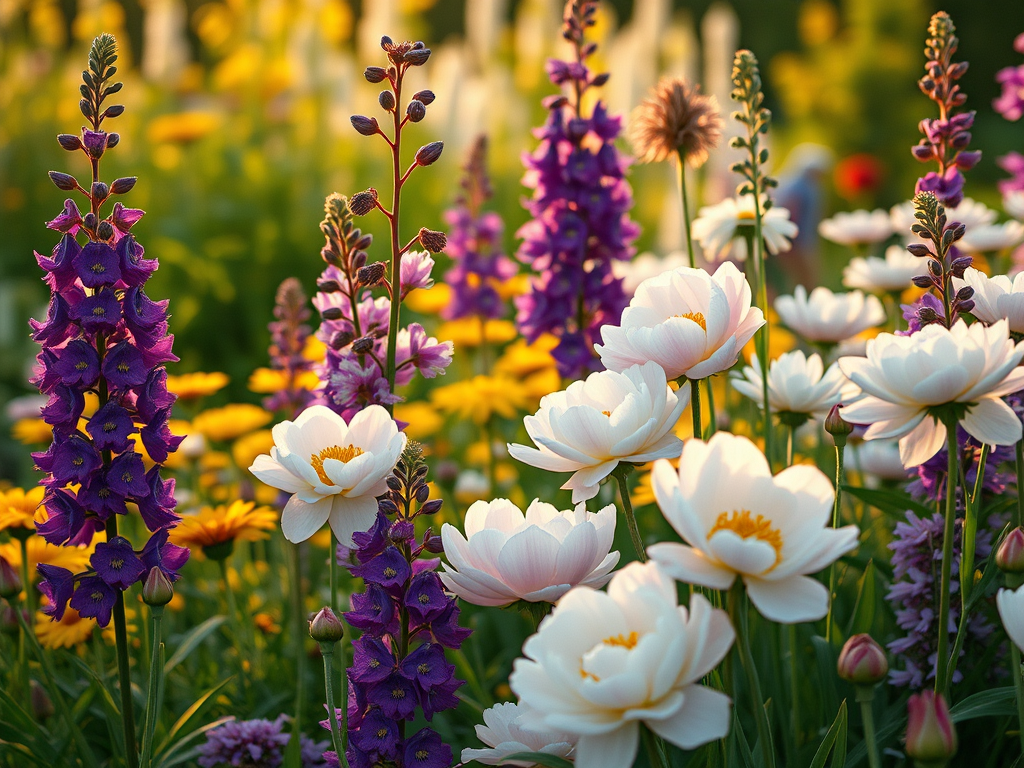
After finding your growing zone and sun exposure, it’s time to decide what type of flowers you want to plant. One suggestion that I have for creating a beautiful garden is to decide on a color scheme. Just like interior rooms look more cohesive with a set color scheme, garden beds do as well. I decided to use a color scheme of purple, yellow, and white. This is a complementary color scheme because purple and yellow are directly across from each other on a color wheel. In gardening, green and white are considered neutral colors, so white flowers in my bed will be “neutral.”

Just a note about red: For those that love red flowers, if you want a complementary color scheme, your garden colors will be red and white flowers with green foliage, since green is the complementary color to red. Another color scheme that looks nice is red, white, and blue. A monochromatic color scheme with reds, oranges, and pinks is also one to consider, although it’s not my personal favorite.

Okay, after I chose my color scheme of purple, yellow, and white, I then looked at height of plants. I wanted the tallest plants to be in the back and the shortest plants to be in the front. This way none of the flowers are hidden, and taller or “leggier” plants have their stems hidden by the shorter row of flowers in front of them. Something else I looked at was when each plant would be blooming during the season. If everything turns out like I planned, I should have at least one type of flower blooming from early spring through late summer.

This is one of the spaces I am using for a flower garden. This space gets full sun. Everything that I’m planting in the fall will be planted here. I’ve added 6 bags of manure and completely turned the soil over to prepare it for seeds and tubers.

What I’m planting this fall, so that it will be ready to flower in the spring:

  • Allium Gladiator, purple, 40″ tall, perennial
  • Peony, Festiva Maxima, white, 39″, perennial
  • Itoh Peony, Bartzella, yellow, 24-36″, perennial
  • Canterbury Bells, Campana Lilac, purple, 30-34″, biennial
  • Allium Mount Everest, white, 30″ tall, perennial
  • Stock Seeds, Miracle Blue Mid, purple, 24-30″, annual
  • Allium Purple Sensation, purple, 28″, perennial
  • Yarrow, The Pearl, white, 16″, perennial
  • Alyssum, Basket of Gold, yellow, 8-12″, perennial

As you can see, most of these plants are perennials, so they come back each year.

In the spring, I will be planting the rest of my seeds, which are all annuals. These are going to be in a separate, but adjacent, flower bed.

  • Cosmos, Double Click, purple, 36-42″
  • Zinnia, Benary Giant White, white, 36-40″
  • Zinnia, Isabellina, yellow, 36″
  • Snapdragon, Snowflake, white, 36″
  • Love in a Mist, Orientalis Transformer, yellow, 28″
  • Snapdragon, Madame Butterfly, yellow, 24-30″
  • Cosmos, Xanthos, yellow and white, 20-24″
  • Love in a Mist, Blue, blue, 18-24″

I purchased all of my flowers from Eden Brothers. The Eden Brothers website is very use friendly. You can filter by all of the things I mentioned in this article – color, growing zones, perennial, and so on. When your seeds arrive they will have a QR code to get specific instructions. I also received a link via email with helpful information for most of the flowers that I ordered.

Save on Seeds

I’ll update this article with photos of my blooms in a few months. In the meantime, please let me know below if you have any questions!