Original sleeping porch in a 1939 Colonial Revival home with vintage furnishings and screened windows

The Southern Sleeping Porch: What This Historic Room Still Teaches Us About Home

Beneath the canopy of a Japanese cherry tree, the sleeping porch in our 1939 Colonial Revival home is a magnet for all who visit. An overstuffed down sofa and a collection of houseplants are the first things to draw someone in. Once inside, a cross breeze from the open cantilever windows is what keeps them from leaving.

When I tell guests that we spend most of our free time sitting out on the sleeping porch, they look confused. “Do you mean the sunroom?” “No,” I respond, “this is an original sleeping porch.”

Although sleeping porches have largely disappeared from modern homes, they reveal a steadfast truth: the places we set aside for quiet, reflection, and everyday routines shape not only how we use our homes but how we experience our lives.

The Sleeping Porch in Southern History

Around the turn of the twentieth century, sleeping porches began to rise in popularity, particularly in the American South. Unlike front porches, which were often spaces for hospitality and socializing, sleeping porches were private spaces for retreating, seeking solace from hot summer temperatures, and sleeping.

Air conditioning wasn’t commonplace in homes until the late 1960s, so sleeping porches were designed to maximize airflow. Normally, at least two sides of the porch would be fitted with screened windows, usually of a cantilever style.

Porches were built on second levels or higher on the corners of houses. At this location in a house, the air would be cooler, and a cross breeze could be created from opening windows on multiple walls.

Exterior of a 1939 Colonial Revival home with an original second-story sleeping porch
Located on the second floor, sleeping porches were typically positioned to capture breezes from multiple directions before residential air conditioning became common.

As well as creating a space for comfortable sleeping on hot days, sleeping porches were thought to help fight diseases like tuberculosis. At the time, air flow and circulation were believed to help patients recuperating from their sickness.

Sleeping porches in the South were considered utilitarian spaces. Furnishings and decoration would have been kept to a minimum, and the porch would have commonly been outfitted with multiple beds.

Sleeping porches are sometimes confused with sunrooms. A sunroom is more open and integrated into the home. Windows in a sunroom are often fixed or are more traditional looking than the slanted cantilever windows found on a sleeping porch. A sleeping porch is more secluded and private than a sunroom. A sunroom would traditionally have had seating and entertaining spaces, and a sleeping porch would have had beds and nightstands.

Open cantilever windows on a historic Southern sleeping porch designed for natural ventilation
Cantilever windows open outward to create cross ventilation, helping sleeping porches stay cooler during warm Southern summers.

Today, due to modern air conditioning and medical advances, sleeping porches are no longer commonly found on floor plans. Oftentimes, older homes that originally had sleeping porches are renovated to use these spaces in other ways.

More Than a Historic Home Feature

The sleeping porch was the space in our house that I was most excited about. Immediately after signing the papers, we drove over and ripped the carpet off the porch floor.

For weeks beforehand, I could imagine sitting there with the windows open enjoying fresh air and a breeze.

Rather than thinking of the porch as an obsolete space that needed to be renovated, I considered the idea that it represented something valuable that could translate into modern living.

If sleeping porches were historically places to seek a reprieve from the heat and retreat at difficult times of the day, why not find a way to use the space to achieve similar results today?

In our home we have turned the sleeping porch into a space that shapes our daily habits.

How Rooms Shape Daily Habits

In modern floorplans, designs are often developed to consider traffic patterns and how to increase flow between rooms.

Looking at a floor plan on paper, it’s easy to see how spaces in today’s homes continuously flow into each other. The kitchen is often connected to the dining room, which is connected to the living room. In open floor plan houses, there is often little to no physical separation of rooms.

Because the rooms in modern houses are so connected, it can be difficult to find a space to truly disconnect and relax. With constant distractions and stimulation, many people have forgone pastimes and hobbies and replaced them with screens.

In our home, our daily routine is that we go to the sleeping porch when we get up in the mornings. After stopping at the coffee pot to fill up a cup, we immediately head to the porch to sit down. I can’t think of a morning when it hasn’t been my ritual to sit with the dogs and watch as people walk by as I sip my coffee.

After dinner, when the sunlight is just right, I return to the porch to pick up a book or work on a hobby. These habits of retreating to our porch have shaped our daily routines.

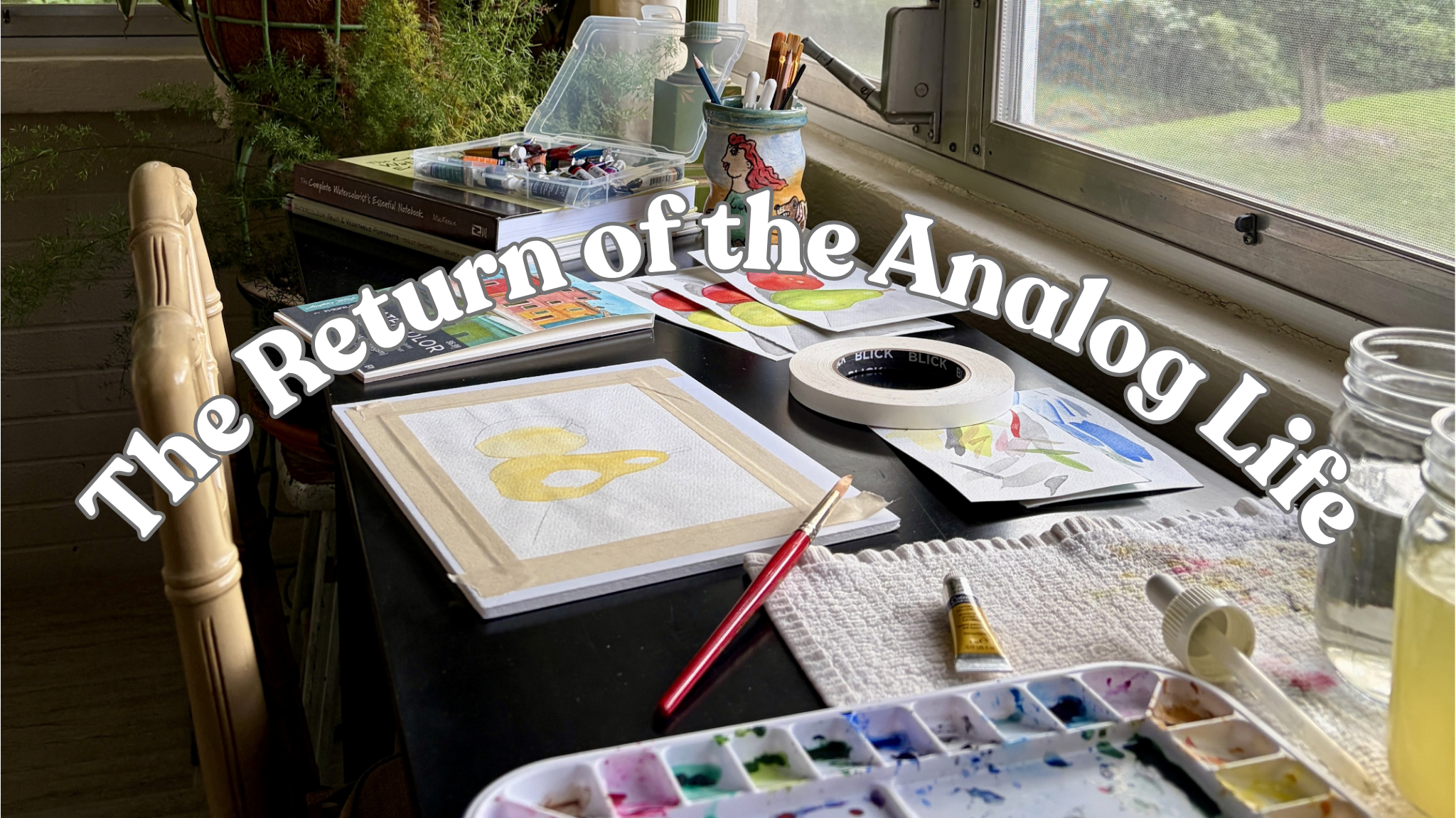
Watercolor painting supplies arranged on a desk inside a historic sleeping porch
A quiet corner for watercolor painting reminds us that meaningful rooms encourage creativity as much as comfort.

It’s not uncommon to hear of someone turning a spare bedroom into an extra closet or enclosing a screened-in porch to enlarge a kitchen. But consider if we looked at our overall well-being and imagined how we might use a space like an old sleeping porch to enrich our everyday lives.

Reimagining the Sleeping Porch Today

While our sleeping porch does have a small television, it rarely gets used. Instead, we have created a space that intentionally fosters an environment for analog activities.

Reading corner on a sleeping porch with books, coffee, binoculars, and houseplants
Books, coffee, birdwatching, and quiet conversation have replaced the porch’s original purpose while preserving its role as a place of retreat.

Instead of scrolling through Pinterest for hours, you’ll find a stack of Martha Stewart books, recent issues of Southern Living and Garden & Gun, and even a pair of binoculars to watch the deer and birds outside of the windows.

I have brought in some of our favorite pieces of art and even created a space to do watercolor painting.

A 1920s china cabinet is filled with thrifted finds and miscellaneous treasures from our travels, which are good for sharing stories and remembering old times. There’s even a basket of vintage quilts if someone wants to open the windows to take a nap or enjoy chilly weather.

Vintage china cabinet displaying collected treasures inside a historic sleeping porch
Collected objects, thrifted finds, and vintage quilts give the porch a sense of history while encouraging everyday use rather than formal display.

The sleeping porch in our 1939 home is no longer used as a regular sleeping room to get relief from the heat. Instead, we have created a retreat from the busyness of daily life and the constant noise from screens.

Finding a Retreat in Any Home

It was certainly inspiring to find that our house had a room like a sleeping porch that we could use to create a retreat for our family. However, you don’t need to have an old porch or live in a historic home to have a space like this of your own.

Unused spaces like a formal living room or a sitting area adjacent to a primary bedroom can often be transformed into your family’s version of a sleeping porch. By making small changes like removing a television or adding a stack of books, you can slowly begin to create an environment that encourages your family to detach from their phones and laptops.

A small table for puzzles under a window or a box full of old photos can magically turn a previously unused room into a retreat and space to reflect or connect with your loved ones.

Sleeping porches aren’t the only things that have disappeared from homes over the years.

Today, families are living in a constant state of motion in their own homes. We are bombarded with noise from phones, laptops, and televisions. We have lost the daily rituals of connecting to each other over conversation or sitting in silence for reflection.

When our grown kids or guests come to stay, they are drawn to our sleeping porch. It’s a space where we instinctively slow down and talk to each other. In this small space, tucked to the side of the house, human connection and well-being are the first priorities, not notifications and emails.

Consider how you can set aside a space in your own home to create rituals for quiet reflection and activities that enrich the experiences of everyday life.


Create Your Own Retreat

Whether your retreat is a historic sleeping porch, a quiet corner of the living room, or a favorite chair beside a window, thoughtfully chosen pieces can help create a space that encourages reading, creativity, conversation, and quiet reflection. I’ve gathered a collection of timeless furnishings, books, and accessories inspired by our sleeping porch to help you create a retreat of your own.


Check out these other reader favorites:

Original sleeping porch in a 1939 Colonial Revival home with vintage furnishings and screened windows
The original sleeping porch in our 1939 Colonial Revival home has become our family’s favorite place to read, create, and slow down.
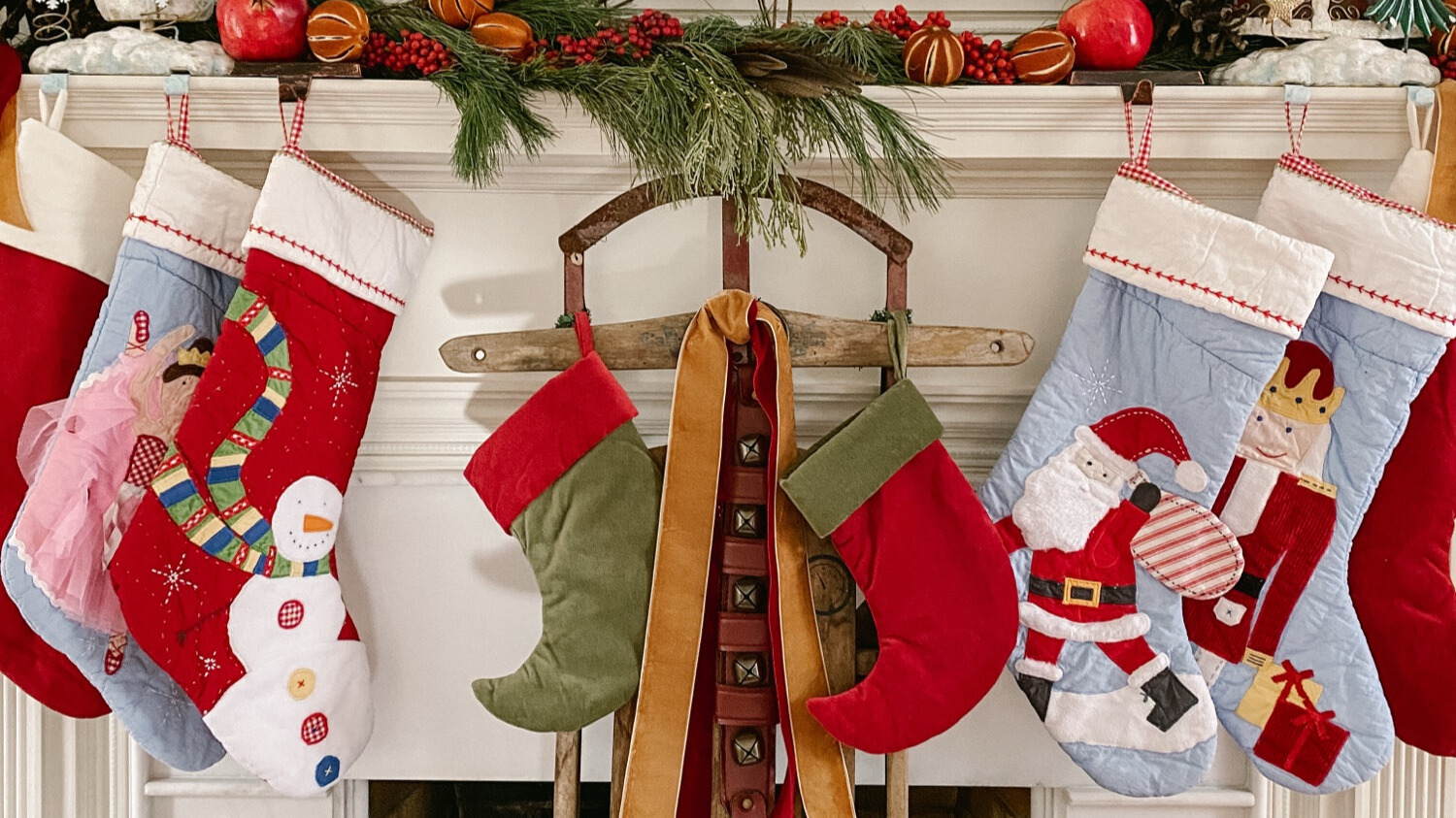
Christmas stockings hanging on a decorated mantel with greenery, bells, and handmade holiday details in a cozy home setting.

Keep the Holiday Magic Alive: Traditions for Every Age

When my kids were small, it seemed like the chaos of December would never end. There were classroom parties, letters to Santa, reindeer food, and late-night baking – all to keep the holiday magic alive for them. The truth is that the years slip by, and suddenly little ones who once tore into wrapping paper have grown, live in their own homes, and are building their own lives.

I’ve never been the type of mom that thought my job was done when the kids were grown. It turns out that I really like the people I raised, and I love spending time with them. So now, I look for new ways to keep the holiday magic alive by creating fresh traditions we can share as adults.

A group of children sitting with an adult during a Christmas gathering, wearing pajamas and costumes, capturing a warm vintage holiday memory.

Can you remember what you did the December you were ten years old? I can’t, and I’m willing to bet that you can’t either. We can’t rely on the magic of Christmas from childhood to provide a lifetime of memories. We need to continually fill the memory banks of our family, so that they’ll have memories to draw from later.

Relationships are built on shared experiences, and if we don’t have any shared experiences, relationships drift apart.

This article contains affiliate links. As an affiliate, I may earn a small commission on qualifying purchases—at no additional cost to you.


Now that my husband and I have been empty nesters for three years, we’ve learned there were things that no one prepared us for. Something we didn’t anticipate was how strange it would be the first time one of our kids wasn’t home on Christmas morning.

That day there was a missing piece of our family puzzle, and we didn’t feel complete for the rest of the day. After that Christmas, we knew that we needed to start planning holidays differently to intentionally create traditions filled with joy for our adult children. We would keep the holiday magic alive to carry us through until the next time we’d all be together again.

If I had to give one recommendation for parents of grown children, it would be that you must be flexible. We have raised these kids to be successful, independent people making their own way through the world. In doing so, they will create their own lives separate from ours. When they start families of their own, they’ll build new traditions, and that’s something to celebrate.

A young family standing beside a decorated Christmas tree, holding a toddler and smiling together during a holiday moment.
The years go by faster than we expect. I’m grateful for every season we’ve shared.

What does it look like to be flexible?

The main way you can be flexible is with the dates that you gather to celebrate the holidays. The holidays can be just as magical, if not more so, even when they’re celebrated on another day. When you’re flexible, your grown kids don’t have to rush off, and they’ll actually want to come.

Another way to be adaptable is letting go of the traditions from their childhood. Gathering around the Christmas tree to open gifts left by Santa was an experience that you got to enjoy when your kids were small. Once grown, that is something for them to experience with their significant other and their own children. This gives us an exciting opportunity to create new traditions! Instead of insisting on your kids being there Christmas morning, why not dedicate one day each year to baking, an ornament or PJ swap, or even Christmas themed games?

We can keep the holiday magic alive by focusing on joyful connections, rather than keeping exact dates and reenacting Christmas scenes from their childhood. Happy shared experiences create happy relationships.

Tips: Christmas fun can happen anytime during the holidays. Draw names and swap holiday pajamas early so they can be worn all season.


Young Adults Starting Your Own Traditions

One thing that I’ve learned from my grown kids is that they still want to have fun. This is especially true for college aged kids and young adults in their 20s. They still want to keep the holiday magic alive throughout the season.

If you fall into the young adult category and find yourself missing a bit of the holiday magic, start small. Here are a few ideas to get you started:

  • A dessert potluck between lunch and dinner or an ornament exchange at Thanksgiving can bring everyone together without overwhelming anyone.
  • If you don’t live close to family, don’t be afraid to ask friends if they want to get together for something festive. A hot chocolate bar, with everyone bringing a different topping, is a fun and inexpensive way to get together. If you’re looking for an inexpensive holiday activity with friends, driving around and looking at Christmas lights is a great idea.
  • If you’re worried about being alone on the holidays, try reaching out to hospitals or nursing homes to see if they need any volunteers.

Traditions are what connect us and give us a sense of belonging. They don’t have to be elaborate, Instagram-worthy spectacles. They’re simply moments that we repeat with intention with the people we care about.

If you’re young, don’t be intimidated by planning a holiday get together. You don’t have to create a perfect gathering to create a sense of belonging. People just want to be seen and included, and that can be done by simply inviting others in. You can be the one to keep the holiday magic alive for those around you.

Tips: For an extra element of fun, invite guests to bring a Christmas mug to swap at a hot chocolate bar. For a dessert potluck, provide to-go containers so guests can exchange leftovers to take home.

Presence over Perfection

Whether you’re an empty nester or you’ve just flown the nest yourself, we all really want the same thing. We yearn to stay connected and belong to a circle of people who share joyful experiences and traditions during the holidays. Kids from two to ninety-two appreciate when others go out of their way to keep the holiday magic alive.

This year, think about ways that you can create new, meaningful ways to connect with the ones you love. It doesn’t have to be elaborate. Gifts don’t have to be exchanged. What matters is that you’re present with the ones you love at a happy, enjoyable gathering.


In Closing

When I was a kid, we used to do this thing called, “Remember when.” When we were driving down the road or sitting around the table, one of us would say, “remember when,” and we would then proceed to tell the story about something that had happened. The stories we usually told involved all of us doing or experiencing something together. We could collectively remember and relive this experience through the re-telling of the story.

This holiday season I encourage you to create some experiences that will one day be “remember whens.” The holidays have always been less about what’s under the tree and more about who’s around it. Keep filling the memory banks. One day, those small, ordinary gatherings will be the treasures that tell your family’s story.

Children dressed in angel and nativity costumes during a Christmas pageant, standing together on stage in a warm vintage holiday scene.
I grew up in a season of simple Christmas programs and handmade costumes. These are the memories that stay with us.

Explore More From this Series

If you enjoyed this article on holiday traditions, we invite you to explore more from the series. Each article in this series celebrates the beauty of Southern living through the seasons. You can find the full collection on the homepage under Home for the Holidays: A Southern Season of Charm.

Thank you for subscribing!

Please check your email to confirming your subscription.

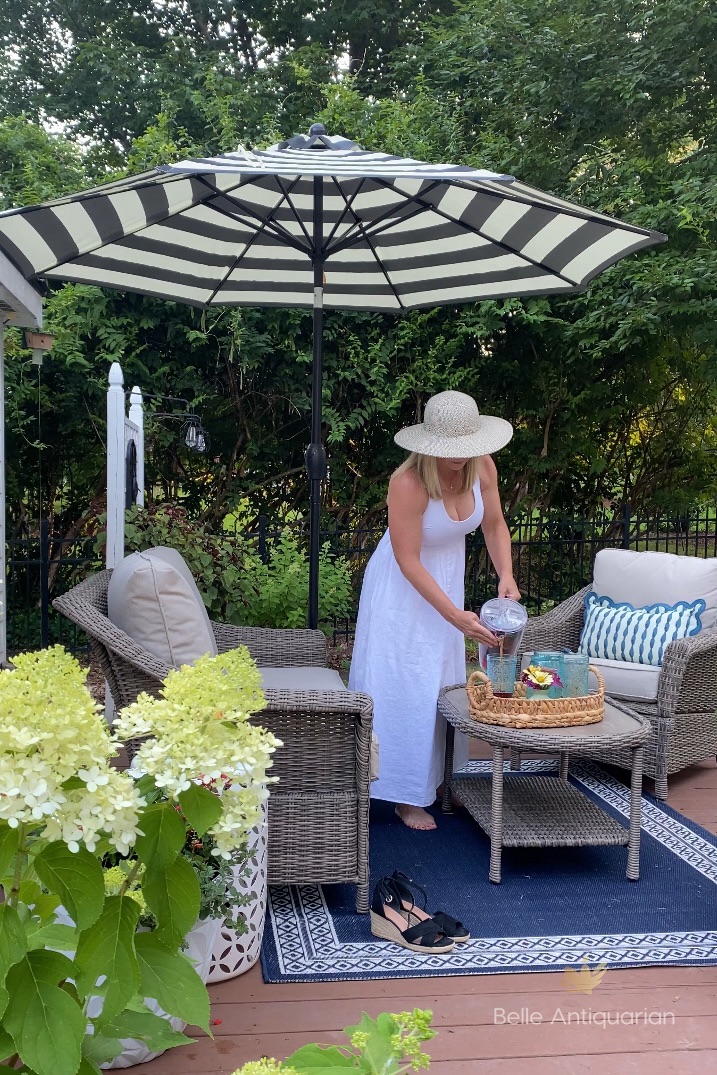
A southern garden at golden hour. A woman wearing a white linen dress and a straw hat pours a glass of sweet tea.

Classic Summer Whites: Timeless Linen Dresses and Southern Style Staples

This article is part of my Old Fashioned Summer Saturdays series, a weekly look at timeless summer traditions, seasonal recipes, and vintage-inspired living. This week, we’re covering the important topic of what to wear in the South during the hot, sticky months of our beloved Summer.

I think people who move to the South often assume that us native folks hate the summer as much as they do. Do we complain about the heat? Of course. Will you overhear us say, “It’s not the heat; it’s the humidity.” You certainly will. But what newcomers may not realize is that our love of summer in the South runs as deep as a magnolia tree’s roots. It is truly our time to shine.

A southern garden at golden hour. A woman stands behind a limelight hydrangea, wearing a white linen dress and straw hat.
Classic summer whites, the dresses we reach for when the humidity rises

Where most transplants go astray is that they often assume what is good for the summer in Nantucket is good for the heat in Georgia. That is simply not the case. We love a linen. A seersucker. A caftan. Lululemon isn’t making anything that Southern girls want touching their skin in mid-July, because darlin’, we will be getting “sticky” in this heat.

A southern garden at golden hour. A woman wearing a white linen dress and a straw hat pours a glass of sweet tea.
White linen, sweet tea, and the quiet hum of summer

Many have strayed from the Labor Day through Memorial Day rule for wearing white clothing. But here in the South, we WILL be wearing white during the summer to reflect the heat. Lightweight fabrics like linen and cotton aren’t just breathable; they’re part of our heritage. Just ask any Southern grandmother why her Sunday dress was always starched and white. These materials move with the heat, not against it.

flat lay of an outfit featuring a white linen dress, sandals, straw hat, and pearl necklaces. The scene is framed by a few flowers against a checkered background.
Perfect for garden parties, porch evenings, and everything in between. Tap the links below for my shoppable picks.

Here are a few of my Style Staples for a Southern Summer

A southern vegetable garden at golden hour. I woman wearing a white linen dress and straw hat enters the garden through a gate.
Nothing beats the feel of a linen dress in a Georgia breeze.

So yes, we may gripe about the heat, but make no mistake, we were made for this season. From porch swings to garden parties, there’s a quiet elegance to the way Southerners dress for summer, and classic whites are right at the heart of it. Whether it’s a crisp linen dress, a cotton blouse that’s seen a dozen Julys, or a pair of pearl drop earrings that feel just right in the glow of twilight, our style says: we belong to this place and this moment. If you’re new to dressing for Southern summers, start simple. I’ve rounded up a few of my favorite timeless summer staples HERE, pieces that look just as lovely on a back porch as they do at a bridal shower.

Explore More from Old-Fashioned Summer Saturdays

This article is part of my Old-Fashioned Summer Saturdays series, where I share timeless inspiration for warm-weather living. Be sure to check out these reader favorites:

Timeless Red, White, and Blue Decor Ideas for the Porch
Heirloom Tomato Dreams
Simple Garden Joys
Refrigerator Pickles—A Southern Summer Staple
Creating a Cozy Summer Reading Spot
Old-Fashioned Strawberry Shortcake Cake
Blue and White China for Summer Entertaining

You can subscribe here to receive new articles, seasonal inspiration, and vintage-style favorites delivered right to your inbox.

How to Create a One-of-a-Kind Father’s Day Gift from the Antique Store

If you’re looking for a thoughtful Father’s Day gift that’s as unique as Dad, head to your favorite antique store. With a little creativity and a touch of nostalgia, you can create a meaningful gift that feels personal, useful, and memorable.

Step 1: Start with a Container

Look for a piece that can hold the other items—a vessel that becomes part of the gift itself. Think beyond traditional gift baskets. Great choices include:

  • A vintage wooden toolbox
  • A retro tin
  • An enamel dishpan
  • A metal tray
  • A wooden crate or drawer

Step 2: Find a Feature Antique

This is the item that gives the gift its character. Try to find something with history or a bit of charm that fits Dad’s interests. A few ideas:

  • A cocktail shaker for the home bartender
  • An old fishing lure or gear for the outdoorsman
  • A vintage pen for the journaler or writer
  • Records from his favorite artist
  • A metal sign for his garage or workshop

Step 3: Add Something New

Tie it all together with a small, new item that complements your finds. This bridges the gap between vintage charm and modern practicality. Try:

  • A bottle of bourbon
  • A new set of grill spices
  • A local coffee blend
  • A gift card to a tool or record store
  • A fresh notebook
Cigar Box + Vintage Shaker + Bartenders Book + Whiskey

Gift Combinations to Inspire You:

  • Bar-Inspired: Metal tray + antique shaker + favorite bourbon
  • Fishing Fan: Tackle box + vintage lures + local bait shop gift card
  • Grill Set: Old ammo box + cast iron branding iron + spice rubs
  • Coffee Crate: Vintage tin + enamel mug + fresh ground beans
  • Writer’s Box: Wooden cigar box + vintage pen + new leather journal

The beauty of this idea? It supports small businesses, gives new life to old treasures, and creates a gift that can’t be duplicated.

So this year, shop with heart. Celebrate Dad with a gift that’s built on history, thoughtfulness, and a little antique magic.

Fun Holiday Activities for Young Adults and Families

This article contains commissionable links and ads.

I’m always looking for ways to keep the magic of Christmas alive now that our kids are young adults. Our youngest is in college, and our oldest lives about 3 hours away, so I try to make the most of our time when we’re all together as a family. I heard a quote a few years ago, and since then it has become something that I have become intentional about. The quote is, “Relationships are built on shared experiences.” I think this quote applies to many types of relationships, but isn’t it beautiful to think of in the context of families?

Relationships are built on shared experiences.

Where can we go together? What foods can we taste together? What games can we play together? How can we have FUN together? ‘Shared experiences’ have one thing in common, time spent together. Even when the quantity of time isn’t great, like when we are separated by distance, we can be intentional about the quality of the time spent together.

This brings me to my point of intentionally planning experiences this holiday season with our 20-something year olds and their significant others. My husband, Ken, and I are planning several things, but the one I want to share today is the white elephant advent calendar exchange we are planning for Thanksgiving. I use the term ‘white elephant’ loosely because we are really only using the rules of the game in this situation. We’re going to buy and wrap advent calendars to play a gift exchange with. Since our kids are in their young 20s, and therefore on a budget, Ken and I are going to buy all of the advent calendars. If we continue this game in years to come, we’ll up the fun-factor by asking everyone to contribute a wrapped one of their own.

Thanksgiving is the perfect time to play this game, because the advent calendars are needed before December 1st. We’re going to choose calendars that anyone would enjoy, regardless of who ends up with it. It will really be fun to see which ones are the favorites.

For now, I have rounded up sixteen of this year’s advent calendars that I think are the best. This list includes picks for young children, teens, women, and men. There are a couple of splurges, but most of them are priced $20-$25. Many of them have coupons to click before checkout, and several of them are reusable. I’m not going to share which ones off of this list that I’m buying in case one of our kids happens to read this article (unlikely), but please do come back and leave a comment if there’s one from the list that your family particularly enjoys.

You can click the photo above to find all 16 of these advent calendars in my LTK shop, or you can click the name below to go directly to the advent calendar’s website.

Southern Culture: Food, Football, and Manners

Seven years ago I wrote a blog post about 10 southern traditions that everyone should know about. Our traditions are what bind us as a Southern culture. They unite us and give us a common link to each other. I think the world could use a little more of that – looking for what we have in common, instead of how we’re different.

Even if you’re not Southern, these are traditions anyone can enjoy and participate in.

Southern Wedding Traditions

Cake pulls have been a tradition for southern weddings that date back as far as Victorian times. A tiny charm with a ribbon attached is placed into a cake and the bridesmaids pull the ribbon and receive their fortune.  Southern wedding tradition also says that if a bride and groom go to the site of their wedding exactly one month before the wedding day and bury a bottle of bourbon, then it will not rain on their wedding day. The bottle should be completely full and buried upside down, or so tradition says. To learn more about cake pulls and their meaning, visit Southern Living.

Photo via Southern Living

Bottle Trees

Southern gardens traditionally have a “bottle tree.” Bottle trees were believed to attract evil spirits at dusk. The spirits were supposedly trapped in the bottles, and when the sun rose and shone on the bottles, the spirits were destroyed. Tradition says that as the wind blew across the bottles you could hear the spirits moaning. 

Church

Churches in the south aren’t just worship centers. They are a hub for social gatherings and community outreach. You can find churches throughout the Bible belt hosting potluck dinners, selling smoked pork butts as fundraisers, and stocking food pantry shelves to help those in need. The easiest way to see what southern holidays are like, is to find a southern church. Easter, Trunk-or-Treats, and Christmas pageants are all big events. Whether you join the Methodist, Baptist, or Presbyterian church in town, finding a “church home” will fill your social calendar.

Football

Football in the South is not taken lightly. Friday Night Lights in the local high school stadium will bring out the whole town. Even those who do not have a high school student take supporting the local team seriously. Local businesses take pride in the hometown high school football teams, too.

If you think high school football is big in the South, you haven’t seen anything until you’ve met a SEC college football fan. Getting married? You better not schedule that on a game day! College football is almost a religion unto itself. Your neighbor might be a perfectly nice person, but if they cheer for the wrong team, you’ll always deep-down hold that against them. (“She’s nice and all, but she likes Alabama.”)

Tailgating before the big games is almost as big of a deal as the game. Serious tailgaters don’t just serve the basic burgers and dogs. It can get fancy and decadent. Ladies find ways to create the perfect outfits using their school colors. Just because it’s a football game doesn’t mean that pearls can’t go with it! Some men wear polos, button-ups, and even bow ties with khakis on game day.

photo via Pinterest

Food

In the south we will find any excuse to get together, especially for food. A low country boil is an event in itself. Sometimes called Frogmore Stew, a low country boil cooks corn on the cob, sausage, potatoes, and some type of shellfish, whether it’s shrimp or crayfish, in a big pot. Once it’s cooked, it is dumped out onto tables covered in newspapers.

Only the best barbecue comes from the south. We like to cook any kind of meat low and slow with smoke. Add a side of Brunswick Stew, and your BBQ meal is complete. We even eat a meal for good luck on New Year’s Day. It doesn’t matter who your mama is, what neighborhood you’re from, or what you look like, in the south collard greens, cornbread, fried chicken, and mac and cheese are traditional staples.

photo via Epicurius recipe

Manners

Southerners don’t use manners “just for show”. We use manners because it shows respect to others. We joke that saying “bless your heart” is really a nice way of saying anything from “that poor girl” to “you fool”. But the point is, even if we don’t like someone or we disagree with them, we can be respectful and simply say, “bless your heart” before moving on. We teach our kids to saying ma’am and sir to show respect to anyone older than us, because we realize that with age comes wisdom. We hold the door open for the person behind us, because why not give your fellow man or woman a hand? Manners are not demeaning; they show human compassion.

In the South, some children and young adults attend cotillion, which is etiquette training that teaches manners, basic dancing skills, and ways to be a conscientious and courteous member of society.

Haint Blue Porch Ceilings

Haint Blue porch ceilings are a long-standing tradition in the south. Haint is the combination of the words Haunted and Saint. In other words, a Haint is a ghost or an evil spirit. Haint Blue has been said to repel evil spirits from entering a home. Some people also believed that it kept the bugs away, which can be bothersome on southern porches on summer evenings.

Haint Blue is a hue that can vary depending on who you’re asking. It can also vary regionally. For our ceiling we selected one of the most popular Haint Blue colors, Benjamin Moore Palladian Blue, HC-144. To see more about our Haint Blue porch ceiling, click HERE.

To summarize, in the South we are proud of our culture, history, and traditions. We love people, food, and football. To read more about Southern Traditions, here are a few other posts that might interest you:

Haint Blue Porch Ceiling

Southern Easter Traditions

The Southern Easter Menu

The Southern Thanksgiving Menu

The Southern New Year’s Day Menu

Southern Hummingbird Cake with Tupelo Honey Creamcheese frosting

Dressing with Southern Class and a Little Bit of Sass

10 Southern Traditions that Y’all Should Know About (original post)

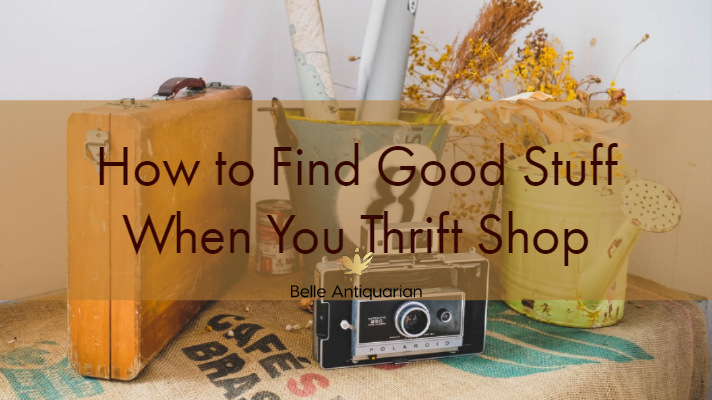
How to Find Good Stuff When You Thrift Shop

It’s National Thrift Shop Day! Sometimes I feel like everyday is National Thrift Shop Day, but whatever. LOL I started shopping at thrift stores when I was in high school. At that time I was mainly looking for vintage clothes. Now, I rarely look for clothing. Instead I am searching for vintage and antique home decor, dishes, and vinyl records.

No matter what you’re looking for when you shop in thrift stores, sometimes it feels like you’re looking for a needle in a haystack. It can be overwhelming and frustrating, which is never fun. And thrift shopping is supposed to be FUN.

I’ve put together a few tips for finding good stuff when you thrift shop. But keep in mind, even with these tips, thrift shopping is a lot like treasure hunting. Sometimes you hit the jackpot, and sometimes you strike out.

Tip #1 Know What You’re Looking For

If you already have in mind what you’re looking for, you’re more likely to find it. For example, if I am looking for jadeite, then I am constantly scanning everywhere my eyes land for that telltale green color. If you go in with a focus, it’s a lot easier to find something than if you don’t.

Tip #2 Take a Thrifting Buddy

I like to take my husband or kids with me when we shop at thrift stores. By now, they know what I like to buy. If they spot something I’m interested in, they’ll either pick it up or tell me about it. If I don’t think that they know what I’m looking for that day, I’ll tell them specifically. For example, “I’m looking for milk glass today. Milk glass looks like _____.” Or maybe I’ll say, “I’m looking for an old radio today, but only one that has a ____.” The more eyes that you have looking for something, the more likely you are to find it. (Just be careful about taking someone who is looking for the same thing as you.)

Tip #3 Consider if Damage Matters

Sometimes you might be looking for something that you’re willing to put some work into. Decide ahead of time what kind of damage you can work with, or if you are looking for something damage-free. Can you fix the dresser drawer? If it’s not what you’re looking for, move on quickly. Don’t waste your time.

Tip #4 Try Again

If you’ve heard that a certain thrift store has good stuff, but you aren’t seeing it, try again on another day. Try a different day of the week or a different time of day. Maybe someone else regularly checks that thrift store on Thursdays during their lunch break. If you switch it up you may find something.

Tip #5 Stains and Smells

Don’t always be intimidated by a stain. There is a lot of advice on the internet about getting rid of hard to treat stains. I have worked wonders on vintage tablecloths with a paste made out of baking soda, dawn dish soap, and hydrogen peroxide. There are a thousand things to try. If the price is low enough, it might be worth trying to get a stain out.

Smells, on the other hand…Did you know there is a “thrift store smell”? Yes, there is. And that smell will certainly come out of whatever you’re buying. But smells like urine, pets, body odor, and cigarettes are very difficult to get rid of. Those are a hard “no” for me.

Tip #6 Can You Change it to Make it Work?

Spray paint and glue are very cheap. If you find something similar to what you need, but it’s the wrong color, consider if a can of spray paint will make it work for you. Is something cracked or broken in two? Glue + Spray Paint are your best friends.
Tip #7 Don’t Get Sidetracked

Know your aesthetic. Imagine you see a stunning Blue Willow plate, but you don’t collect Blue Willow. You know you came in looking for a macrame plant hanger, so while you appreciate the Blue Willow plate, it’s not your style. Stick to your style.

Tip #8 Shop After Holidays

A lot of people like to shop after Christmas, because everyone is donating for the tax write offs. But many people purge after any holiday or in the spring. (“spring cleaning”) I think good stuff can be found after any holiday. People get started by gathering unwanted, old decorations to donate, and they’ll start adding to their donate pile since they’re making a trip there anyway.

Tip #9 There is more to thrift shopping than a Goodwill

Don’t stick with one kind of thrift store. There are some very well-known thrift store chains, but there are just as many small independently run thrift stores. Some chains may ask their employees to hold certain items back to sell in online auctions or private sales. Others may put everything out to earn money for charity. Try different kinds of thrift stores.

Tip #10 The Rich Thrift Stores

Some people like to shop in thrift stores in affluent parts of town because they feel like there will be higher quality items to choose from. I personally feel like that depends on what you’re looking for. If you’re looking for clothing, that theory may work out for you.

Do you have any other tips? Was this type of post helpful for you? Please share in the comments!

Where to Find Vinyl Records

Buying and listening to vinyl records has become a hobby for our family. My dad has always been a big music lover. We listened to all sorts of records growing up. I also enjoy listening to music with my own kids. We recently got a new record player for our family room, as well as a smaller one for our teenagers. We’ve had a vintage console style record player before, but the problem is that needles and other parts eventually need to get replaced. Parts can be hard to find and expensive compared to those for newer models. For what we wanted to use ours for, it made more sense to buy a new model.

The record player we ended up going with is the Boytone 8-in-1. We are pleased with the sound quality of the speakers, and you are also able to connect other speakers if you choose. We mostly use it for the record player and the radio, but you are also able to play cassette tapes, MP3, CDs, USB, and SD cards. We have connected to it using our phone bluetooths, and had no problems with that.

Browsing through records. It’s frustrating when they’re not categorized.

The kids use a record player that we picked up at TJ Maxx/Homegoods around the holidays. Theirs is a portable style that looks like a small briefcase. They like it because they can put it in a closet or under their bed when it’s not being used.

Pretty much the only reason Jackson goes into an antique store willingly for is records.

When we are looking for records our criteria is do we like the music and is the record playable/not scratched?

We picked up 8 records for $44. Most were $4.50 each.

Over the years we’ve picked up vinyl records in all sorts of places. They are really easy to find if you know where to look. Here is a list of our favorite places to find vinyl records:

Goodwill

There’s no telling what kinds of records you will find at Goodwill. They are not organized into any category, or not at any of the Goodwills we shop at, anyway. But they are usually some of the cheapest vinyl records for sale. We like looking here because you can usually look at them really well to inspect for scratches. At the Goodwills we shop at, vinyl records are found near the books and sometimes near the checkouts. When you shop for records at Goodwill you are looking for a needle in a cheap, unorganized haystack.

Estate Sales

Some of our favorite Christmas records came from estate sales. Estate sales can be risky, though, because you aren’t always able to open them and look at them for scratches. We’ve come across them taped up – take it or leave it types of situations. There’s usually a sense of urgency at estate sales, too. People are all trying to buy the same “good” things.

Antique Stores

Initially you might think this is the most expensive place to buy records, and sometimes it is. But there is one antique store near us that has around 100 vendors. More vendors means more competition for sales, which means lower prices. For us, the best selection and the lowest prices comes from a local antique store.

Vinyl Record Expo/Fair

A town near us has an annual vinyl sale. Multiple vendors/dealers come and sell their records. Although we did end up buying several albums, this was one of the more expensive places to buy them. I also noticed that the vendors all brought genres which they though would be most popular at the sale. We happened to be looking for classic county (Cash, Carter, Cline, Parton), and they did not have those artists with them. It was also a little uncomfortable when we were looking at the records for scratches. A lot of them were double wrapped in plastic sleeves, almost like they didn’t want to you to inspect them.

Record Shops

Oh, I love a good record shop. Everything is beautifully organized and easy to find. The employees are usually very helpful in finding what you’re looking for or answering questions. Record shops are not the cheapest place to buy vinyl records, but they are the best place to go if you are looking for something specific.

Etsy or Ebay

If you know of a specific title you’re looking for, chances are you can find it on Etsy or Ebay. Make sure you read the description carefully. I am a little more comfortable buying records on Ebay than Etsy because Ebay has specific ratings for the condition of the records. If you are buying a used record online, ask the seller if they have personally listened to it play at regular speed all the way through. Some of them will speed it up and listen to it, just to make sure it doesn’t noticeably skip or jump. But that doesn’t catch all of the skips or jumps. When buying a record online you want to make sure it is in excellent condition. Also, consider that most of these sellers will charge a shipping fee on top of the price of the record.

Target

Obviously if you’re shopping at Target for records they are new records. Some of the titles are “vintage”, but they are never played, new records. You can buy them online or in-store at Target. There are always titles we like there. There are even new release albums. Since they’re new, you are paying new album prices, which is more than a CD.

Urban Outfitters

There is not a huge selection to choose from, but Urban Outfitters does sell some vinyl records. We bought some on sale, otherwise we would’ve probably passed on them.

A History of Country Easter Egg Decorating: a Pennsylvania Dutch Tradition

//assets.pinterest.com/js/pinit.js

An introduction:

Today most families decorate their Easter eggs with store bought kits. I know we certainly do! The more advantageous egg decorators may even use natural dyes they discovered on Pinterest. I would like to share with you the history of how my grandparents and great-grandparents decorated Easter eggs with their kids, my dad included, while they lived in Shenandoah Valley, Virginia. Their ancestors were Pennsylvania Dutch and these methods for Easter egg dying most likely came with them from Pennsylvania to Virginia over a century ago. I post this here in the hope that this history will not be lost. Thank you to my aunts Gail and Martha who humored me a couple of years ago with my questions, and my apologies for taking so long to publish it here.

Easter was an important part of growing up in the country — not only did we see Easter Sunday as the most important Sunday in the life of the church, it was a time when we kids could take part in coloring Easter Eggs, and at the same time we heard stories of an even older time!  Here is the sequence of how we did our eggs:

First, on Good Friday Mama (Grandmother Polly Will Lytton) would boil several dozen eggs — sometimes 3 or 4 dozen depending on how many were at hand.  Once the eggs were boiled they were placed in colanders or pans — nestled into old cotton of some sort (old dish towels, clean rags of every kind) and ALWAYS with very clean hands — Mama did not want any oil or grease to spoil what would be the final product.  The pans of eggs were then put on the back screened porch to cool overnight — never into the icebox (or later the refrigerator) where if cooling too fast they would “sweat”.

On the Saturday before Easter, after supper, Mama would gather all the things needed to “spot eggs” — vinegar, suet, dyes, old woolen shirts or sweaters — she would have everything ready before she brought the eggs in from the porch.

//assets.pinterest.com/js/pinit.js

 With all us kids hovering around and Grandma Edna and Granddad Carson near by we would start (I can’t remember your Granddad Ty Cobb Lytton being involved at all — maybe he was doing final outside chores …or taking time to just sit aside and read the paper!)

This is how it would go:   Grandma had boiled some onion skins to make brown dye; Granddaddy would be standing by to mix the toxic black dye (kids not allowed to touch – it was cloth dye and it was toxic!); Mama would set old cups or those stained from previous Easter dye sessions around the table and carefully put the dye tablet, some vinegar, some hot water in each cup and each of us would take up a space around the table and try to stir and melt the tablet without spilling a drop (not always successful at that).  With that accomplished Mama would carefully put an egg in each cup and we would try to made sure that each egg was evenly colored.  Each colored egg was laid again in clean cotton cloth to completely dry and wait for “spotting.”  We kids of course would try to outdo each other in whose eggs came most perfectly out of the dye — not a quiet discussion.
When we were very young we would be sent off to bed to wait for Easter morning where we would find baskets of the decorated eggs — as we grew older and stopped believing in the Easter Bunny WE were allowed to help and this is how it went:

Once the eggs were cool and colored, Mama would melt the suet in a pan on the stove — this really was beef tallow that she saved from year to year —  from Easter to Easter — with very clean hands we would each take an egg and using our fingers — or for more intricate designs a straw from a REAL broom — and dip into the tallow and make spots of tallow all over the egg — or dip each end of the egg in tallow and put a design in tallow around the middle –or use a straw to make a design;  Mama ALWAYS took the green eggs and made a  wheat design [shafts of wheat, little tadpoles, crosses, bunny tracks, spiders] up and down the egg w/tallow using a broom straw   — Granddaddy used the black dye to make “baldies” by dipping each end of the egg in the tallow — then he would take a black egg and with a straw draw spiders all over the egg — somehow I cannot remember if we decorated Grandma’s onion skin dyed eggs –maybe we just admired them as brown — I’ll have to ask one of the “Lytton girls” about that …anyway  we could make any design we could manage — as you can imagine some of us had much more artistic talent then others!!

After the tallow hardened on the egg — and it hardened quickly on the porch-cooled eggs — and the older the tallow the more quickly it hardened — Mama would place the eggs in a bowl of water and apple vinegar where they would sit for a few minutes — then out she would take them and rub with the woolens she also kept from year to year — all the color would come off EXCEPT for that under the tallow — can you picture that?  Of course the tallow came off too but the color underneath did not and formed the design.

Preparing/decorating Easter Eggs in this way was always attributed to our Pennsylvania Dutch/German ancestors — I like to think of them as folk art — while those of the Ukraine are/were much more complex and sophisticated — I do not know of anyone who decorates eggs “our” way now — Some of us have tried  over the years — but the eggs are treated/coated when they come from the store – so you need straight from the hen — the dyes are much too harmless nowadays so the color won’t stick – and the tallow must be heated again and again to render it to the point when it will harden quickly –“
The eggs were a simpler version of traditional Dutch decorated eggs such as these.

//assets.pinterest.com/js/pinit.js

This process must’ve produced the most beautiful and unique eggs. I don’t think that I will ever actually be able to take these steps. The tallow and fresh eggs aren’t realistic ingredients for me to come by. But I do think it is important for this history to be written down and remembered. There is a lot of art lost in convenience, don’t you agree?

Dressing with Southern Class (& a little bit of sass!)

//assets.pinterest.com/js/pinit.js

1. Pearls go with everything. A nice, quality set of pearls is basic piece in every southern wardrobe. Pearls can be worn everywhere from work or a wedding to a baby shower, church, or picnic. Pearls never go out of style and can be passed down through generations. Pair your necklace or earrings with a dress or jeans. You’ll look and feel fabulous with them on.
Sterling Silver and White A-Quality Freshwater Cultured Pearl Necklace (7.5-8mm), 18″

2. Monogram it.
If you liked it, then you should’ve put a monogram on it! Southern ladies like to add a monogram to shirts, workout shorts, handbags, and sheets. You can even add a monogram to your wall! I love this timeless monogram necklace.
Sterling Silver Fancy Monogram Necklace (18 Inches)

3. Timeless pieces mixed with modern and trendy accessories. The basis of any great southern wardrobe are timeless pieces that you can mix and match. Find ways to bring colorful, modern, and trendy patterns into your wardrobe with accessories!

4. Fun with classic lines. Think Lilly Pulitzer fabrics . Think Seersucker suit. We do like to have fun with a playful pattern! Southern gents have been known to wear shorts in all sorts of tongue-in-cheek patterns. The important thing to remember is that pieces should always have classic, modest lines. Have fun, but command respect!
Lilly Pulitzer Women’s Janice Shift

5. Modest and tasteful.
Let’s face it. Modern jeans that make your figure look fantastic while standing up, don’t always step up to the job while you are sitting down or bending over. The same can be said for semi-sheer to sheer tops or tops with lower cut necklines. A southern lady leaves certain areas to the imagination. I personally own several of these tank tops and wear one almost every day. They help cover areas that jeans and tops can leave exposed. As an added bonus, these tanks make all of your curves feel fantastic. (i.e. Not jiggly!)
Sugar Lips Seamless Rib Tank Top, Black, One-Size

6. Dress for the occasion.
Knowing exactly what to wear for each occasion can leave you feeling panicked and unsure of yourself. Black tie, white tie. Formal, business casual. Company picnic, baseball game. It’s important to know what is appropriate and how to make a good impression at all times. Check out this fantastic guide:
A Guide to Elegance: For Every Woman Who Wants to Be Well and Properly Dressed on All Occasions

7. Always support your team, your sorority, and your school.
Southerners are known to support their colleges, sororities, and fraternities for life! A SEC football game is an opportunity for every southerner to bring out the preppiest of fashions in their school colors. I personally love this shirt. Because, well, it *is* home…til the day I die, y’all!
Homeland Tees Women’s Georgia Home State T-Shirt

Keep it classy, y’all!
XOXO,
Abby

This post contains links to amazon affiliate ads.