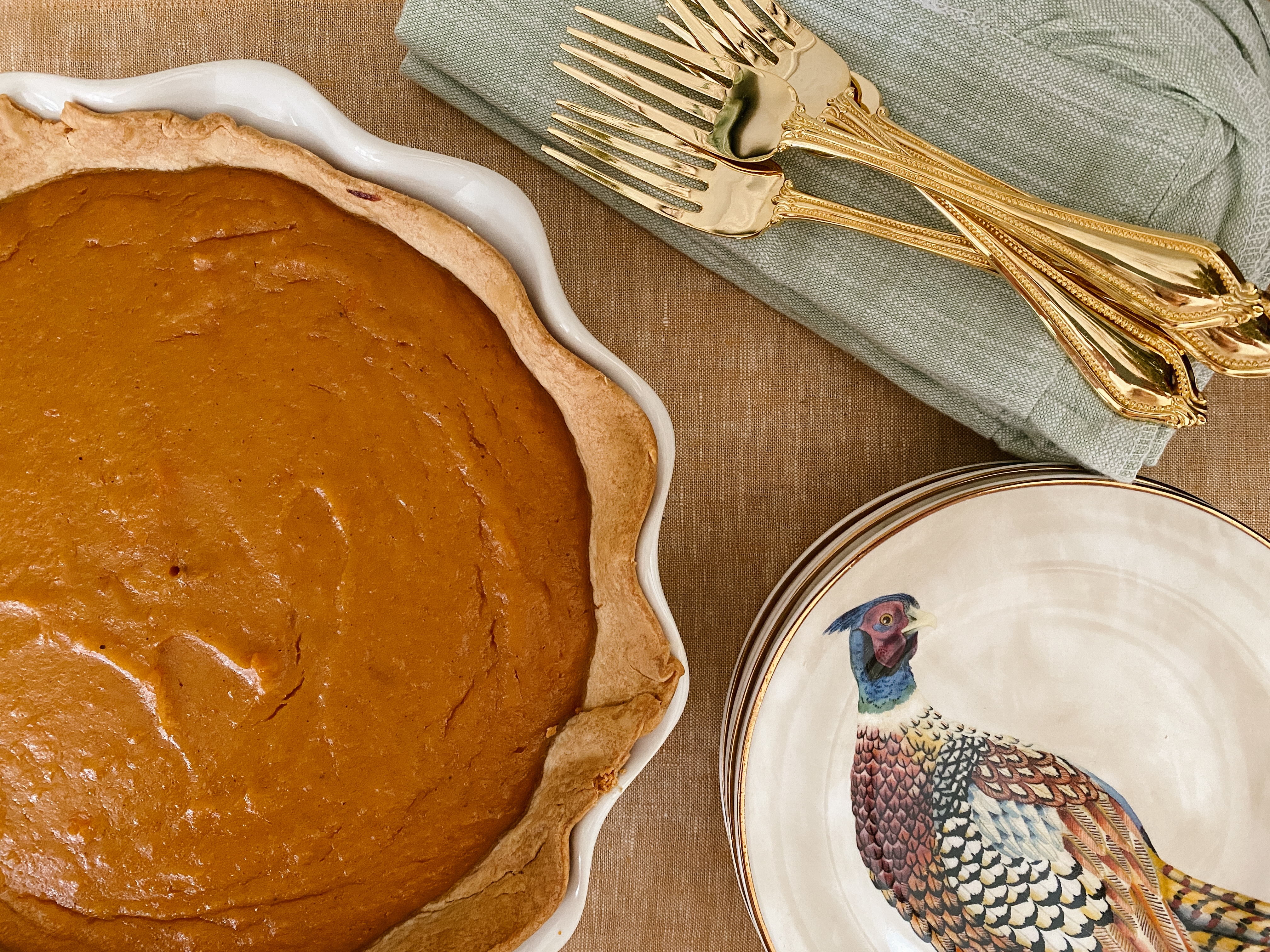
Whole Southern sweet potato pie styled with vintage silverware, linen napkins, and fall table setting.

A Southern Sweet Potato Pie Recipe from a Vintage Southern Cookbook

(Part of the “Home for the Holidays: A Southern Season of Charm” series)

This article contains affiliate links. As an Amazon and LTK affiliate, I may earn a small commission if you make a purchase through my links, at no extra cost to you.

A Taste of Southern Nostalgia

Most people might guess that a typical Southern Thanksgiving meal would include a favorite Southern sweet potato pie recipe. But the truth is, I hadn’t found one that I really liked until now. Today I’m sharing this treasured recipe that I uncovered, just in time for Thanksgiving. It’s part of this year’s Home for the Holidays: A Southern Season of Charm series, where we’re celebrating meaningful traditions and nostalgic Southern flavors.

A few months ago, while I was thrifting, I stumbled across The Deep South Cookbook, by Southern Living in 1976. I mentioned in an earlier article with my Chicken Mull recipe, that it’s important to me that we keep our Southern cultural recipes alive. So, when I found this cookbook that was full of recipes from a by-gone era, I simply couldn’t leave it behind. (And the fact that it was only $1 was icing on the cake!)

Today we’re making a recipe that I discovered on page 55 of The Deep South Cookbook, which is Harvest Sweet Potato Pie. This recipe was submitted by Shirley Wise of Richmond, Virginia.

As the cookbook states, this recipe was “home-tested, so you can be sure of delicious dining!”

Abby Smolarsky holding The Deep South Cookbook by Southern Living, 1976, inspiration for a vintage Southern sweet potato pie recipe.
Abby with The Deep South Cookbook (Southern Living, 1976), the vintage treasure where she found this classic Harvest Sweet Potato Pie recipe.

A Cookbook Worth Keeping

This cookbook is far from beautiful. The cover decoration is an unmistakably mid-century scene with candles and a platter of roasted poultry. By modern standards, it’s almost an unappetizing image. But after opening the cover of the cookbook, it’s a pure delight. Beyond discovering the Southern sweet potato pie recipe, there are hundreds of other traditional recipes to explore.

The book is divided into states in the Deep South. Each section begins with a brief introduction and history of food in that state. Following the introduction, the pages are filled with simple, approachable recipes for home cooks. Each recipe was written and submitted by real Southern women whose names appear beside that recipe.

I won’t be experimenting with “South Georgia Squirrel Stew,” but today we’re going to make the Southern sweet potato pie recipe. After I share the recipe, I’ll also include a few modern changes that you could make to enhance the nostalgic Southern flavors for your pie this Thanksgiving.

Whole Southern sweet potato pie styled with vintage silverware, linen napkins, and fall table setting.
A classic Southern sweet potato pie, styled simply with vintage silverware and linens for a timeless holiday table.

The Original Harvest Sweet Potato Pie

Whole Southern sweet potato pie styled with vintage silverware, linen napkins, and fall table setting.
Belle Antiquarian (adapted from The Deep South Cookbook, 1976)

Harvest Sweet Potato Pie

A classic Southern sweet potato pie inspired by a 1976 recipe from The Deep South Cookbook, a Southern Living publication. This simple and comforting dessert highlights the timeless flavors of sweet potatoes, cinnamon, and milk in a flaky crust. It is a vintage favorite that feels just as welcoming on today’s holiday table as it did generations ago.
Prep Time 20 minutes
Cook Time 45 minutes
Total Time 1 hour 5 minutes
Servings: 8 servings
Course: Dessert
Cuisine: Southern

Ingredients
  

  • 1 ¾ cups mashed sweet potatoes
  • 1 tsp salt
  • 1 ½ cups milk
  • 2 eggs
  • 1 cup sugar
  • 1 tsp cinnamon
  • 1 unbaked pie shell

Method
 

  1. Preheat over to 350 degrees.
  2. Combine all of the filling ingredients in a bowl, then beat until smooth.
  3. Pour into the pie shell.
  4. Place on the center rack and bake at 350°F for about 45 minutes, or until a knife inserted near the center comes out clean and the filling is just set. Begin checking at 30 minutes, as baking times may vary.

Notes

For a richer flavor, substitute part or all of the milk with buttermilk or evaporated milk. If using buttermilk, reduce the salt to ½ teaspoon and use 1¼ cups instead of 1½ cups. You can also replace half of the white sugar with light brown sugar for a hint of molasses. Try adding ¼ teaspoon nutmeg and a splash of vanilla extract for a more aromatic pie. Bake until the center is just set, then cool completely before slicing. Serve with lightly sweetened whipped cream or a sprinkle of cinnamon sugar for a classic Southern finish.
The recipe above is printed exactly as it appeared in The Deep South Cookbook (Southern Living, 1976). Baking times may vary depending on oven type, pie dish material, and the moisture level of your sweet potatoes. Begin checking for doneness at 30 minutes and continue baking until the center is fully set, about 45 minutes total.

Modern Touches for Today’s Kitchen

With only a few ingredients, and even fewer steps to pull this recipe together, I imagine that Mrs. Shirley Wise of Richmond, Virginia, made many of these pies in her time. As much as I love following a recipe exactly as it was written, I also enjoy experimenting with subtle changes that reflect today’s kitchens and ingredients.

To modernize and customize this recipe for my family, I made a few substitutions and additions. The Southern sweet potato pie recipe is delicious just as Mrs. Wise wrote it, but with a few changes, we can introduce a touch of warmth and brightness that is suitable for modern holiday tables.

Here are the ways I updated this Southern sweet potato pie recipe:

  • 1¼ cups buttermilk (instead of milk, reduce salt) – for tang and creaminess.
  • ½ cup white sugar + ½ cup light brown sugar – adds depth and warmth.
  • 1 teaspoon vanilla extract – enhances sweetness naturally.
  • ¼ teaspoon nutmeg – classic holiday spice that pairs well with cinnamon.
  • ½ teaspoon orange zest (optional) – brightens the flavor slightly; use sparingly so it doesn’t overpower the custard.

Optional variation: add 1 tablespoon melted butter to the filling for extra richness.

Slice of Southern sweet potato pie served on a fall plate with vanilla ice cream dusted with cinnamon.
A slice of sweet potato pie served with a scoop of vanilla ice cream and a touch of cinnamon — simple, classic Southern comfort.

Serving and Styling

While this pie is simple enough to throw together for a casual meal with the family, it’s also a thoughtful addition to holiday gatherings. We always set up a dessert buffet in our dining room for Thanksgiving, and this Southern sweet potato pie recipe will be included this year. (I’m already looking forward to enjoying a slice with a hot cup of coffee!)

I served mine in a white ceramic pie dish with some simple linen napkins and vintage silverware that I found at an estate sale. I used some fall themed plates and added a small scoop of high-quality vanilla ice cream on the side.

If you’d like to recreate this setup, here are a few of my favorite pieces and some of the kitchen tools I used while baking.

Southern-style kitchen counter with vintage pie plate, rolling pin, glass prep bowls, and a stand mixer surrounded by baking tools used to make a sweet potato pie.
Timeless kitchen essentials that make holiday baking a pleasure. Simple tools, classic materials, and a touch of Southern charm.

Why These Recipes Still Matter

When is the last time you ate sweet potato pie for dessert? Have your kids ever tasted it? Our country enjoys many different cultures throughout the different regions across our great land. In the North you’d probably expect to find cheesecake. In the Midwest, we would probably eat scotcheroos.

Unless we do something to preserve our traditions, they will continue to meld into one indistinguishable, bland culture that has forgotten the spice and flavors of the people who live in each region.

When I found this cookbook and came up with the idea of sharing one of the recipes, I intentionally looked for one that had very few ingredients. Anyone can make pie recipe, even a beginner home cook.

This holiday season, I hope you’ll slow down, honor the stories behind your favorite recipes, and make a little space in your kitchen for history to live again. Whether you’re baking with family, sharing dessert with friends, or simply enjoying a quiet slice with coffee, this sweet potato pie is a delicious reminder of how good the simplest things can be. And Mrs. Shirley Wise, if you’re out there, I loved your pie.

Explore More from This Series

Each article in this series celebrates the beauty of Southern living through the seasons. You can find the full collection on the homepage under Home for the Holidays: A Southern Season of Charm.

Each article in this series celebrates the beauty of Southern living through the seasons. You can find the full collection on the homepage under Home for the Holidays: A Southern Season of Charm.

Natural Fall Decor: Simple Ways to Bring the Outdoors In

Welcome to the first installment of my newest series, Home for the Holidays: A Southern Season of Charm. Today we begin by sharing ways to bring the outdoors inside to decorate your home with natural décor for fall.

The holiday season in the South is rich in tradition. It’s a graceful time of the year where we extend hospitality and celebrate the season by adding seasonal touches in gathering spaces. Each week of the Home for the Holidays series will be a celebration of meaningful traditions, nostalgic décor, and cozy inspiration for the heart of the home.

Whether you plan to host a large holiday gathering or your goal is to simply add traditional touches around your home, I hope you’ll come back each week for inspiration and a sense of community.

Autumn charm tucked into a secretary desk — goldenrod in a stoneware crock, bowls of acorns, beeswax candles, and heirloom blue-and-white china.

Why Choose Natural Fall Decor?

Albert Camus is credited with saying, “Autumn is a second spring when every leaf is a flower,” and I can’t hear this quote without thinking of the mighty Southern magnolia.

Truly a Magnolia grandiflora, in the spring she entices us with massive, fragrant flowers in a milky white hue that contrast with her green leaves. Yet, the Magnolia doesn’t stop in spring! In the fall, we are presented with brilliant and strange cones that push out bright red seeds as they ripen. The vivid green leaves of spring have developed their velvety brown undersides, softening as the heat of summer eases into the first chilled autumn evenings of the Deep South.

During the spring and summer, we bring nature’s bounty indoors to eat. When autumn arrives, the growing season has come to an end. But that doesn’t mean we turn our backs on what nature has to offer. For generations Southerners have brought nature inside during autumn to decorate with and enjoy. By taking advantage of what nature has to offer us from the land, garden, and forests, we can decorate our homes in the traditional Southern fashion for little to no cost.

Southern autumn in hand — a magnolia seed pod bursting with brilliant red seeds.

The Three Categories of Natural Fall Decor

To make gathering from nature more approachable, I like to think of natural fall décor in three categories.

The Harvest: Abundance for the table and sideboard

The food we harvest to eat in the fall can also be used to decorate our homes. Apples of all shades from yellow to red to bright green mimic the colors of the leaves. A basket full of apples in the center of a breakfast table becomes edible artwork.

Pumpkins are sometimes overlooked as indoor décor. Most houses will be seen with one next to the front door, waiting for a face to be carved. But pumpkins can be used as indoor décor as well. A large pumpkin can be turned into a centerpiece, and small pumpkins can line a windowsill.

Layered textures of hydrangeas and grapevine wreath frame an heirloom pumpkin for an inviting fall accent.

In the fall we also harvest other growing plants like cotton, wheat, and many types of flowers. Bundles of cotton and wheat can be used in vases or wreaths. Dried hydrangeas and goldenrod are also traditional Southern fall decor.

The Gathered: Treasures from the forest floor

A walk through our natural surroundings will reveal all sorts of treasures if we observe the world around us. These items aren’t necessarily grown to harvest at the end of the season. They’re little gifts that we can find while looking on the forest floor or in the trees. Sometimes a stroll along the shore of an ocean or lake will reveal a prize to bring inside.

A hand-carved wooden dough bowl brimming with acorns adds warmth to a fall mantel styled with grapevine pumpkins.

In my own yard I collected magnolia and pine cones, acorns, and pecans. I filled all kinds of bowls and vessels to use them as natural fall décor. I also cut branches of magnolia to use in floral arrangements.

Other gathered finds are items like feathers, antler sheds, ethically sourced turtle shells, and oyster shells. All of these can be thoughtfully integrated into your fall décor.

Rustic fall touches — pinecones, twine, dried grasses, and terracotta pots flank a vintage dog portrait for cozy seasonal charm.

The Handcrafted: Artisan-made with natural materials

The final category of natural fall décor is the handcrafted. Artisans use natural items to create things that we use on a daily basis. We can thoughtfully incorporate those items in our fall décor to highlight their natural materials and craftsmanship.

Pheasant feathers in ironstone, vintage books tied with velvet ribbon, and a grapevine pumpkin create timeless autumn layers.

Candles made of beeswax perfume the room and add a warm yellow tone to the space even when they’re not burning. Baskets made of local grass and willows are useful all year round, and in the fall they can be used to showcase things like a bunch of gourds.

Other handcrafted items to consider using in your natural fall décor are quilts, pottery, and sculptures made from wood or local rock.

How to Incorporate Natural Decor into Your Home

A common mistake people make when decorating their homes for the holidays is to go overboard with a theme. If every item in your home has a pumpkin motif on it, it will start to look more like a gift shop than a home with decorative touches. The same thing can happen if you go overboard with natural fall décor.

I recommend finding ways to integrate natural fall décor into your existing vignettes. Take one or two natural elements and treat them as “hero pieces” in combination with other groupings of existing décor. Consider things like textures, colors, and size when you’re styling or arranging your spaces.

A cozy fall corner — heirloom pumpkin centerpiece beside a wingback chair and brass lamp, framed by autumn light.

Four Places to Add Natural Fall Decor

A brown transferware bowl filled with moss, seed pods, and a candle rests on a stack of well-loved books for simple fall charm.

Shop the Look

If you like the idea of decorating for fall using natural décor, but you don’t live in an area where you can find it on your own, I’m sharing some links for items that I recommend. I’ve curated a list of items you can use throughout the year, as well as some resources for natural items like shells and dried flowers.

You can find this list by clicking the image below or going directly to my curated LTK shop for fall.

Shop the look: timeless natural finds I recommend for autumn decorating. These pieces can be styled throughout your home and carried into other seasons with ease.

Looking Ahead: A Season of Charm

Throughout this eight-week Home for the Holidays series we’ll explore a few Southern holiday recipes, decorate our tables for special holiday meals, and explore easy ways to show hospitality and care to those around us this season.

I invite you to come back each Saturday for the next installment of Home for the Holidays: A Southern Season of Charm. Be sure to bookmark this website in your browser and follow along on Instagram for updates. Links to the other segments in this series will be added to the bottom of this article as we make our way through the holidays season together.

Closing Thought

When we choose to use natural décor in our homes it honors the environment around us. We’re at a time in history when home décor is being treated as though it is disposable. Walk into any craft store, and you’ll find shelves up to the ceiling that are lined with hundreds of identical decorations that will likely only be used for one season before ending up in the trash.

I want to encourage you to consider buying quality items that can be used in different ways every season, instead of something that can only be used for a couple of weeks. For example: A dough bowl can be filled with eggs in the spring, shells in the summer, acorns in the fall, and ornaments at Christmas.

Investing in quality décor saves money in the long run and decreases mental and physical clutter in our homes. Dante Alighieri said, “Nature is the art of God,” and I hope you have been inspired to bring nature into your décor this fall.  

Autumn elegance in the dining room — antler mounts, brown transferware, cabbage plates, and hydrangeas with velvet ribbon.
Autumn natural decor ideas illustration featuring seasonal elements such as magnolia stems, oak leaves, dried wheat, pumpkins, grapevine, dried hydrangeas, pheasant feathers, cotton stems, acorns, pinecones, dried seed pods, antler sheds, and oyster shells. Styled for fall decorating inspiration with a Southern touch.
Bring the outdoors in this autumn with simple, natural decor. From magnolia stems and acorns to antler sheds and oyster shells, these timeless touches add warmth, charm, and Southern character to any home.

Explore More from This Series

Each article in this series celebrates the beauty of Southern living through the seasons. You can find the full collection on the homepage under Home for the Holidays: A Southern Season of Charm.

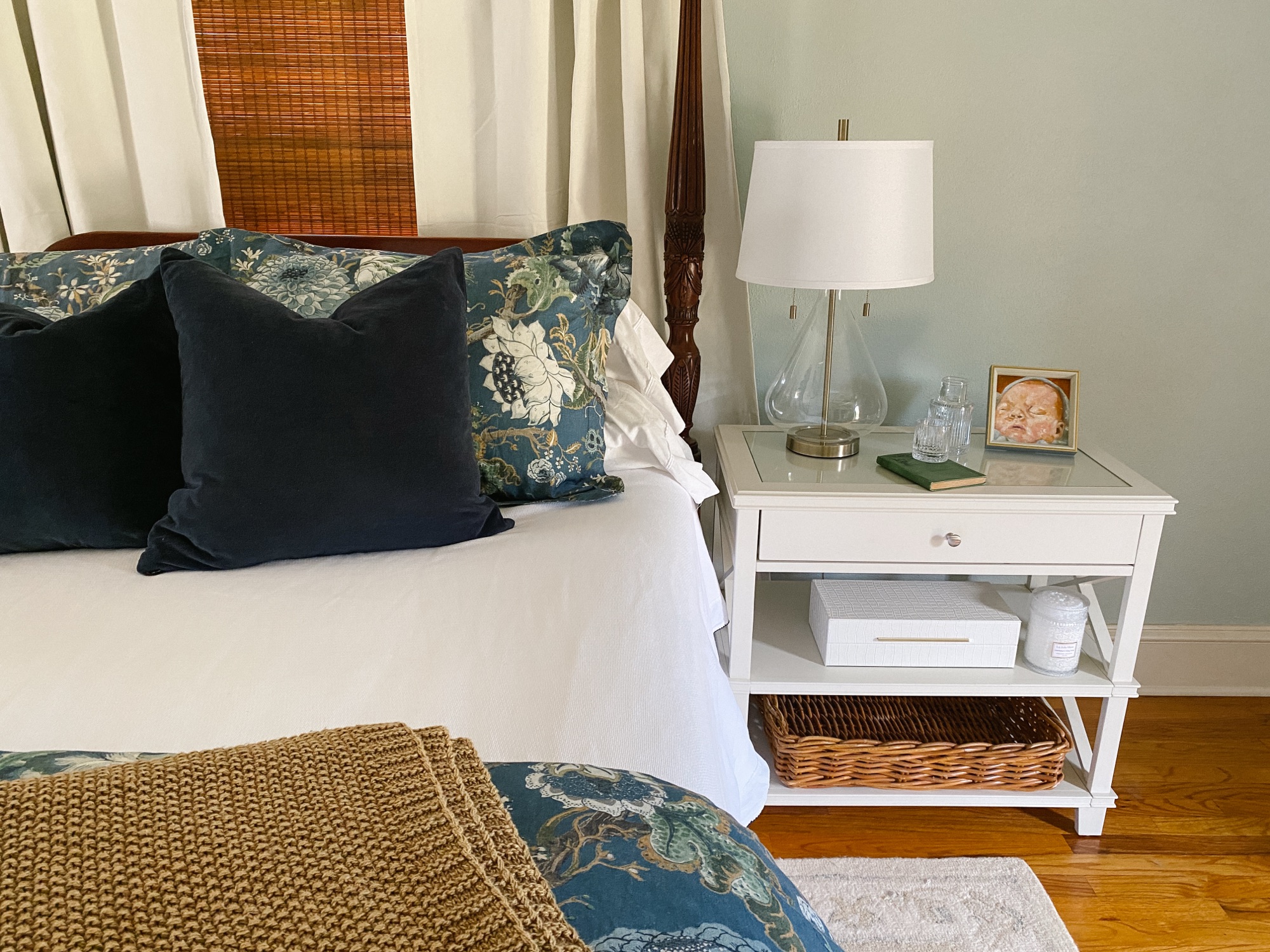
Feminine nightstand with lamp, carafe, small art, storage boxes, candle, and basket.

Home as a Haven: How to Create a Cozy Bedroom Retreat

Welcome back to the sixth installment of our weekly Friday series called Falling for Home: A Weekly Autumn Journal. Each week we explore ways to embrace the softness of the autumn season, create a welcoming environment to restore your spirit, and fall in love with our own homes again. If you’re just joining me here from Google, Pinterest, or Instagram, I invite you to read the other segments in this series, which can be found linked at the bottom of this article.

As the season progresses, we begin to lose daylight hours and the temperatures cool. The sun is setting earlier each day, and we begin to retreat indoors.

Today we’ll start a conversation on the importance of intentionally curating a personal haven in your home and creating a place to restore yourself… not just a place to crash at the end of the day to get some sleep.

The bedroom as a whole reflects the balance of function and comfort: closed storage to keep clutter tucked away, restful art, and layered bedding that invites you to linger.

Step One: Clear the Space for Peaceful Rest

Many of my readers are the family’s nurturers, often putting everyone else’s needs before their own. In the home, this translates into prioritizing the shared family spaces and even the children’s bedrooms. Our bedrooms become the catch all and dumping grounds for all the miscellaneous items that don’t have a designated spot. The clean laundry is often brought into our bedrooms until it can be folded and put away later.

Not only does this create physical clutter; it creates mental clutter and unrest in the very space that we retreat to get rest.

Create Processes

We need processes for dealing with items that make their way into our bedrooms. I like to use a method called “Touch it once.” For example, if I’m taking laundry out of the dryer, then dumping it on my bed, then moving it to a chair to fold it later, I’ve touched it 3 or 4 times before it gets put away. By folding each item as I take it out of the dryer, I will touch it only once before it gets put away. Doing it this way might not feel like it in the beginning, but it becomes a lot less work.

Look around your bedroom to assess miscellaneous piles of clutter. Those are the items that you’ll need to create a new process for. When we move piles of clutter from one spot to another to clean, we’re just moving the mess around and not actually taking care of the mess.

Essential Items

Next, I recommend that you only keep the essential items within sight. These would be things that support the rest, comfort, or function of your bedroom. For example, you’ll need a bedside table of some sort, a lamp within reach of your bed, and a hamper to hold your dirty laundry. Other examples are a throw blanket that gets used on chilly nights or a fan that cools you in warm weather. Essential items are ones that directly help you rest, prepare for the day, or feel comforted. If it distracts you, nags at you, or simply takes up space without providing function, it doesn’t belong in your bedroom.

Daily Items

In addition to essential items, we all have daily items, which I recommend organizing into closed storage containers. These items are practical, not decorative, and by placing them into closed storage containers we are able to keep surfaces peaceful without disrupting our routine. Examples of daily items would be chargers, medications, skincare, books, and pajamas. When each item has a designated space in a closed storage system, we easily prevent clutter from snowballing into piles. Items are still convenient and within reach; they’re just not visually tiresome or nagging.

Implementing these habits can take a little practice. However, you’ll find that if you consistently maintain these methods, it will be well worth the effort when you have a peaceful, relaxing space at the end of the day.

On his side of the bed: a leather catchall, favorite books, and a wood box for everyday necessities, proof that practicality can be handsome when it’s well-contained.

Step Two: Add Meaningful & Personal Touches

Your bedroom is probably a place that most guests won’t see. And if you’re a parent, it may be the one space in your home that’s truly yours. Your bedroom is an opportunity to create a room with décor that reflects your personality and sentimentality. By carefully selecting your furnishings and accessories, you can build an area for yourself that makes you feel at home.

Adding personal touches to your bedroom should be done with simplicity, restraint, and sentimentality. For example, a gallery wall of art or family photos creates too much stimulation and interest in a space that is intended for relaxation. Instead, try adding a small family photo in a frame on your nightstand or dresser.

You can easily personalize your bedroom by adding one small vase for flowers, a small antique dish as a catchall, or an heirloom quilt at the end of your bed. Instead of surrounding your room with your entire collections, pick one favorite that you can use in a functional way. By doing so, you’ll keep your space peaceful and uncluttered.

On her side: a small carafe for evening water, original art for a touch of beauty, and storage boxes to keep daily items close but unseen. Serenity comes from thoughtful restraint.

Step Three: Layer Comfort & Care

Repeating tones, from the bamboo shade to the throw blanket and picture frames, bring warmth and cohesion. A reminder that subtle echoes of color and texture create harmony in a room.

Gen Z is known for not using “the big light.” They’re referring to the overhead light, which we call “ambient lighting” in the interior design world. In an area like a bedroom, I tend to agree with them.

Strategically adding lamps to a bedroom for accent and task lighting creates a much more relaxing environment than using “the big light.” I recommend lamps for your nightstands that are easy to reach and turn on/off without getting out of bed. You should be able to easily fit your hand under the shade to operate the switch or use a lamp that has a switch on the cord. If you have a reading chair in your bedroom, a floor lamp can be a well-thought-out addition.

Another way to create a relaxing environment for yourself is to consider your comfort and senses. Stay away from scratchy or uncomfortable fabrics that will be next to your skin. Consider whether candles, fragrance plug-ins, and even laundry detergents are overpowering your senses. No smell is better than a strong smell.

Lastly, consider your needs while you are in your room. If you frequently find yourself getting up for water, a carafe of water and drinking glass will be helpful to you.

Soft lamplight turns the bedroom into a sanctuary at dusk, offering a place to exhale as the day comes to a close.

Step Four: Invest in Quality Where It Counts

If you follow me on Instagram, you know that I love a good bargain and buying things second-hand. However, there are some things in the bedroom that I won’t compromise on. A good rule of thumb is, the closer it is to your skin, the higher quality you need to invest in. A good example of this is choosing bargain window coverings, but higher quality bedding. You won’t be laying down at night on your curtains, but you will be on the sheets.

When purchasing bedding, I recommend looking at thread count and fabric materials. If there isn’t a thread count listed, it’s most likely very low. High thread count sheets will last decades, so while the upfront cost may be marginally more, they will last incredibly longer than cheaper options… saving you money in the long run.

It’s also important to consider fabric materials. Fabric materials with descriptions like “knit, jersey, cooling” are less breathable than materials with long-staple natural fibers like Egyptian cotton. They are inferior materials that usually weave some sort of synthetic material made of plastic into the fibers. Synthetic materials don’t last very long and will need to be replaced in a short amount of time.

Most of us are on a budget, and it’s simply not realistic to invest in the highest quality of furnishings and accessories all at once for our spaces. I encourage you to make a point of switching things over one at a time until you have created a well-curated space that you deserve. Swap furniture made of composite materials for solid wood pieces, synthetic bedding for high-quality bedding made from renewable materials, mass-produced art for original art that reflects your unique personality. In this way, we create a collected space that truly becomes a haven in our home.

Layering textures – the quilt, duvet, and throw – adds depth and comfort. Each piece contributes to the feeling of being enveloped in warmth.

Step Five: Introduce Seasonal Color & Mood

I would be remiss if I didn’t point out the impact that color has on your bedroom haven. The psychology of color tells us that our emotions are subconsciously affected by the colors in our spaces. Restaurant owners, marketing professionals, and health care facilities understand that color goes beyond preference.

When choosing wall color, linens, and accessories in a bedroom, it’s important to understand the effects of your choices. I recommend tones with less saturation if you are trying to create a palette to anchor your room’s mood. Too much visual interest will hinder relaxation in a bedroom.

Today I am recommending a set of three colors, which can also be seen on the image below. Pale Oak, Cloud White, and Hale Navy are choices that you can bring into your space in a variety of ways such as furniture, bedding, lampshades, throw blankets, and artwork. They also provide a relatively neutral backdrop for you to add your personal touches that were mentioned above. If you can’t repaint your bedroom at this time, these three colors also tend to work well with a myriad of other colors.


Throughout this article I have mentioned things that I find to be useful in a bedroom space. You will find examples of these items in this curated list, which can be found by clicking HERE or clicking on the image below. You’ll find many more choices in this list than the ones pictured.

Click to shop from a list of suggestions for each of these areas.

Explore More from Falling for Home: A Weekly Autumn Journal

This article is part of my series called Falling for Home: A Weekly Autumn Journal. Be sure to check out these reader favorites:

You can subscribe here to receive new articles, seasonal inspiration, and vintage-style favorites delivered right to your inbox.

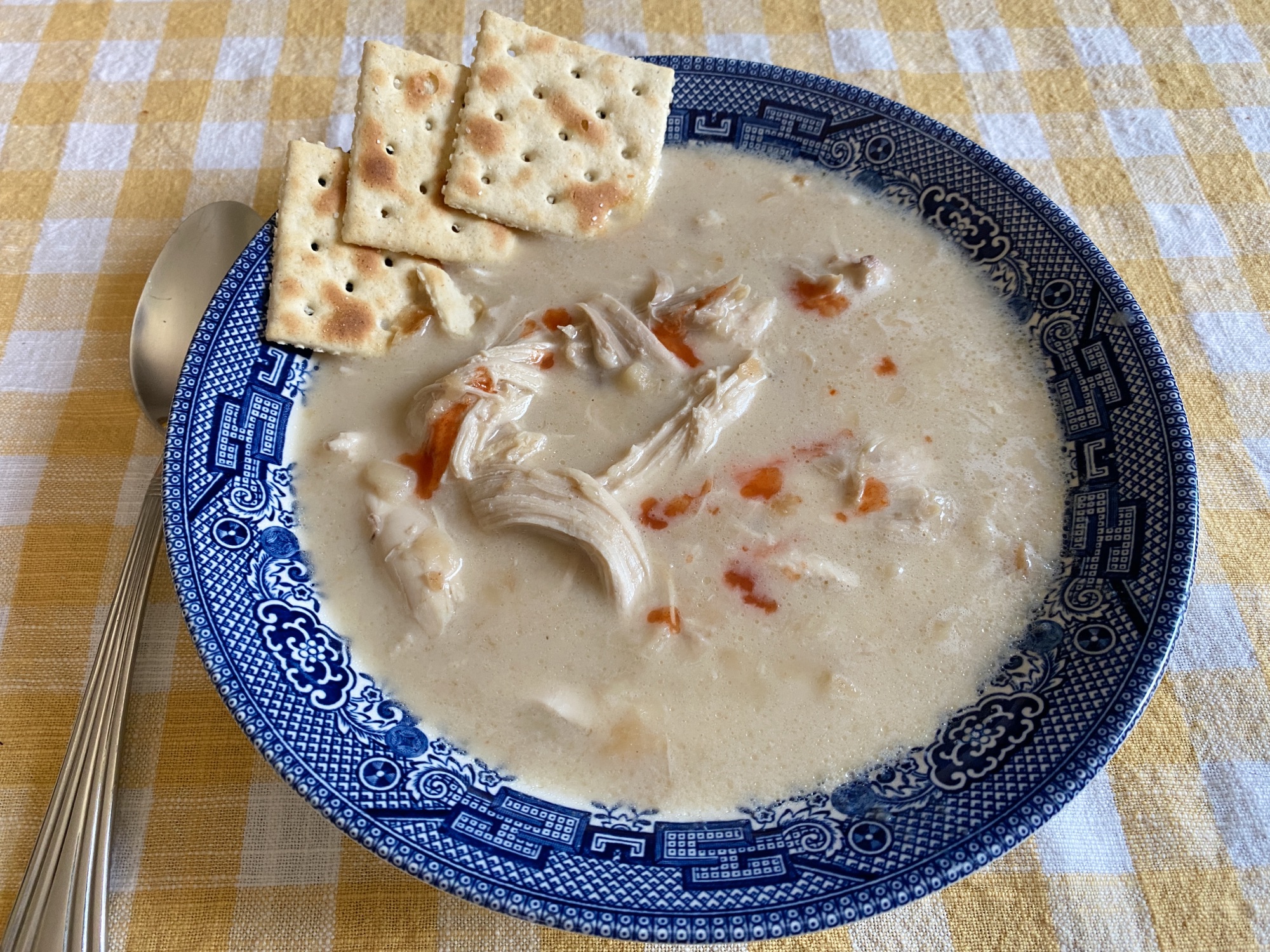
Bowl of creamy Chicken Mull served in white enamelware, garnished with cracked pepper and surrounded by saltine crackers

A Southern Classic for Fall: How to Make Chicken Mull

A Regional Recipe Worth Discovering

Welcome to the fourth installment of my fall series, Falling for Home: A Weekly Autumn Journal. Throughout this weekly Friday series, we’re embracing a slow, intentional rhythm of Southern living rooted in home, heritage, and the kind of traditions that make fall in the South unforgettable.

Today’s article is all about Chicken Mull. I encourage you to use the ingredients that you already have on hand and your favorite pot, as well as to invite friends and neighbors into your home to share it with you this fall.

What Is Chicken Mull? A Brief Southern History

Although I’ve lived in Georgia my whole life, I hadn’t heard of Chicken Mull until moving to the greater Athens, Georgia area. One chilly fall afternoon, someone mentioned that it was Chicken Mull season, and I’ve been intrigued by this creamy, comforting stew ever since.

Chicken Mull is a traditional Southern fall recipe that is usually made with only 3 ingredients: water, chicken, and saltine crackers. The ingredients may be simple, but the flavor is anything but.

Chicken Mull finds its roots in the Carolinas, as well as a very specific region of Northeast Georgia. In fact, Athens, Georgia has often claimed to have invented this Georgia Chicken Mull recipe. (Locals will warn you not to confuse it with Chicken Muddle, which is an entirely different thing.)

Historically, Chicken Mull was more than just a dish. A Chicken Mull was the name of the gathering where the Chicken Mull was eaten. This would have been a church or community event held in the fall, and the Chicken Mull would have fed a large crowd.

Ingredients You’ll Need

While the basic Chicken Mull recipe uses just three ingredients, today I am using the Southern Living version that includes some herbs, heavy whipping cream, and hot sauce. To make my version of Chicken Mull, I’m using cast iron Dutch ovens, a fine-mesh strainer, wooden utensils, and sturdy kitchen tongs. This is a fun dish to serve in vintage enamelware dishes or handled soup bowls…  something that feels as nostalgic as the recipe itself.

Chicken Mull Recipe (Stovetop)

Bowl of creamy Chicken Mull served in white enamelware, garnished with cracked pepper and surrounded by saltine crackers
Abby Smolarsky | Belle Antiquarian

Chicken Mull (A Classic Northeast Georgia Stew)

A creamy, comforting Southern classic, Chicken Mull is a beloved fall tradition in Northeast Georgia. Made with slow-simmered chicken, rich broth, crushed saltines, and a splash of cream, this humble stew is a must-try recipe for chilly evenings. Serve with extra crackers and hot sauce for a taste of Athens heritage in every spoonful.
Prep Time 15 minutes
Cook Time 1 hour 45 minutes
Total Time 2 hours
Servings: 6 people
Course: Main Course
Cuisine: Southern
Calories: 420

Ingredients
  

  • 1 3-4 lb whole chicken
  • 2 large yellow onions unpeeled and quartered
  • 4 celery stalks roughly chopped, about 2 cups
  • 5 cups water
  • 4 cups chicken broth
  • 1 Tbsp kosher salt
  • 1 Tbsp whole black peppercorns
  • 5 fresh thyme sprigs
  • 5 garlic cloves
  • 2 dried bay leaves
  • 1 sleeve saltine crackers crushed, plus more for serving
  • 1 cup heavy whipping cream

Equipment

  • 5.5-quart Dutch oven or large stockpot
  • Fine-mesh strainer
  • Tongs
  • Blender
  • Large wooden spoon
  • Ladle
  • Cutting board

Method
 

  1. In a 5 ½-quart Dutch oven, add the chicken, onions, celery, water, broth, salt, peppercorns, thyme, garlic, and bay leaves.
  2. Bring to a simmer over medium-high heat, then reduce to medium-low and cover. Simmer for about 1 hour, or until the chicken is cooked through and brother is flavorful. Skim fat as needed.
  3. Remove the chicken and let cool slightly. Shred the meat, discarding skin and bones.
  4. Strain the broth through a fine-mesh strainer into a clean Dutch oven. Discard solids.
  5. Bring the strained broth to a simmer over medium-low heat. Stir in crushed cracker and cook for 3 minutes until slightly thickened.
  6. Carefully blend half the broth mixture until smooth (about 20 seconds), then return to the pot.
  7. Stir in the heavy cream and shredded chicken. Cook uncovered over medium-low, stirring occasionally, until heated through (about 10-15 minutes.)
  8. Serve hot with extra crackers and optional hot sauce.

Notes

Don’t Skip the Strain: Straining the broth may seem like an extra step, but it creates the signature smooth base that sets this version apart from other chicken stews. Make-Ahead Friendly: Chicken Mull reheats beautifully the next day. Some even say it’s better after the flavors have had time to meld. Store in an airtight container in the fridge for up to 3 days.

The Palette of Chicken Mull

There’s a warmth to Chicken Mull that goes beyond the post. It’s the colors of autumn comfort. For this week’s post, I’ve created a coordinating color palette that captures the creamy whites, golden butter tones, and soft sage of the ingredients and atmosphere. You’ll find this same palette in everything from vintage kitchen tools to enamel cookware, and I’ve linked a few timeless pieces below.

Whether you’re styling your kitchen or hosting your own mull supper, these pieces bring the coziness of fall to life.

A Dish That Feels Like Home

I live in an area of the South that has changed rapidly over the last 40 years. Folks from all over the world moved here to call this place home. While we welcome new cultures and diversity, I noticed a while ago that many of our beloved Southern traditions were fading like steam rising from a warm bowl, slowly disappearing into memory. Many researchers will tell you that our accents are disappearing. As we discussed in a previous article, our Southern hospitality that we are known for is starting to dampen. So when I discovered this recipe that neither I, nor anyone in my family had ever heard of, I was really excited to revive this regional recipe from Athens, Georgia cuisine.

Whether you’re a Southern peach or you hail from some other wonderful place on this planet, I hope that you will remember your roots and keep your culture alive for future generations.

So many of you messaged me on Instagram that you loved our summer recipes that we shared. I invite you to make this recipe for Chicken Mull, or to share your version with me! Tag me on Instagram so we can share a virtual bowl of stew together.

Invitation to Return

Thank you for joining me with this week’s article from my series Falling for Home. Each Friday from August through September, we’ll meet here at BelleAntiquarian.com to reflect on a slow, intentional rhythm of seasonal living, rooted in tradition, home, and memory. Join me next Friday as we explore The Collected Kitchen, a celebration of antique charm, practical warmth, and the soulful heart of the Southern home.


Explore More from Falling for Home: A Weekly Autumn Journal

This article is part of my Falling for Home series. Be sure to check out these reader favorites:


You can subscribe here to receive new articles, seasonal inspiration

The Velvet Season: Using Texture and Rich Tones in Fall Home Decor

A Five-Year-Old’s Treasure

When I was about five or six years old, I walked a couple of houses down the street to a neighbor’s yard sale. The driveway was lined with various unrelated items my neighbor was hoping to sell. One of those things was a harvest-gold crushed velvet throw pillow. To an adult, it was probably a hideous 1960s relic from a musty basement. But when my small fingers touched that fabric- velvet for the first time- I thought it was the most luxurious thing of beauty that I had ever seen.

Being a child, of course I didn’t have any money to buy it, but I returned several times that day to admire the velvet pillow. Finally, at the end of the day when the lady was packing up her unsold items, the pillow remained, and she gave it to me.

Even now, decades later, I still believe that there’s something decadent and luxurious about a well-placed velvet pillow. It makes the whole room seem more cared for.


This is the third entry in the Falling for Home: A Weekly Autumn Journal, a Friday series dedicated to timeless seasonal living, traditional Southern décor, and creating a home you love year-round. (Find links to previous entries at the bottom of this post.)

A Season of Layers and Light

During the weeks of late summer to early fall, it feels like a quiet transition. Supple textures like velvet mimic the season’s natural softness. The transition to spring is dotted with turbulent thunderstorms, and the starkness of winter jolts us with its biting winds. But the South seems to float imperceptibly from summer to fall. It’s a soft and gentle glide into the autumn season, like fingertips trailing across velvet.

It’s easy to feel the pressure to head to a big-box store each season to buy the newest décor available for our homes. However, today I want to talk about intentionally investing in a few timeless, quality pieces that we can layer with our existing, collected décor to decorate for fall. In this way we will invite calm, rather than clutter, into our homes. We’ll use our creativity in ways that will repurpose objects we own and love with a few new things that we find along the way.

Touchpoints of Texture – Decorating the Living Room

When my kids were small they had several beloved “stuffies.” You know, those precious stuffed animals with ears rubbed thin and matted fur that was once fluffy. However, after a few years’ worth of birthday parties, I quickly learned that if a family member asked what one of the kids wanted for their birthday, my response included that we didn’t need any more stuffed animals.

Throw pillows are our grown-up version of stuffed animals. They really are! Unfortunately throw pillows take up a lot of storage space in our homes. My solution to this is to invest in some quality pillow inserts and only buy pillow covers. Not only does this save on storage, but it’s far cheaper to buy pillow covers than the whole throw pillow.

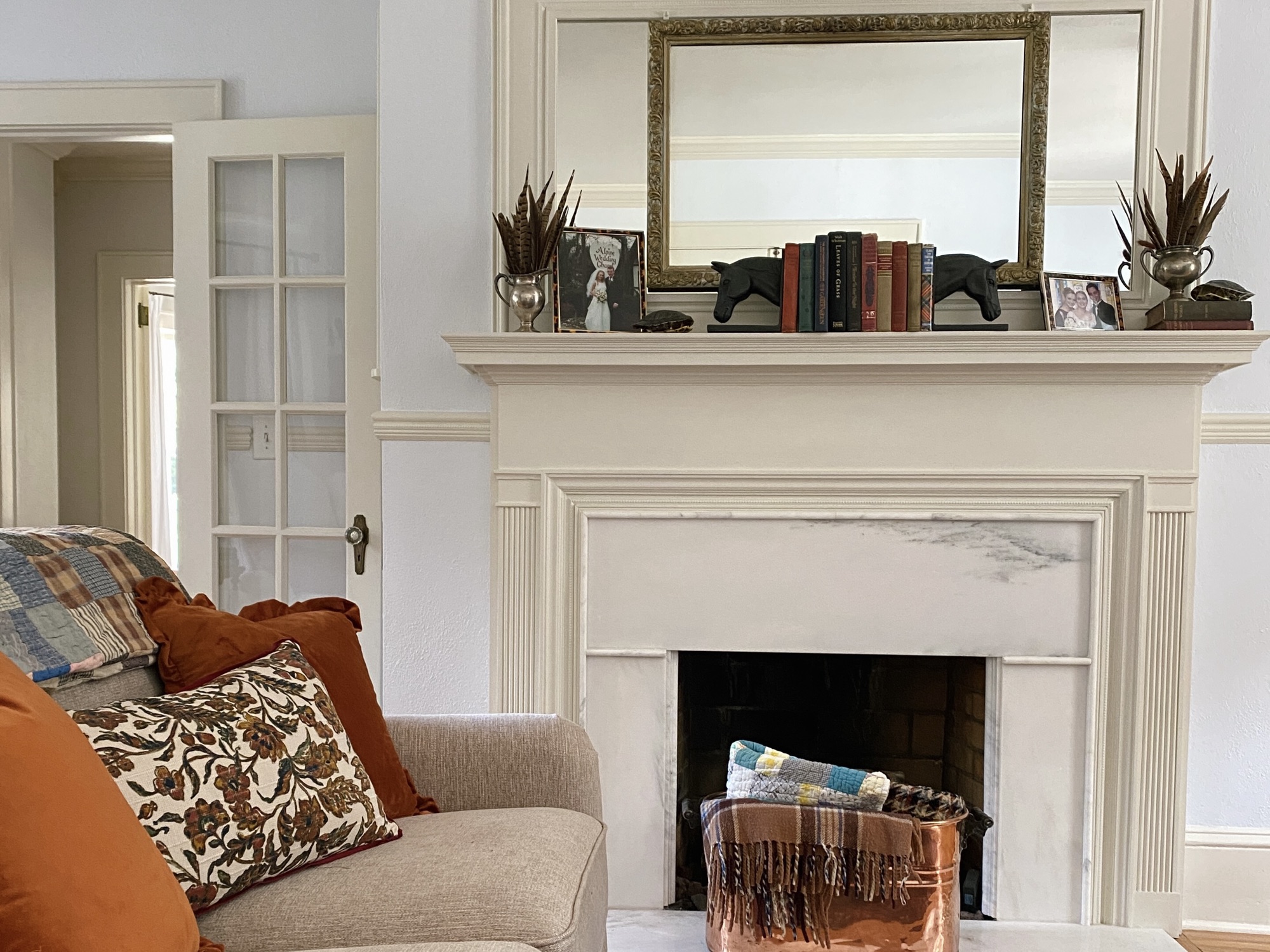
This season I traded the navy blue pillow covers that I used throughout summer for some rich, copper colored velvet ones. If you’re looking to switch your pillow covers this fall, aim for saturated tones like copper, plum, or chocolate. If you want to add more texture to your space, consider tactile materials like velvet, raw linen, or boucle.

In addition to switching out your throw pillows, another great addition to your fall décor are copper and brown glass pieces. These are easy things to “hunt” for throughout the year as you’re antiquing. A copper boiler or basin can be used to hold books, magazines, and even throw blankets. A collection of brown and amber vases set in front of a window catches the fading sunrays to cast a magical glow around the room.

As you decorate for fall, don’t overlook lighting. When the daylight grows shorter, we have opportunities in the evening to create a warm, cocooned glow that invites rest with well-placed lamps and even candles. Lighting is a way to add to the rhythm of the season and awaken our senses to calm and comfort. The glow of a lamp in the corner of your living room or the flicker and scent of an autumn candle invites us to the small moments that spark peace within.


Many of my favorite fall items that I used throughout our home this season can be found in this curated grouping on LTK. You can either click HERE to find the complete list, or click the image to be taken directly there.

The Velvet Ribbon Effect – Small Luxuries

If investing in new décor isn’t in your budget this year, or you feel like you already own enough of it, there are ways to take your existing décor up a notch to freshen it up. A budget-friendly fall décor update is using some velvet ribbon. Taking ordinary objects like a stack of books, a candle, or even a piece of artwork, and tying a length of velvet ribbon around them, will transform the ordinary into a piece of intentional seasonal décor.

Well placed bits of velvet ribbon transform ordinary objects into decorative pieces fit for the autumn season.

You can find seasonal velvet ribbon at craft stores or online. Look for shades like cinnamon, olive, rust, or plum to layer with your existing palette.

In my home, I used seasonal toned velvet ribbon around a stack of books, a little amber vase, and large brown bottles. It changed them from ordinary objects into objects d’art. It’s the slightest changes– a bit of ribbon, a tempered light – that tell us it’s time to slow down in this next season.

Permission to Linger

Will this be the autumn that you finally allow yourself to linger? I want to gently encourage you to embrace the comfort that you create in your own home without rushing into the chaos of the holidays. Remember, when you invest in your own home this season, that quality is better than quantity, collected is better than consuming, and luxury can be quiet and accessible. I invite you to observe your own home and find ways to soften your décor this season.

Invitation

Thank you for joining me with this week’s article from my series Falling for Home. Each Friday from August through September, we’ll meet here at BelleAntiquarian.com to reflect on a slow, intentional rhythm of seasonal living, rooted in tradition, home, and memory. Join me next week for Chicken Mull, a lesser-known Southern heritage recipe.

Never miss a post – use the box below to receive the latest Belle Antiquarian articles directly in your in-box. Want to see more of our daily lives? Find me HERE on Instagram.

Explore More from Falling for Home: A Weekly Autumn Journal

This article is part of my Falling for Home series. Be sure to check out these reader favorites:


Each week during the Falling for Home series I am featuring a paint color palette inspired by the topic we discussed. The Velvet Season inspired me to create a moody, rich palette that brings velvet textures and antique finishes to mind. Perfect for living rooms, libraries, and layered interiors.

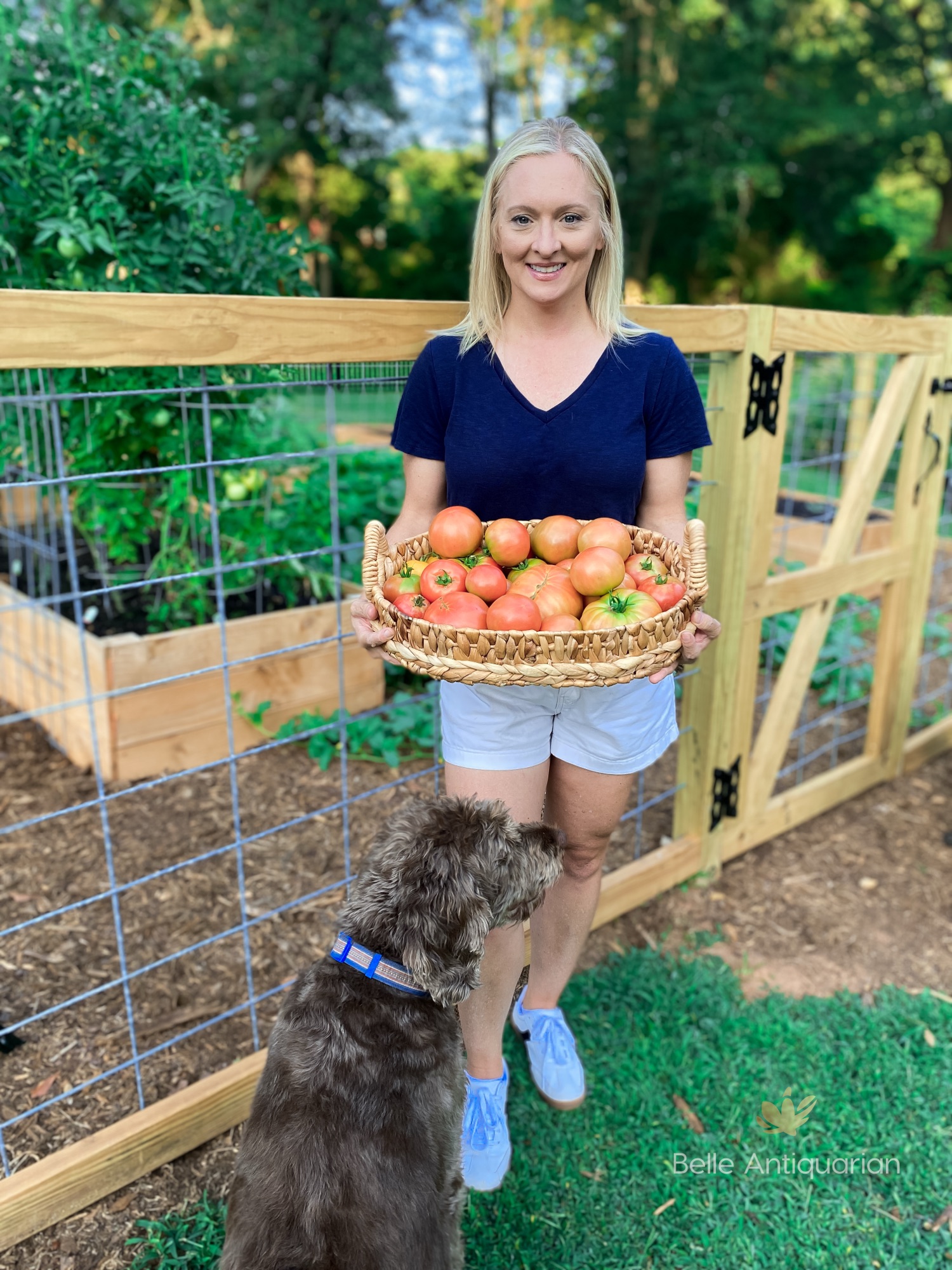
A woman, Abby, stands in front of her garden holding a large basket full of tomatoes. There is a brown dog by her side.

Simple Garden Joys: Everyday Moments from a Southern Summer Garden

The Heart of a Southern Garden

I have found that there are few things in life as empowering as gardening. The humbling act of placing a tiny seed into rich, dark soil, watering it, and waiting for the sun to penetrate the earth…only for a pair of green leaves to emerge a few days later is a series of small miracles. Knowing that I have the capability to do this, regardless of anything else happening in the world, is a grounding force.

As a child I watched my mother use a rototiller to turn the soil and create her own garden in our backyard. I was awe-struck at the zucchini, yellow squash, and corn she grew. She told me the names of the wildflowers she planted: Black-eyed Susans, Bachelor’s Buttons, and Zinnias. I witnessed that by simply placing seeds in dirt, my mother had the power to make things grow. What I didn’t know then is that gardening would grow to become an important part of my life.

This article is part of my Old-Fashioned Summer Saturdays series, a weekly look at timeless summer traditions, seasonal recipes, and vintage-inspired living. This week we’re in the garden, talking about the simple joys that gardening will enrich your life with. Gardening, especially in a Southern backyard, offers more than food or flowers…it offers a sense of peace, purpose, and tradition.

If you’ve found your way here via Instagram, Pinterest, or Google, I hope you’ll take the time to check out the other articles in this series, which you will find linked at the end.

Morning Stillness & Rituals

In the South we are fortunate to have an incredibly long growing season. I begin my planting in February, and by the time July and August arrive, I find myself tending the garden in the early morning or late evening to avoid the sweltering heat. Not long after the sun rises, I make my way to my vegetable garden with a steaming cup of coffee in one hand, dragging the hose behind me with the other.

As I water the thirsty soil around my tomatoes and honeydew melon, there are no cellphone alerts or sounds from the morning news. It has become a time of stillness, peace, and meditation. I lose track of time as I breathe slower and think clearly. My early morning garden routine has become a quiet ritual, an antidote to a busy world and the heartbeat of my Southern summer days.

The thing is, gardening is something that anyone can do. With a little patience, you can create a garden to cultivate as an act of self-care. Whether you have a large backyard, a small deck at an apartment, or just a sunny window, I encourage you to plant a few seeds and become their caretaker.

The Joy of Tending

There is something sacred about working in the garden with your hands. In the rhythm of pulling weeds, tying up tomato vines with old twine, and gently snipping herbs for supper, I find a quiet joy that asks for nothing but presence. My garden is home to heirloom varieties passed down through generations. Cherokee Purple tomatoes, Rattlesnake pole beans, and Mammoth sunflowers stand taller than me by August. These plants, chosen with care, are more than produce; they’re a living thread between the past and present. Gardening reminds me that growth isn’t just about the harvest. It’s about showing up, getting your hands dirty, and tending to something with love.

Unexpected Visitors

As a result of tending a garden, I feel a gentle responsibility for the other visitors that come as a result of this habitat that I’ve created. Every year I breathe a sigh of relief when the pollinators arrive, because they are an integral part of gardening success. I look to see how many varieties of bees are moving from flower to flower. This year I have seen Common Eastern Bumble Bee, Western Honey Bee, and Blueberry Digger Bee.

The butterflies arrive a bit later in the season when the high temperatures settle in. The American Lady and Eastern Tiger Swallowtail flit by quickly as they search for nectar in nearby flowers.

In the evening, the song of the Cicadas starts soft and low, but by the time the sun sets, the Fall Southeastern Dusk-singing Cicadas are loudly calling in unison to each other. It is the song of a Southern summer night.

As I walk though the garden, past the cucumbers and beans, these creatures and I…the toads, bees, birds, and even the bats…we are all together, living on this marvelous earth, depending on one another for food, safety, and cooperation.

Gathering the Harvest

There have been years when I have not harvested a single tomato. The squirrels got to them before they started to blush, or the soil I planted them in wasn’t healthy. This year I planted a new bed full of zinnia seeds, and the results were disappointing, to say the least.

In other years, like this year, I am begging neighbors to take grocery bags full of cucumbers so that they don’t go to waste. (We made pickles more times this year than I ever have before.)

Regardless of the Southern summer harvest, there is joy simply in the act of gardening homegrown vegetables. The process of caring for something other than yourself turns into just that, caring for yourself. Gardening is both self-less and soul-sustaining.

A woman, Abby, stands in front of her garden holding a large basket full of tomatoes. There is a brown dog by her side.

A Garden is Never Just a Garden

Gardening feels like it is a huge part of who I am. It is something that I think about even on the cold, dark days of winter. I have wondered, though, would I still have followed this path if I hadn’t witnessed my mother gardening? My Great Aunt Fern was a gardener into her 90s, so is this something in my DNA?

Maybe the idea of a Tomato Hornworm has you swearing that you will never plant a Cherokee Purple heirloom tomato within 500 miles of your house. Maybe you’re not “outdoorsy.” That’s okay, but I encourage you to figure out what you ARE interested in that brings you simple joy. And I’m willing to bet that it’s not glowing back at you from a screen.

Whether you’re planting tomatoes or simply sitting among the blooms, slowing down with nature invites you to notice life again.

Explore More from Old-Fashioned Summer Saturdays

This article is part of my Old-Fashioned Summer Saturdays series, where I share timeless inspiration for warm-weather living. Be sure to check out these reader favorites:

Timeless Red, White, and Blue Decor Ideas for the Porch
Heirloom Tomato Dreams
Classic Summer Whites: Timeless Linen Dresses and Southern Style Staples
Refrigerator Pickles—A Southern Summer Staple
Creating a Cozy Summer Reading Spot
Old-Fashioned Strawberry Shortcake Cake
Blue and White China for Summer Entertaining
You can subscribe here to receive new articles, seasonal inspiration, and vintage-style favorites delivered right to your inbox.

I often get asked to recommend things that I use while gardening. You can find the items I recommend in my LTK shop HERE, or you can click the image below to be taken directly there.

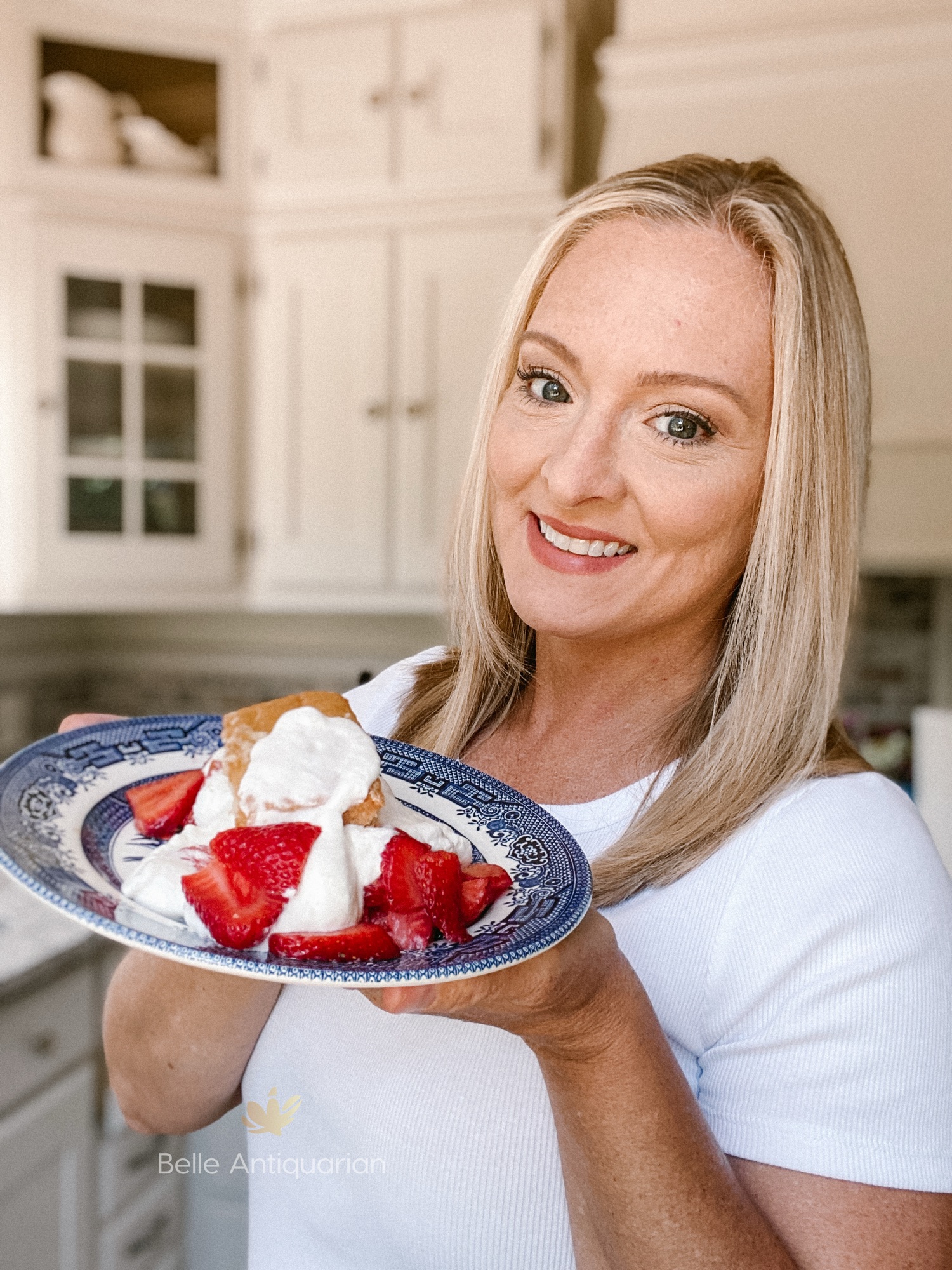
Abby holds a plate of strawberry shortcake.

Old-Fashioned Strawberry Shortcake: A Southern Classic for Summer Gatherings

If there’s one thing the South is known for, it’s good old-fashioned Southern hospitality. And while we may be known for it, it’s no secret that it’s a practice slowly fading from modern culture. Between the rise of social media and the quieting effects of social distancing, our homes aren’t as open to guests as they once were. Today I’m sharing a recipe for old-fashioned strawberry shortcake cake.

This recipe is part of my Old-Fashioned Summer Saturdays series, a weekly look at timeless summer traditions, seasonal recipes, and vintage-inspired living. This week we’re in the kitchen, adapting a tried-and-true recipe found in How to Cook Like a Southerner by Johnnie Gabriel.

If you’ve found your way here via Instagram, Pinterest, or Google, I hope you’ll explore the other articles in this series, which are linked at the end of this article.

Rediscovering the Art of Visiting

As a child, my mother often took us along when she went “visiting.” Visiting meant stopping by the home of a friend or neighbor on a Saturday or Sunday afternoon to catch up on news, share a story or two, and enjoy a little company.

It wasn’t planned. It wasn’t perfect. But it was personal.

Sometimes we stayed for an hour or two, simply catching up. Other times, the conversations were more meaningful…the kind you didn’t want little ears overhearing in the vestibule after church.

Visiting was a verb. We would say, “We’re going visiting this afternoon.” And our hosts would graciously open their doors to welcome us in.

Today, with Pinterest boards and Instagram reels showcasing elaborate charcuterie boards and styled cocktail bars, it’s easy to feel like hosting must be an event. But back then, our hosts weren’t serving sparkling lemonade in etched glasses or arranging cheese by country of origin.

If we were offered anything at all, it might have been a slice of Sara Lee pound cake from the freezer or some saltine crackers with cheddar. And it was more than enough.

With a little preparation and the right mindset, hospitality can still be simple, meaningful, and joyful. You don’t need a Pinterest-worthy home to host a friend or two, just an open heart and a bit of forethought.

A hand holding a heart shaped strawberry in front of a blurry background of many other strawberries.
A heart-shaped strawberry, freshly picked and ready for shortcake. Sometimes the sweetest details are the smallest.

Create a Signature Summer Dish

One easy way to take the stress out of hosting? Choose a signature dish.

When you’re known for something, it becomes your calling card. With this recipe, guests will know that if they stop by your house during the summer, they’re likely to enjoy Strawberry Shortcake Cake.

“It’s what she’s known for.”

Near our home in North Georgia, we’re fortunate to have dozens of small, family-owned farms that offer strawberry picking each spring. These are the reddest, juiciest berries I’ve ever tasted.

Since my children were in strollers, we’ve made it a tradition to pick them by the bucketful, enough to enjoy fresh and still have plenty to freeze for later. Keeping berries in the freezer means I can recreate this dessert any time a guest drops by.

Why This Version Works

You’ll love this twist on a Southern classic for its slightly sweet, cake-like texture that offers the nostalgia of strawberry shortcake without the fuss of difficult biscuits. After years of experimenting, this recipe is my favorite. It’s simple, consistent, and always delicious.

an overhead view of a jadeite green bowl of sliced strawberries on a kitchen counter. The corner of a blue and white striped kitchen towel can be seen.
Sweet and simple in a vintage jadeite bowl; summer memories often start in the kitchen.

Host with Less Stress: Make-Ahead Tips

The easiest way to simplify hosting is by being prepared.

Here are two simple ways to do that:

  1. Keep pantry staples on hand—flour, sugar, baking soda, and vanilla extract, plus frozen strawberries and whipped topping or cream in the fridge.
  2. Make the cake ahead of time. After baking and cooling, wrap it well and freeze. When you need it, just thaw, warm, and serve with strawberries and cream. (Full instructions included in the recipe notes.)
an overhead view of an 8x8 square glass baking dish that is buttered and floured, along with a jadeite green batter bowl full of raw cake batter.
Preparing the cake for strawberry shortcake; a buttered dish and jadeite bowl make summer baking feel special.

The Power of a Personal Tradition

By creating a signature dish that’s always ready, you’re doing more than preparing a dessert. You’re establishing a tradition, one your guests will remember fondly.

Years from now, they’ll say, “Remember how she always served her homemade Strawberry Shortcake Cake every summer?”

A strawberry shortcake dessert on a jadeite green plate.
The finished dish, ready to share. A summer classic that tastes like tradition.

Recipe (keep reading for more details)

A slice of old-fashioned strawberry shortcake ready to serve
Abby Smolarsky | Belle Antiquarian

Strawberry Shortcake Cake

A classic Southern strawberry shortcake cake adapted from How to Cook Like a Southerner by Johnnie Gabriel. Tender cake layers, sweetened strawberries, and fresh whipped cream make this an easy, nostalgic dessert for summer gatherings. Includes make-ahead and freezer-friendly tips.
Prep Time 15 minutes
Cook Time 30 minutes
Chill/Rest Time 6 hours
Total Time 6 hours 45 minutes
Servings: 9 servings
Course: Dessert

Ingredients
  

  • 3 one-pound cartons fresh strawberries washed, hulled, and sliced (or frozen)
  • ¾ cup granulated sugar for strawberries or to taste
  • ½ cup milk
  • 1 Tbsp butter
  • 2 large eggs
  • 1 cup granulated sugar for cake
  • 1 tsp vanilla extract
  • 1 cup sifted all-purpose flour
  • 1 tsp baking powder
  • ¼ tsp salt
  • 2-3 cups heavy cream
  • ¼-⅓ cup powdered sugar optional

Equipment

  • Stand mixer with paddle attachment
  • 8 x 8-inch baking pan
  • Mixing bowls
  • Saucepan
  • Wire cooling rack

Method
 

  1. Six to eight hours before serving, place strawberries in a large bowl and sprinkle with sugar. Cover and refrigerate until syrupy.
  2. Preheat oven to 350 °F. Grease and flour an 8 x 8-ince baking pan.
  3. Heat milk and butter in a small saucepan over medium-low heat until butter melts
  4. Beat eggs in a stand mixer with paddle attachment until thickened. Add sugar and vanilla; beat well.
  5. In a small bowl, stir together flour, baking powder, and salt. Add to egg mixture and mix on low speed.
  6. With mixer running on low, slowly add warm milk mixture. Mix just until combined.
  7. Pour batter into prepared pan and bake 25 to 30 minutes, until a tester inserted in the center comes out clean.
  8. Cool in a pan 10 minutes, then turn out onto a wire rack to cool completely.
  9. Whip cream in a chilled bowl, gradually adding powdered sugar if desired, until soft peaks form.
  10. Cut cake into 9 equal pieces. Slice each horizontally. Assemble with strawberries, syrup, and whipped cream. Garnish with a strawberry slice if desired.

Notes

Using Frozen Strawberries: Thaw completely and drain excess liquid. Simmer strawberries for 10 to 15 minutes until softened and syrupy. Cool before serving.
Make-Ahead and Freezer Instructions: Wrap cooled cake tightly in plastic wrap and then foil. Freeze up to 2 months. Thaw at room temperature for 1 to 2 hours. For best texture, warm unwrapped cake in a 300* oven for 10 to 15 minutes before serving.
Abby holds a plate of strawberry shortcake.

Vintage Finds for a Strawberry Summer

Strawberries have long symbolized the sweetness of summer. Over the years, I’ve collected countless vintage and antique pieces featuring strawberry motifs, many of which have found their way into my kitchen.

I’ve rounded up a curated collection of vintage and new strawberry-themed items in my LTK shop for you to browse. From berry bowls and tea towels to charming serving pieces, these finds add a bit of timeless cheer to your summer table.

A Gentle Invitation to Open Your Home

I hope this week’s article encourages you to open your home the way our mothers and grandmothers once did.

Let friends and neighbors know they’re welcome by simply saying, “Please stop by anytime. I’d love for you to try my Strawberry Shortcake Cake this summer.”

Southern hospitality doesn’t have to be old-fashioned if we choose to make it part of our everyday lives.

Friends, may your summer days be sweet, and your doors always open to good company.

Explore More from Old-Fashioned Summer Saturdays

This article is part of my Old-Fashioned Summer Saturdays series, where I share timeless inspiration for warm-weather living. Be sure to check out these reader favorites:

Timeless Red, White, and Blue Decor Ideas for the Porch
Heirloom Tomato Dreams
Classic Summer Whites: Timeless Linen Dresses and Southern Style Staples
Refrigerator Pickles—A Southern Summer Staple
Creating a Cozy Summer Reading Spot
Blue and White China for Summer Entertaining
Simple Garden Joys


You can subscribe here to receive new articles, seasonal inspiration, and vintage-style favorites delivered right to your inbox.

Creating a Cozy Summer Reading Spot: Southern-Inspired Porch and Garden Retreats

If I think back to the summers of my childhood, the memories that stand out most are filled with adventure and journeys to far-off lands with friends whose names I couldn’t always pronounce. I’d lay flat on the cool floor, escaping the Southern heat as I read my way through stories brought to life by authors like Frances Hodgson Burnett, Roald Dahl, and Lucy Maud Montgomery.


These days, on certain golden afternoons, the light on our sleeping porch turns honey-colored, and the only sounds are the hum of cicadas and the dogs snoring nearby. That’s when I return to the same quiet habit of reaching for a book with a well-worn spine and a story that stretches out like a July day.

That’s where the idea for my dedicated reading spaces began. A soft place to sit, a lamp, a light blanket, and a little side table for a cool drink. Nothing fancy, just a small retreat tucked into the edges of our home.

If you’ve ever dreamed of a quiet corner like this, a retreat made just for you, I hope today’s article will show you just how easy and beautiful it can be. This post is part of Old-Fashioned Summer Saturdays, a weekly series where I share timeless Southern joys, from gardening and seasonal recipes to vintage-style living. If you found your way here from Instagram, Pinterest or Google, I’m so glad you’re here. I hope you’ll stay a while and explore the other articles in the series.

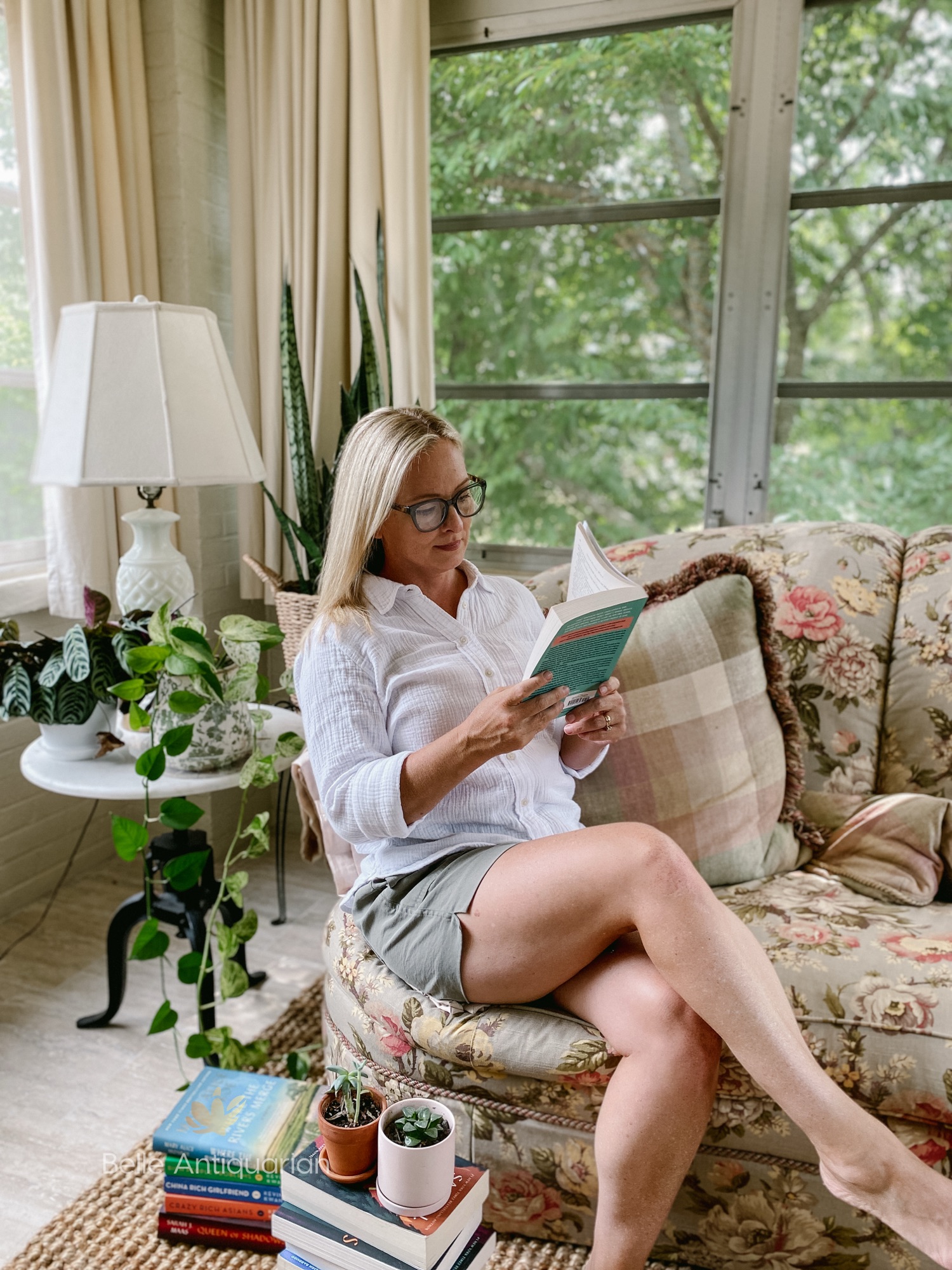
A cozy spot to read a book. A floral couch has a plaid pillow, a lightweight cotton blanket, and an open book. The table next to the couch is a white marble top with an iron stand. On top of the table are plants and a lamp. The room is full of windows showing trees outside.

Why You Need a Summer Reading Retreat

Creating a cozy summer reading spot is about so much more than decorating a corner of your home. We are constantly bombarded with screens, alerts, and noise. Carving out a small space for yourself (a place to rest, reflect, and read) is an act of care.

It doesn’t need to be perfect. It just needs to be yours.

By intentionally designing a retreat, you’re choosing a lifestyle that’s slower, purposeful, and deeply comforting.

Choosing the Perfect Spot, Indoors or Out

When looking for a spot to dedicate to reading this summer, consider the kind of environment that soothes you.

– Do you enjoy a warm breeze, the sound of wind chimes or cicadas, or the smell of garden flowers?
– Is a hammock or shady porch your idea of heaven?
– Or do you prefer the feel of a ceiling fan and the hum of the air conditioner indoors?

Even a corner by a window can become your reading haven with a few thoughtful touches.

This year, I created two reading spots, one indoors and one out. On our sleeping porch, I open the windows and turn the ceiling fan on low. I keep a small table nearby to set down my sweet tea and bookmarks.

Outside, I’ve placed a comfortable chair in the shade garden on our deck. There’s a little side table and a cordless rechargeable lamp for when the light begins to fade. It’s peaceful, quiet, and entirely mine.

Layering Southern Charm and Comfort

As you’re thrifting or antiquing this summer, keep your reading nook in mind. You might find the perfect wicker chair or vintage iron rocker. Or maybe you’ll spot a plant stand that becomes a charming little table with the addition of a tray.

Here are some ideas to inspire your setup:
– Seating: Wicker, wood, or vintage metal chairs layered with soft cushions and a light quilt
– Tables: Repurposed plant stands, small stools, or antique side tables
– Accessories: A linen napkin as a coaster, a glass of iced tea, a jar of flowers from the garden
– Lighting: A small table lamp, string lights, or a vintage-inspired cordless lamp

If you’re going for a vintage look, or just prefer to shop online, I’ve linked a few of my favorite finds HERE and in my LTK shop.

A collage of recommended items that can be used to create a cozy summer reading spot. Included are comfy chairs, side tables, lamps, a light blanket, and some books,

Favorite Books for a Southern Summer

There are certain stories that seem to belong to this season. When I think of summer reading, these titles immediately come to mind:

Fried Green Tomatoes at the Whistle Stop Café
The Secret Garden
Divine Secrets of the Ya-Ya Sisterhood
Where the Crawdads Sing

You can find my full list of summer book recommendations HERE, or click the photo below to shop.

Your Own Slice of Stillness

I encourage you to create your own cozy summer reading spot, somewhere quiet and beautiful, made just for you. It doesn’t take much. A little time. A few thoughtful details. And the decision to rest.

Imagine how rested and refreshed you’ll feel at the end of the season, having given yourself the gift of a little peace, a little story, and a little corner to call your own.

I always look forward to hearing what others are reading, and I’d love to know what’s in your summer stack. Let me know in the comments below!

Explore More from Old-Fashioned Summer Saturdays

This article is part of my Old-Fashioned Summer Saturdays series, where I share timeless inspiration for warm-weather living. Be sure to check out these reader favorites:

Timeless Red, White, and Blue Decor Ideas for the Porch
Heirloom Tomato Dreams
Classic Summer Whites: Timeless Linen Dresses and Southern Style Staples
Refrigerator Pickles—A Southern Summer Staple
Simple Garden Joys
Old-Fashioned Strawberry Shortcake Cake
Blue and White China for Summer Entertaining
You can subscribe here to receive new articles, seasonal inspiration, and vintage-style favorites delivered right to your inbox.

P.S. I’m giving away a little something to help stock your summer book basket—details are on Instagram!

A woman stands in a kitchen holding a red heirloom tomato.

Heirloom Tomato Dreams: A Simple Southern Tomato Sandwich and Summer Garden Ritual

Some memories are sun-warmed and red-stained, like tomatoes still warm from the vine. In my Southern garden, heirloom tomatoes aren’t just vegetables. They’re history, flavor, and summer all wrapped in one.

There’s no mistaking the smell of a tomato vine that’s been brushed by little fingers searching for the ripe fruit on plant. I’m immediately transported back to summers when my children were small, very excited to see what we grew in our tiny backyard garden. There are certain smells that say “summer” to me, and a tomato vine will always be one of them.

A woman stands in a kitchen holding a red heirloom tomato.
It’s a Tomato Girl Summer. Click the photo to shop this look.

This post is part of Old-Fashioned Summer Saturdays, a weekly series where I share timeless Southern joys, from gardening and seasonal recipes to vintage-style living. If you found your way here from Instagram, Pinterest or Google, I hope you’ll stay a while and explore the other articles in the series.

The tomato is one of the most popular and versatile treasures in the Southern garden. While many gardeners will grow enough to can and preserve tomatoes for their pantry, the vast majority of us backyard gardeners are chasing the heirloom beauties for one major purpose: the tomato sandwich. It’s a sandwich that has graced generations of Southern tables, humble in appearance, but unforgettable in flavor.

It’s undisputed that the Southern tomato sandwich consists of two slices of Sunbeam bread dressed with Duke’s mayonnaise and filled with slices of garden-fresh tomatoes (salted and peppered, of course). However, today I would like to offer a couple of variations of the classic Southern tomato sandwich.

A southern tomato sandwich made from a heirloom tomato, Duke's mayonnaise, and sunbeam bread
An undisputed classic, the heirloom tomato sandwich.

The first variation on the classic Southern tomato sandwich is to add another Southern delicacy, pimento cheese. I love to cover one piece of Sunbeam bread in pimento cheese, instead of the Duke’s mayonnaise, and add my fresh tomato slices. From here you can go one of two ways in order to finish the sandwich: a slice of cooked bacon or some zippy refrigerator pickles. Both are equally as delicious with the fresh tomato and pimento cheese, but my favorite way is to add the refrigerator pickles. The tartness of the pickles slices right through the richness of the pimento cheese. A pickle and pimento cheese sandwich? Absolutely not. A tomato sandwich with pimento cheese and refrigerator pickles? You do not know what you’re missing out on! (Refrigerator pickle recipe HERE.)

The second variation on the original Southern tomato sandwich is to swap the Sunbeam bread for some sourdough slices. We’re making a summer tomato grilled cheese sandwich. Instead of using the Duke’s mayonnaise on the inside of the sandwich, we’re going to “butter” the outside of the bread with it. Select some cheese slices of your choosing, but I suggest some mozzarella slices for the direction we’re going in. After you salt and pepper some tomato slices, add them to your sandwich before cooking it like you would any other grilled cheese sandwich. All you need at this point is some balsamic glaze or dressing to dip your sandwich in. It’s heaven on a plate.

A vine-ripened tomato is a thing of glory. But if I have to be honest, I’m often fighting the squirrels for my ripe tomatoes. I usually pick them when they are just starting to blush, and I allow them to finish ripening in our bright kitchen windows. Our kitchen becomes dressed in the colors of our harvest, and the air becomes scented with the fruits of our labor. I found this wonderful candle scent called “tomato and vine.” It’s not the exact same thing as a fresh tomato on the windowsill, but it’s nostalgic and beautiful. I just had to share it!

two heirloom tomatoes on a kitchen counter next to a beautiful glass jar candle scented "tomato and vine"
Click to shop this “tomato and vine” scented candle.

There’s something sacred about the slowness of tending a tomato vine. It’s a ritual, a heritage, a love letter to simpler days…and one bite brings it all rushing back.

Below is a round-up of a few of my favorite tomato-related things! Click the photo to shop or find the complete list HERE. I hope you’ll come back next week for the newest installment of Old-Fashioned Summer Saturdays.

Click the photo to shop my tomato related favorites.

Explore More from Old-Fashioned Summer Saturdays

This article is part of my Old-Fashioned Summer Saturdays series, where I share timeless inspiration for warm-weather living. Be sure to check out these reader favorites:

Simple Garden Joys
Timeless Red, White, and Blue Decor Ideas for Summer Porch Styling
Classic Summer Whites: Timeless Linen Dresses and Southern Style Staples
Refrigerator Pickles—A Southern Summer Staple
Creating a Cozy Summer Reading Spot
Old-Fashioned Strawberry Shortcake Cake
Blue and White China for Summer Entertaining

You can subscribe here to receive new articles, seasonal inspiration, and vintage-style favorites delivered right to your inbox.

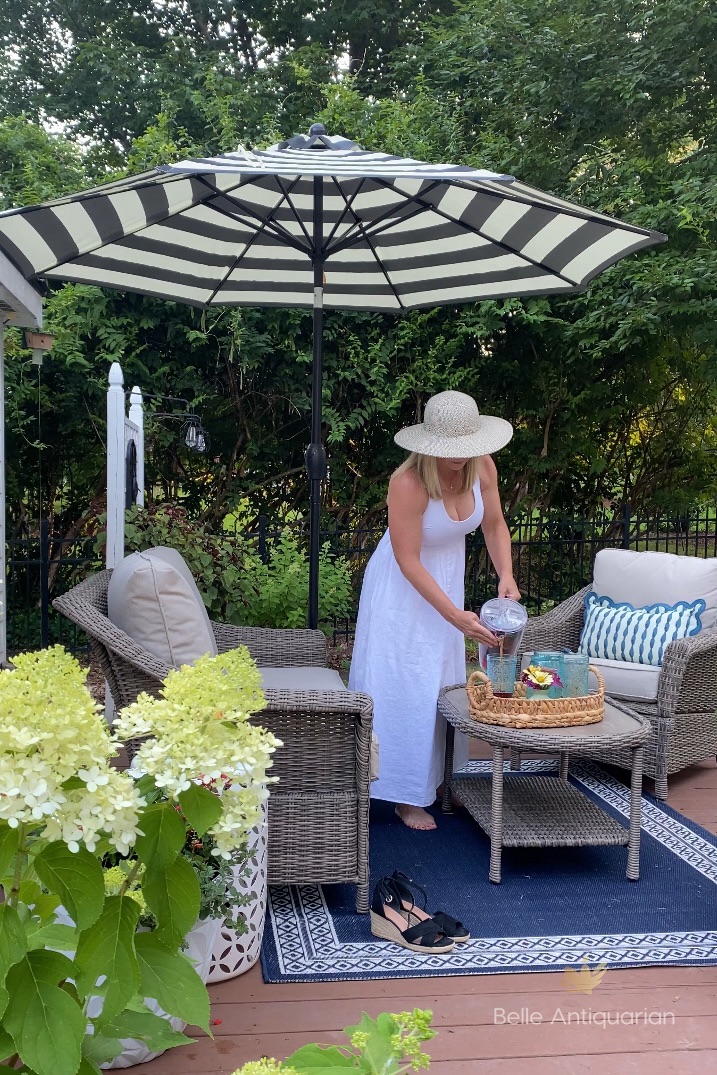
A southern garden at golden hour. A woman wearing a white linen dress and a straw hat pours a glass of sweet tea.

Classic Summer Whites: Timeless Linen Dresses and Southern Style Staples

This article is part of my Old Fashioned Summer Saturdays series, a weekly look at timeless summer traditions, seasonal recipes, and vintage-inspired living. This week, we’re covering the important topic of what to wear in the South during the hot, sticky months of our beloved Summer.

I think people who move to the South often assume that us native folks hate the summer as much as they do. Do we complain about the heat? Of course. Will you overhear us say, “It’s not the heat; it’s the humidity.” You certainly will. But what newcomers may not realize is that our love of summer in the South runs as deep as a magnolia tree’s roots. It is truly our time to shine.

A southern garden at golden hour. A woman stands behind a limelight hydrangea, wearing a white linen dress and straw hat.
Classic summer whites, the dresses we reach for when the humidity rises

Where most transplants go astray is that they often assume what is good for the summer in Nantucket is good for the heat in Georgia. That is simply not the case. We love a linen. A seersucker. A caftan. Lululemon isn’t making anything that Southern girls want touching their skin in mid-July, because darlin’, we will be getting “sticky” in this heat.

A southern garden at golden hour. A woman wearing a white linen dress and a straw hat pours a glass of sweet tea.
White linen, sweet tea, and the quiet hum of summer

Many have strayed from the Labor Day through Memorial Day rule for wearing white clothing. But here in the South, we WILL be wearing white during the summer to reflect the heat. Lightweight fabrics like linen and cotton aren’t just breathable; they’re part of our heritage. Just ask any Southern grandmother why her Sunday dress was always starched and white. These materials move with the heat, not against it.

flat lay of an outfit featuring a white linen dress, sandals, straw hat, and pearl necklaces. The scene is framed by a few flowers against a checkered background.
Perfect for garden parties, porch evenings, and everything in between. Tap the links below for my shoppable picks.

Here are a few of my Style Staples for a Southern Summer

A southern vegetable garden at golden hour. I woman wearing a white linen dress and straw hat enters the garden through a gate.
Nothing beats the feel of a linen dress in a Georgia breeze.

So yes, we may gripe about the heat, but make no mistake, we were made for this season. From porch swings to garden parties, there’s a quiet elegance to the way Southerners dress for summer, and classic whites are right at the heart of it. Whether it’s a crisp linen dress, a cotton blouse that’s seen a dozen Julys, or a pair of pearl drop earrings that feel just right in the glow of twilight, our style says: we belong to this place and this moment. If you’re new to dressing for Southern summers, start simple. I’ve rounded up a few of my favorite timeless summer staples HERE, pieces that look just as lovely on a back porch as they do at a bridal shower.

Explore More from Old-Fashioned Summer Saturdays

This article is part of my Old-Fashioned Summer Saturdays series, where I share timeless inspiration for warm-weather living. Be sure to check out these reader favorites:

Timeless Red, White, and Blue Decor Ideas for the Porch
Heirloom Tomato Dreams
Simple Garden Joys
Refrigerator Pickles—A Southern Summer Staple
Creating a Cozy Summer Reading Spot
Old-Fashioned Strawberry Shortcake Cake
Blue and White China for Summer Entertaining

You can subscribe here to receive new articles, seasonal inspiration, and vintage-style favorites delivered right to your inbox.