
Feminine nightstand with lamp, carafe, small art, storage boxes, candle, and basket.

Home as a Haven: How to Create a Cozy Bedroom Retreat

Welcome back to the sixth installment of our weekly Friday series called Falling for Home: A Weekly Autumn Journal. Each week we explore ways to embrace the softness of the autumn season, create a welcoming environment to restore your spirit, and fall in love with our own homes again. If you’re just joining me here from Google, Pinterest, or Instagram, I invite you to read the other segments in this series, which can be found linked at the bottom of this article.

As the season progresses, we begin to lose daylight hours and the temperatures cool. The sun is setting earlier each day, and we begin to retreat indoors.

Today we’ll start a conversation on the importance of intentionally curating a personal haven in your home and creating a place to restore yourself… not just a place to crash at the end of the day to get some sleep.

The bedroom as a whole reflects the balance of function and comfort: closed storage to keep clutter tucked away, restful art, and layered bedding that invites you to linger.

Step One: Clear the Space for Peaceful Rest

Many of my readers are the family’s nurturers, often putting everyone else’s needs before their own. In the home, this translates into prioritizing the shared family spaces and even the children’s bedrooms. Our bedrooms become the catch all and dumping grounds for all the miscellaneous items that don’t have a designated spot. The clean laundry is often brought into our bedrooms until it can be folded and put away later.

Not only does this create physical clutter; it creates mental clutter and unrest in the very space that we retreat to get rest.

Create Processes

We need processes for dealing with items that make their way into our bedrooms. I like to use a method called “Touch it once.” For example, if I’m taking laundry out of the dryer, then dumping it on my bed, then moving it to a chair to fold it later, I’ve touched it 3 or 4 times before it gets put away. By folding each item as I take it out of the dryer, I will touch it only once before it gets put away. Doing it this way might not feel like it in the beginning, but it becomes a lot less work.

Look around your bedroom to assess miscellaneous piles of clutter. Those are the items that you’ll need to create a new process for. When we move piles of clutter from one spot to another to clean, we’re just moving the mess around and not actually taking care of the mess.

Essential Items

Next, I recommend that you only keep the essential items within sight. These would be things that support the rest, comfort, or function of your bedroom. For example, you’ll need a bedside table of some sort, a lamp within reach of your bed, and a hamper to hold your dirty laundry. Other examples are a throw blanket that gets used on chilly nights or a fan that cools you in warm weather. Essential items are ones that directly help you rest, prepare for the day, or feel comforted. If it distracts you, nags at you, or simply takes up space without providing function, it doesn’t belong in your bedroom.

Daily Items

In addition to essential items, we all have daily items, which I recommend organizing into closed storage containers. These items are practical, not decorative, and by placing them into closed storage containers we are able to keep surfaces peaceful without disrupting our routine. Examples of daily items would be chargers, medications, skincare, books, and pajamas. When each item has a designated space in a closed storage system, we easily prevent clutter from snowballing into piles. Items are still convenient and within reach; they’re just not visually tiresome or nagging.

Implementing these habits can take a little practice. However, you’ll find that if you consistently maintain these methods, it will be well worth the effort when you have a peaceful, relaxing space at the end of the day.

On his side of the bed: a leather catchall, favorite books, and a wood box for everyday necessities, proof that practicality can be handsome when it’s well-contained.

Step Two: Add Meaningful & Personal Touches

Your bedroom is probably a place that most guests won’t see. And if you’re a parent, it may be the one space in your home that’s truly yours. Your bedroom is an opportunity to create a room with décor that reflects your personality and sentimentality. By carefully selecting your furnishings and accessories, you can build an area for yourself that makes you feel at home.

Adding personal touches to your bedroom should be done with simplicity, restraint, and sentimentality. For example, a gallery wall of art or family photos creates too much stimulation and interest in a space that is intended for relaxation. Instead, try adding a small family photo in a frame on your nightstand or dresser.

You can easily personalize your bedroom by adding one small vase for flowers, a small antique dish as a catchall, or an heirloom quilt at the end of your bed. Instead of surrounding your room with your entire collections, pick one favorite that you can use in a functional way. By doing so, you’ll keep your space peaceful and uncluttered.

On her side: a small carafe for evening water, original art for a touch of beauty, and storage boxes to keep daily items close but unseen. Serenity comes from thoughtful restraint.

Step Three: Layer Comfort & Care

Repeating tones, from the bamboo shade to the throw blanket and picture frames, bring warmth and cohesion. A reminder that subtle echoes of color and texture create harmony in a room.

Gen Z is known for not using “the big light.” They’re referring to the overhead light, which we call “ambient lighting” in the interior design world. In an area like a bedroom, I tend to agree with them.

Strategically adding lamps to a bedroom for accent and task lighting creates a much more relaxing environment than using “the big light.” I recommend lamps for your nightstands that are easy to reach and turn on/off without getting out of bed. You should be able to easily fit your hand under the shade to operate the switch or use a lamp that has a switch on the cord. If you have a reading chair in your bedroom, a floor lamp can be a well-thought-out addition.

Another way to create a relaxing environment for yourself is to consider your comfort and senses. Stay away from scratchy or uncomfortable fabrics that will be next to your skin. Consider whether candles, fragrance plug-ins, and even laundry detergents are overpowering your senses. No smell is better than a strong smell.

Lastly, consider your needs while you are in your room. If you frequently find yourself getting up for water, a carafe of water and drinking glass will be helpful to you.

Soft lamplight turns the bedroom into a sanctuary at dusk, offering a place to exhale as the day comes to a close.

Step Four: Invest in Quality Where It Counts

If you follow me on Instagram, you know that I love a good bargain and buying things second-hand. However, there are some things in the bedroom that I won’t compromise on. A good rule of thumb is, the closer it is to your skin, the higher quality you need to invest in. A good example of this is choosing bargain window coverings, but higher quality bedding. You won’t be laying down at night on your curtains, but you will be on the sheets.

When purchasing bedding, I recommend looking at thread count and fabric materials. If there isn’t a thread count listed, it’s most likely very low. High thread count sheets will last decades, so while the upfront cost may be marginally more, they will last incredibly longer than cheaper options… saving you money in the long run.

It’s also important to consider fabric materials. Fabric materials with descriptions like “knit, jersey, cooling” are less breathable than materials with long-staple natural fibers like Egyptian cotton. They are inferior materials that usually weave some sort of synthetic material made of plastic into the fibers. Synthetic materials don’t last very long and will need to be replaced in a short amount of time.

Most of us are on a budget, and it’s simply not realistic to invest in the highest quality of furnishings and accessories all at once for our spaces. I encourage you to make a point of switching things over one at a time until you have created a well-curated space that you deserve. Swap furniture made of composite materials for solid wood pieces, synthetic bedding for high-quality bedding made from renewable materials, mass-produced art for original art that reflects your unique personality. In this way, we create a collected space that truly becomes a haven in our home.

Layering textures – the quilt, duvet, and throw – adds depth and comfort. Each piece contributes to the feeling of being enveloped in warmth.

Step Five: Introduce Seasonal Color & Mood

I would be remiss if I didn’t point out the impact that color has on your bedroom haven. The psychology of color tells us that our emotions are subconsciously affected by the colors in our spaces. Restaurant owners, marketing professionals, and health care facilities understand that color goes beyond preference.

When choosing wall color, linens, and accessories in a bedroom, it’s important to understand the effects of your choices. I recommend tones with less saturation if you are trying to create a palette to anchor your room’s mood. Too much visual interest will hinder relaxation in a bedroom.

Today I am recommending a set of three colors, which can also be seen on the image below. Pale Oak, Cloud White, and Hale Navy are choices that you can bring into your space in a variety of ways such as furniture, bedding, lampshades, throw blankets, and artwork. They also provide a relatively neutral backdrop for you to add your personal touches that were mentioned above. If you can’t repaint your bedroom at this time, these three colors also tend to work well with a myriad of other colors.


Throughout this article I have mentioned things that I find to be useful in a bedroom space. You will find examples of these items in this curated list, which can be found by clicking HERE or clicking on the image below. You’ll find many more choices in this list than the ones pictured.

Click to shop from a list of suggestions for each of these areas.

Explore More from Falling for Home: A Weekly Autumn Journal

This article is part of my series called Falling for Home: A Weekly Autumn Journal. Be sure to check out these reader favorites:

You can subscribe here to receive new articles, seasonal inspiration, and vintage-style favorites delivered right to your inbox.


Abby holds a plate of strawberry shortcake.

Old-Fashioned Strawberry Shortcake: A Southern Classic for Summer Gatherings

If there’s one thing the South is known for, it’s good old-fashioned Southern hospitality. And while we may be known for it, it’s no secret that it’s a practice slowly fading from modern culture. Between the rise of social media and the quieting effects of social distancing, our homes aren’t as open to guests as they once were. Today I’m sharing a recipe for old-fashioned strawberry shortcake cake.

This recipe is part of my Old-Fashioned Summer Saturdays series, a weekly look at timeless summer traditions, seasonal recipes, and vintage-inspired living. This week we’re in the kitchen, adapting a tried-and-true recipe found in How to Cook Like a Southerner by Johnnie Gabriel.

If you’ve found your way here via Instagram, Pinterest, or Google, I hope you’ll explore the other articles in this series, which are linked at the end of this article.

Rediscovering the Art of Visiting

As a child, my mother often took us along when she went “visiting.” Visiting meant stopping by the home of a friend or neighbor on a Saturday or Sunday afternoon to catch up on news, share a story or two, and enjoy a little company.

It wasn’t planned. It wasn’t perfect. But it was personal.

Sometimes we stayed for an hour or two, simply catching up. Other times, the conversations were more meaningful…the kind you didn’t want little ears overhearing in the vestibule after church.

Visiting was a verb. We would say, “We’re going visiting this afternoon.” And our hosts would graciously open their doors to welcome us in.

Today, with Pinterest boards and Instagram reels showcasing elaborate charcuterie boards and styled cocktail bars, it’s easy to feel like hosting must be an event. But back then, our hosts weren’t serving sparkling lemonade in etched glasses or arranging cheese by country of origin.

If we were offered anything at all, it might have been a slice of Sara Lee pound cake from the freezer or some saltine crackers with cheddar. And it was more than enough.

With a little preparation and the right mindset, hospitality can still be simple, meaningful, and joyful. You don’t need a Pinterest-worthy home to host a friend or two, just an open heart and a bit of forethought.

A hand holding a heart shaped strawberry in front of a blurry background of many other strawberries.
A heart-shaped strawberry, freshly picked and ready for shortcake. Sometimes the sweetest details are the smallest.

Create a Signature Summer Dish

One easy way to take the stress out of hosting? Choose a signature dish.

When you’re known for something, it becomes your calling card. With this recipe, guests will know that if they stop by your house during the summer, they’re likely to enjoy Strawberry Shortcake Cake.

“It’s what she’s known for.”

Near our home in North Georgia, we’re fortunate to have dozens of small, family-owned farms that offer strawberry picking each spring. These are the reddest, juiciest berries I’ve ever tasted.

Since my children were in strollers, we’ve made it a tradition to pick them by the bucketful, enough to enjoy fresh and still have plenty to freeze for later. Keeping berries in the freezer means I can recreate this dessert any time a guest drops by.

Why This Version Works

You’ll love this twist on a Southern classic for its slightly sweet, cake-like texture that offers the nostalgia of strawberry shortcake without the fuss of difficult biscuits. After years of experimenting, this recipe is my favorite. It’s simple, consistent, and always delicious.

an overhead view of a jadeite green bowl of sliced strawberries on a kitchen counter. The corner of a blue and white striped kitchen towel can be seen.
Sweet and simple in a vintage jadeite bowl; summer memories often start in the kitchen.

Host with Less Stress: Make-Ahead Tips

The easiest way to simplify hosting is by being prepared.

Here are two simple ways to do that:

  1. Keep pantry staples on hand—flour, sugar, baking soda, and vanilla extract, plus frozen strawberries and whipped topping or cream in the fridge.
  2. Make the cake ahead of time. After baking and cooling, wrap it well and freeze. When you need it, just thaw, warm, and serve with strawberries and cream. (Full instructions included in the recipe notes.)
an overhead view of an 8x8 square glass baking dish that is buttered and floured, along with a jadeite green batter bowl full of raw cake batter.
Preparing the cake for strawberry shortcake; a buttered dish and jadeite bowl make summer baking feel special.

The Power of a Personal Tradition

By creating a signature dish that’s always ready, you’re doing more than preparing a dessert. You’re establishing a tradition, one your guests will remember fondly.

Years from now, they’ll say, “Remember how she always served her homemade Strawberry Shortcake Cake every summer?”

A strawberry shortcake dessert on a jadeite green plate.
The finished dish, ready to share. A summer classic that tastes like tradition.

Recipe (keep reading for more details)

A slice of old-fashioned strawberry shortcake ready to serve
Abby Smolarsky | Belle Antiquarian

Strawberry Shortcake Cake

A classic Southern strawberry shortcake cake adapted from How to Cook Like a Southerner by Johnnie Gabriel. Tender cake layers, sweetened strawberries, and fresh whipped cream make this an easy, nostalgic dessert for summer gatherings. Includes make-ahead and freezer-friendly tips.
Prep Time 15 minutes
Cook Time 30 minutes
Chill/Rest Time 6 hours
Total Time 6 hours 45 minutes
Servings: 9 servings
Course: Dessert

Ingredients
  

  • 3 one-pound cartons fresh strawberries washed, hulled, and sliced (or frozen)
  • ¾ cup granulated sugar for strawberries or to taste
  • ½ cup milk
  • 1 Tbsp butter
  • 2 large eggs
  • 1 cup granulated sugar for cake
  • 1 tsp vanilla extract
  • 1 cup sifted all-purpose flour
  • 1 tsp baking powder
  • ¼ tsp salt
  • 2-3 cups heavy cream
  • ¼-⅓ cup powdered sugar optional

Equipment

  • Stand mixer with paddle attachment
  • 8 x 8-inch baking pan
  • Mixing bowls
  • Saucepan
  • Wire cooling rack

Method
 

  1. Six to eight hours before serving, place strawberries in a large bowl and sprinkle with sugar. Cover and refrigerate until syrupy.
  2. Preheat oven to 350 °F. Grease and flour an 8 x 8-ince baking pan.
  3. Heat milk and butter in a small saucepan over medium-low heat until butter melts
  4. Beat eggs in a stand mixer with paddle attachment until thickened. Add sugar and vanilla; beat well.
  5. In a small bowl, stir together flour, baking powder, and salt. Add to egg mixture and mix on low speed.
  6. With mixer running on low, slowly add warm milk mixture. Mix just until combined.
  7. Pour batter into prepared pan and bake 25 to 30 minutes, until a tester inserted in the center comes out clean.
  8. Cool in a pan 10 minutes, then turn out onto a wire rack to cool completely.
  9. Whip cream in a chilled bowl, gradually adding powdered sugar if desired, until soft peaks form.
  10. Cut cake into 9 equal pieces. Slice each horizontally. Assemble with strawberries, syrup, and whipped cream. Garnish with a strawberry slice if desired.

Notes

Using Frozen Strawberries: Thaw completely and drain excess liquid. Simmer strawberries for 10 to 15 minutes until softened and syrupy. Cool before serving.
Make-Ahead and Freezer Instructions: Wrap cooled cake tightly in plastic wrap and then foil. Freeze up to 2 months. Thaw at room temperature for 1 to 2 hours. For best texture, warm unwrapped cake in a 300* oven for 10 to 15 minutes before serving.
Abby holds a plate of strawberry shortcake.

Vintage Finds for a Strawberry Summer

Strawberries have long symbolized the sweetness of summer. Over the years, I’ve collected countless vintage and antique pieces featuring strawberry motifs, many of which have found their way into my kitchen.

I’ve rounded up a curated collection of vintage and new strawberry-themed items in my LTK shop for you to browse. From berry bowls and tea towels to charming serving pieces, these finds add a bit of timeless cheer to your summer table.

A Gentle Invitation to Open Your Home

I hope this week’s article encourages you to open your home the way our mothers and grandmothers once did.

Let friends and neighbors know they’re welcome by simply saying, “Please stop by anytime. I’d love for you to try my Strawberry Shortcake Cake this summer.”

Southern hospitality doesn’t have to be old-fashioned if we choose to make it part of our everyday lives.

Friends, may your summer days be sweet, and your doors always open to good company.

Explore More from Old-Fashioned Summer Saturdays

This article is part of my Old-Fashioned Summer Saturdays series, where I share timeless inspiration for warm-weather living. Be sure to check out these reader favorites:

Timeless Red, White, and Blue Decor Ideas for the Porch
Heirloom Tomato Dreams
Classic Summer Whites: Timeless Linen Dresses and Southern Style Staples
Refrigerator Pickles—A Southern Summer Staple
Creating a Cozy Summer Reading Spot
Blue and White China for Summer Entertaining
Simple Garden Joys


You can subscribe here to receive new articles, seasonal inspiration, and vintage-style favorites delivered right to your inbox.

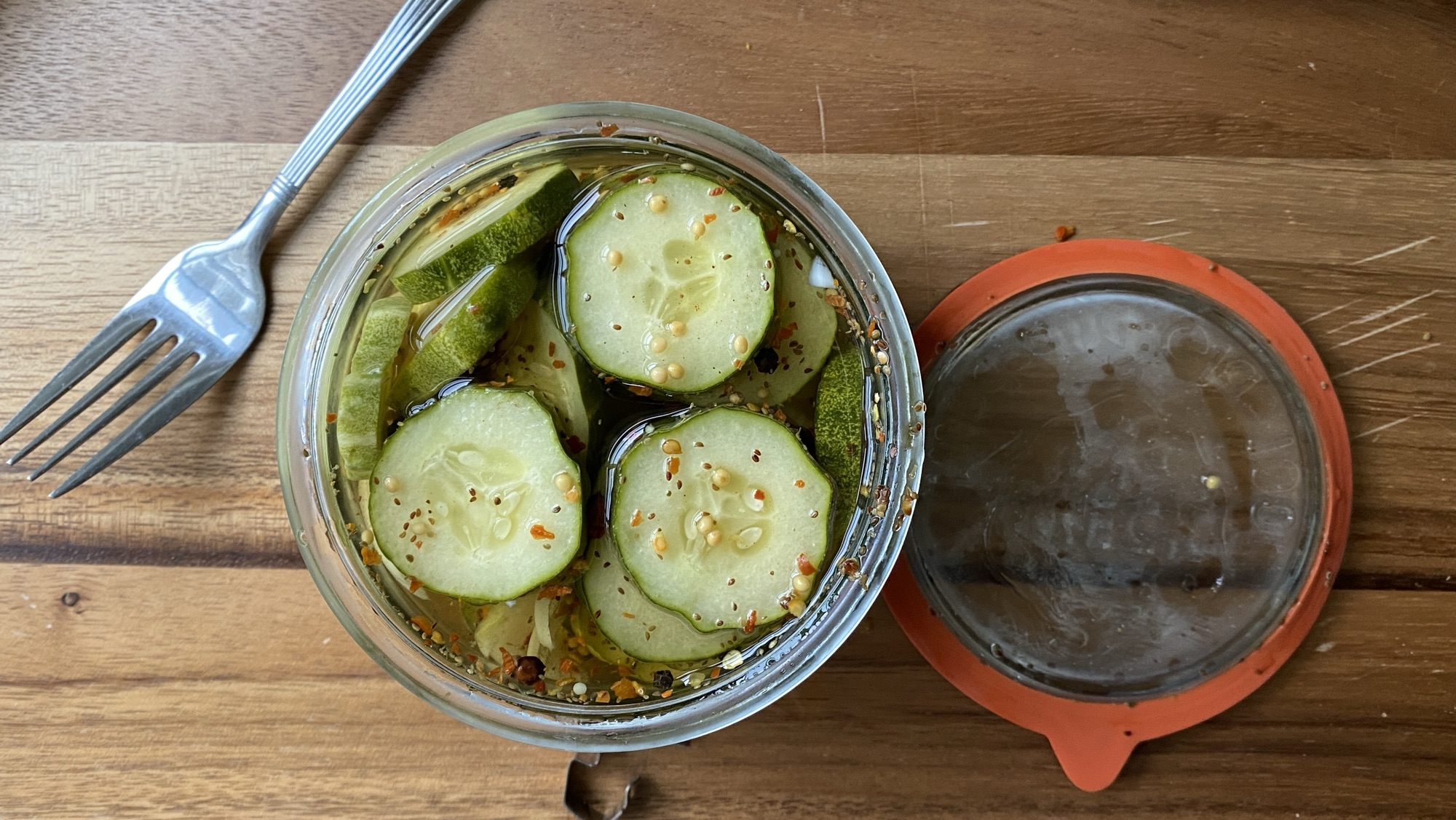
Old-fashioned refrigerator pickles made with fresh cucumbers and onions

How to Make Old-Fashioned Refrigerator Pickles in Weck Jars: A Southern Summer Staple

This recipe is part of my Old Fashioned Summer Saturdays series, a weekly look at timeless summer traditions, seasonal recipes, and vintage-inspired living. This week, we’re in the garden, putting those homegrown cucumbers to good use with a classic refrigerator pickles recipe…no canning required!

If you’ve ever grown cucumbers in your garden, you know how quickly they multiply. This easy refrigerator pickle recipe is my favorite way to preserve them without needed a canner, water bath, or any special tools. It’s fast, crisp, and full of flavor. Whether you’re a beginner or a seasoned gardener, you’ll love this vintage-inspired method.

Why I love this method:

  • No canning, no fuss. Plus it’s a great way to use homegrown produce.
  • This is a modern take on a timeless tradition.
  • There are no daunting tasks.
  • This recipe is easily adaptable and hard to mess up!

Supplies You’ll Need (affiliate links)

Recipe (keep reading for more details)

Old-fashioned refrigerator pickles made with fresh cucumbers and onions
Abby Smolarsky | Belle Antiquarian

Old-Fashioned Refrigerator Pickles

A no-canning refrigerator pickle recipe using fresh cucumbers and classic Southern flavors. Crisp, sweet-tangy, and easy to make; no special equipment required.
Prep Time 14 minutes
Additional Time 2 days
Total Time 2 days 14 minutes
Servings: 4 servings
Course: Side Dish
Cuisine: American, Southern

Ingredients
  

  • 4 medium cucumbers, thinly sliced
  • 1 Vidalia onion, thinly sliced
  • 2 cups white vinegar
  • 1 cup granulated sugar
  • 1 Tbsp kosher salt
  • 1 tsp mustard seeds
  • 1 tsp celery seeds
  • ½ tsp black pepercorns
  • ½ tsp crushed red pepper flakes
  • ½ clove of garlic per jar, peeled

Equipment

  • Clean mason jars or Weck jars
  • Sharp knife
  • Cutting board
  • Measuring cups and spoons

Method
 

  1. In a large bowl or measuring cup, whisk together the vinegar, sugar, salt, mustard seeds, celery seeds, black peppercorns, and red pepper flakes until the sugar and salt dissolve.
  2. Add the sliced cucumbers and onion to the brine, stirring to coat evenly.
  3. Place ½ garlic clove into each clean jar.
  4. Transfer the cucumber mixture into the jars, pressing gently to remove air bubbles and ensure the vegetables are fully submerged.
  5. Seal the jars tightly to refrigerate for at least 24 hours; for best flavor, allow 48 hours before serving.
  6. Shake the jars gently every few hours during the first day to distribute the seasonings evenly.

Notes

This is a small batch recipe and will typically fill 2-3 jars. If you have additional cucumbers or jars, simply prepare more brine to fully cover the vegetables. 

How to Customize Your Pickles

There is no end to the flavor combinations that you can create. Today I used radishes and cool-jalapenos (Yep, they’re a thing) to some of the jars for a few different flavor combinations. If you have a lot of extra okra, then you could pickle okra instead of cucumbers. Don’t have a Vidalia onion on hand? Use a red onion, or even swap out the white vinegar for apple cider vinegar. This recipe is very flexible!

Storage Tips

Wait about 48 hours for these pickles to achieve their peak flavor, but don’t wait too long to enjoy eating them. Since they don’t have preservatives or an airtight seal, they need to be enjoyed within a month. Keep them stored in the refrigerator, and always use a clean utensil when serving them to avoid contamination.

Whether you’re overrun with cucumbers or just looking for a way to savor summer, these easy pickles are a delicious and practical solution. If you give this recipe a try, tag me on Instagram or pin this post to save it for later! (Looking for the exact tools and products that I used? Find them HERE.)

Explore More from Old-Fashioned Summer Saturdays

This article is part of my Old-Fashioned Summer Saturdays series, where I share timeless inspiration for warm-weather living. Be sure to check out these reader favorites:

Timeless Red, White, and Blue Decor Ideas for the Porch
Heirloom Tomato Dreams
Classic Summer Whites: Timeless Linen Dresses and Southern Style Staples
Simple Garden Joys
Creating a Cozy Summer Reading Spot
Old-Fashioned Strawberry Shortcake Cake
Blue and White China for Summer Entertaining

You can subscribe here to receive new articles, seasonal inspiration, and vintage-style favorites delivered right to your inbox.

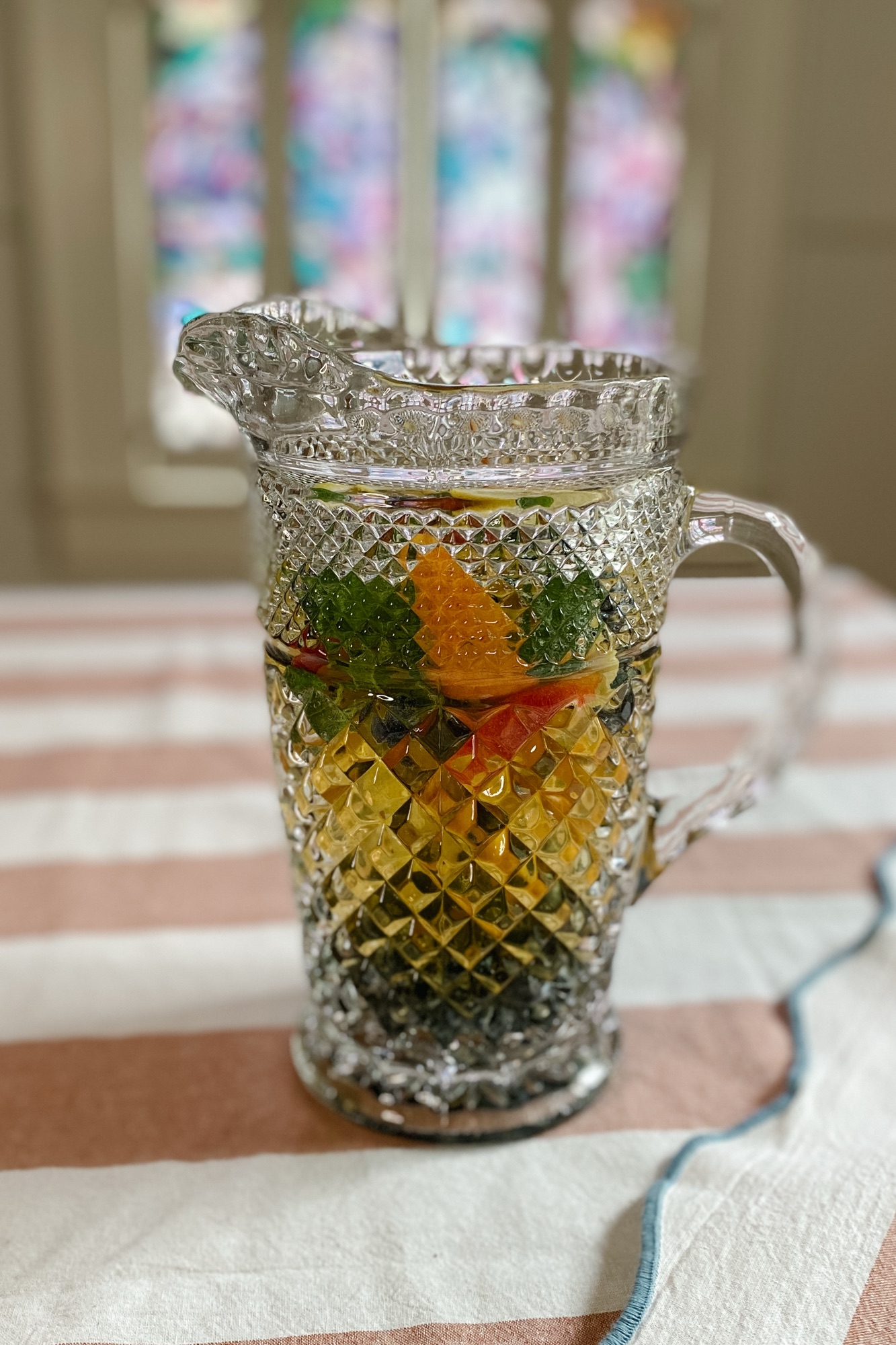
vintage glass pitcher with a beautiful southern sangria

Southern Garden Sangria: A Vintage-Inspired Summer Sip

Southern summers invite slow afternoons, porch swings, and a glass of something cold in hand. This Southern Sangria is my take on a warm weather classic, inspired by vintage garden parties, worn recipe cards, and the kind of fruit-filled drinks inspired by old-fashioned fruit punches and garden-party entertaining.

This article may contain affiliate links. If you purchase through these links, Belle Antiquarian may earn a small commission at no additional cost to you.

Why This Southern Sangria Feels Special

This isn’t the overly sweet sangria you may have had at a chain restaurant. This version is subtle, fragrant, and anchored by summer’s best fruits.

The addition of peach schnapps adds a soft floral note that pairs beautifully with ripe peaches, blueberries, and a handful of mint that I grow out on my sleeping porch.

And while you can absolutely serve it in a mason jar, I love to pour it into these vintage inspired glasses. It turns even a weeknight sip into something memorable.

Fresh summer fruit perfect for a southern garden sangria

Southern Garden Sangria Recipe

This is a simple sangria to prepare, with just a bit of time needed for the flavors to come together. Once it’s chilled, it’s ready to pour and serve.

Fresh summer fruit perfect for a southern garden sangria
Abby Smolarsky, Belle Antiquarian

Southern Garden Sangria

A vintage-inspired Southern garden sangria made with dry white wine, peach schnapps, bourbon, fresh peaches, blueberries, lemon, and mint. Light, fragrant, and perfect for summer entertaining.
Prep Time 15 minutes
Chill 2 hours
Total Time 2 hours 15 minutes
Servings: 6 servings
Course: Drinks
Cuisine: Southern

Ingredients
  

  • 1 bottle dry white wine, such as dry Riesling
  • ½ cup peach schnapps
  • ¼ cup bourbon
  • 1 ripe peach, sliced
  • ½ cup fresh blueberries
  • ½ lemon, thinly sliced
  • 1 handful fresh mint
  • Sparking water or club soda, to top
  • Ice, for serving
  • Additional mint or edible blooms, for garnish, optional

Method
 

  1. In a large pitcher, combine the white wine, peach schnapps, and bourbon.
  2. Add the sliced peach, blueberries, lemon slices, and fresh mint. Stir gently.
  3. Refrigerate for at least 2 hours, or overnight for more developed flavor.
  4. Just before serving, top with sparkling water or club soda.
  5. Serve over ice in glasses. Garnish with additional mint or edible blooms, if desired.

Notes

For a lighter version, add more sparkling water just before serving. Use seasonal fruit such as strawberries, plums, or blackberries depending on what is fresh.
Alcohol note: This recipe contains alcohol and is intended for adults 21 and older.

Entertaining Tip: Serve It in Something Beautiful

Once everything is chilled and ready, this is where I like to slow down a bit and think about how it will be served.

The glass truly matters. Pull out the vintage stemware, even if it’s only for yourself. Here are a few favorites you can find online:

vintage glass pitcher with a beautiful southern garden sangria

Make It Your Own

This sangria is forgiving. Use what’s in season or growing near you. Swap the peaches for plums, or the blueberries for strawberries. Add a splash of rose instead of white wine. The beauty is in the mix.

More Summer Recipes and Garden-Inspired Ideas

If you find yourself lingering a little longer over summer meals and simple gatherings, there are a few more ideas you may enjoy.

From fresh herbs clipped just before dinner to desserts meant for warm evenings on the porch, these are the kinds of recipes and traditions that make the season feel full.

ingredients for a southern sangria using many items fresh from the garden

How to Create a One-of-a-Kind Father’s Day Gift from the Antique Store

If you’re looking for a thoughtful Father’s Day gift that’s as unique as Dad, head to your favorite antique store. With a little creativity and a touch of nostalgia, you can create a meaningful gift that feels personal, useful, and memorable.

Step 1: Start with a Container

Look for a piece that can hold the other items—a vessel that becomes part of the gift itself. Think beyond traditional gift baskets. Great choices include:

  • A vintage wooden toolbox
  • A retro tin
  • An enamel dishpan
  • A metal tray
  • A wooden crate or drawer

Step 2: Find a Feature Antique

This is the item that gives the gift its character. Try to find something with history or a bit of charm that fits Dad’s interests. A few ideas:

  • A cocktail shaker for the home bartender
  • An old fishing lure or gear for the outdoorsman
  • A vintage pen for the journaler or writer
  • Records from his favorite artist
  • A metal sign for his garage or workshop

Step 3: Add Something New

Tie it all together with a small, new item that complements your finds. This bridges the gap between vintage charm and modern practicality. Try:

  • A bottle of bourbon
  • A new set of grill spices
  • A local coffee blend
  • A gift card to a tool or record store
  • A fresh notebook
Cigar Box + Vintage Shaker + Bartenders Book + Whiskey

Gift Combinations to Inspire You:

  • Bar-Inspired: Metal tray + antique shaker + favorite bourbon
  • Fishing Fan: Tackle box + vintage lures + local bait shop gift card
  • Grill Set: Old ammo box + cast iron branding iron + spice rubs
  • Coffee Crate: Vintage tin + enamel mug + fresh ground beans
  • Writer’s Box: Wooden cigar box + vintage pen + new leather journal

The beauty of this idea? It supports small businesses, gives new life to old treasures, and creates a gift that can’t be duplicated.

So this year, shop with heart. Celebrate Dad with a gift that’s built on history, thoughtfulness, and a little antique magic.

Styled garland showing how to dry whole oranges and use them in natural Christmas decor.

How to Dry Whole Oranges for Christmas Decor

When I think of Christmas, I am reminded of fragrant oranges, spicy cloves, and warm cinnamon. For many years I have dried and preserved orange slices to use as Christmas decor. (See this article from 2020.) This year I decided that I would learn how to dry whole oranges, instead of just slices. Today I am sharing the simple steps to drying whole oranges.

The steps for drying whole oranges are very simple, but they are somewhat time-consuming. Today I am sharing the basic things you need to know about how to dry whole oranges. I chose to only dry half a bag of oranges. I wish I had done the entire bag! While it is a little lengthy to dry whole oranges, they turned out really well. I found other spots in the house that I would’ve placed more whole, dry oranges. Next year I’ll put the entire bag into the drying process.

Step One

Turn your oven on to the lowest temperature. My oven’s lowest temperature is 170*. My oven has convection bake and regular bake. I found that convection bake was more effective than the regular bake.

Step Two

Using a small paring knife, you will begin to cut into the orange rind from pole to pole. Don’t quite go all the way to the end/pole. Leave 1/4 of rind on each end of your cut. You’ll want to make sure your cut goes all the way into the pith/rind through to the orange flesh. However, once you start drying them, if you notice that you didn’t get all the way through to the orange flesh, you can take it back out of the oven and cut deeper before putting it back in.

You can see how I didn’t cut deep enough on this orange. You can cut deeper and put it back into the oven to finish drying.

Note: I experimented on one of my oranges to see if I could cut a design other than basic stripes. This doesn’t work as well. Using the method I described above, the oranges will develop gaps and vents, exposing the inner part of the fruit to be dried out. You can experiment as well, but in my experience, basic slits are best.

You can’t see them, but the slits into the orange are there.

Step Three

Once your oranges are cut, you need to decide how you want them to be placed into the oven. My oven is new, so I decided to line a cookie sheet with parchment paper and place them on top. Some people place them directly onto the racks. Other people place them onto metal cooling racks that have been put into a cookie sheet. A friend told me it would not affect drying time. You decide what’s best for you!

I used tongs to turn the oranges every couple of hours. If you notice a cut didn’t go all the way through, take it out to cut deeper before putting it back in again.

Step Four

Next you will leave the oranges in the oven to dry out until the rind is hardened and you believe that the fruit inside is dried out. I had been warned that this would take a long time, and it certainly did. On the first day, I dried them in the oven from 7 am to 7 pm. I didn’t want to leave the oven on overnight, so I took them out. The next day I dried them for another four hours. The third day, I dried them for the entire day again. All in all, I think this was about 24 hours of drying time. Which is why I wished I had dried the entire bag at once.

After Your Oranges are Dried

You can use your dried oranges in garlands, wreaths, or hanging on your Christmas tree. I have tucked dried oranges into my fireplace garland, along with pomegranates, feathers, holly berries, and pine cones. I added ribbon that resembled the colors of dried oranges and pomegranates.

When I dry orange slices, I will save them in an airtight bag to use for multiple years. Before I use dried slices again the next year, I inspect them to make sure there is no mold or anything undesirable on them. Since it is not possible to see inside and inspect whole oranges, I won’t be saving the dried whole oranges to use again next year.

Using natural elements in Christmas decor creates a rich and vibrant ambiance. Since a bag of oranges is relatively inexpensive, you really only need some time to create Christmas decor using whole dried oranges. Have you dried oranges before? Slices, or whole oranges? I’d love to hear your feedback in the comments below. Or, post a photo on Instagram and tag me so that I can see your dried oranges.

Merry Christmas!

Transform Your Dining Room on a Budget

This article contains affiliate links and ads. You can find many of the pieces I feature by clicking on the links at the bottom of this article.

I’m happy to finally share the details on our dining room refresh. Months before our kitchen renovation began, we started on our dining room. This was a low cost project that we completed over a long weekend. With some paint, new draperies, an estate sale find, and collected antiques from the storage bins, I created a dining room that we look forward to hosting holiday dinners in.

The homeowner that did all of the major renovations on our home in the early 2000s painted it a sherbet green with a lighter shade of green on the ceiling. The seller we purchased it from didn’t make any changes to the dining room at all. Every room was kept exactly the way it was when they bought the house, right down to where the nails in the wall were. It was important to me to make this OUR home, and painting is an easy way to do that without changing the style and architecture of a historic home.

One of the changes we made with the biggest impact was to paint the ceiling. If you’re considering painting your ceilings a lighter shade of the wall colors, pause and think twice. Not necessarily because of resale value, but think of how you want people to feel while they’re in your home. If you’re wanting a dramatic effect and an artistic environment, then go for it! But if you want people to feel relaxed and settled, it’s not for you. It’s distracting and chaotic if it’s not done properly.

We painted our walls with Benjamin Moore “Revere Pewter,” and the ceiling is “White Dove.” The trim is Behr “China White.” The trim was already painted for us, and I like how it works with the Revere Pewter. China White reminds me of the color of antique ironstone dishes.

When we sold our last house three years ago, we sold most of our furniture, including the dining room table, chairs, and china cabinet. The rental house we were moving to didn’t have a dining room, and the dining set was looking a little dated, so we sold it on Facebook Marketplace. After we bought this house, I found an estate sale that was selling an Ethan Allen dining set for less than 1/10th of the retail cost. It’s currently on the Ethan Allen website, and the total cost for the table, 8 chairs, and buffet would’ve been over $11,000. We paid around $1,000. It’s worth it to check out estate sales!

I featured the drapery and hardware on an Instagram post several months ago. The drapery and hardware ended up being a source of frustration. The bay windows in our house do not match the measurements of modern bay windows. Modern bay windows have a larger center window with a smaller functional window on each side. Our original historic bay windows have a smaller center (functional) window, with a larger stationary window on each side. The drapery and hardware for our bay windows were custom made to fit them. And unfortunately, they were removed by the seller. I ended up finding hardware and drapery that I preferred, but it was time and money that we weren’t expecting to spend.

The other items in the room, like plates, pitchers, and artwork, are things that I’ve collected over the years. It was a little like Christmas opening all of my boxes that had been in storage for three years, and we’ve only had one broken crystal glass so far!

I’m lucky to have two pieces of artwork by my twin brother, Tyrus Lytton, displayed in our dining room. He painted a portrait of our daughter when she was two or three, and I found a frame online that complemented the antique mirror on the other side of the doorway. He also painted a small watercolor of our house. (Side note: my brother normally does large scale art installations all over the world. I’m very proud of him and thankful to have some of his artwork on a smaller scale.)

Below you can find a list of sources for the items that I used in our dining room. Some of the pieces are antiques, but I have linked similar ones that I found online. Click on the word to be taken to the source where you can find them.

P.S. There are also a few side-by-side- before and after photos below.

As you can see, a little paint and some new draperies can make a big impact. I’m curious if you’ve ever purchased a house and had items removed that were supposed to stay. Let me know in the comments if you’ve experienced that, too!

Until next time,

Abby

Lemon Ginger Honey Tea

Lemon Ginger Honey Tea

Hi! I’m just popping in with a quick post to share an easy tea recipe.

This tea is made using fresh ingredients. All of these ingredients are known to boost immunity, and what better time to enjoy a warm drink than during the cold and flu months of winter?

Lemon ginger honey tea recipe

For this receipt you will need organic ginger, organic lemon, local honey, a small jar, and some kind of utensil to use to get the honey from one container to the other. I used a small rubber spatula and a wooden stirrer. I’ll explain below why you want to use organic, instead of regular lemons and ginger.

Lemon ginger honey tea recipe

First, you will need to wash and thinly slice the lemon. Next you need to peel and thinly slice a finger length of ginger. The easiest way to peel ginger is to use the edge of a metal spoon and scraped the peel off. After everything is washed, peeled, and sliced, start layering your ingredients in your jar. You can either add honey in between layers as you go, or you can fill of your jar at the very end. (I layer the honey as I go.) Did you know that honey is the only food that will never spoil, as long as it is kept sanitary? If you don’t know where to get local honey, some Costco locations sell local honey.

Lemon ginger honey tea recipe

At this point your “tea” is done. You can keep it in the refrigerator for two weeks. Each time you want to make tea, simply scoop a spoonful of the mixture, including some lemons and ginger, into a mug and fill it with warm to hot water. You don’t want to use boiling water because it will remove some of the healthy benefits of the mixture.

Lemon ginger honey tea recipe

A few tips before we get to the printable recipe: The lemons and ginger need to be organic. Otherwise, a) the lemon will be coated in a preservative that you don’t really want to be brewing and ingesting, and b) the ginger won’t contain the healthy yeast it is known to have if it is organic. An alternative to putting your jar in the refrigerator is to allow it to ferment on the counter for 2-4 weeks before putting it into the fridge. Fermenting requires other steps, like burping the jar daily. I do not have experience with fermenting the mixture, so if you want to do that, you should do a quick Google search to find some directions.

Lemon Ginger Honey Tea

A soothing tea made with fresh lemon and warming ginger.

Credit: BelleAntiquarian.com

Ingredients

  • 1 small organic lemon, thinly sliced
  • 1 finger of organic ginger, peeled and thinly sliced
  • local honey to cover and fill your container
  • a clean small jar

Directions

  1. Wash, peel, and slice the ginger thinly.
  2. Wash and slice the lemon thinly.
  3. Layer the honey, lemon, and ginger in a small jar.
  4. Refrigerate your mixture until you’re ready to use it.
  5. When you want to make a cup of tea, scoop out some of the honey mixture, including some lemon and ginger, and place it into a cup. Fill your cup with warm or hot water and mix together. Don’t use boiling water or it will eliminate some of the health benefits of the ingredients.

Never miss a post, subscribe below! (You can unsubscribe at any time.)

Winter Stovetop Potpourri

This is an easy stovetop potpourri that comes together with simple ingredients in just a few minutes.

This potpourri is wonderful any time from autumn through winter. With citrus and layers of spices, it will warm up your home. This is a natural, non-toxic way to make your whole home smell heavenly.

A few tips before we get to the recipe: The amounts for these ingredients are flexible. However, Star Anise is very strong. I don’t recommend using more than 3 seed pods. The best place to find these spices is in the Hispanic area of your grocery store. Not only will the quality be wonderful, the prices will be, too. For example, the cinnamon I buy in the Hispanic area of the store is not only bigger, but it is much, much more affordable.

Winter Stovetop Potpurri

A warming potpourri scent filled with citrus and spice.

Credit: BelleAntiquarian.com

Ingredients

  • 1 small orange or lemon, sliced
  • 1 cup of whole, raw cranberries
  • 1 tablespoon of whole cloves
  • 2 sprigs of fresh rosemary
  • 3 star of anise dried seed pods
  • 3 whole cinnamon sticks
  • water

Directions

  1. Add all of your ingredients to a large sauce pan.
  2. Fill the pot 3/4 way full of water.
  3. Put the pot on a stove burner on the low setting.
  4. As the pot steams or simmers, it will fill your home with a beautiful, natural aroma.
  5. Don’t allow the pot of water to boil. Don’t leave it unattended. You will need to add more water, depending on how long you allow the potpourri to simmer. Don’t allow the water to burn off completely.

Never miss a post, subscribe below! (You can unsubscribe at any time.)

Easy and Elegant Easter Place Settings

Let’s get real for a minute here: You’re probably not hosting Easter brunch for a magazine shoot. Your place settings don’t have to look like the Easter Bunny couldn’t decide what to buy, so he bought one five of everything. There are several reasons why I like to feature simple, but elegant place settings.

First, hosting friends and family for a meal doesn’t need to be unnecessarily complicated. Your guests aren’t expecting a “show.” What they really want is conversation, fellowship, contact. It’s possible to make them feel special when they sit down to eat without killing yourself to make it look that way.

Next, making a place setting look special doesn’t need to cost a fortune. As I talked about in this post HERE, I like to find basic dishes that can be used for all sorts of occasions. White works…go with it. If you buy different dishes to use for different holidays and events, the cost of hosting will take some joy out of doing it. Not to mention, you will need to find storage for all the various things. We are blessed to have an abundance of storage space; but honestly, there’s never enough space to store all of the things you have. Bottom line, invest in some nice, quality basic pieces that you can use time and time again.

Finally, sometimes less is more. I firmly believe in keeping things simple and classic. I don’t want to sit down to a meal and feel like I’m surrounded by cluttered decorations. Can we say, “Claustrophobic”? That’s not how you want your guests to feel. Hosting is all about making your guests feel comfortable and welcome. Focus on that!

With all of that said, here are some examples of simple and elegant Easter place settings.

This is in our dining room:

//assets.pinterest.com/js/pinit.js

To see any photo larger, just click on it!

The tablecloth, place mats, and napkins are all from HomeGoods. The plates are antique German china, but I’d also be completely comfortable using my favorite white plates from World Market. The mini tulips are from Publix; we used them all throughout our Spring decor this year and you can see more of that HERE and HERE.

Here are some examples of other people’s place settings that I found on Pinterest. If you’d like to follow me on Pinterest, use the button on the top, right corner of the page.
IMG_1922

//assets.pinterest.com/js/pinit.js

I found this on Or So She Says…. She has a great how-to. I’m not great with acrylic paint, so I’d opt for a gold or silver Sharpie marker. Look for the little nests in the floral department of Michael’s or Hobby Lobby. 
Cookie cutter bunny
This one seems so simple and FUN! I found it on All You.com. You can find M & M’s of all one color at Party City, Michael’s, or Hobby Lobby. 
Super affordable and your guests can take this one home! I found it on With a Grateful Prayer and a Thankful Heart. Use simple twine, string, or even embroidery floss to bind the sticks together. If you want to skip on the tags, you could type of the verse on some paper or card stock and cut it into strips. You could lay it with the strip or even glue the strip. Since it’s sticks, simply use Elmer’s glue. 
This one is a little different, but I love it: 

//assets.pinterest.com/js/pinit.js

I found this on Apartment Therapy. If your local store has carrots with the green tops attached, you could totally use those, too. It reminds me of the poem by Else Holmelund Minarik:
Little seeds we sow in spring
growing while the robins sing,
give us carrots, peas and beans,
tomatoes, pumpkins, squash and greens.

And we pick them,
one and all,
through the summer, 
through the fall.

Winter comes, then spring, and then
little seeds we sow again.
Enjoy! Remember, relax and don’t make hosting a chore.
Want to see more posts about simple place settings? Go HERE