America is seeing a return of the analog life, and you may be surprised at who is leading the way.
As someone born on the tail end of Generation X, I remember life before and after the dawning of the digital age. My freshman year of high school, we took a class called Keyboarding as a graduation requirement. This class taught us typewriter skills on, what else, a typewriter. But by the time I graduated high school, we were exclusively using a desktop computer for typing and word processing.
My kids are both members of Gen Z. They weren’t alive during the time when “car phones” were rare. For most of their lives, anything they might want to buy could be ordered with a tap on their phones.
And while Gen Z grew up with more technology at their fingertips than any generation before them, they are the generation that is leading the way to intentionally using less of it.

The Growing Desire for an Analog Life
I recently participated in Pinterest Presents. During this presentation, Pinterest shared that their research shows an astounding 40 percent of respondents from Generation Z wish that social media did not exist.
I’ve seen this firsthand with my own Gen Zers. My kids sometimes remove social media apps from their devices, and they’ll go for long periods of time without checking them on their laptops.
Gen Z is turning screen time limits on their phones, and they’re some of the first to put them away at restaurant tables.
My son and daughter have commented on how their generation consumes social media content, but they don’t share social media content as much as older generations. Their Instagram profiles are sparse, and they’ll rarely post anything to Facebook.
When Gen Z uses Pinterest, searches for “things to do instead of scrolling” have increased 350 percent. The generation that has always had an Apple device within reach has recognized that technology has begun to replace many of the ordinary activities that once filled our days. By making everything convenient, life became a little less interesting.
When Convenience Removed the Doing
Remember when your grandmother made bread? The smell of baking bread filled the house. With some pantry ingredients and a bit of time, your family could have warm homemade bread on the dinner table.
Today, we can buy bread instead of baking it. Grandma isn’t in the kitchen showing us how to knead the dough, and in turn, we’re not sharing stories while the dough rises.
When I was a kid, the bottom shelf of our family bookshelf was dedicated to a complete set of encyclopedias. When I got bored, I would go and take one of the volumes to the sofa and flip through it for hours.
With the “S” encyclopedia, I could learn about space, Spain, Shakespeare, and the Sphinx all in one afternoon. Today, we ask Google, find the answer in seconds, and often remain on the phone to check a message, read the news, or scroll through something unrelated.
Advances in technology have made our lives easier. These conveniences save us time, but they do not always help us use that time well.
What if the doing was part of the value? By making everything convenient, we have forgotten that there is value in time and experiences.
Participation Offers Something Efficiency Cannot
Every year during the first week of April, I plant my summer garden. I kneel beside my garden bed and poke holes every couple of inches into the soft dirt. As I drop a seed into each hole, I know it will be months before any of this food is ready to harvest.
Over the next few weeks, I patiently wait to see which seeds germinate and which ones are duds. I water my garden beds early in the morning while several kinds of birds sing in the nearby trees. I attach my growing tomatoes to their trellises, and they release their unmistakable perfume into the air where I have rubbed their stems.
When friends and family visit, I tell them, “Come, let’s go see what’s growing in the garden.” As we walk through, I invite them to fill bags to take home. I point out the growing watermelons and say they’ll have to come back when they’re ready.
It would’ve been so much easier to just buy tomatoes from the grocery store. But think of all I might have missed out on.
If I skipped all this all this time-consuming work, I wouldn’t have had the satisfaction of nurturing these plants from seed to fruit. I would’ve missed the birdsong and scents that belong to the garden in the morning.
Most importantly to me, I would’ve missed out on the opportunity to share my garden with friends and family. The connections to people, stories, and experiences would’ve been lost.

The Goal is Not Simply to Use Your Phone Less
It’s been nearly 20 years since the first modern smartphone was released. What did we do with our free time before swiping to the next screen?
In doctors’ offices we would read a book or do a crossword puzzle. I even remember my mom bringing her cross-stitch projects with her while she waited for my brother and me during our music lessons.
Now, if a parent tells their child to get off their phones, they might say, “But what do you want me to do instead?” Perhaps the answer is not to spend our lives trying to resist the phone. Instead, we should build our lives to be interesting enough that we sometimes forget to reach for it.
Setting screen time limits is a good first step to creating boundaries. Many people may not even be aware of how much time they’re spending on their phones, instead of engaging in meaningful activities and conversations.
It’s important to find hobbies and interests to hold your attention and occupy the time that you would’ve wasted online. Not only will this be a better use for your time, but it will make your life more interesting.
The more interests we develop, the more reasons we have to participate in our own lives.
What an Analog Life Can Look Like
So, what does an analog life look like in our ordinary lives? It’s not taking a trip back in time to the dark ages or Little House on the Prairie. Instead of romanticizing the past or adopting an old-fashioned lifestyle, look for ways to actively participate in your life.
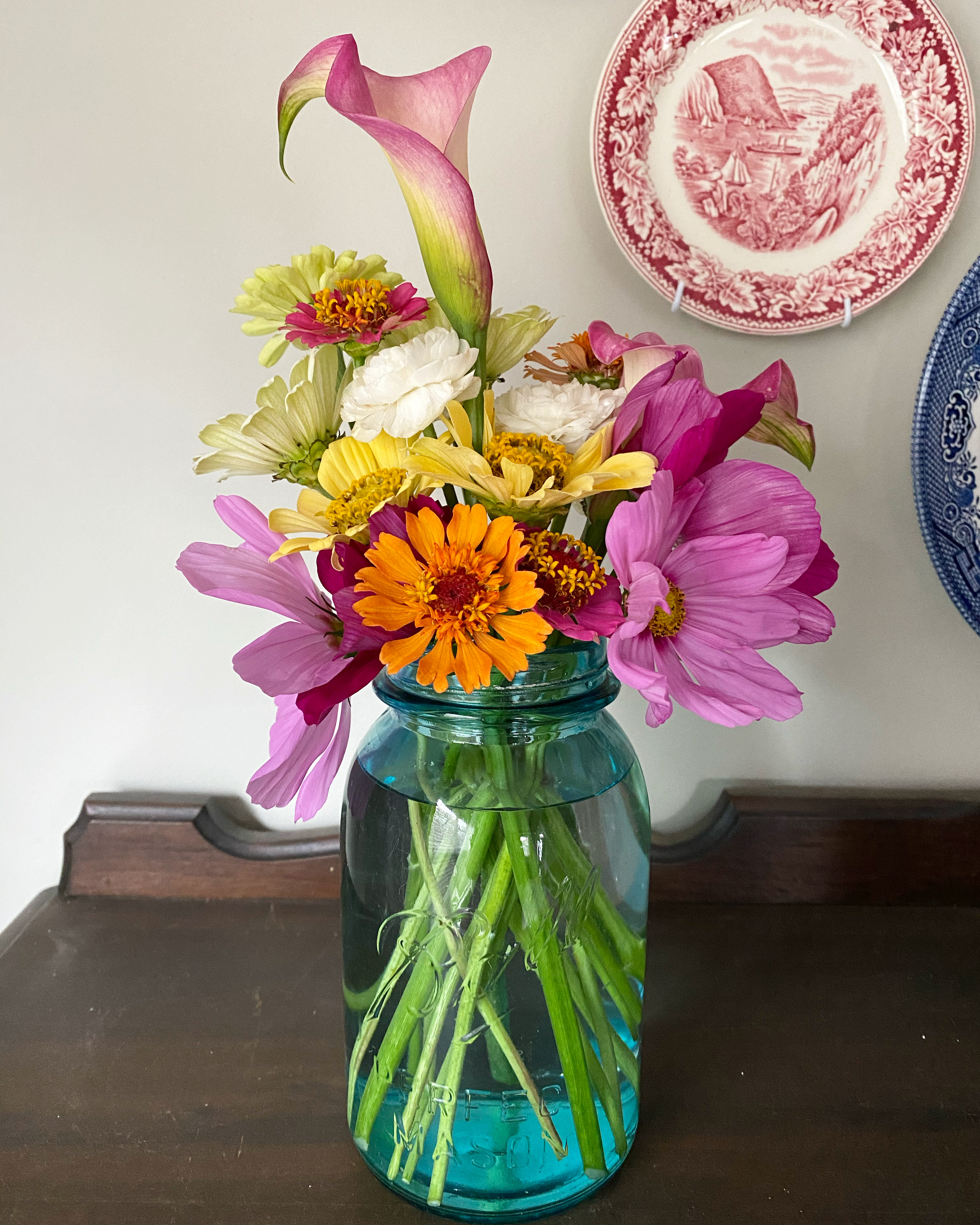
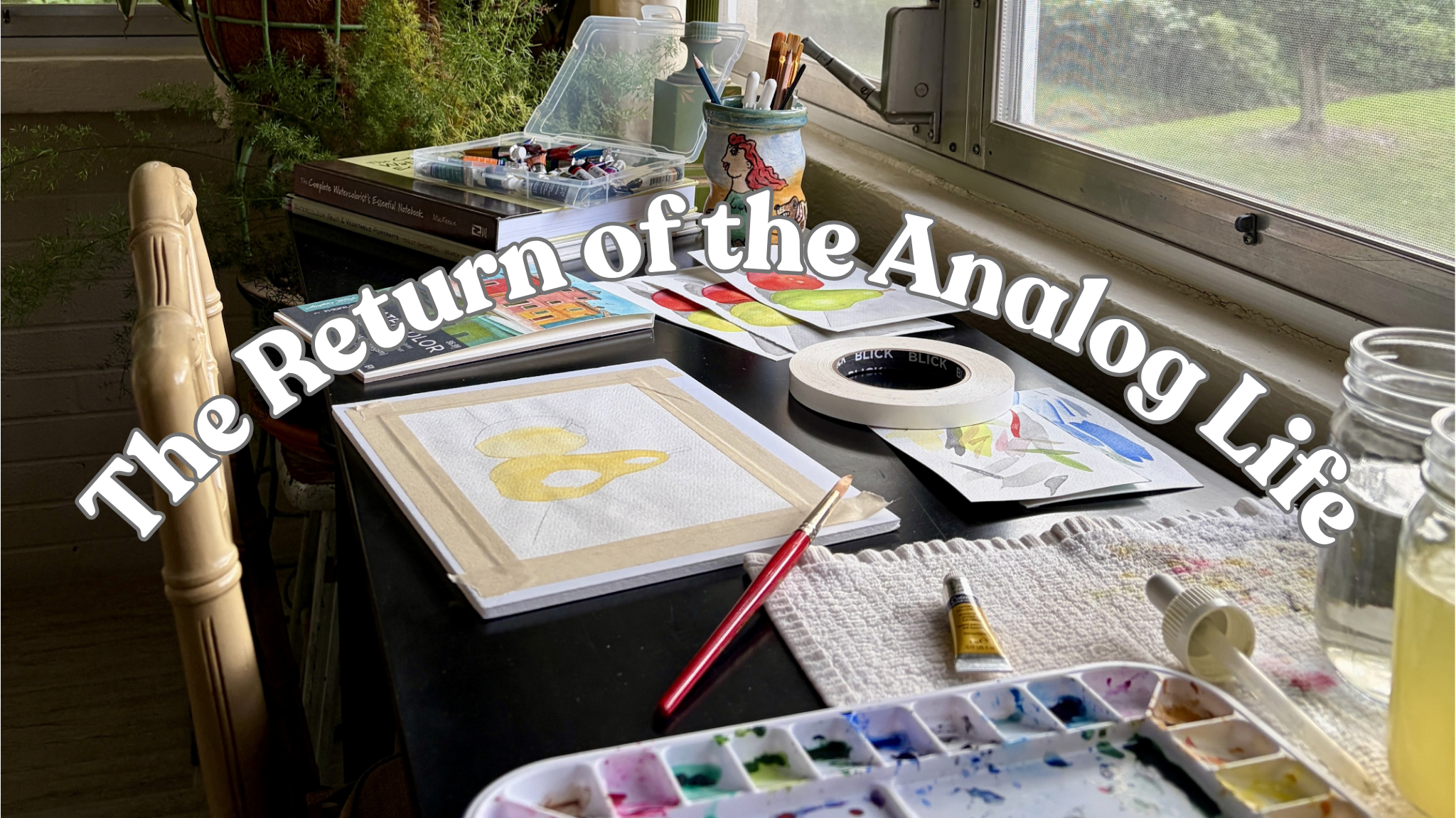
For some people, enthusiasm and fulfillment come from spending their time making something. Perhaps you might enjoy watercolor painting, restoring a car, repairing a broken radio, or arranging some flowers.
Others find that tending things brings joy to their lives. Activities like beekeeping, caring for animals, or gardening require regular attention, but they also give us the satisfaction of watching something thrive under our care.
One of my favorite ways to invest my time is learning. Reading physical books, researching family history or local history, and becoming knowledgeable about antiques are examples of ways we can follow our curiosity beyond a quick internet search.
Others find meaning in gathering with people. If this describes you, activities like hosting a dinner, joining a club, or visiting friends are things to do instead of scrolling.
Analog living shouldn’t feel like a punishment. The point is to make more time for the people and activities you genuinely enjoy.

Analog Living Does Not Require Rejecting Technology
This isn’t a call to reject technology completely. Technology isn’t something to be feared or hated. The question is, can we find a way to use technology to transform ideas into a life well-lived?
I enjoy using my phone to document life and share it with my readers and social media followers. I regularly share recipes, gardening, and projects that I’m working on around our house. I don’t share my life to simply be entertainment. My hope is that what I share inspires you to bring more interest and enjoyment into your own life.
If you’ve seen a recipe on my website that intrigues you, spend the afternoon baking it for yourself. If you’re inspired by seeing a gardening reel on my Instagram, go outside and plan your next garden.
Technology is most useful when it leads us toward connection, creativity, or action, rather than becoming the destination itself.

Find a Reason to Go Offline
It’s interesting that Gen Z is leading the way to analog living. They don’t know what life was like before the internet. They aren’t yearning to return to a past they weren’t a part of.
What Generation Z has identified is that convenience and connection are not the same as fulfillment. Our phones can become distractions that disconnect us from people and life’s meaningful activities.
We often hear the phrase, “older and wiser,” but maybe this is a case where that doesn’t apply. From Baby Boomers to Gen Alpha, I encourage you to follow Gen Z’s lead and skip convenience every now and then.
Now is the time to stop simply saving ideas to your Pinterest boards and make them happen. As Dolly Parton sang, “You better get to livin’.”
Looking for a place to begin?
Sometimes a new interest starts with the right tools. If you are hoping to encourage a hands-on hobby for someone you love, I gathered screen-free activity gifts for men, women, teens, children, and preschoolers in one easy-to-shop guide.