Wide view of a Southern garden in late spring with growing vegetables and flowers in Georgia

A Southern Garden in Late Spring

If a Southerner is going to give you their opinion on something, it’s going to be the weather. If it’s too cold, we’ll cry, “I wasn’t made for this!” But, on certain days when the weather feels just right, we’ll sigh and say, “If only the weather was like this all the time.”

Many of those “perfect days” of Southern weather happen in late spring.

While the weather at this time of year is perfect, my garden leaves me a little impatient. It is a period of waiting for the next big show.

The seeds in both the vegetable and flower gardens have all been sown. Plants are growing their vines, stems, and leaves until the early weeks of summer give us pops of color from zinnias and tomatoes alike.

This article contains affiliate links. If you purchase through these links, I may earn a small commission at no additional cost to you. Thank you for supporting Belle Antiquarian.

Birdbath surrounded by flowers and pollinator plants in a Southern garden during late spring
A garden is never just about the plants. Water, pollinators, and wildlife all play a role in late spring.

The Vegetable Garden Requires Patience

You may have heard the expression, “a watched pot never boils.” I think a better saying would be, “a watched tomato never ripens.”  During late spring, the tomatoes in my vegetable garden are lingering in their own space-time continuum. The vines are loaded with handfuls of green tomatoes that can’t be rushed to reach their full ruby-colored potential.

Clusters of green tomatoes growing on the vine in a Southern vegetable garden during late spring
Tomatoes spend much of late spring suspended between promise and harvest, testing the patience of gardeners eager for the first tomato sandwich of summer.

As I look from the kitchen window, I can see yellow flowers on my zucchini and cucumber plants. Big flowers on the zucchini invite a whole host of pollinators to join the party at once, while the small flowers on cucumbers only have room for one bee at a time.

The pollinators are working and having their feast in my garden, but my vegetable feast won’t begin for a few more weeks.

While I wait, I’m closely watching the colors of the leaves on my young vegetable plants. I’ll take clues from them to see if the soil needs fertilizing or amending. On many mornings I trudge to the garden carrying my largest watering can. It’s full of diluted fish fertilizer or calcium, food for my young tomatoes.

I’m bribing them with, “Tomatoes, if I do this for you, what will you do for me?” And I hope the reply will be more tomatoes than I can eat or give away.

Cucurbit bee gathering pollen from a cucumber flower in a Southern vegetable garden
While gardeners wait for vegetables to ripen, pollinators are already hard at work among the blooms.

In addition to feeding the growing plants, I also watch for signs of unwanted bugs, and I take preventative measures to keep them at bay for the rest of the season. When the sun goes down, an eerie purple glow from my black light flashlight scans the plants up and down for the dreaded tomato hornworm.

Pampering these vegetable plants now means that in a few weeks my patience will pay off as I take a bite of my first tomato sandwich of the summer.

The vegetable garden requires surprisingly little equipment, but there are a handful of tools, fertilizers, and amendments I reach for throughout the growing season.

Recommended vegetable garden supplies including tools, fertilizers, and garden essentials
Click the image to browse the vegetable garden tools, fertilizers, and supplies I use throughout the growing season.

A Season Between Blooms

While I wait for my vegetables to grow, the flowers have a time of transition, too. Early spring gives the South flowers with soft and delicate blooms. In summer, flower varieties have transitioned to hardier and sturdier stems that can withstand the heat that settles in at the hottest part of the day.

Unopened zinnia flower bud developing in a Southern cut flower garden during late spring
The first zinnia blooms of summer are still forming in late spring, building anticipation for the season’s brightest display of color.

The peonies, which bloom in early spring in the South, have come and gone weeks ago. The tiny pink blooms on my Peggy Martin roses and the fuzzy, purple alliums have finished their shows as well.

In late spring, my flower gardens will not only be a source of blooms to bring indoors, but they will also attract important pollinators.

Spires of salvia and lavender dance and sway as the bees crawl from flower to flower for their next treat. Hummingbirds flit in and out of gladiolus flowers.

During this time, the zinnias and dahlias are still growing their stems. Flower buds are beginning to form, and anticipation builds for when they decide it is time for a chorus of color.

As the flower garden begins its summer display, these are a few of the tools and containers I use for harvesting, arranging, and enjoying blooms indoors.

Recommended flower garden supplies for growing, cutting, and arranging blooms
Click the image to browse the flower garden tools, harvesting supplies, and floral essentials featured in this article.

Learning to Wait

After the long and dark months of winter, spring brings new growth and excitement. But it also requires a great deal of waiting and patience.

Gardener harvesting gladiolus stems in a Southern flower garden during late spring
Gardening requires both patience and participation, rewarding careful attention with flowers to bring indoors and moments spent outdoors.

It’s a good thing the weather is so ideal in the South during late spring, because I spend a lot of time checking on the gardens.

I drink my morning coffee hovering over my pepper plants like a helicopter parent. I’ll take another stroll through the rows in the evening after dinner. Have the seeds germinated since I last stared at the dirt six hours ago?

Gardening is both about myself and something bigger than myself. I am nurturing these plants with water, food, and protection. But I’m also connecting to the earth as a whole.

These days of perfect late spring weather in the South are fleeting with every rotation of the Earth. And while we often wish these perfect days could last forever, would we really want them to?

Soon the mild temperatures of late spring will give way to the humid heat that is necessary for a watermelon to ripen and a dinner-plate dahlia to unfurl in summertime.

Afterwards, shorter days will trigger the reds, oranges, and yellows of autumn leaves.

Each season requires patience for what is still to come and an appreciation for what is here now, because neither lasts forever.

The sun, the dirt, and the pollinators are all reminders that it’s never just about the little seeds we sow in spring.


Other Reader Favorites:
Thanksgiving in Our New Historic Home

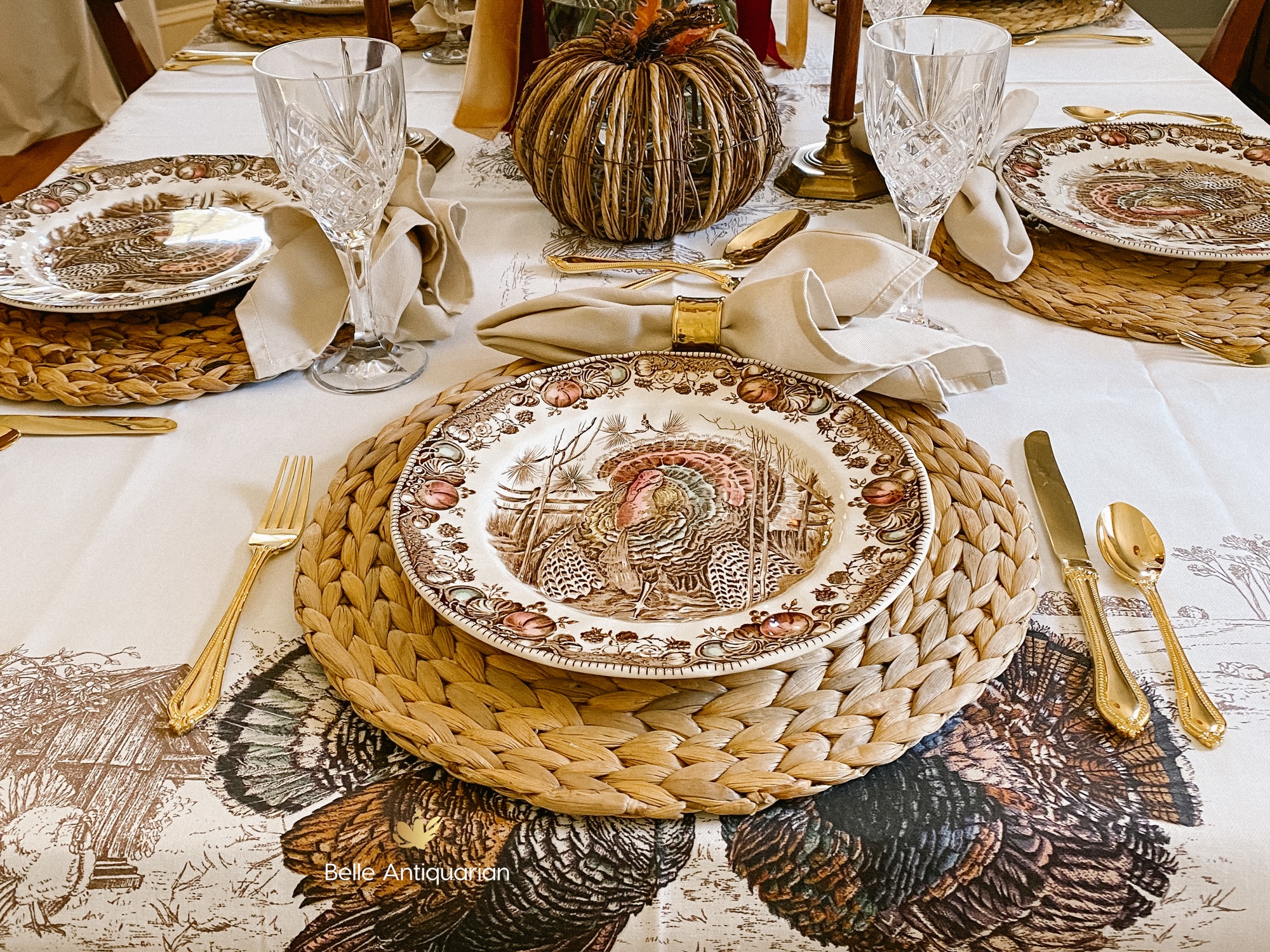
Thanksgiving is just a few weeks away, and this will be our first year celebrating in our “new” historic home. I want to give a house update and share our Thanksgiving table with you.

Click the photo to shop these items.

We’ve been working hard to settle in and make our house feel like home. All of the moving boxes have been unpacked. Many of them had been in storage for four years, and thankfully we’ve only had two items broken. Our kitchen renovation is finished, and we’ve restored the flooring in several rooms. We’ve restored many of the original iron railings, and the rest will have to wait for warmer weather this spring. Outside, we’ve planted hundreds of perennials, including boxwoods, hydrangeas, and peonies, to name a few. If all goes well, there will be blooms throughout the yard from spring through summer next year.

Click the photo to shop these items.

We’re also researching the proper way to reglaze our original, working, sixteen pane windows. We’ll start the slow process of reglazing them when weather turns warmer. This is considered a maintenance task, and if we do it correctly, it won’t need to be done again for decades.

Click the photo to shop these items.

As we’re nearly the holiday season, we’re also preparing to host out-of-town guests. Several guest spaces have been completed to make them comfortable during their stay. Unfortunately, a custom sofa that we ordered in September still hasn’t arrived, which is creating stress as Thanksgiving draws near.

Click the photo to shop these items.

In spite of the lack of living room seating, there is a place for everyone at the dining room table. We’ll treasure the times spent with our friends and loved ones this season. We will be gathered around the table to enjoy delicious food and each others company. I’ve included a few photos of our Thanksgiving table this year. You will notice that there is a Christmas tree up in the dining room. There are a few reasons for this, which I can talk about in a future article, but let’s just say the turkey still tastes the same with the tree up!

To find the sources for everything I used to set our Thanksgiving table, you can visit this post in my LTK shop.

Happy Thanksgiving!

Transform Your Dining Room on a Budget

This article contains affiliate links and ads. You can find many of the pieces I feature by clicking on the links at the bottom of this article.

I’m happy to finally share the details on our dining room refresh. Months before our kitchen renovation began, we started on our dining room. This was a low cost project that we completed over a long weekend. With some paint, new draperies, an estate sale find, and collected antiques from the storage bins, I created a dining room that we look forward to hosting holiday dinners in.

The homeowner that did all of the major renovations on our home in the early 2000s painted it a sherbet green with a lighter shade of green on the ceiling. The seller we purchased it from didn’t make any changes to the dining room at all. Every room was kept exactly the way it was when they bought the house, right down to where the nails in the wall were. It was important to me to make this OUR home, and painting is an easy way to do that without changing the style and architecture of a historic home.

One of the changes we made with the biggest impact was to paint the ceiling. If you’re considering painting your ceilings a lighter shade of the wall colors, pause and think twice. Not necessarily because of resale value, but think of how you want people to feel while they’re in your home. If you’re wanting a dramatic effect and an artistic environment, then go for it! But if you want people to feel relaxed and settled, it’s not for you. It’s distracting and chaotic if it’s not done properly.

We painted our walls with Benjamin Moore “Revere Pewter,” and the ceiling is “White Dove.” The trim is Behr “China White.” The trim was already painted for us, and I like how it works with the Revere Pewter. China White reminds me of the color of antique ironstone dishes.

When we sold our last house three years ago, we sold most of our furniture, including the dining room table, chairs, and china cabinet. The rental house we were moving to didn’t have a dining room, and the dining set was looking a little dated, so we sold it on Facebook Marketplace. After we bought this house, I found an estate sale that was selling an Ethan Allen dining set for less than 1/10th of the retail cost. It’s currently on the Ethan Allen website, and the total cost for the table, 8 chairs, and buffet would’ve been over $11,000. We paid around $1,000. It’s worth it to check out estate sales!

I featured the drapery and hardware on an Instagram post several months ago. The drapery and hardware ended up being a source of frustration. The bay windows in our house do not match the measurements of modern bay windows. Modern bay windows have a larger center window with a smaller functional window on each side. Our original historic bay windows have a smaller center (functional) window, with a larger stationary window on each side. The drapery and hardware for our bay windows were custom made to fit them. And unfortunately, they were removed by the seller. I ended up finding hardware and drapery that I preferred, but it was time and money that we weren’t expecting to spend.

The other items in the room, like plates, pitchers, and artwork, are things that I’ve collected over the years. It was a little like Christmas opening all of my boxes that had been in storage for three years, and we’ve only had one broken crystal glass so far!

I’m lucky to have two pieces of artwork by my twin brother, Tyrus Lytton, displayed in our dining room. He painted a portrait of our daughter when she was two or three, and I found a frame online that complemented the antique mirror on the other side of the doorway. He also painted a small watercolor of our house. (Side note: my brother normally does large scale art installations all over the world. I’m very proud of him and thankful to have some of his artwork on a smaller scale.)

Below you can find a list of sources for the items that I used in our dining room. Some of the pieces are antiques, but I have linked similar ones that I found online. Click on the word to be taken to the source where you can find them.

P.S. There are also a few side-by-side- before and after photos below.

As you can see, a little paint and some new draperies can make a big impact. I’m curious if you’ve ever purchased a house and had items removed that were supposed to stay. Let me know in the comments if you’ve experienced that, too!

Until next time,

Abby

Hot Beverage Station/Coffee Bar

This post includes affiliate links and ads. You can find all of the exact pieces that I feature by clicking the links.

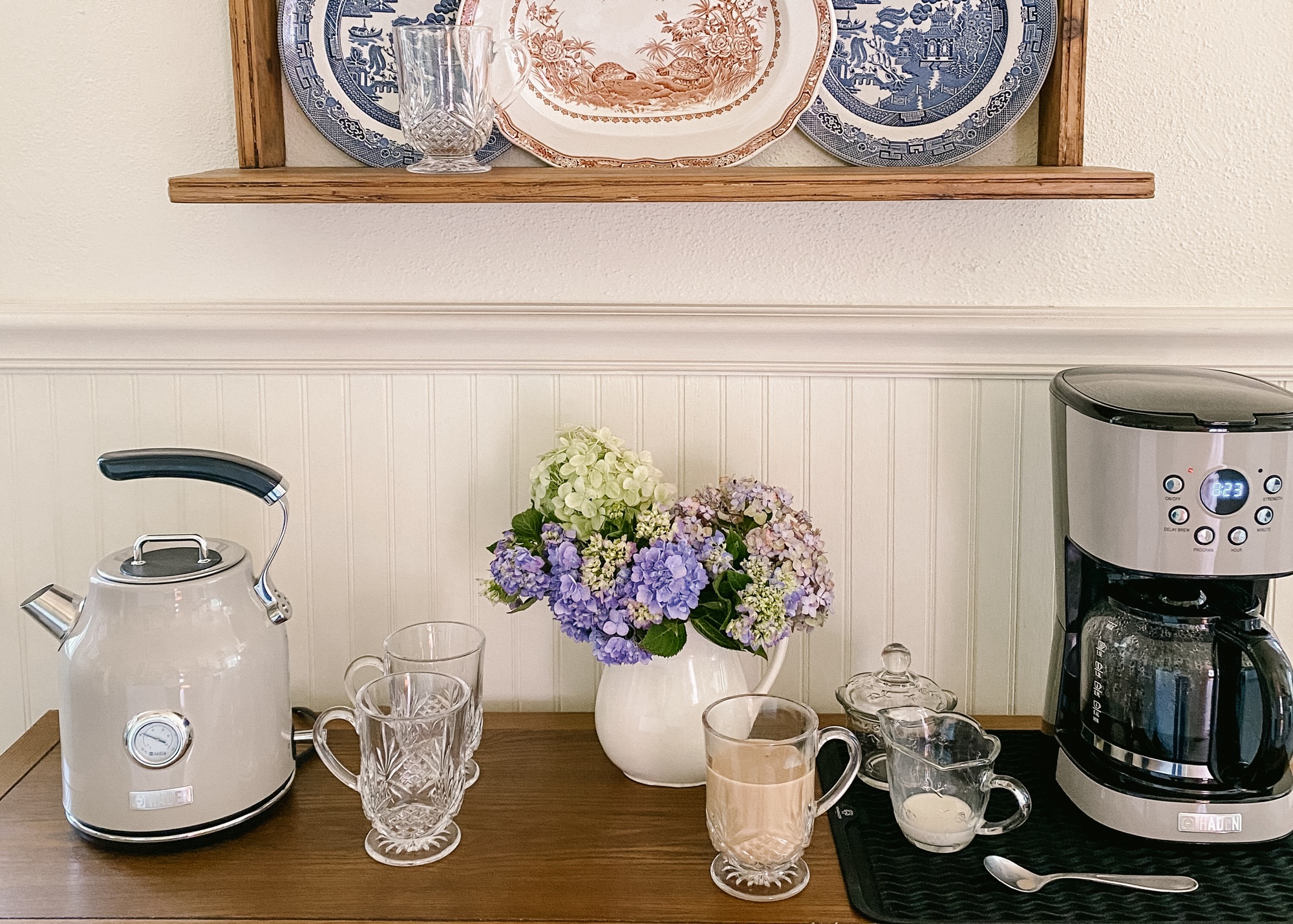
One of the reasons I wanted a really neutral kitchen color scheme is because I absolutely adore color. That sounds contradictory, but by having a neutral background I can decorate with all of my lively, colorful accessories and change them out seasonally. In today’s article I am featuring my new hot beverage station/coffee bar, which I have accessorized with colorful antique plates and a red antique rug.

One side of our kitchen had a blank space that I needed to make functional. We considered adding a base cabinet there during our renovation, but there were a few issues. There are a door, window, and HVAC vent all along that wall. I knew I would find the perfect piece to use as a coffee bar and hot beverage station. And I did!

THIS gorgeous oak sideboard allows the HVAC vent to flow, while also giving me “counter” space to use for my *stunning* electric tea kettle and coffee maker. Ken and I were a little unsure about ordering a piece of furniture online. The reviews were really good, but we live in the country, and we weren’t sure about it making it here in one piece. Still, it arrived quickly and packaged extremely well to protect all of the wood. The legs did need to be attached, but we did that together in about ten minutes. The shelf underneath provides extra storage that would be good for cookbooks or a basket like this one. The plate rate that I’m using above the sideboard is an antique piece that I found, but I found a couple of other options HERE and HERE.

Not only do I have more counter space to use as a coffee bar, but the 4 drawers and 2 doors are very deep. I have room to store my tea bag organizers, coffee grounds, filters, and mugs and glasses. I’m protecting the sideboard surface under the coffee maker with a silicone mat. This keeps me from worrying about spills on the beautiful wood.

The only one who loves my red antique rug more than me is Annie. I found a really similar rug that I know you’ll love, too.

Want to find almost everything that I’ve pictured and featured? You can do so in 3 different ways: click the links above in the article, click HERE for my LTK shop, or click HERE for my Lowe’s Storefront.