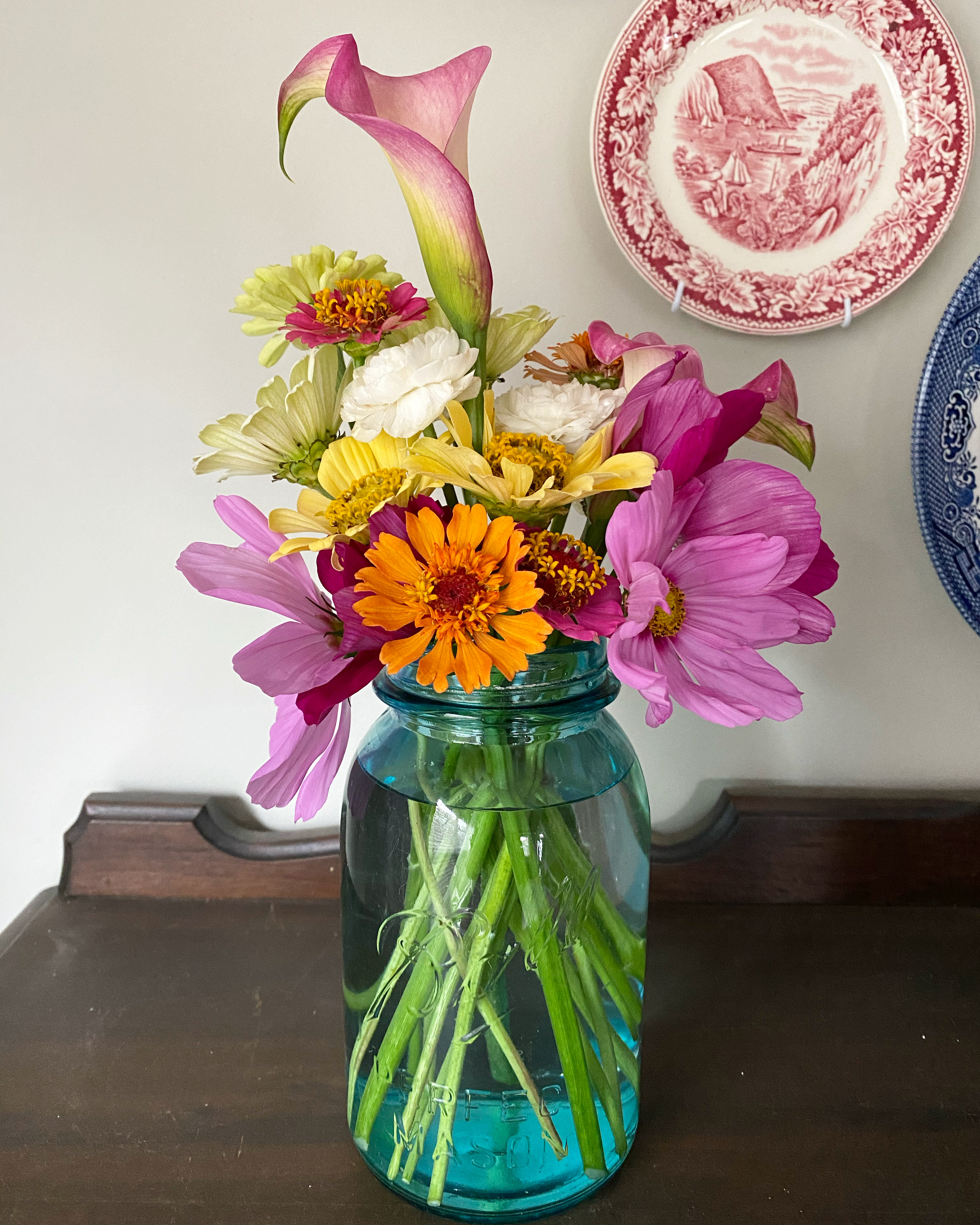
I spend a lot of time thinking about flowers. There are times that my mind wanders while I’m doing other mundane tasks, and my thoughts drift away to varieties, colors, and bouquets.
It all started years ago with one little seed packet of zinnias that I planted to attract pollinators to my vegetable garden. At the time I didn’t even know how to plant a zinnia cut flower garden, but it was the start of my flower gardening journey.
Over time I shifted my focus from growing vegetables to growing flowers. I get a lot of joy growing things whose sole purpose is to bring beauty into the world. What a pleasure to walk outside and take my pick of which stems to bring into my home.
Zinnias are blooms full of cheer, and they make the perfect addition to any Southern cutting garden.
This article was created in partnership with Eden Brothers. Some links in this article are affiliate links, which means I may earn a small commission from qualifying purchases at no additional cost to you.
Why Zinnias Belong in a Southern Cutting Garden
It turns out that the little packet of zinnia seeds that I picked up at the garden center to attract pollinators is one of the best choices for a Southern flower garden.
Why Zinnias Thrive in Southern Summers
On the summer days when the heat feels oppressive, zinnias are thriving. They don’t need a lot of maintenance, like other cut flowers, and when the sun beats down, the flowers come up.
Zinnias are often a choice flower for beginners and seasoned gardeners alike. As long as you have enough sunlight, you’ll be able to cut blooms for flower arrangements all summer long. In fact, the more you cut, the more flowers you’ll have to bring inside.
The hardest part of growing zinnias is usually deciding which varieties to buy.
Choosing the Right Zinnia Varieties
There are over one hundred varieties of zinnia seeds sold in the United States. With so many choices available, there are a few things to consider when choosing which seeds to plant in your Southern cutting garden.

Some varieties of zinnias are more tolerant of Southern growing conditions than others. Varieties that have high humidity tolerance and resistance to diseases do well in the South.
Color is another big consideration when planning a zinnia cut flower garden. Varieties come in colors ranging from muted pastels to bold summer hues. The colors you select will not only impact your garden outdoors, but they’ll also be present inside your home. If you’re planning to bring your zinnias inside, it’s important to consider if your garden color palette integrates well with your home’s color palette.
One of the most important things to consider is how your zinnias fill a vase. I like to use a mixture of varieties so that I have variations in texture, color, and size of blooms. If you’re only planning to grow zinnias for cut flowers, you can create a well-rounded arrangement by planning variation carefully.
The Best Zinnias for Cutting Gardens
Eden Brothers has been an excellent resource for recommending zinnia varieties to me. I partnered with them to grow several varieties in my garden this year.

One of their top recommendations for zinnias in the South is Benary’s Giant, which is mildew resistant and excellent for cut flowers. Benary’s Giant Zinnias are the workhorses of the zinnia world with big, strong blooms that will fill a vase.
Oklahoma zinnias are like Benary’s Giant, but slightly smaller, fuller, and excellent for bouquets. These zinnias are what I lovingly refer to as “reliable” because they are useful for filling in blank spots of flower arrangements. They’re there when you need something extra.
Queeny zinnias also do well in the South, and they provide interesting pops of color. For smaller scale zinnias that do well in pots and borders, Eden Brothers recommends Profusion and Zahara varieties. My raised vegetable garden beds are the perfect spot for the smaller varieties.
When to Plant Zinnias in the South
Once you have your seeds in hand, there are a few important things to know about when to plant them.

Why Timing Matters More Than Most Gardeners Expect
Although growing zinnias from seed is easy, issues can be triggered by planting seeds at the wrong time.
It’s considered safe to plant seeds directly in the ground after the last danger of frost. But I recommend waiting just a little while longer to sow them. Zinnias are heat-loving plants. Your zinnias will have the best chance of germination once the soil temperatures are consistently 70-80 degrees.
Planting too early can result in stunted growth or weaker plants that are susceptible to disease. Since zinnias love warm temperatures, you can plant them every few weeks through July to ensure you have blooms until fall.
If you’d like to keep these planting recommendations handy throughout the season, I’ve put together a free printable Southern Zinnia Planting Guide with my favorite varieties, planting reminders, and harvesting notes.
There’s not a hard and fast date for planting zinnias each year. It’s important to look at soil temperatures and weather forecasts before putting your seeds in the ground. Even so, Mother Nature has a mind of her own.
I’ve had an unusually warm spring, but night temperatures have been cooler than normal. After my seeds germinated, they were slow to grow this year. Now that temperatures have heated up, their growth is booming. Even an experienced gardener like me is dependent on Mother Nature to behave herself.
Planting Zinnias Successfully in Southern Soil
Once you know what you’re going to plant and when to plant it, you need to decide on where the best spot in your yard will be to sow your zinnia seeds.

Zinnias require full sun, so you’ll need a place in your yard that receives at least six hours of sun each day.
Zinnias also need good air circulation. It’s important that their leaves are given the opportunity to dry off. Air flow is vital in humid climates in order to keep plants healthy.
The South is known for red clay soil. While zinnias can grow successfully in poor soil, they do need proper drainage. If your soil is compact, consider amending it with compost to improve drainage.

Zinnia seeds should be planted about one-half inch deep. They’ll sprout rather quickly in just 4 to 7 days if the soil is warm.
Once sprouted, zinnias should be watered at the base of the plant. Keep the leaves dry to prevent moisture-related diseases.
It feels counter-intuitive, but to give your zinnia seedlings the best chance of success, you’ll need to thin them out. You’ll want to gently remove seedlings so that there’s one growing about every 12 inches. Choose the healthiest looking stems as you go through this process.

Thinning seedlings is necessary to maintain a healthy garden. Too many seedings creates unnecessary competition for nutrients and light. While it feels strange to pull up seeds that you planted, you’ll be rewarded with better blooms.
Why I Prefer to Direct Sow Zinnias
Zinnia seeds should be sown directly into soil outdoors. They germinate quickly and do not like to be transplanted. Therefore, it’s best to plant them in the soil.
The only time that I would start zinnia seeds indoors is if I was going to sow them in a large planter that they were going to stay in all summer.
The One Step That Makes Zinnias More Productive
I like to pinch my stems. Pinching is a practice that is done to create a bushier plant that will produce more blooms.
How and When to Pinch Zinnias
Zinnias are ready to be pinched once they’ve reached about 12 inches, before they have developed any flower buds. The plant should have at least 4 sets of leaves at this point.
Remove the center part of the flower down about 3 or 4 inches, right above a pair of leaves. This should leave at least 2 sets of leaves on the plant.

Once they’re pinched, the zinnia plants will start to branch out to create more stems. Many gardeners hesitate to pinch off growth, but pinching prevents plants from getting leggy or top heavy. Each plant will produce more flowers than they would’ve otherwise.
Common Problems Southern Gardeners Should Expect
Zinnias may be uncomplicated to grow, but they aren’t free from problems.
Powdery Mildew
Powdery mildew is one of the biggest concerns for a Southern cutting garden. It’s not a matter of if you’ll get powdery mildew in a Southern garden, it’s a matter of when. The Southern climate is notoriously humid, so when leaves get wet, they tend to stay wet longer.
In addition to proper spacing of plants, zinnias should be watered at the base of the plant, instead of on the leaves.
If powdery mildew is present, products like neem oil or fungicide should be used to get it under control before it affects production and spreads to other plants. Neem oil can be a solution for many gardening issues, so it’s always the first thing I try when combating powdery mildew.
Japanese Beetles
Japanese beetles love to make a buffet of a flower garden. Neem oil can be used as a deterrent to prevent beetles from eating. Some gardeners find that planting things like chives and marigolds will deter them as well.
If Japanese beetles have found their way to your garden, they can be brought under control by hand picking them and placing them in soapy water. I’ve even used milky spore to eradicate a Japanese beetle infestation.
Other Problems to Anticipate
Many of the problems that zinnias experience can be prevented with intentional spacing, thinning, and pinching. Without pinching, plants can get top-heavy, which can cause them to fall in storms or weight of blooms.
Zinnias can experience heat stress if they aren’t receiving adequate water. If they’re overcrowded from lack of thinning, they’ll be competing for water and nutrients from other zinnias.
With a bit of care and prevention, you’ll be rewarded with armloads of zinnias, ready to be brought inside your house to enjoy.
Harvesting Zinnias for the House
It doesn’t take long for the first zinnia blooms to appear. When the time is right, you should cut them to bring indoors.

When Zinnias Are Ready to Cut
Some flowers can be cut before they’ve fully bloomed, but zinnias should be fully bloomed before cutting. Once the bloom is fully opened you can test whether the stem is ready to be cut.
Gently hold the zinnia stem about 8 inches below the bloom and gently give it a wiggle test. If the bloom flops as you wiggle it, it’s not ready. If the stem stays firm under the bloom, you’re ready to cut your flower.
Zinnias prefer to be cut in the morning. To cut, reach down deep into the plant and cut above a set of leaves across from each other. Immediately remove most of the leaves and place them into a bucket of water.
Some zinnia gardeners like to condition their blooms by placing them in a cool, dark spot for 3-4 hours. Letting zinnias rest will extend vase life, and they should be given another cut before arranging them in a vase.
Zinnias are an important flower in a Southern cutting garden because they’re “cut and come again” flowers. Don’t be hesitant to cut them to bring them inside, because cutting encourages your plant to produce more flowers.
My favorite vessels to hold zinnias are everyday kitchen containers. I love to fill a milk pitcher or antique ball jars full of these simple blooms. Zinnias have a homespun appeal to them, which makes them perfect for everyday moments throughout the house, instead of fragile, special occasion arrangements.
There are a handful of things that make me feel rich in life, regardless of how much money I have in the bank: clean sheets on my bed, spending time with family, and fresh flowers in my home.
Zinnias are so abundant that even after I have filled my own home with them, I have plenty to share with my friends and neighbors. I’ve shared on Instagram that one of the main reasons why I grow flowers is to give them away.
If you’ve never grown zinnias before, why don’t you pick up a packet? But be warned, once you grow them, they’ll have a spot in your Southern cutting garden every year.
Check out these other reader favorites:
- How to Grow Herbs in the South: A Guide for the Southern Kitchen
- Fall Garden Prep: Essential Tasks for a Beautiful Start to Spring
- Simple Garden Joys: Everyday Moments from a Southern Summer Garden
- Spring Branches in Bloom: Easy Spring Floral Arrangements from the Garden