
Abby holding a slice of homemade Southern tomato pie on a blue willow plate in her kitchen.

Southern Tomato Pie: Why This Summer Classic Still Belongs on the Southern Table

Gardening is perceived as a relaxing activity. Seed packets tell you when to plant and when to harvest. It seems so simple.

Talk to a gardener, though, and they’ll tell you otherwise. Leaf-footed bugs or lady beetles posing as lady bugs can ruin your whole day. Then there’s that moment of panic when twenty green tomatoes ripen all on the same day.

If I had it my way, one or two tomatoes would ripen each day, just enough for my daily tomato and pimento cheese sandwich for lunch. As nature would have it, it’s feast or famine.

In the South, when someone says, “What am I going to do with all of these tomatoes?” they’re likely to be asked if they’ve made a tomato pie yet.

Homegrown summer tomatoes ripening on a kitchen windowsill before being used to make Southern tomato pie.
Peak tomato season often means more tomatoes than can be eaten fresh, making Southern tomato pie a delicious solution.

A Dish Born from Summer Abundance

I planted seven varieties of indeterminate tomatoes in my garden this year. With names like Big Beef, Better Boy, and Park’s Whopper, my expectations were set high for some nice slicing tomatoes.

When planting my young seedlings at the beginning of April, my mouth salivated thinking of thick slices of tomatoes, salted and peppered, between two slices of Sunbeam bread skimmed with some Duke’s mayo. A Southern summer sandwich delight.

Fresh chives being harvested from a backyard garden for Southern tomato pie with garden herbs.
Fresh herbs picked just before cooking bring brightness to this classic Southern tomato pie recipe.

The reality is that seven tomato plants were far more than I needed. (I think this is where the term “your eyes are bigger than your stomach” comes from.) My kitchen windowsill is now lined with various shades and sizes of red tomatoes waiting for their final destination.

This is not a phenomenon unique to me. With a long growing season in the South, farmers markets across the state draw a crowd of shoppers each Saturday morning looking for homegrown tomatoes… and there will be an abundance of them.

Obvious solutions to the problem of too many tomatoes include homemade salsa, fresh pasta sauce, and even canning tomatoes. But there is nothing more Southern than a tomato pie on the dinner table or at a church potluck.

Carrying freshly picked homegrown tomatoes into the kitchen in preparation for making Southern tomato pie.
Every Southern tomato pie begins long before the oven is preheated, often with a basket of tomatoes gathered from the garden.

The Tradition Behind Southern Tomato Pie

The South is a region that reveres tradition and heritage. When it comes to food, those traditions have long crossed social and economic lines. Whether served in a farmhouse or a fine home, Southern tables have been set with many of the same dishes for generations, including tomato pie.

Southerners pass along recipes as though they are heirloom quilts or sterling silver teapots. A perfected recipe for cheese straws or benne wafers will suddenly get a name added to them, Betty Ann’s Cheese Straws or Janet’s Benne Wafers.

Brides are often given recipe cards at bridal showers for traditional meals they may want to serve in the future. A recipe for Southern tomato pie may be tucked into the ribbon of a wrapped pie plate. A new pie plate and a recipe to fill it with is a treasured gift.

Once you’ve made a tomato pie, it’s easy to see why this dish has endured on Southern tables for generations.

Many of the ingredients in the recipe are within reach of the kitchen. Simply by opening the kitchen door, I have all the herbs and tomatoes I need. A handful of tomatoes, a few basil leaves, and a snip of chives were all collected from a single garden bed in my backyard.  

Other ingredients like pie crust, mayonnaise, and cheese are commonly found in the refrigerator or freezer. By using pantry staples and garden produce, it’s easy to pull together a delicious dinner or something to bring to a gathering.

Hospitality in the South is an opportunity to share heirloom recipes. Your next gathering is a chance to show why tomato pie has endured on Southern tables for generations.

Adapting a Classic for Today’s Table

While tomato pie is standard on many Southern summer tables, it’s not one that should be thrown together all willy-nilly.

As a child, I wasn’t a fan of tomato pie. I tried one that wasn’t very good, and no one could get me to try it again for years. When I was young, the problem I had with that particular tomato pie was the amount of mayonnaise. And considering that mayonnaise is a key ingredient, that was tricky.

Another issue that many tomato pies have is a watery, soggy filling. No one wants to eat tomato soup in a pie shell.

Fresh tomato slices draining on paper towels before assembling Southern tomato pie.
Removing excess moisture helps create a pie with distinct tomato layers and a crisp crust.

I tested and refined my recipe using classic ingredients, while updating them for modern palates. Combining fresh herbs and a perfect ratio of mayonnaise and cheese, I’ve created a tomato pie recipe that is lighter in texture, holds its structure, and maintains the identity of a traditional Southern tomato pie.

Southern Tomato Pie with Garden Herbs

After testing and refining this recipe throughout tomato season, this is the version I’ll be making whenever my kitchen windowsill begins to fill with ripe summer tomatoes.

Southern tomato pie with one slice removed, showing layers of ripe tomatoes, cheese, and fresh herbs.
Abby Smolarsky's avatarAbby Smolarsky

Southern Tomato Pie with Garden Herbs

A classic Southern tomato pie made with ripe summer tomatoes, sharp cheddar, Parmesan, fresh garden herbs, and a creamy cheese filling. This refined version celebrates the flavors of peak tomato season while producing a crisp crust and slices that hold together beautifully.
Prep Time 35 minutes
Cook Time 1 hour 8 minutes
Additional Time 2 hours
Total Time 3 hours 43 minutes
Servings: 8 servings
Course: Main Course
Cuisine: Southern

Ingredients
  

Crust
  • 1 refrigerated 9-inch deep-dish pie crust
  • 3-4 Tbsp finely grated parmesan cheese (for the crust barrier)
Filling
  • About 2 ½ pounds ripe slicing tomatoes, (approximately 4-5 medium tomatoes), cut into ¼-inch-thich slices
  • 1 tsp kosher salt, divided
  • ½ cup mayonnaise, we use Duke's
  • 2 Tbsp full-fat sour cream
  • ¾ cup freshly shredded sharp cheddar cheese
  • ¼ cup finely grated Parmesan cheese
  • 1 tsp Dijon mustard
  • ¼ cup sweet onion, very thinly sliced
  • 1 Tbsp chopped fresh basil
  • 1 Tbsp chopped fresh chives
  • ½ tsp fresh thyme leaves
  • ¼ to ½ tsp ground black pepper
  • pinch Cayenne pepper

Equipment

  • 9-inch deep-dish glass pie plate
  • Baking sheet
  • Parchment paper
  • Pie weights or dried beans
  • Cooling rack
  • Paper towels
  • Mixing bowl
  • Small offset spatula or the back of a spoon

Method
 

Prepare the Tomatoes
  1. Arrange the tomato slices in a single layer on paper towels. Spring with ¾ teaspoon of the kosher salt.
  2. Let stand for 30 minutes.
  3. Turn the tomato slices, blot with fresh paper towels, and let stand an additional 15 minutes.
  4. Pat the tomatoes dry once more immediately before assembling the pie.
Blind Bake the Crust
  1. Preheat the oven to 400 °F
  2. Fit the pie crust into a 9-inch deep-dish plate and crimp the edges as desired.
  3. Place the pie plate on a rimmed backing sheet. Line the crust with parchment paper and fill completely with pie weights or dried beans.
  4. Bake for 18 minutes.
  5. Carefully remove the parchment paper and weights.
  6. Return the crust to the oven and bake for 5 more minutes, or until the bottom looks dry and just begins to turn light golden.
  7. Immediately sprinkle the 3-4 tablespoons of Parmesan cheese evenly over the hot crust and allow it to melt.
  8. Reduce the oven temperature to 350 °F
Prepare the Filling
  1. While the tomatoes drain and the crust bakes, combine the mayonnaise, sour cream, cheddar cheese, ¼ cup Parmesan cheese, Dijon mustard, onion, basil, chives, thyme, remaining ¼ teaspoon kosher salt, black pepper, and Cayenne in a mixing bowl.
  2. Stir until well combined.
  3. Leave the filling at room temperature while assembling the pie.
Assemble the Pie
  1. Arrange a layer of tomato slices over the prepared crust.
  2. Using a small offset spatula or the back of a spoon, spread a thin, even layer of the cheese mixture over the tomatoes.
  3. Repeat the layers until all of the tomatoes have been used.
  4. Finish with the remaining cheese mixture, spreading it evenly over the top of the pie.
Bake
  1. Keeping the pie on a baking sheet, bake at 350 °F for 45 minutes, or until the filling is bubbling around the edges and the top is lightly golden.
Cool
  1. Transfer the pie to a cooling rack.
  2. Allow the pie to cool for at least 1 hour before slicing. For the cleanest slices, allow 75-90 minutes of cooling time. The pie will still be pleasantly warm while the filling finishes setting.

Notes

Tomato Tips
Use ripe but still firm slicing tomatoes. Overripe tomatoes contain more moisture and may produce a softer filling.
Properly salting, draining, and blotting the tomatoes is essential for preventing excess moisture.
Ingredient Tips
Use full-fat sour cream. Reduced-fat and fat-free sour cream contain more water and may affect the texture of the filling.
Freshly grate the cheddar cheese for the best flavor and melting.
Fresh herbs are recommended for the brightest flavor.
Serving
Southern Tomato Pie is best served warm after it has had sufficient time to cool and set. The filling should be creamy and cohesive, with tomato slices that remain distinct and a crisp, flaky crust.
Serve with a simple green salad, cucumber salad, fresh fruit, or seasonal Southern vegetables for a light summer meal.
Storage
Cover and refrigerate leftovers for up to 3 days.
Reheating
For the best texture, reheat individual slices in a 325°F oven or toaster oven until warmed through. Microwaving is not recommended because it softens the crust.
Nutrition
Nutrition information is automatically calculated and should be considered an estimate.
Southern tomato pie with one slice removed, showing layers of ripe tomatoes, cheese, and fresh herbs.
A crisp crust, distinct tomato layers, and fresh garden herbs make this refined version of a Southern classic.

Serving Southern Tomato Pie at the Summer Table

There’s a sense of pride that comes with setting the table with a meal made from ingredients you grew. Whether you’re making tomato pie for a casual brunch after church or serving a cherished tomato pie recipe to your garden club, this pie will disappear in minutes.

If you’re coming to my house for lunch in the summertime, there’s a good chance that you’ll be served tomato pie. A slice of tomato pie on a blue willow plate, paired with fresh cucumbers and onions and slices of peaches, is one of my favorite summertime meals.

More Than a Recipe

Tomato Pie isn’t simply a dish Southerners eat in the summer. Like deviled eggs at Easter or chicken mull in the fall, tomato pie is a tradition that endures.

As I was writing this article, I invited a friend to be my official taste-tester. I knew I had perfected the recipe when she said, “Oh my. This is it – this is summer on a plate.”

I sent her home that afternoon with a grocery sack of heirloom tomatoes, a half-eaten tomato pie, and the recipe written down on a piece of notebook paper.

Like Betty Ann’s Cheese Straws and Janet’s Benne Wafers, my friend has named this Abby’s Tomato Pie.


This article contains affiliate links. I may earn a small commission at no additional cost to you. The simple tools and timeless serving pieces used throughout this feature are part of my everyday summer kitchen. I’ve linked many of them in my LTK collection for readers who’d like to explore them further.

Abby holding a slice of homemade Southern tomato pie on a blue willow plate in her kitchen.
A recipe worth sharing begins with tomatoes from the garden and ends around the table.

Check out these other reader favorites:

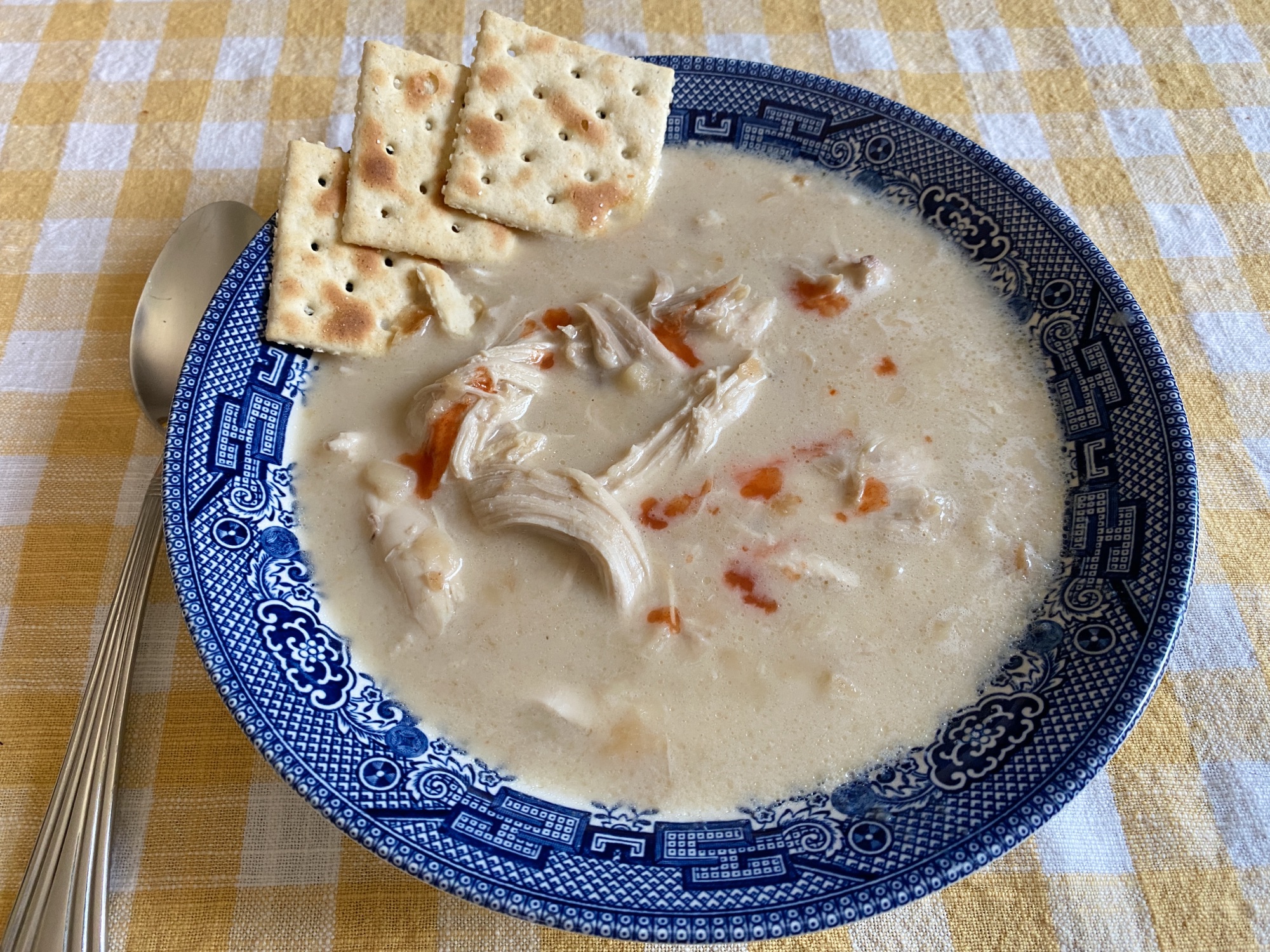
Bowl of creamy Chicken Mull served in white enamelware, garnished with cracked pepper and surrounded by saltine crackers

A Southern Classic for Fall: How to Make Chicken Mull

A Regional Recipe Worth Discovering

Welcome to the fourth installment of my fall series, Falling for Home: A Weekly Autumn Journal. Throughout this weekly Friday series, we’re embracing a slow, intentional rhythm of Southern living rooted in home, heritage, and the kind of traditions that make fall in the South unforgettable.

Today’s article is all about Chicken Mull. I encourage you to use the ingredients that you already have on hand and your favorite pot, as well as to invite friends and neighbors into your home to share it with you this fall.

What Is Chicken Mull? A Brief Southern History

Although I’ve lived in Georgia my whole life, I hadn’t heard of Chicken Mull until moving to the greater Athens, Georgia area. One chilly fall afternoon, someone mentioned that it was Chicken Mull season, and I’ve been intrigued by this creamy, comforting stew ever since.

Chicken Mull is a traditional Southern fall recipe that is usually made with only 3 ingredients: water, chicken, and saltine crackers. The ingredients may be simple, but the flavor is anything but.

Chicken Mull finds its roots in the Carolinas, as well as a very specific region of Northeast Georgia. In fact, Athens, Georgia has often claimed to have invented this Georgia Chicken Mull recipe. (Locals will warn you not to confuse it with Chicken Muddle, which is an entirely different thing.)

Historically, Chicken Mull was more than just a dish. A Chicken Mull was the name of the gathering where the Chicken Mull was eaten. This would have been a church or community event held in the fall, and the Chicken Mull would have fed a large crowd.

Ingredients You’ll Need

While the basic Chicken Mull recipe uses just three ingredients, today I am using the Southern Living version that includes some herbs, heavy whipping cream, and hot sauce. To make my version of Chicken Mull, I’m using cast iron Dutch ovens, a fine-mesh strainer, wooden utensils, and sturdy kitchen tongs. This is a fun dish to serve in vintage enamelware dishes or handled soup bowls…  something that feels as nostalgic as the recipe itself.

Chicken Mull Recipe (Stovetop)

Bowl of creamy Chicken Mull served in white enamelware, garnished with cracked pepper and surrounded by saltine crackers
Abby Smolarsky | Belle Antiquarian

Chicken Mull (A Classic Northeast Georgia Stew)

A creamy, comforting Southern classic, Chicken Mull is a beloved fall tradition in Northeast Georgia. Made with slow-simmered chicken, rich broth, crushed saltines, and a splash of cream, this humble stew is a must-try recipe for chilly evenings. Serve with extra crackers and hot sauce for a taste of Athens heritage in every spoonful.
Prep Time 15 minutes
Cook Time 1 hour 45 minutes
Total Time 2 hours
Servings: 6 people
Course: Main Course
Cuisine: Southern
Calories: 420

Ingredients
  

  • 1 3-4 lb whole chicken
  • 2 large yellow onions unpeeled and quartered
  • 4 celery stalks roughly chopped, about 2 cups
  • 5 cups water
  • 4 cups chicken broth
  • 1 Tbsp kosher salt
  • 1 Tbsp whole black peppercorns
  • 5 fresh thyme sprigs
  • 5 garlic cloves
  • 2 dried bay leaves
  • 1 sleeve saltine crackers crushed, plus more for serving
  • 1 cup heavy whipping cream

Equipment

  • 5.5-quart Dutch oven or large stockpot
  • Fine-mesh strainer
  • Tongs
  • Blender
  • Large wooden spoon
  • Ladle
  • Cutting board

Method
 

  1. In a 5 ½-quart Dutch oven, add the chicken, onions, celery, water, broth, salt, peppercorns, thyme, garlic, and bay leaves.
  2. Bring to a simmer over medium-high heat, then reduce to medium-low and cover. Simmer for about 1 hour, or until the chicken is cooked through and brother is flavorful. Skim fat as needed.
  3. Remove the chicken and let cool slightly. Shred the meat, discarding skin and bones.
  4. Strain the broth through a fine-mesh strainer into a clean Dutch oven. Discard solids.
  5. Bring the strained broth to a simmer over medium-low heat. Stir in crushed cracker and cook for 3 minutes until slightly thickened.
  6. Carefully blend half the broth mixture until smooth (about 20 seconds), then return to the pot.
  7. Stir in the heavy cream and shredded chicken. Cook uncovered over medium-low, stirring occasionally, until heated through (about 10-15 minutes.)
  8. Serve hot with extra crackers and optional hot sauce.

Notes

Don’t Skip the Strain: Straining the broth may seem like an extra step, but it creates the signature smooth base that sets this version apart from other chicken stews. Make-Ahead Friendly: Chicken Mull reheats beautifully the next day. Some even say it’s better after the flavors have had time to meld. Store in an airtight container in the fridge for up to 3 days.

The Palette of Chicken Mull

There’s a warmth to Chicken Mull that goes beyond the post. It’s the colors of autumn comfort. For this week’s post, I’ve created a coordinating color palette that captures the creamy whites, golden butter tones, and soft sage of the ingredients and atmosphere. You’ll find this same palette in everything from vintage kitchen tools to enamel cookware, and I’ve linked a few timeless pieces below.

Whether you’re styling your kitchen or hosting your own mull supper, these pieces bring the coziness of fall to life.

A Dish That Feels Like Home

I live in an area of the South that has changed rapidly over the last 40 years. Folks from all over the world moved here to call this place home. While we welcome new cultures and diversity, I noticed a while ago that many of our beloved Southern traditions were fading like steam rising from a warm bowl, slowly disappearing into memory. Many researchers will tell you that our accents are disappearing. As we discussed in a previous article, our Southern hospitality that we are known for is starting to dampen. So when I discovered this recipe that neither I, nor anyone in my family had ever heard of, I was really excited to revive this regional recipe from Athens, Georgia cuisine.

Whether you’re a Southern peach or you hail from some other wonderful place on this planet, I hope that you will remember your roots and keep your culture alive for future generations.

So many of you messaged me on Instagram that you loved our summer recipes that we shared. I invite you to make this recipe for Chicken Mull, or to share your version with me! Tag me on Instagram so we can share a virtual bowl of stew together.

Invitation to Return

Thank you for joining me with this week’s article from my series Falling for Home. Each Friday from August through September, we’ll meet here at BelleAntiquarian.com to reflect on a slow, intentional rhythm of seasonal living, rooted in tradition, home, and memory. Join me next Friday as we explore The Collected Kitchen, a celebration of antique charm, practical warmth, and the soulful heart of the Southern home.


Explore More from Falling for Home: A Weekly Autumn Journal

This article is part of my Falling for Home series. Be sure to check out these reader favorites:


You can subscribe here to receive new articles, seasonal inspiration