Patterns & Patina: How to Layer Like a Southerner

Have you ever found yourself admiring someone’s personal style, whether in their home or wardrobe, and wondered why it feels so sophisticated? Perhaps you were inspired to create a similar outfit or room in your home and ended up feeling like yours just wasn’t on the same level of style. Today we’re discussing how mixing patterns and patina creates a personal style in your wardrobe and home that tells a story, adds character, and creates a timeless collected look.

Welcome back to our fall series Falling for Home: A Weekly Autumn Journal. If you’re just joining us from Google, Pinterest, or Instagram, I invite you to browse through the other articles in the series, which can be found linked at the end of this article.

Patterns: Mixing with Confidence

In the South we never miss an opportunity to dress something up. Whether it is a specially wrapped gift, a room in our home, or ourselves, we find opportunities to express our personality and present it to the world on a visual platter.

It’s often true that the most charming aesthetics are created when patterns are thoughtfully combined and layered to create depth and interest throughout your home and wardrobe. Interior and fashion designers use this technique in both clothing and home decor selections to create a visual conversation and unique story.

Our subconscious minds are attuned to visual interest. In last week’s article, Home as a Haven, we briefly discussed how too much visual interest can prevent you from getting rest in your bedroom. Similarly, too much visual interest in your outfit or home décor can cause unpleasant clashing.

With some practice and a few guiding principles, mixing patterns to create a polished and collected look can be done by anyone. Here are some tips I’ve learned along the way.

What to Pay Attention To

If you’re just getting started with pattern mixing, there are four things to be mindful of to achieve your desired effect.

  1. Color Family – Be mindful to keep color tones in the same palette. Too many different colors, or colors that don’t blend well, will end up clashing with each other. Colors that are next to each other on a color wheel or opposite from each other are usually successful choices.
  2. Scale – When mixing patterns, be aware of size and scale. For example, if you’re selecting a large floral pattern, consider a smaller stripe or plaid to complement it.
  3. Texture – Remember to consider the fabrics and materials of the patterns you’re choosing. Compare how different a velvet paisley is from a crisp cotton plaid.
  4. Balance – An important factor when mixing patterns is balance. Let one pattern be the star of the show, and the other patterns play a supporting role. For example, two different stripes can be successfully combined when one is a large bold stripe, and the other is a small, subtle stripe. Avoid being so over-the-top that you get lost in your aesthetic from trying to do “too much.”

Example Combinations

Have you ever heard people say, “Never mix plaids with stripes”? That’s not necessarily a good piece of advice. There aren’t many hard-and-fast rules for which patterns to mix, and if you follow the 4 design rules that I mentioned above, you can create endless combinations.

If you’re having trouble getting started, here are a few of my favorite patterns to combine for a polished look in both fashion and home décor:

  • Leopard + Plaid – This combination is classic and bold. It works in interiors with combinations like a leopard pillow and a plaid footstool. In fashion, a plaid blazer can be combined with a leopard belt for a touch of playfulness.
  • Paisley + Herringbone – These two traditional patterns can be combined for a refined and classic statement. Select paisley drapery panels with a herringbone chair for a timeless duo. You can’t miss when you combine a paisley scarf with a tweed herringbone jacket.
  • Floral + Buffalo Check – Florals balance the bold, graphic nature of buffalo check to create a charming and approachable look. In your home, combine a floral sofa with buffalo check throw pillows. In your closet, a delicate floral scarf pairs well with a buffalo check skirt or shirt.
  • Stripe + Plaid – These linear patterns can be combined to create an energetic, tailored look. In décor, a striped rug can be successful under plaid armchairs. In fashion, a crisp white shirt layered under a subtle striped sweater and paired with a plaid blazer will be seen as polished and sophisticated.

Patina: The Beauty of Time

Patterns catch the eye, but patina holds attention. It’s what makes a room or outfit feel lived in. Patina adds authenticity, character, and a sense of permanence. Patina is the way a lived-in surface changes appearance, and it can only be achieved with use, age, or weathering. Patina is what gives items soul. Antique appraisers look for signs of patina when determining authenticity of an item in question. Furniture will see patina around drawer pulls and surfaces with heavy use. Jewelry and other accessories show patina in the gentle softening of shine and wear on the surface,

When we’re aiming to achieve an aesthetic that includes items with patina, it’s necessary to consider whether new items we purchase will age with time and use. Items made of acrylic, vinyl, “vegan” leather, and laminated finishes do not age well or achieve the desired patina effect. For this reason, items made of those materials should not be treated as investment pieces.

Wondering how to incorporate patina into your home or closet? Here are a few examples of what to be on the lookout for:

Interiors

  • Leather armchairs darkening with use.
  • Unpolished silver trays, candlesticks, or cutlery.
  • Natural wood: farm tables, cutting boards, frames with softened edges.
  • Stoneware or pottery with subtle crazing.
  • Seasonal touches: a patinaed copper bucket for firewood, a weathered wicker basket for blankets.

Wardrobe & Accessories

  • Leather belts, handbags, boots that soften and show character.
  • Jewelry that develops a mellow sheen rather than a perfect shine.
  • Brass buckles, buttons, or clasps with gentle wear.
An antique silver bowl, painted tray, and well-loved books bring pattern & patina to life.

Bringing it Together

Many of us understand that having a solid foundation is essential to décor and fashion. However, a well-honed personal sense of style goes behind finding colors that match. Don’t be afraid to create a style that feels layered and personal.

It’s easy to settle for beige walls and a plain sofa, but your signature look is developed when you begin to layer coordinating patterns to showcase your unique personality. When we add touches of patina to our home and closet, we can explore opportunities to add soul to otherwise lackluster choices. After patterns and patina are combined, they seem to effortlessly create spaces and wardrobes that feel collected rather than staged.

I invite you to embrace layering styles at home and in your daily style. In addition to all the timeless Southern style recommendations that I’ve given in this article, the ultimate test is how your space and outfit make you feel. If it doesn’t feel right, it’s probably not. If it makes you happy and comfortable, then it’s probably a good choice. That’s the beauty of a personal style – it should matter most of all to you.

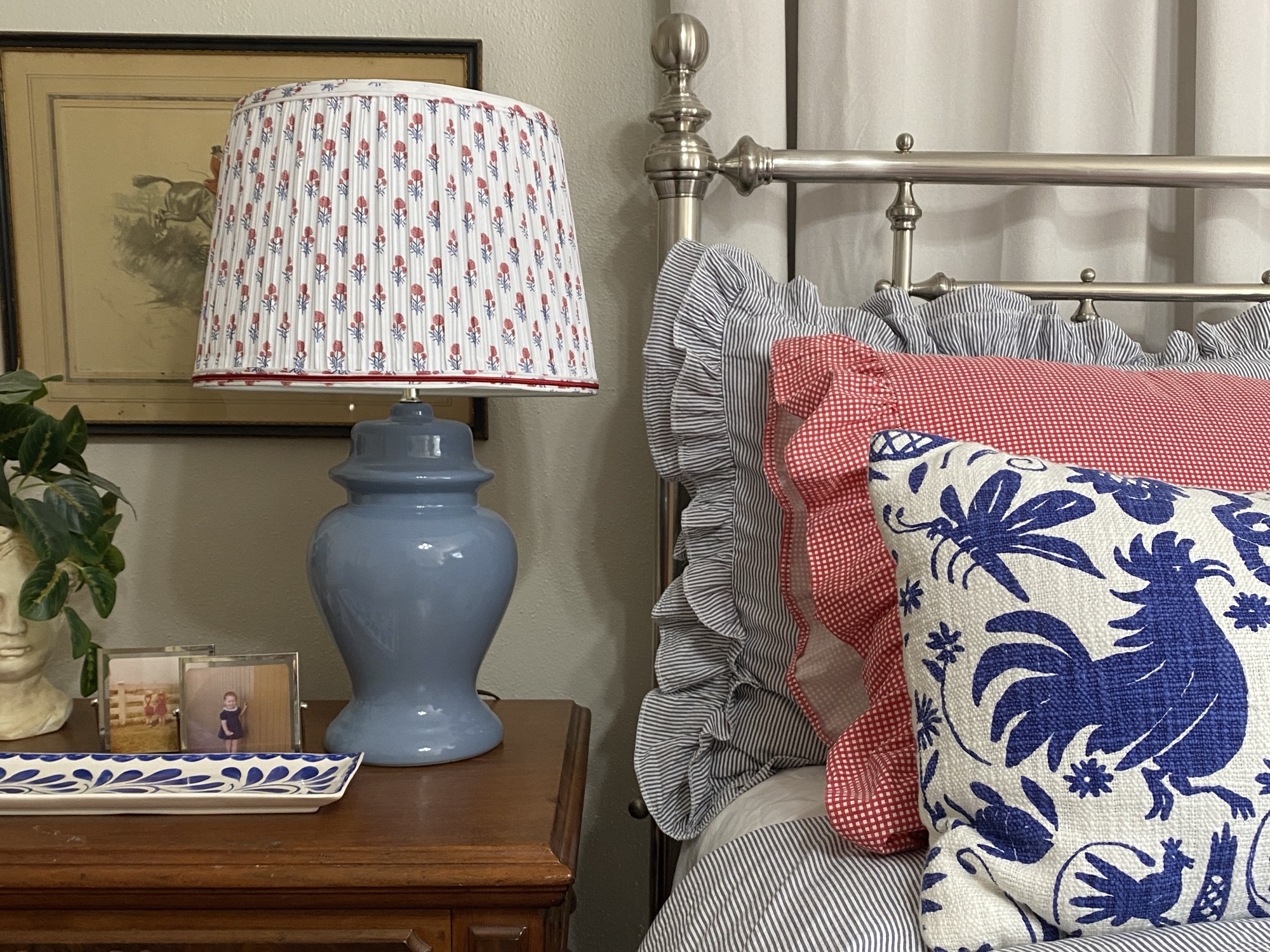
Discover how to style ticking stripes, gingham, and folk-inspired prints with vintage accents for a cozy and timeless bedroom look.
Stripes, gingham, and folk prints mingle with vintage accents for a collected bedroom.

Join me next week for the final article in this series, Falling for Home: A Weekly Autumn Journal. Next week’s article, Front Doors & First Impressions, is all about the importance of first impressions and how your entryway sets the tone.

Explore More from Falling for Home: A Weekly Autumn Journal

This article is part of my series called Falling for Home: A Weekly Autumn Journal. Be sure to check out these reader favorites:

You can subscribe here to receive new articles, seasonal inspiration, and vintage-style favorites delivered right to your inbox.
Essential Elements for a Beautiful Entryway

It’s the beginning of a new month, which means it’s time to release another designed space. This month’s design plan features an entryway 3 ways: casual, formal, and transitional.

This article contains affiliate links and ads. You can find the products I recommend by clicking on the links throughout and at the bottom of this page. These are designs that you can pick and choose which elements to bring into your own spaces. They’ll be saved here on my website, or you can save them on Pinterest. You can come back and add pieces to your spaces as time and budgets allow.

This month I am sharing what I consider to be the perfect recipe for a successful entryway design. The best entryways have the following essential elements in common:

  • a functional piece of furniture
  • a lamp
  • artwork
  • a mirror
  • storage/catchall
  • something alive/fresh
  • a rug
  • a clock
  • and a place to set a wet umbrella.

Not only do these items create a beautiful space, but they are functional as well. For example, the mirror allows residents and guests to check their appearance before coming and going, as well as reflecting light into the space. A lamp allows residents to find their way inside on a dark night, as well as helping guests find the door on their way out.

Below you can see a colorful and vibrant entryway design. Since the entryway is the first impression of your home, it’s an opportunity to create a space that reflects your personal style. This design leans more towards casual and bohemian. It is full of visual interest and layers of texture. Combining two separate pieces, like the green and white plate and the pink framed artwork, you can create a one-of-kind, original piece of art in your home that no one else will have. Try using Command brand hooks to mount the plate on top of the pink art before hanging it on the wall.

Click the photo to shop for these exact items.

Traditional decor thrives on symmetry. The design below uses symmetry to create balance by flanking the mirror with matching lamps and plates from the same series. While the first design is considered modern and casual, I would consider the design below to be formal.

Click the photo to shop for these exact items.

Entry Table

Below you will find the final entryway design for this month. Notice how similar metal tones and a soft ivory color are carried throughout. Natural materials like wicker, marble, and wood counterbalance the glamorous gold and brass to create a sophisticated but approachable space. This design is a midway point between casual and formal.

Click the photo to shop for these exact items.

In many cases, the front door to the home opens directly into the living space without a designated foyer or entryway. In these situations it’s possible to create an entryway by grouping specific items on a wall next to the front door. Are you missing any of these essential items in your entryway? Do you have any items in your entryway that you would add to this list? Let me know in the comments below.

Never miss a design release in the future by subscribing using the box at the bottom of this article.

You can find many of these items in my LTK Storefront HERE.

Valentine’s Day: Top Hygge Gifts for Her and Him

In the dark, cold winter when Valentine’s Day arrives, it’s the perfect time to embrace the hygge experience. What is hygge? Merriam-Webster defines hygge (pronounced hoo-guh) as a cozy quality that makes a person feel content and comfortable. I don’t think there’s a better way to describe how I want the person I love to feel on Valentine’s Day than content and comfortable.

What types of hygge gifts can I give to my Valentine to make them feel content and comfortable? I’ve rounded up a few ideas to get you started. This article contains commissionable links and ads. You can find the exact hygge gifts I recommend by clicking on the links below.

Hygge gifts for Her

Ladies, take the guess work out of what your Valentine should give you for Valentine’s Day. Here are a few ideas to keep you warm and pamper you. Send him this link to give him a direction of where to start.

Hygge gifts for Him

Finding the perfect Valentine’s gift for a man is easier said than done. The stereotypical Valentine’s gifts of flowers and chocolates aren’t what men typically want to receive on Valentine’s Day. Here are a few cozy and comfortable hygge gift ideas for your man this Valentine’s Day.

When couples focus on how they want their partner to feel on Valentine’s Day, the gifts become more sincere and appreciated. Choosing hygge-type Valentine’s gifts to make your partner feel content and comfortable, warm and relaxed, or just plain cozy will express to your partner that you truly care for and love them.

Need to save these ideas for later? You can save this post to Pinterest or bookmark this page. Be sure to follow me on Instagram or LTK for more ideas in the coming days. Do you have another hygge Valentine’s gift idea – share it in the comments below!

Happy Valentine’s Day!

Fun Holiday Activities for Young Adults and Families

This article contains commissionable links and ads.

I’m always looking for ways to keep the magic of Christmas alive now that our kids are young adults. Our youngest is in college, and our oldest lives about 3 hours away, so I try to make the most of our time when we’re all together as a family. I heard a quote a few years ago, and since then it has become something that I have become intentional about. The quote is, “Relationships are built on shared experiences.” I think this quote applies to many types of relationships, but isn’t it beautiful to think of in the context of families?

Relationships are built on shared experiences.

Where can we go together? What foods can we taste together? What games can we play together? How can we have FUN together? ‘Shared experiences’ have one thing in common, time spent together. Even when the quantity of time isn’t great, like when we are separated by distance, we can be intentional about the quality of the time spent together.

This brings me to my point of intentionally planning experiences this holiday season with our 20-something year olds and their significant others. My husband, Ken, and I are planning several things, but the one I want to share today is the white elephant advent calendar exchange we are planning for Thanksgiving. I use the term ‘white elephant’ loosely because we are really only using the rules of the game in this situation. We’re going to buy and wrap advent calendars to play a gift exchange with. Since our kids are in their young 20s, and therefore on a budget, Ken and I are going to buy all of the advent calendars. If we continue this game in years to come, we’ll up the fun-factor by asking everyone to contribute a wrapped one of their own.

Thanksgiving is the perfect time to play this game, because the advent calendars are needed before December 1st. We’re going to choose calendars that anyone would enjoy, regardless of who ends up with it. It will really be fun to see which ones are the favorites.

For now, I have rounded up sixteen of this year’s advent calendars that I think are the best. This list includes picks for young children, teens, women, and men. There are a couple of splurges, but most of them are priced $20-$25. Many of them have coupons to click before checkout, and several of them are reusable. I’m not going to share which ones off of this list that I’m buying in case one of our kids happens to read this article (unlikely), but please do come back and leave a comment if there’s one from the list that your family particularly enjoys.

You can click the photo above to find all 16 of these advent calendars in my LTK shop, or you can click the name below to go directly to the advent calendar’s website.