
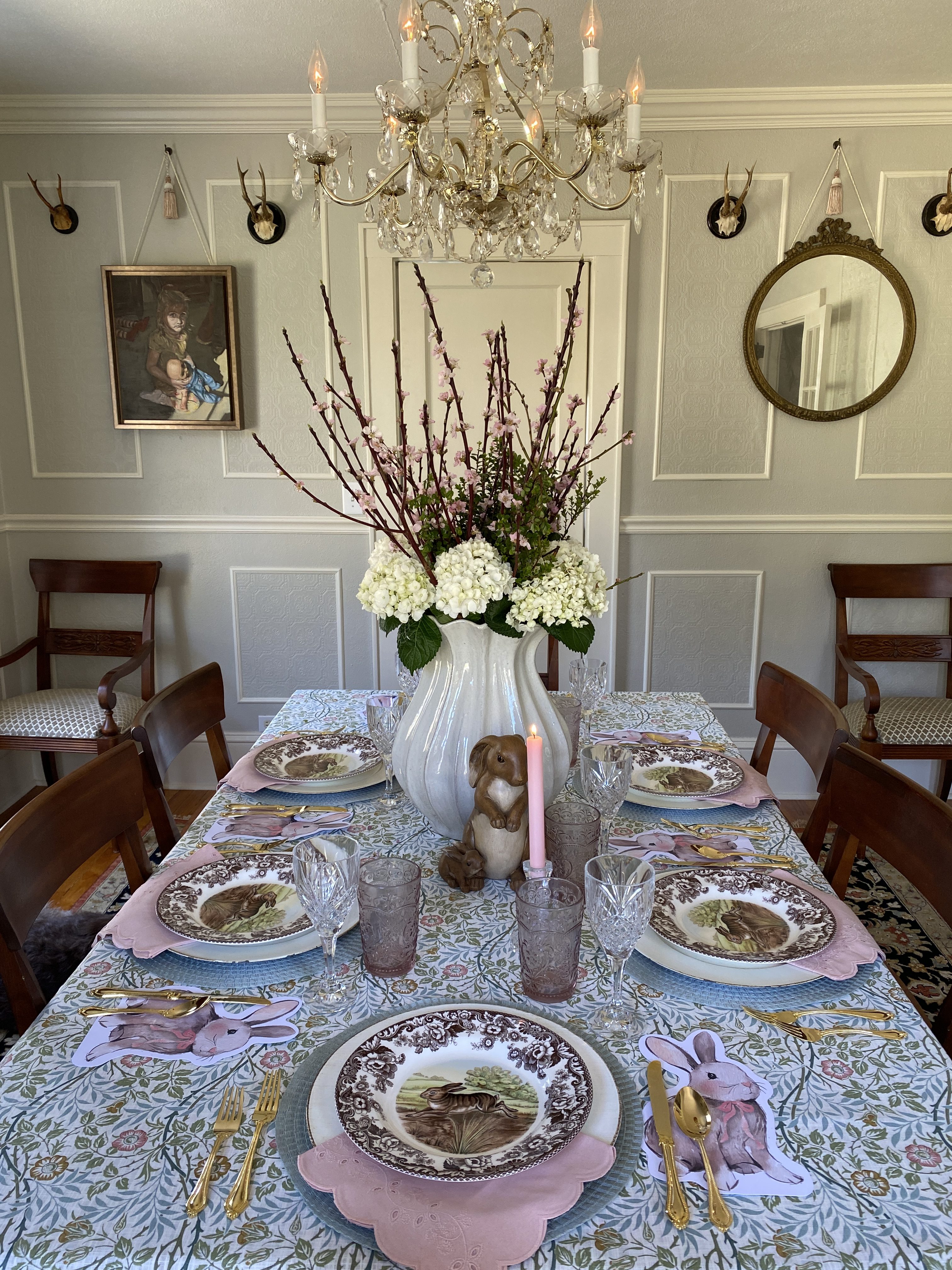
Classic spring easter table setting with layered vintage and new tableware, pink linens, crystal glassware, and floral centerpiece

A Beautiful Easter Table: How to Set a Classic Spring Easter Table

An Easter Table Set with Intention

In the South, there isn’t a great thaw of ice and snow at the end of winter. Our spring thaw is more of a metaphysical one. We are starved for the changing angles of the sun after months of darkness searching for signs of spring: velvety buds, chartreuse sprouts, and fervent birdsong. Winter may keep us indoors, cocooned in thick blankets, but when spring arrives, we are liberated from the imprisonment of cold and darkness.

As a culture, Southerners aren’t solitary people. Warmer temperatures and longer days in spring give us opportunities to show hospitality and connect with others. Naturally, when Easter arrives, it’s an occasion to reunite with our friends and family around the Easter table to share a meal.

Easter is the perfect time to set the table with a mixture of new and collected pieces. Your Easter table setting can be planned beautifully by layering thrifted, collected, and new elements. Here’s how to build a layered, classic Easter table using a mix of things you already own, and perhaps a few new additions.

Easter table setting with vintage rabbit dinnerware, pink napkins, gold flatware, and spring floral centerpiece
A classic Easter table layered with vintage rabbit dinnerware, soft spring linens, and a gathered floral centerpiece.

This article may contain affiliate links. If you choose to make a purchase through one of these links, I may earn a small commission at no additional cost to you.

Start with a Foundation You Love

Spring gives us our greatest inspiration with soft pastel colors, new life, and warmer temperatures. The first step in creating a beautiful design is to consider your foundation, the tablecloth. The tablecloth sets the color palette and anchors the rest of the table.

When choosing a tablecloth for Easter, consider one that is neutral or one that brings in soft, seasonal colors. Choose a tablecloth that can be used for multiple occasions, not just one day.

The Easter table setting in this article uses a classic William Morris design, Sweet Briar. This pattern brings in soft pinks and greens on a cream background with occasional brown accents. These colors, reminiscent of spring, will be incorporated throughout the rest of the table setting.

Layering Pieces for a Collected, Timeless Look

After selecting a tablecloth, consider ways to create a layered look on the Easter table. Layering pieces over the tablecloth creates visual interest and depth to the design.

Layered easter table place setting with woven placemat, charger, rabbit dinner plate, pink napkin, and gold flatware
Layering a placemat, charger, and patterned plate creates depth and gives an Easter table setting a collected feel.

Layers can be achieved in many ways. Take inspiration from the colors and textures in the tablecloth and begin to build each place setting with intention.

I’ve selected a woven placemat, which adds texture and pulls in color found in the tablecloth. On top of each placemat, I layered an off-white charger. The off-white color creates a soft contrast to highlight the next layer. Finally, on top of the charger sits the focal point plate. These Spode Woodland Rabbit dinner plates are a classic design. The colors from the plate pick up colors from the previous layers, especially our tablecloth. Creamy white, pink, soft green, and chocolate brown; the color palette is cohesive from our base to the top plate.

Consider using elements for each layer of the place setting that have varying textures and tones. Doing so will create a visually interesting space at the table that makes each guest feel special sitting in front of it.

How to Mix Vintage and New Without It Feeling Disjointed

Often a collected table setting feels much more interesting than one where everything has been purchased all at once. Using pieces collected over time feels polished and approachable.

When shopping, keep in mind colors and materials that work well throughout the year. For this Easter table setting, gold flatware was purchased in an online auction years ago. The gold brings in a warm tone on the table that reflects the temperatures of spring, but it can also be used at Thanksgiving and Christmas.

The off-white chargers were recently found at a thrift store for one dollar each. These were fabulous finds because they can be used in endless scenarios throughout the year.

The woven placemats were purchased many years ago on clearance, and it’s wonderful that they pick up the same color found in the tablecloth, which was purchased new this year.

The soft pink napkins were new this year and selected specifically to bring the pink from the flowers on the tablecloth to another layer of the place setting.

Each of these pieces, new, found and old, tie to each other to create a cohesive design.

Choosing Glassware That Feels Special But Practical

Don’t be afraid to integrate everyday pieces into your Easter table setting. Pink drinking glasses repeat the pink found in the tablecloth and dinner napkins. If your everyday pieces complement your tablescape, by all means, use them.

Glassware is another opportunity to layer pieces that you have found, collected, or purchased new. Clear Godinger crystal wine glasses pair with pink drinking glasses to create a subtle seasonal layer.

Easter table setting with crystal wine glasses, pink water glasses, and a lit taper candle centerpiece
Mixing crystal and colored glassware adds warmth and interest to a classic Easter table.

When mixing glass styles on the table, be sure the styles work well with each other and the other elements being used so that the tone is cohesive. Often glassware styles can be bridged with other pieces. Clear glass candlesticks with pink taper candles unite the pink and clear drinkware on the table.

Adding Simple Easter Touches Without Overdoing It

Nearly everything in this tablescape design is versatile. The tablecloth, napkins, and items in the plate stack could be used anytime in spring or even for Mother’s Day. Adding a few restrained touches to the table can show that it’s Easter without overwhelming the design.

Easter table setting detail with rabbit place card, gold flatware, pink napkin, and vintage-style dinner plate
Simple seasonal details, like a rabbit place setting, add charm without overwhelming the table.

In this case, simple die-cut paper rabbit decorations are placed under each knife and spoon. These simple touches can be discarded after the meal. Understated elements effortlessly communicate the occasion without cluttering the design.

Let the Flowers Be Effortless

Flowers for the Easter table don’t need to be elaborate. Often, something from the yard in a simple vase is enough. For this table, branches from an Eastern Red Bud tree were cut to bloom indoors. The pink flowers reflect the shades of pink used throughout the tablescape.

Spring easter table centerpiece with white hydrangeas, flowering branches, and pink taper candle
A simple spring centerpiece with seasonal branches and soft blooms brings height and movement to the table.

I share more about spring arrangements and using branches in this article.

A Simple Formula for Your Own Easter Table

If you’re not sure where to begin, or you’re overwhelmed with planning a special Easter table setting, here are a few simple steps that you can use to recreate this look in your own home.

  1. Start with a soft base – Select a tablecloth or runner that gives you a strong foundation and inspiration to layer other elements on top.
  2. Layer texture – At each place setting, use pieces like placemats, chargers, and different sizes of plates to create a beautiful scene in front of every guest.
  3. Mix one vintage element – A collected piece that tells a story brings character and depth to your Easter table. Try using a vintage deviled egg plate, candlesticks, or silver tray to bring some character to the table.
  4. Repeat a color – This Easter table setting uses pink, green, cream, and brown in various ways. Let the colors in your tablecloth or feature plate guide the color palette that repeats on your table.
  5. Add one seasonal detail – Keep your Easter table setting enjoyable and classic. Too much holiday décor can visually clutter the table. Choose one seasonal detail to take the focus.
  6. Finish with simple flowers – Flowers are synonymous with spring. Whether you purchase a simple bouquet from the grocery store, or you cut a bunch of daffodils from the yard, simple flowers are the perfect touch for your Easter table.

A Table Meant to Be Lived In

While it is satisfying to see a well-laid Easter table, the goal is to gather with friends and family around the table for a meal. The Easter table is more than a lovely work of art to fill a dining room. It’s meant to be used and lived in. Each person seated at the table should be considered more precious than the items used to decorate it.

When you’re planning your Easter table setting, consider how each guest will feel seated at your table. It’s important to make sure everyone feels comfortable and relaxed enough to want to come back.

If you’re looking for help with your Easter menu while you’re planning your tablescape, check out this article on the Southern Easter menu.

In Closing

The thing about a collected design style is that it takes time. Your table doesn’t need to be perfect to invite others in. While a beautifully set table is a nice thing to have, those gathered around it will remember the food, laughter, and love most of all.

Don’t wait until you have the perfect pieces to create a place for laughter to linger.

Happy Easter!
Patterns & Patina: How to Layer Like a Southerner

Have you ever found yourself admiring someone’s personal style, whether in their home or wardrobe, and wondered why it feels so sophisticated? Perhaps you were inspired to create a similar outfit or room in your home and ended up feeling like yours just wasn’t on the same level of style. Today we’re discussing how mixing patterns and patina creates a personal style in your wardrobe and home that tells a story, adds character, and creates a timeless collected look.

Welcome back to our fall series Falling for Home: A Weekly Autumn Journal. If you’re just joining us from Google, Pinterest, or Instagram, I invite you to browse through the other articles in the series, which can be found linked at the end of this article.

Patterns: Mixing with Confidence

In the South we never miss an opportunity to dress something up. Whether it is a specially wrapped gift, a room in our home, or ourselves, we find opportunities to express our personality and present it to the world on a visual platter.

It’s often true that the most charming aesthetics are created when patterns are thoughtfully combined and layered to create depth and interest throughout your home and wardrobe. Interior and fashion designers use this technique in both clothing and home decor selections to create a visual conversation and unique story.

Our subconscious minds are attuned to visual interest. In last week’s article, Home as a Haven, we briefly discussed how too much visual interest can prevent you from getting rest in your bedroom. Similarly, too much visual interest in your outfit or home décor can cause unpleasant clashing.

With some practice and a few guiding principles, mixing patterns to create a polished and collected look can be done by anyone. Here are some tips I’ve learned along the way.

What to Pay Attention To

If you’re just getting started with pattern mixing, there are four things to be mindful of to achieve your desired effect.

  1. Color Family – Be mindful to keep color tones in the same palette. Too many different colors, or colors that don’t blend well, will end up clashing with each other. Colors that are next to each other on a color wheel or opposite from each other are usually successful choices.
  2. Scale – When mixing patterns, be aware of size and scale. For example, if you’re selecting a large floral pattern, consider a smaller stripe or plaid to complement it.
  3. Texture – Remember to consider the fabrics and materials of the patterns you’re choosing. Compare how different a velvet paisley is from a crisp cotton plaid.
  4. Balance – An important factor when mixing patterns is balance. Let one pattern be the star of the show, and the other patterns play a supporting role. For example, two different stripes can be successfully combined when one is a large bold stripe, and the other is a small, subtle stripe. Avoid being so over-the-top that you get lost in your aesthetic from trying to do “too much.”

Example Combinations

Have you ever heard people say, “Never mix plaids with stripes”? That’s not necessarily a good piece of advice. There aren’t many hard-and-fast rules for which patterns to mix, and if you follow the 4 design rules that I mentioned above, you can create endless combinations.

If you’re having trouble getting started, here are a few of my favorite patterns to combine for a polished look in both fashion and home décor:

  • Leopard + Plaid – This combination is classic and bold. It works in interiors with combinations like a leopard pillow and a plaid footstool. In fashion, a plaid blazer can be combined with a leopard belt for a touch of playfulness.
  • Paisley + Herringbone – These two traditional patterns can be combined for a refined and classic statement. Select paisley drapery panels with a herringbone chair for a timeless duo. You can’t miss when you combine a paisley scarf with a tweed herringbone jacket.
  • Floral + Buffalo Check – Florals balance the bold, graphic nature of buffalo check to create a charming and approachable look. In your home, combine a floral sofa with buffalo check throw pillows. In your closet, a delicate floral scarf pairs well with a buffalo check skirt or shirt.
  • Stripe + Plaid – These linear patterns can be combined to create an energetic, tailored look. In décor, a striped rug can be successful under plaid armchairs. In fashion, a crisp white shirt layered under a subtle striped sweater and paired with a plaid blazer will be seen as polished and sophisticated.

Patina: The Beauty of Time

Patterns catch the eye, but patina holds attention. It’s what makes a room or outfit feel lived in. Patina adds authenticity, character, and a sense of permanence. Patina is the way a lived-in surface changes appearance, and it can only be achieved with use, age, or weathering. Patina is what gives items soul. Antique appraisers look for signs of patina when determining authenticity of an item in question. Furniture will see patina around drawer pulls and surfaces with heavy use. Jewelry and other accessories show patina in the gentle softening of shine and wear on the surface,

When we’re aiming to achieve an aesthetic that includes items with patina, it’s necessary to consider whether new items we purchase will age with time and use. Items made of acrylic, vinyl, “vegan” leather, and laminated finishes do not age well or achieve the desired patina effect. For this reason, items made of those materials should not be treated as investment pieces.

Wondering how to incorporate patina into your home or closet? Here are a few examples of what to be on the lookout for:

Interiors

  • Leather armchairs darkening with use.
  • Unpolished silver trays, candlesticks, or cutlery.
  • Natural wood: farm tables, cutting boards, frames with softened edges.
  • Stoneware or pottery with subtle crazing.
  • Seasonal touches: a patinaed copper bucket for firewood, a weathered wicker basket for blankets.

Wardrobe & Accessories

  • Leather belts, handbags, boots that soften and show character.
  • Jewelry that develops a mellow sheen rather than a perfect shine.
  • Brass buckles, buttons, or clasps with gentle wear.
An antique silver bowl, painted tray, and well-loved books bring pattern & patina to life.

Bringing it Together

Many of us understand that having a solid foundation is essential to décor and fashion. However, a well-honed personal sense of style goes behind finding colors that match. Don’t be afraid to create a style that feels layered and personal.

It’s easy to settle for beige walls and a plain sofa, but your signature look is developed when you begin to layer coordinating patterns to showcase your unique personality. When we add touches of patina to our home and closet, we can explore opportunities to add soul to otherwise lackluster choices. After patterns and patina are combined, they seem to effortlessly create spaces and wardrobes that feel collected rather than staged.

I invite you to embrace layering styles at home and in your daily style. In addition to all the timeless Southern style recommendations that I’ve given in this article, the ultimate test is how your space and outfit make you feel. If it doesn’t feel right, it’s probably not. If it makes you happy and comfortable, then it’s probably a good choice. That’s the beauty of a personal style – it should matter most of all to you.

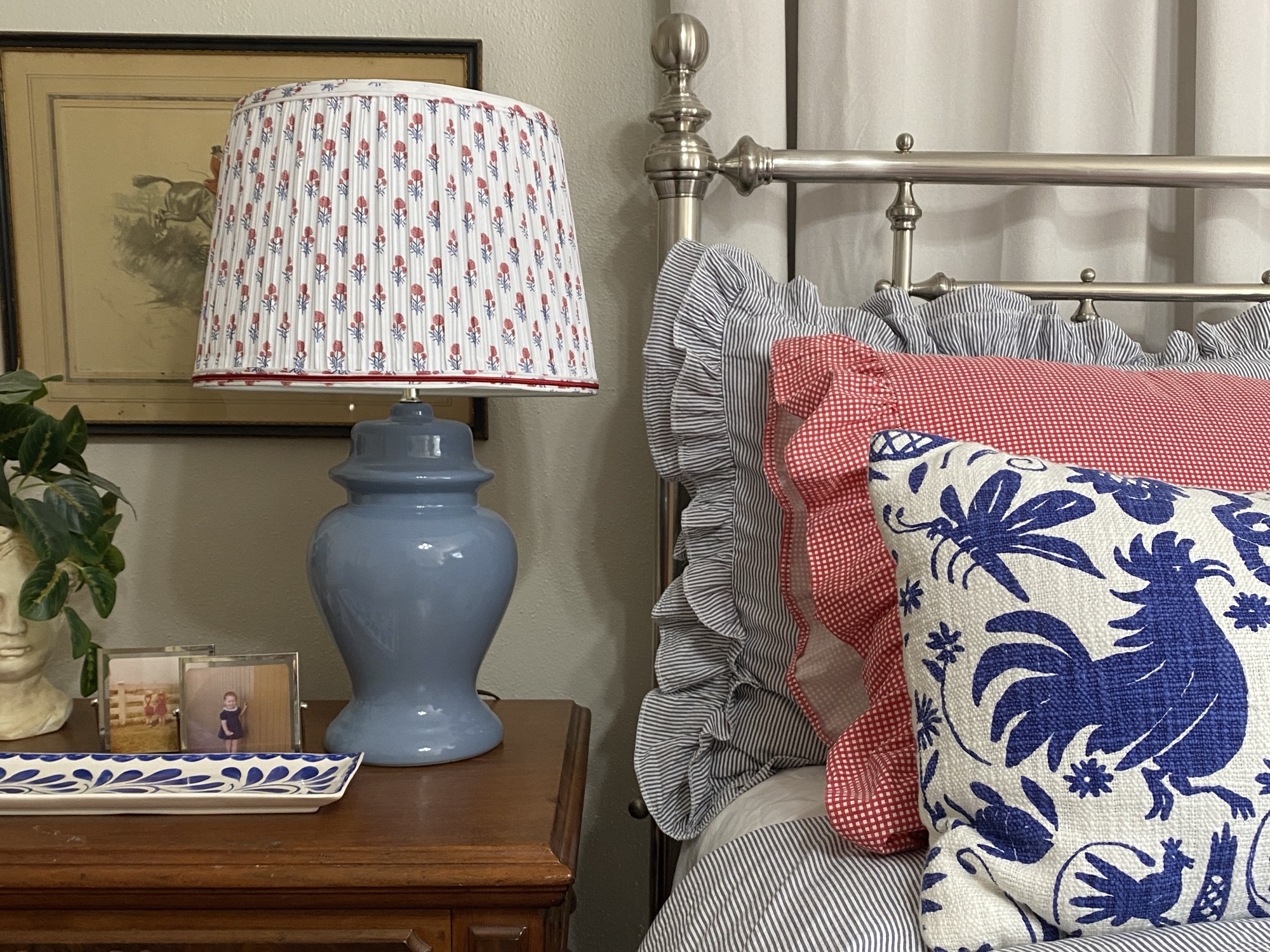
Discover how to style ticking stripes, gingham, and folk-inspired prints with vintage accents for a cozy and timeless bedroom look.
Stripes, gingham, and folk prints mingle with vintage accents for a collected bedroom.

Join me next week for the final article in this series, Falling for Home: A Weekly Autumn Journal. Next week’s article, Front Doors & First Impressions, is all about the importance of first impressions and how your entryway sets the tone.

Explore More from Falling for Home: A Weekly Autumn Journal

This article is part of my series called Falling for Home: A Weekly Autumn Journal. Be sure to check out these reader favorites:

You can subscribe here to receive new articles, seasonal inspiration, and vintage-style favorites delivered right to your inbox.