fall garden prep: essential tasks for a beautiful start to spring belleantiquarian.com

Fall Garden Prep: Essential Tasks for a Beautiful Start to Spring

If youโ€™re anything like me, fall garden prep is the last thing you want to think about right now. Gardening feels fresh and full of promise in spring and early summer, but somewhere near the end of September, my enthusiasm wanes.

It’s fall, and the daylight is growing shorter, which means Iโ€™m spending more time indoors. The air feels softer, and the garden smells faintly of drying leaves and damp soil. I can no longer see bright red tomatoes growing from my kitchen window. And there are no zinnias or cosmos ready to fill vases throughout our home.

This time of year, the Southern garden is quietly in the background asking for attention, while I neglect to give it a passing glance.

Welcome back to the newest installment of Home for the Holidays: A Southern Season of Charm. Today Iโ€™m talking about essential tasks for cultivating a healthy garden so that itโ€™s ready for planting when spring arrives. If youโ€™re just joining me from Google, Pinterest, LTK, or Instagram, I invite you to browse the other articles in this series, which can be found linked at the end of this article.

Note: This article contains affiliate links, which help support Belle Antiquarian at no extra cost to you.

Southern Timing: Why Fall Garden Prep Matters

In the South, gardening is often a year-round activity. Thereโ€™s still plenty of time to grow many cooler weather crops. But for most gardeners, we are putting our garden beds to sleep for the winter. Weโ€™re preparing for the beginning of next yearโ€™s garden by performing essential fall garden prep.

Itโ€™s important to evaluate what your garden needs now in order to have a successful growing season next year. Now that the temperatures have cooled off a bit, itโ€™s the perfect time to spend outside looking at your soil, cleaning tools, preventing diseases from spreading, and planning changes for the next year. Itโ€™s even a wonderful time to plant cool-weather crops like garlic and shallots.

If I wait too long to take care of my fall garden prep, the rush of holidays and gatherings will be here. Pretty soon, there will be Christmas cards to address, gifts to wrap, and cookies to bake. If the garden is going to be attended to, it needs to be now. Itโ€™s time to prepare the garden for spring.

Hand holding dried zinnia flower heads for seed saving during fall garden prep.
Zinnia blooms at the end of their season โ€” drying beautifully for seed saving and next yearโ€™s planting.

Ornamental Garden Care: Peonies and Perennials

Fall is the ideal time to plant many flowering perennials, shrubs, and trees. Planting in the fall allows plants to establish their root systems. The plants wonโ€™t be injured or stressed from direct sunlight with high temperatures. The soil is still warm enough to encourage root growth, but less daylight and cooler temperatures prevent the plant from sprouting upwards.

If youโ€™ve been following me for a while, you know that one of my favorite plants to grow is the peony. In the South, the best time to plant peonies is in the fall. Peonies grow from tuberous roots that prefer to settle into cool, well-drained soil. The best place to purchase peony tubers in the fall is from a reputable online retailer. Most big-box stores sell peonies in the spring, which is not their ideal planting time. If youโ€™re looking for quality tubers, Iโ€™ve had good success ordering from Eden Brothers.

A few tips for planting peony tubers this fall:

  • Plant shallowly, with eyes no more than 1-2 inches deep.
  • Choose a sunny, well-drained spot.
  • Avoid disturbing roots once established.

If you already have peonies planted, fall is also time to perform routine care for them. Peonies are low maintenance plants, but they do need a little care to keep them healthy and happy.

Peony tubers labeled with garden tags for fall planting.
Peony tubers labeled with garden tags for fall planting. (We recommend copper tags.)

Here are a few recommended fall care tips for peonies:

  • Cut foliage to the ground after frost.
  • Remove debris to prevent fungal issues.
  • Mulch lightly, especially in exposed areas.

If you still have other types of blooms in the garden worth saving, such as hydrangeas, you might enjoy my article on Gathering Baskets & Dried Blooms. It shares simple ways to preserve flowers for use in arrangements and dรฉcor.

Pro Tip: When cutting back peonies, always clean your pruners between plants to prevent fungal spread. If youโ€™re planning new roots, mark the spots now with tags like this; once spring foliage emerges, youโ€™ll be glad you did.

Helpful Items:

Kitchen Garden Care: Rest, Mulch, and Plan Ahead

This year we had a successful kitchen garden with tomatoes, cucumbers, beans, squash, pumpkins, and peppers. The summer garden has finished growing, and now itโ€™s time to take care of some essential tasks. I want to make sure next yearโ€™s garden is just as bountiful as this yearโ€™s was.

I begin by pulling out and removing any remaining plants and weeds. Iโ€™ll add compost or aged manure and mix it lightly into the soil. Iโ€™ll finish my garden beds off with a layer of leaves that Iโ€™ve raked up from the yard. The leaves will act as mulch to help prevent erosion and weeds.

Woman turning soil in raised garden bed during fall garden prep to mix in compost before winter.
Turning the soil to add compost before the raised beds rest for winter.

Now is the time to clean and store your garden tools. Your tools will last for years if you take a little time to oil wooden handles, clean blades, and sharpen edges before storing.

I also use this time to reflect on what worked this year, and what I may want to do differently in the future. Iโ€™ll order seed catalogs to peruse over the cold winter days when Iโ€™m dreaming of warmer weather. Iโ€™ll also start to map out and plan what I want to plant in the spring.

Pro Tip: You can reference an earlier article HERE that I shared on rotating crops in raised beds, one of the simplest ways to keep your garden soil healthy.

Helpful Items:

Fall garden prep checklist for Southern gardens showing essential tasks like mulching, pruning, and tool care โ€” Belle Antiquarian seasonal guide.
A simple fall garden prep checklist for Southern gardeners โ€” BelleAntiquarian.com

For a printable version of this checklist, click the button below.

When the work is done and the tools are set aside, thereโ€™s a calm that settles over the garden, a quiet knowing that everything is in its place.

Woman watering peas growing in raised beds during fall garden prep in a Southern garden.
Watering cool-weather peas, one of the easiest fall crops in the South.

Container & Porch Gardens

One last place that I want to give attention to in the gardens this fall will be the garden planters. I use my planters for annuals, and itโ€™s getting too cold for the plants that have spent their summer bringing cheerful color to the porch and deck. Iโ€™ll use annuals like pansies, violas, and ornamental cabbage to give them a cool-weather refresh. Be sure to clean your planters and check for cracks before you use them again.

Spruce up your garden planters now so that by the time you host guests for the holidays, the plants have grown and filled in the pots. Take care of your planters now, and youโ€™ll shorten your to-do list before guests arrive.

Autumn porch planter with pansies and ornamental cabbage for fall garden refresh.

Pro Tip: Before the first frost, water container plants deeply and group them together near a wall or porch corner. The shared warmth and protection help them weather sudden cold snaps.

Helpful Items:

A Ritual of Readiness

Fall and winter are slow seasons for gardeners. And thank goodness, because the holidays are filled with a hustle and bustle that can feel chaotic. Now is the perfect time to take care of your fall garden prep. It prevents small stresses from piling up when the holidays get busy. Youโ€™ll be happier and able to enjoy the festivities with those around you.

Just as we prepare our hearts and homes to welcome guests inside this holiday season, caring for your garden this fall can be seen in a similar way. When frost glistens on the garden beds, youโ€™ll rest easily knowing your work is done. Your garden, like your heart, is ready for the season ahead. The garden can sleep soundly this winter, and so can you.

Home for the Holidays: A Southern Season of Charm

Be sure to check out these other reader favorites from the series! You can also subscribe here to make sure you never miss a new article.

Previous: How to Roast a Pie Pumpkin (Plus The Best Pumpkin Muffin Recipe)

Next: A Classic Sweet Potato Pie Recipe from a Vintage Southern Cookbook

For the full Home for the Holidays archive, go HERE.

10 Tools to Prep Your Fall Garden - shop these items
10 Tools to Prep Your Fall Garden – Click to shop these items.

how to roast a pie pumpkin plus the best pumpkin muffin recipe

How to Roast a Pie Pumpkin (Plus The Best Pumpkin Muffin Recipe)

Somewhere along the way of making foods convenient, we seem to have overcomplicated the simplest of kitchen tasks. It’s easy to learn how to roast a pie pumpkin (sometimes called a sugar pumpkin) to use in your holiday baking, and youโ€™ll be rewarded with the best tasting pumpkin for your favorite recipes.

Welcome back to the newest installment in our holiday series, Home for the Holidays: A Southern Season of Charm. Today Iโ€™m sharing the simple steps to roast your own pie pumpkins, which brings out the sweetest, richest flavors of the season. Youโ€™ll learn how to make pumpkin puree, talk about ways to store it, and explore how to cook with it. Iโ€™ll also link my familyโ€™s favorite pumpkin muffin recipe, and I know youโ€™ll love it as well.

The other articles in this series are linked below. I hope youโ€™ll browse through other reader favorites at your leisure.

What Is a Pie Pumpkin?

When Iโ€™m making homemade pumpkin puree, I usually opt for sugar pie pumpkins. Sugar pie pumpkins look just like the kind that youโ€™d buy to carve a jack-0โ€™-lantern, but they are much smaller. Sugar pie pumpkins are easily split into two to fit inside your oven to bake. But if youโ€™re feeling adventurous, there are many varieties of edible pumpkins that provide rich, sweet flesh for cooking. You can see other types of edible pumpkins on the image that Iโ€™ve created below, and if you want to research more about edible pumpkins, you may enjoy this book.

There are many varieties of edible pumpkins. Flavors range from mild to savory to sweet.
Sugar pie pumpkins are smaller and sweeter than carving pumpkins โ€” perfect for homemade purรฉe.

How to Roast a Fresh Pie Pumpkin (Step-by-Step Guide)

If youโ€™ve ever wondered how to roast a pie pumpkin at home instead of using canned puree, this simple guide walks you through each step.

Roasting a fresh pumpkin to make puree is a beginner-friendly kitchen task. All you need are a few kitchen tools and a little bit of time. Here you can see all the steps and equipment youโ€™ll need, plus a few tips for storing and using your pumpkin puree. Keep reading for a link to my familyโ€™s favorite pumpkin muffin recipe!

how to roast a pie pumpkin plus the best pumpkin muffin recipe
Abby | Belle Antiquarian

Homemade Pumpkin Puree

Rich, smooth, and naturally sweet homemade pumpkin puree. Perfect for pies, muffins, soups, and all your favorite fall recipes.
Prep Time 10 minutes
Cook Time 50 minutes
Servings: 2 cups puree
Course: Side Dish

Ingredients
  

  • 1 Pie pumpkin (also called sugar pumpkin) about 2 ยฝ to 3 pounds
  • 1-2 tsp Olive or avocado oil. Optional, for lightly brushing the cut sides before roasting
  • 1 pinch Salt. Optional, helps draw out moisture and deepen flavor
  • Water for blending, as needed. Start with 1-2 tablespoons

Equipment

  • 1 Sharp chef's knife for safely cutting the pumpkin in half.
  • 1 Large cutting board sturdy and non-slip to handle round produce.
  • 1 Metal spoon or scoop to remove seeds and stringy pulp.
  • 1 Baking sheet a rimmed sheet pan to catch any caramelized juices while roasting.
  • 1 Parchment paper or silicone baking mat for easy cleanup and even roasting.
  • 1 High-speed blender or food processor to create smooth, creamy puree.
  • 1 Rubber spatula to scrape down the sides while blending.
  • 1 Glass storage containers or freezer-safe bags to portion and store your puree for later use.

Method
 

  1. Preheat the oven to 375*F (190*C). Line a rimmed baking sheet with parchment paper or a silicone baking mat.
  2. Prepare the pumpkin. Using a sharp chef's knife, carefully cut the pie pumpkin in half from top to bottom. Scoop out the seeds and stringy pulp with a spoon. (Save the seeds for roasting later, if desired.)
  3. Roast the pumpkin. Place the halves cut-side down on the prepared baking sheet. Brush lightly with oil, if using. Roast for 45-50 minutes, or until the flesh is tender when pierced with a fork.
  4. Cool slightly. Remove the baking sheet from the oven and let the pumpkin cool until easy to handle, about 10-15 minutes.
  5. Scoop and blend. Scoop the soft pumpkin flesh from the skin and transfer it to a blender or food processor. Blend until smooth, adding water one tablespoon at a time if needed to reach your desired consistency.
  6. Store for later use. Spoon the puree into airtight containers. Refrigerate up to 1 week or freeze in 1-cup portions for up to 3 months.

Notes

  • Storage: Keep fresh pumpkin puree in an airtight container in the refrigerator for up to 1 week, or freeze it in 1-cup portions for up to 3 months. Thaw overnight in the fridge before using.
  • Pumpkin Type: This recipe is best with pie pumpkins (also called sugar pumpkins). Avoid large carving pumpkins; theyโ€™re watery and less flavorful.
  • Texture Tip: For extra-smooth puree, blend roasted pumpkin in a high-speed blender or food processor while still slightly warm.
  • How to Use: Substitute homemade puree cup-for-cup for canned pumpkin in pies, breads, muffins, and soups.
  • Tip: Use a sturdy sheet pan, silicone baking mat, and a good immersion blender for effortless roasting and blending.
  • Make-Ahead Idea: Roast multiple pumpkins at once, cool completely, and freeze the extra puree to save time during the holidays.

This post may contain affiliate links. As an Amazon Associate and LTK Creator, I may earn a small commission if you purchase through my links.

Roast until the skins wrinkle and the flesh is fork-tender โ€” thatโ€™s when the flavor is at its peak.

Cozy Pumpkin Muffin Recipe

Once your kitchen smells like roasted pumpkin, put that fresh puree to good use in some soft, spiced pumpkin muffins.

Itโ€™s not an exaggeration when I say that our kids absolutely adore my pumpkin muffins. They ask for them every fall, and a batch will usually only last us a couple of days. Now that weโ€™re empty-nesters, they still request pumpkin muffins. I recently made a batch and gave them all to my daughter to take back to college.

If you have a big family, hungry teenagers, or you like to meal prep, these pumpkin muffins freeze well. Cool them completely and place them into freezer bags before storing them for future use.

Thereโ€™s a reason the recipe is called The Best Pumpkin Muffins, because they really are! You can find the recipe linked here.

Serving Suggestions and Variations

Although the pumpkin muffins are perfect just as they are, itโ€™s always fun to play around with fall flavors and different add-ins. We sometimes use chocolate chips, golden raisins, dried cranberries, or a streusel topping.

When you bake these pumpkin muffins with fresh pumpkin puree, the flavor and color will be a little richer than canned pumpkin. This small change makes a huge difference.

If you love pumpkin muffins like we do, try pairing them with a hot cup of cinnamon tea or a cream cheese spread.

In Closing

I hope that you see just how easy it is to make your own pumpkin puree by roasting a small sugar pie pumpkin. Before we get into the hectic holiday rush, take an hour this weekend to make some pumpkin puree for your fall pies, bread, and muffins. (Just pop it in your freezer until you need it!)

This holiday season weโ€™re sharing recipes, traditions, and timeless dรฉcor in each of the Home for the Holidays articles. Be sure to bookmark Belle Antiquarian, subscribe below, and follow me on Instagram and Pinterest as we journey Home for the Holidays this season.

Home for the Holidays: A Southern Season of Charm

Previous: Natural Fall Dรฉcor: Simple Ways to Bring the Outdoors In

Next: A Classic Sweet Potato Pie Recipe from a Vintage Southern Cookbook

For the full Home for the Holidays archive, go here.

Homemade pumpkin purรฉe โ€” smooth, rich, and ready for your favorite fall baking recipes.

Natural Fall Decor: Simple Ways to Bring the Outdoors In

Welcome to the first installment of my newest series, Home for the Holidays: A Southern Season of Charm. Today we begin by sharing ways to bring the outdoors inside to decorate your home with natural dรฉcor for fall.

The holiday season in the South is rich in tradition. Itโ€™s a graceful time of the year where we extend hospitality and celebrate the season by adding seasonal touches in gathering spaces. Each week of the Home for the Holidays series will be a celebration of meaningful traditions, nostalgic dรฉcor, and cozy inspiration for the heart of the home.

Whether you plan to host a large holiday gathering or your goal is to simply add traditional touches around your home, I hope youโ€™ll come back each week for inspiration and a sense of community.

Autumn charm tucked into a secretary desk โ€” goldenrod in a stoneware crock, bowls of acorns, beeswax candles, and heirloom blue-and-white china.

Why Choose Natural Fall Decor?

Albert Camus is credited with saying, โ€œAutumn is a second spring when every leaf is a flower,โ€ and I canโ€™t hear this quote without thinking of the mighty Southern magnolia.

Truly a Magnolia grandiflora, in the spring she entices us with massive, fragrant flowers in a milky white hue that contrast with her green leaves. Yet, the Magnolia doesnโ€™t stop in spring! In the fall, we are presented with brilliant and strange cones that push out bright red seeds as they ripen. The vivid green leaves of spring have developed their velvety brown undersides, softening as the heat of summer eases into the first chilled autumn evenings of the Deep South.

During the spring and summer, we bring natureโ€™s bounty indoors to eat. When autumn arrives, the growing season has come to an end. But that doesnโ€™t mean we turn our backs on what nature has to offer. For generations Southerners have brought nature inside during autumn to decorate with and enjoy. By taking advantage of what nature has to offer us from the land, garden, and forests, we can decorate our homes in the traditional Southern fashion for little to no cost.

Southern autumn in hand โ€” a magnolia seed pod bursting with brilliant red seeds.

The Three Categories of Natural Fall Decor

To make gathering from nature more approachable, I like to think of natural fall dรฉcor in three categories.

The Harvest: Abundance for the table and sideboard

The food we harvest to eat in the fall can also be used to decorate our homes. Apples of all shades from yellow to red to bright green mimic the colors of the leaves. A basket full of apples in the center of a breakfast table becomes edible artwork.

Pumpkins are sometimes overlooked as indoor dรฉcor. Most houses will be seen with one next to the front door, waiting for a face to be carved. But pumpkins can be used as indoor dรฉcor as well. A large pumpkin can be turned into a centerpiece, and small pumpkins can line a windowsill.

Layered textures of hydrangeas and grapevine wreath frame an heirloom pumpkin for an inviting fall accent.

In the fall we also harvest other growing plants like cotton, wheat, and many types of flowers. Bundles of cotton and wheat can be used in vases or wreaths. Dried hydrangeas and goldenrod are also traditional Southern fall decor.

The Gathered: Treasures from the forest floor

A walk through our natural surroundings will reveal all sorts of treasures if we observe the world around us. These items arenโ€™t necessarily grown to harvest at the end of the season. Theyโ€™re little gifts that we can find while looking on the forest floor or in the trees. Sometimes a stroll along the shore of an ocean or lake will reveal a prize to bring inside.

A hand-carved wooden dough bowl brimming with acorns adds warmth to a fall mantel styled with grapevine pumpkins.

In my own yard I collected magnolia and pine cones, acorns, and pecans. I filled all kinds of bowls and vessels to use them as natural fall dรฉcor. I also cut branches of magnolia to use in floral arrangements.

Other gathered finds are items like feathers, antler sheds, ethically sourced turtle shells, and oyster shells. All of these can be thoughtfully integrated into your fall dรฉcor.

Rustic fall touches โ€” pinecones, twine, dried grasses, and terracotta pots flank a vintage dog portrait for cozy seasonal charm.

The Handcrafted: Artisan-made with natural materials

The final category of natural fall dรฉcor is the handcrafted. Artisans use natural items to create things that we use on a daily basis. We can thoughtfully incorporate those items in our fall dรฉcor to highlight their natural materials and craftsmanship.

Pheasant feathers in ironstone, vintage books tied with velvet ribbon, and a grapevine pumpkin create timeless autumn layers.

Candles made of beeswax perfume the room and add a warm yellow tone to the space even when theyโ€™re not burning. Baskets made of local grass and willows are useful all year round, and in the fall they can be used to showcase things like a bunch of gourds.

Other handcrafted items to consider using in your natural fall dรฉcor are quilts, pottery, and sculptures made from wood or local rock.

How to Incorporate Natural Decor into Your Home

A common mistake people make when decorating their homes for the holidays is to go overboard with a theme. If every item in your home has a pumpkin motif on it, it will start to look more like a gift shop than a home with decorative touches. The same thing can happen if you go overboard with natural fall dรฉcor.

I recommend finding ways to integrate natural fall dรฉcor into your existing vignettes. Take one or two natural elements and treat them as โ€œhero piecesโ€ in combination with other groupings of existing dรฉcor. Consider things like textures, colors, and size when youโ€™re styling or arranging your spaces.

A cozy fall corner โ€” heirloom pumpkin centerpiece beside a wingback chair and brass lamp, framed by autumn light.

Four Places to Add Natural Fall Decor

A brown transferware bowl filled with moss, seed pods, and a candle rests on a stack of well-loved books for simple fall charm.

Shop the Look

If you like the idea of decorating for fall using natural dรฉcor, but you donโ€™t live in an area where you can find it on your own, Iโ€™m sharing some links for items that I recommend. Iโ€™ve curated a list of items you can use throughout the year, as well as some resources for natural items like shells and dried flowers.

You can find this list by clicking the image below or going directly to my curated LTK shop for fall.

Shop the look: timeless natural finds I recommend for autumn decorating. These pieces can be styled throughout your home and carried into other seasons with ease.

Looking Ahead: A Season of Charm

Throughout this eight-week Home for the Holidays series weโ€™ll explore a few Southern holiday recipes, decorate our tables for special holiday meals, and explore easy ways to show hospitality and care to those around us this season.

I invite you to come back each Saturday for the next installment of Home for the Holidays: A Southern Season of Charm. Be sure to bookmark this website in your browser and follow along on Instagram for updates. Links to the other segments in this series will be added to the bottom of this article as we make our way through the holidays season together.

Closing Thought

When we choose to use natural dรฉcor in our homes it honors the environment around us. Weโ€™re at a time in history when home dรฉcor is being treated as though it is disposable. Walk into any craft store, and youโ€™ll find shelves up to the ceiling that are lined with hundreds of identical decorations that will likely only be used for one season before ending up in the trash.

I want to encourage you to consider buying quality items that can be used in different ways every season, instead of something that can only be used for a couple of weeks. For example: A dough bowl can be filled with eggs in the spring, shells in the summer, acorns in the fall, and ornaments at Christmas.

Investing in quality dรฉcor saves money in the long run and decreases mental and physical clutter in our homes. Dante Alighieri said, โ€œNature is the art of God,โ€ and I hope you have been inspired to bring nature into your dรฉcor this fall.  

Autumn elegance in the dining room โ€” antler mounts, brown transferware, cabbage plates, and hydrangeas with velvet ribbon.
Autumn natural decor ideas illustration featuring seasonal elements such as magnolia stems, oak leaves, dried wheat, pumpkins, grapevine, dried hydrangeas, pheasant feathers, cotton stems, acorns, pinecones, dried seed pods, antler sheds, and oyster shells. Styled for fall decorating inspiration with a Southern touch.
Bring the outdoors in this autumn with simple, natural decor. From magnolia stems and acorns to antler sheds and oyster shells, these timeless touches add warmth, charm, and Southern character to any home.

Explore More from This Series

Each article in this series celebrates the beauty of Southern living through the seasons. You can find the full collection on the homepage under Home for the Holidays: A Southern Season of Charm.

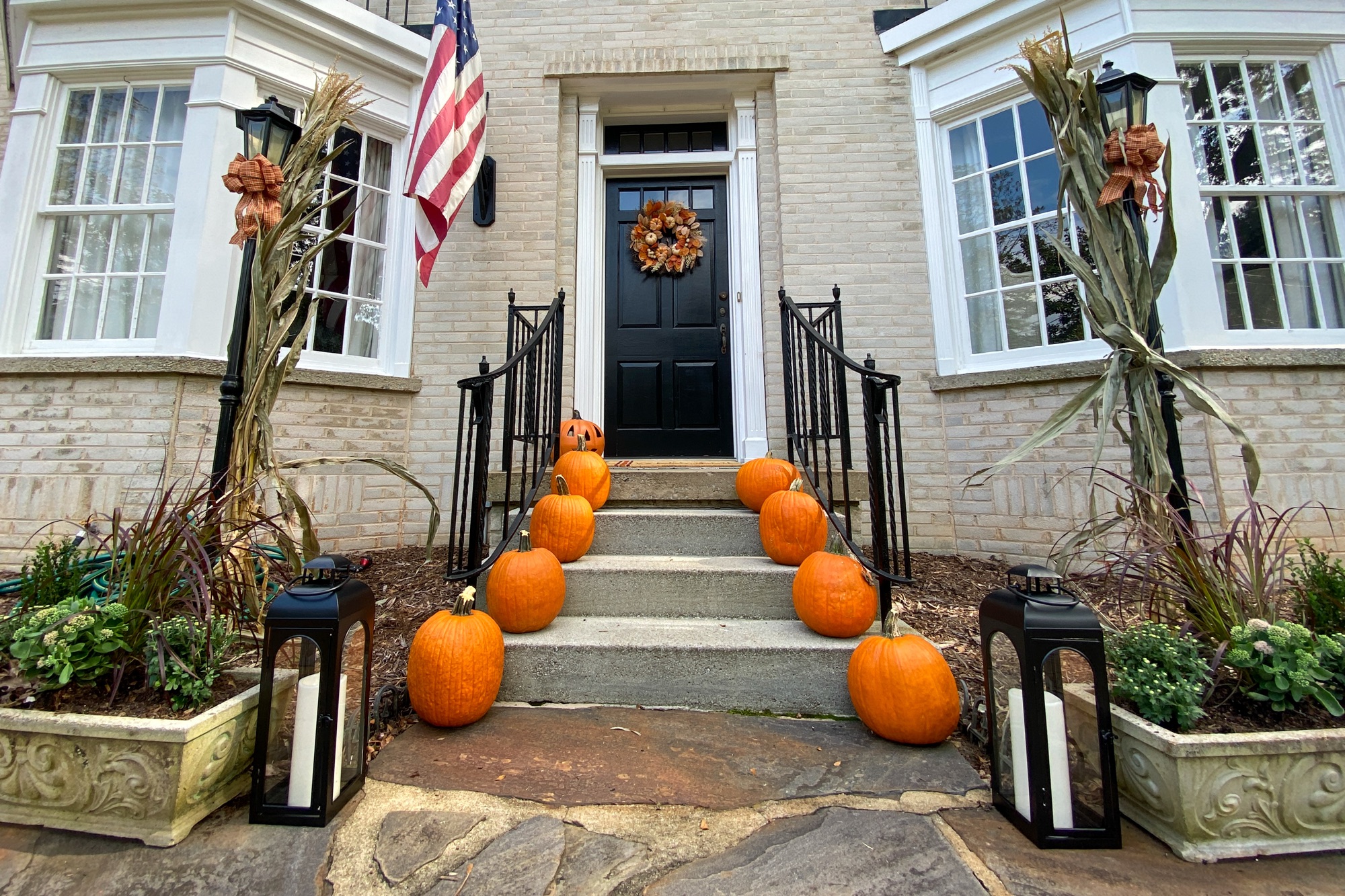
Fall porch with pumpkins, lanterns, cornstalks, and a wreath โ€” an inviting seasonal entryway idea.

Front Doors & First Impressions

Thereโ€™s an old English proverb that says, โ€œFirst impressions are the most lasting.โ€ We usually think of first impressions when we meet someone face-to-face. However, when a visitor arrives at your home for the first time, they come โ€œface-to-faceโ€ with your house. We also create a lasting first impression of where we live.

Although weโ€™ve been discussing fall for several weeks now, this week marked the official first day of fall. Today Iโ€™m sharing very affordable tips that anyone can use to freshen up their front door area as we transition into the next season.

Welcome back to the final installment of our fall series, Falling for Home: A Weekly Autumn Journal. If youโ€™re just joining us from Google, Pinterest, or Instagram, I invite you to browse through the other articles in this series, which are all linked at the bottom of this article.

Front porch decorated for fall with pumpkins, lanterns, and a festive wreath for simple and affordable curb appeal.
A welcoming front entry styled with a fall wreath, layered doormats, pumpkins, and lanterns โ€” affordable seasonal touches with big impact.

Begin with a Clean Slate

If there is nothing else you can do to change the entrance to your home, cleaning and tidying will still make a big difference. Take time to sweep away fallen leaves or other yard debris. If you live in an area with a lot of foot traffic, you may need to pick up some litter. If you have a glass storm door or window at your entrance, be sure to clean off dirt and smudges.

Once your entryway is clean and tidy, weโ€™re ready to layer in some pieces to add warmth and personality.

Start with a Welcoming Wreath

One of the easiest ways to create a warm welcome into your home is by adding a wreath. Since itโ€™s fall, I found a wreath with seasonal colors, like orange and beige. It also has small faux pumpkins, which leaves no question that this is to celebrate the fall season.

Faux flowers have come leaps and bounds in the last ten years. Retailers are now creating wreaths with realistic outdoor faux flowers for fall that are weather resistant. I found my wreath HERE.

Pro Tip: If youโ€™re renting and you canโ€™t install a hook to hang your wreath, there are some quality, affordable options to add a temporary hook. See my favorite temporary wreath hooks on Amazon.

Layer Your Doormats

In last weekโ€™s article, Patterns & Patina, we talked about how mixing patterns thoughtfully takes a basic look and turns it into a sophisticated, polished one. We can see an example of this by layering doormats.

I found two affordable doormats (HERE and HERE) for my entryway and layered them to create a layered fall look. If you want to use this technique, make sure the doormat that will be on the bottom is slightly larger than the mat that will go on top.

Pro Tip: Make sure the mats are tied into each other by either being complementary colors or patterns. Mix different textures to create visual interest.

Add Lanterns & Lighting

One of the easiest ways to add a little magical ambiance to your front porch this fall is by adding some lanterns. Donโ€™t be afraid to opt for tall lanterns, rather than shorter ones. This will bring in some height to your design, creating balance and visual interest.

Black lantern with flameless candle and pumpkins โ€” a simple fall front porch decor idea for instant warmth.
A black lantern with flameless candle adds cozy light alongside pumpkins for simple, affordable porch decor.

For my lanterns, I found these waterproof flameless candles that come with a remote. They can be operated on a timer, or I can easily turn them off and on by pointing the remote out of the nearby window.

Pro Tip: Add a lantern on each side of the entryway to create symmetry. Our subconscious prefers balance in home dรฉcor.

Evening porch decor with glowing lanterns, pumpkins, and fall accents for a warm, welcoming entryway.
Lanterns with flameless candles create a cozy glow, while pumpkins line the steps for a charming fall porch look.

Greenery or Planters

The big-box stores have us trained to buy mums every fall. While they do evoke the fall season, the problem is that they are not low-maintenance additions to your front porch dรฉcor. Many of us struggle to keep them alive for the whole season, and weโ€™re left with pots full of dead flowers.

Try swapping fall mums for more low-maintenance plants like fall ornamental grasses and sedums. These are more drought tolerant and wonโ€™t require daily watering and regular fertilizer like mums do.

Another option is to go with faux mums in your planters. Like we discussed earlier, faux florals have come a long way. There are some outdoor faux mums that would fool anyone until they closely inspected them.

Pro Tip: When buying plants for your pots this fall, use this formula to create a polished look: 1 thriller (tall or spike plant), 3-5 fillers (bushier, compact plants), 3-5 spillers (trailing, vining plants). Remember: Thriller/Filler/Spiller

Side view of a fall porch decorated with pumpkins, cornstalks, and lanterns for classic autumn curb appeal.
A side view of the porch shows layered doormats, pumpkins, lanterns, and cornstalks โ€” timeless fall styling.

Little Details that Count

Donโ€™t underestimate the impact of a small change. One of the easiest and most affordable changes you can make to your front porch is to upgrade your house numbers. This simple change will affect the first impressions of your front door year-round.

Hardware like doorknobs, knockers, and handles can easily be modernized by switching them out with a couple of screws. Say goodbye to peeling polished brass from the 1990s and hello to something more modern like matte black hardware.

Lastly, pick up a few fall-themed outdoor pillows for your front porch. Create an inviting spot for guests to sit on your chairs and benches.


I hope youโ€™ll take the time to check out the things I used to refresh my own front patio. Youโ€™ll be pleasantly surprised at how affordable they are. Easy swaps like this make refreshing your front door seasonally, the perfect way to make a good first impression.

You can find the exact products I used linked throughout this article, or you can find them all in one place in my LTK storefront. Click the image below to navigate there.

Shop my curated picks for a quick and affordable fall front porch refresh. These Amazon and Walmart finds (wreaths, lanterns, doormats, pillows, and more) arrive fast and make it simple to welcome the season in style.

Next week we begin a new series, Home for the Holidays: A Southern Season of Charm. This series will be a weekly celebration of meaningful traditions, nostalgic dรฉcor, and cozy inspiration for the heart of the home.

Explore More from Falling for Home: A Weekly Autumn Journal

This article is part of my series called Falling for Home: A Weekly Autumn Journal. Be sure to check out these reader favorites:

You can subscribe here to receive new articles, seasonal inspiration, and vintage-style favorites delivered right to your inbox.

Full view of a fall front porch decorated with pumpkins, lanterns, and a wreath for simple seasonal curb appeal.
A symmetrical fall front porch styled with pumpkins, lanterns, and a seasonal wreath for instant curb appeal.
Fall porch with pumpkins, lanterns, cornstalks, and a wreath โ€” an inviting seasonal entryway idea.
Classic fall porch styling with pumpkins on every step, lanterns for a warm glow, and cornstalks tied with ribbon for a festive finish.
Evening porch decor with glowing lanterns, pumpkins, and fall accents for a warm, welcoming entryway.
Lanterns with flameless candles create a cozy glow, while pumpkins line the steps for a charming fall porch look.

Patterns & Patina: How to Layer Like a Southerner

Have you ever found yourself admiring someoneโ€™s personal style, whether in their home or wardrobe, and wondered why it feels so sophisticated? Perhaps you were inspired to create a similar outfit or room in your home and ended up feeling like yours just wasnโ€™t on the same level of style. Today weโ€™re discussing how mixing patterns and patina creates a personal style in your wardrobe and home that tells a story, adds character, and creates a timeless collected look.

Welcome back to our fall series Falling for Home: A Weekly Autumn Journal. If youโ€™re just joining us from Google, Pinterest, or Instagram, I invite you to browse through the other articles in the series, which can be found linked at the end of this article.

Patterns: Mixing with Confidence

In the South we never miss an opportunity to dress something up. Whether it is a specially wrapped gift, a room in our home, or ourselves, we find opportunities to express our personality and present it to the world on a visual platter.

Itโ€™s often true that the most charming aesthetics are created when patterns are thoughtfully combined and layered to create depth and interest throughout your home and wardrobe. Interior and fashion designers use this technique in both clothing and home decor selections to create a visual conversation and unique story.

Our subconscious minds are attuned to visual interest. In last weekโ€™s article, Home as a Haven, we briefly discussed how too much visual interest can prevent you from getting rest in your bedroom. Similarly, too much visual interest in your outfit or home dรฉcor can cause unpleasant clashing.

With some practice and a few guiding principles, mixing patterns to create a polished and collected look can be done by anyone. Here are some tips Iโ€™ve learned along the way.

What to Pay Attention To

If youโ€™re just getting started with pattern mixing, there are four things to be mindful of to achieve your desired effect.

  1. Color Family โ€“ Be mindful to keep color tones in the same palette. Too many different colors, or colors that donโ€™t blend well, will end up clashing with each other. Colors that are next to each other on a color wheel or opposite from each other are usually successful choices.
  2. Scale โ€“ When mixing patterns, be aware of size and scale. For example, if youโ€™re selecting a large floral pattern, consider a smaller stripe or plaid to complement it.
  3. Texture โ€“ Remember to consider the fabrics and materials of the patterns youโ€™re choosing. Compare how different a velvet paisley is from a crisp cotton plaid.
  4. Balance โ€“ An important factor when mixing patterns is balance. Let one pattern be the star of the show, and the other patterns play a supporting role. For example, two different stripes can be successfully combined when one is a large bold stripe, and the other is a small, subtle stripe. Avoid being so over-the-top that you get lost in your aesthetic from trying to do โ€œtoo much.โ€

Example Combinations

Have you ever heard people say, โ€œNever mix plaids with stripesโ€? Thatโ€™s not necessarily a good piece of advice. There arenโ€™t many hard-and-fast rules for which patterns to mix, and if you follow the 4 design rules that I mentioned above, you can create endless combinations.

If youโ€™re having trouble getting started, here are a few of my favorite patterns to combine for a polished look in both fashion and home dรฉcor:

  • Leopard + Plaid โ€“ This combination is classic and bold. It works in interiors with combinations like a leopard pillow and a plaid footstool. In fashion, a plaid blazer can be combined with a leopard belt for a touch of playfulness.
  • Paisley + Herringbone โ€“ These two traditional patterns can be combined for a refined and classic statement. Select paisley drapery panels with a herringbone chair for a timeless duo. You canโ€™t miss when you combine a paisley scarf with a tweed herringbone jacket.
  • Floral + Buffalo Check โ€“ Florals balance the bold, graphic nature of buffalo check to create a charming and approachable look. In your home, combine a floral sofa with buffalo check throw pillows. In your closet, a delicate floral scarf pairs well with a buffalo check skirt or shirt.
  • Stripe + Plaid โ€“ These linear patterns can be combined to create an energetic, tailored look. In dรฉcor, a striped rug can be successful under plaid armchairs. In fashion, a crisp white shirt layered under a subtle striped sweater and paired with a plaid blazer will be seen as polished and sophisticated.

Patina: The Beauty of Time

Patterns catch the eye, but patina holds attention. Itโ€™s what makes a room or outfit feel lived in. Patina adds authenticity, character, and a sense of permanence. Patina is the way a lived-in surface changes appearance, and it can only be achieved with use, age, or weathering. Patina is what gives items soul. Antique appraisers look for signs of patina when determining authenticity of an item in question. Furniture will see patina around drawer pulls and surfaces with heavy use. Jewelry and other accessories show patina in the gentle softening of shine and wear on the surface,

When weโ€™re aiming to achieve an aesthetic that includes items with patina, itโ€™s necessary to consider whether new items we purchase will age with time and use. Items made of acrylic, vinyl, โ€œveganโ€ leather, and laminated finishes do not age well or achieve the desired patina effect. For this reason, items made of those materials should not be treated as investment pieces.

Wondering how to incorporate patina into your home or closet? Here are a few examples of what to be on the lookout for:

Interiors

  • Leather armchairs darkening with use.
  • Unpolished silver trays, candlesticks, or cutlery.
  • Natural wood: farm tables, cutting boards, frames with softened edges.
  • Stoneware or pottery with subtle crazing.
  • Seasonal touches: a patinaed copper bucket for firewood, a weathered wicker basket for blankets.

Wardrobe & Accessories

  • Leather belts, handbags, boots that soften and show character.
  • Jewelry that develops a mellow sheen rather than a perfect shine.
  • Brass buckles, buttons, or clasps with gentle wear.
An antique silver bowl, painted tray, and well-loved books bring pattern & patina to life.

Bringing it Together

Many of us understand that having a solid foundation is essential to dรฉcor and fashion. However, a well-honed personal sense of style goes behind finding colors that match. Donโ€™t be afraid to create a style that feels layered and personal.

Itโ€™s easy to settle for beige walls and a plain sofa, but your signature look is developed when you begin to layer coordinating patterns to showcase your unique personality. When we add touches of patina to our home and closet, we can explore opportunities to add soul to otherwise lackluster choices. After patterns and patina are combined, they seem to effortlessly create spaces and wardrobes that feel collected rather than staged.

I invite you to embrace layering styles at home and in your daily style. In addition to all the timeless Southern style recommendations that Iโ€™ve given in this article, the ultimate test is how your space and outfit make you feel. If it doesnโ€™t feel right, itโ€™s probably not. If it makes you happy and comfortable, then itโ€™s probably a good choice. Thatโ€™s the beauty of a personal style โ€“ it should matter most of all to you.

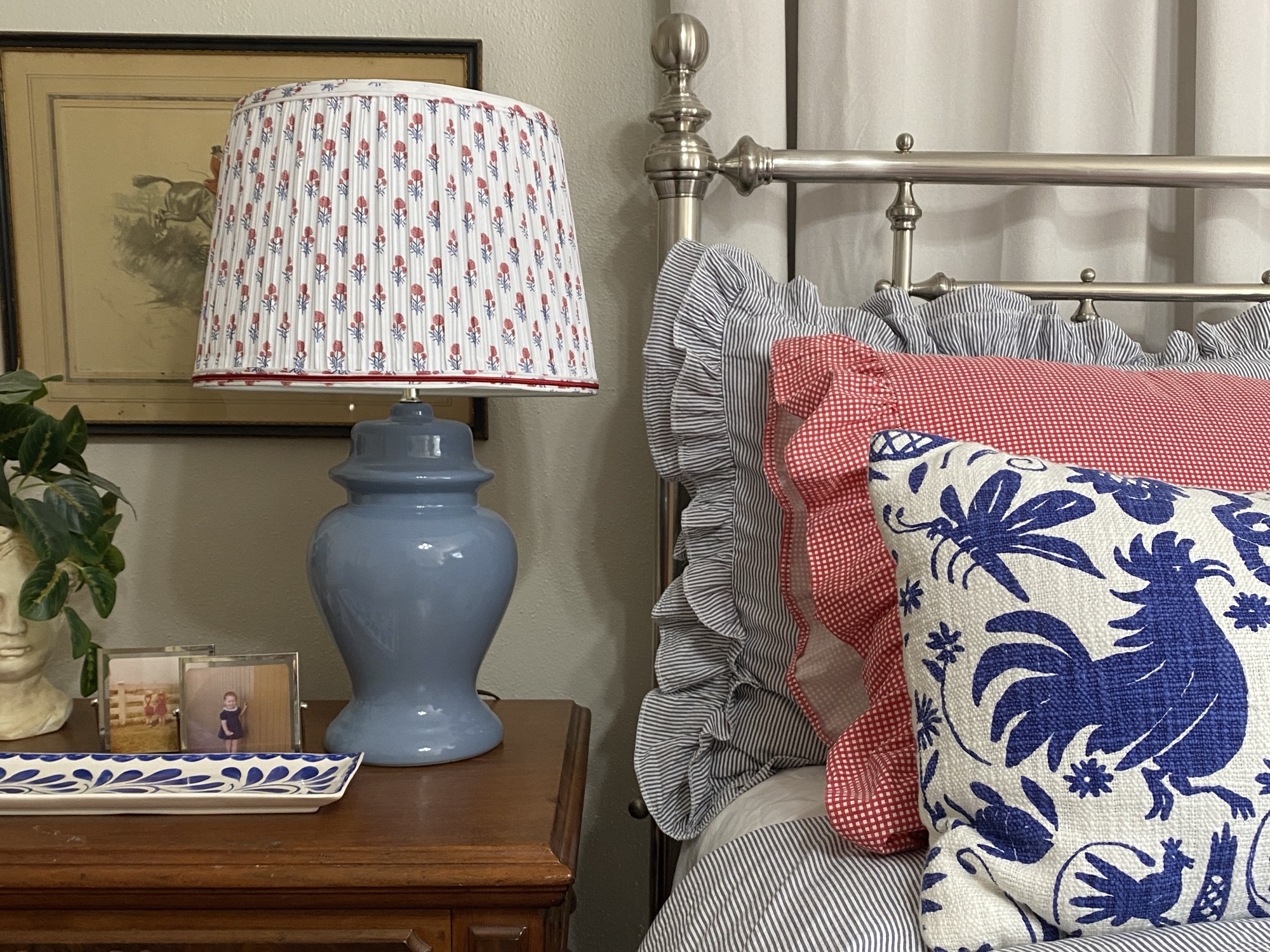
Discover how to style ticking stripes, gingham, and folk-inspired prints with vintage accents for a cozy and timeless bedroom look.
Stripes, gingham, and folk prints mingle with vintage accents for a collected bedroom.

Join me next week for the final article in this series, Falling for Home: A Weekly Autumn Journal. Next weekโ€™s article, Front Doors & First Impressions, is all about the importance of first impressions and how your entryway sets the tone.

Explore More from Falling for Home: A Weekly Autumn Journal

This article is part of my series called Falling for Home: A Weekly Autumn Journal. Be sure to check out these reader favorites:

You can subscribe here to receive new articles, seasonal inspiration, and vintage-style favorites delivered right to your inbox.

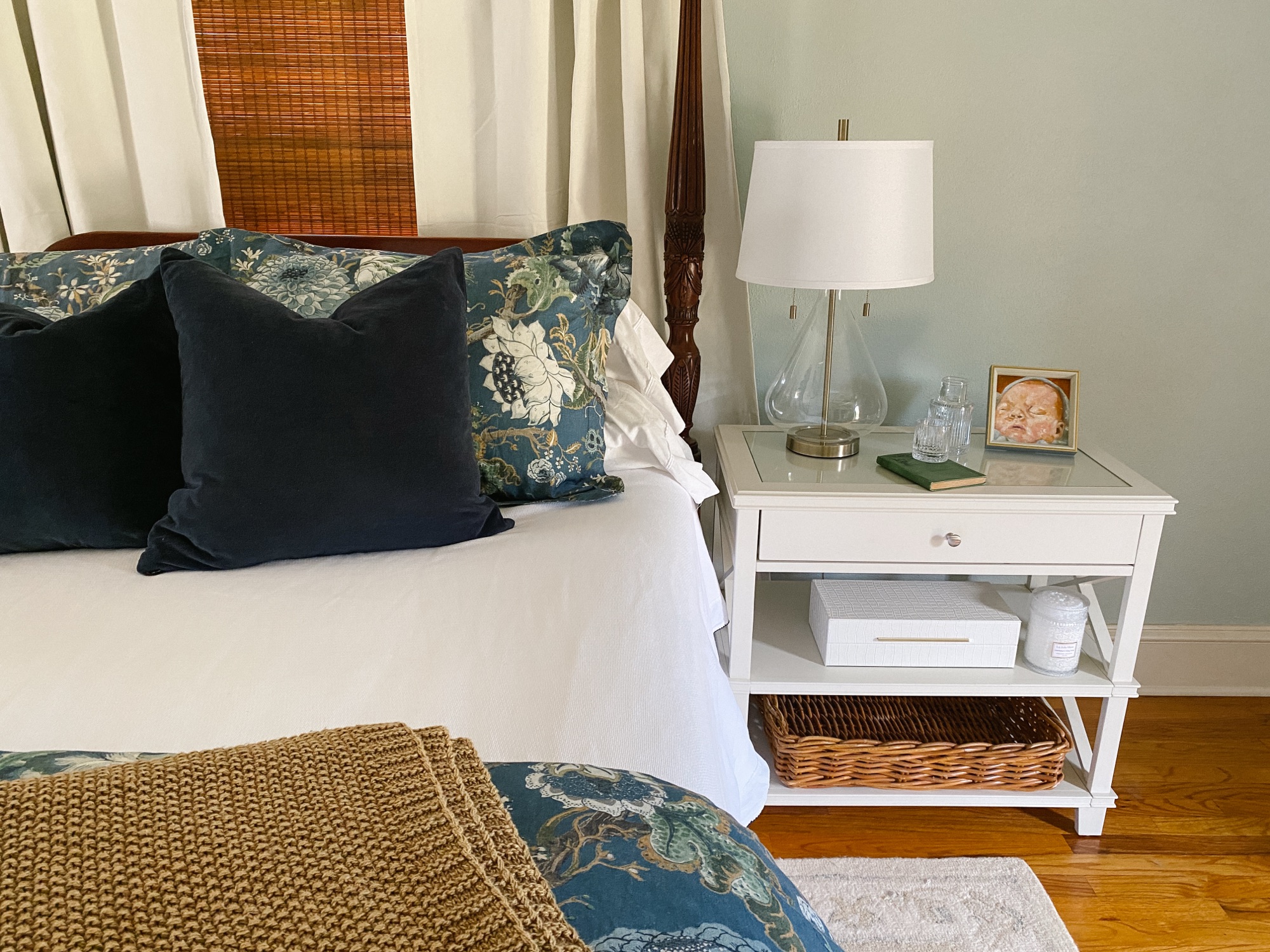
Feminine nightstand with lamp, carafe, small art, storage boxes, candle, and basket.

Home as a Haven: How to Create a Cozy Bedroom Retreat

Welcome back to the sixth installment of our weekly Friday series called Falling for Home: A Weekly Autumn Journal. Each week we explore ways to embrace the softness of the autumn season, create a welcoming environment to restore your spirit, and fall in love with our own homes again. If youโ€™re just joining me here from Google, Pinterest, or Instagram, I invite you to read the other segments in this series, which can be found linked at the bottom of this article.

As the season progresses, we begin to lose daylight hours and the temperatures cool. The sun is setting earlier each day, and we begin to retreat indoors.

Today weโ€™ll start a conversation on the importance of intentionally curating a personal haven in your home and creating a place to restore yourselfโ€ฆ not just a place to crash at the end of the day to get some sleep.

The bedroom as a whole reflects the balance of function and comfort: closed storage to keep clutter tucked away, restful art, and layered bedding that invites you to linger.

Step One: Clear the Space for Peaceful Rest

Many of my readers are the familyโ€™s nurturers, often putting everyone elseโ€™s needs before their own. In the home, this translates into prioritizing the shared family spaces and even the childrenโ€™s bedrooms. Our bedrooms become the catch all and dumping grounds for all the miscellaneous items that donโ€™t have a designated spot. The clean laundry is often brought into our bedrooms until it can be folded and put away later.

Not only does this create physical clutter; it creates mental clutter and unrest in the very space that we retreat to get rest.

Create Processes

We need processes for dealing with items that make their way into our bedrooms. I like to use a method called โ€œTouch it once.โ€ For example, if Iโ€™m taking laundry out of the dryer, then dumping it on my bed, then moving it to a chair to fold it later, Iโ€™ve touched it 3 or 4 times before it gets put away. By folding each item as I take it out of the dryer, I will touch it only once before it gets put away. Doing it this way might not feel like it in the beginning, but it becomes a lot less work.

Look around your bedroom to assess miscellaneous piles of clutter. Those are the items that youโ€™ll need to create a new process for. When we move piles of clutter from one spot to another to clean, weโ€™re just moving the mess around and not actually taking care of the mess.

Essential Items

Next, I recommend that you only keep the essential items within sight. These would be things that support the rest, comfort, or function of your bedroom. For example, youโ€™ll need a bedside table of some sort, a lamp within reach of your bed, and a hamper to hold your dirty laundry. Other examples are a throw blanket that gets used on chilly nights or a fan that cools you in warm weather. Essential items are ones that directly help you rest, prepare for the day, or feel comforted. If it distracts you, nags at you, or simply takes up space without providing function, it doesnโ€™t belong in your bedroom.

Daily Items

In addition to essential items, we all have daily items, which I recommend organizing into closed storage containers. These items are practical, not decorative, and by placing them into closed storage containers we are able to keep surfaces peaceful without disrupting our routine. Examples of daily items would be chargers, medications, skincare, books, and pajamas. When each item has a designated space in a closed storage system, we easily prevent clutter from snowballing into piles. Items are still convenient and within reach; theyโ€™re just not visually tiresome or nagging.

Implementing these habits can take a little practice. However, youโ€™ll find that if you consistently maintain these methods, it will be well worth the effort when you have a peaceful, relaxing space at the end of the day.

On his side of the bed: a leather catchall, favorite books, and a wood box for everyday necessities, proof that practicality can be handsome when it’s well-contained.

Step Two: Add Meaningful & Personal Touches

Your bedroom is probably a place that most guests wonโ€™t see. And if youโ€™re a parent, it may be the one space in your home thatโ€™s truly yours. Your bedroom is an opportunity to create a room with dรฉcor that reflects your personality and sentimentality. By carefully selecting your furnishings and accessories, you can build an area for yourself that makes you feel at home.

Adding personal touches to your bedroom should be done with simplicity, restraint, and sentimentality. For example, a gallery wall of art or family photos creates too much stimulation and interest in a space that is intended for relaxation. Instead, try adding a small family photo in a frame on your nightstand or dresser.

You can easily personalize your bedroom by adding one small vase for flowers, a small antique dish as a catchall, or an heirloom quilt at the end of your bed. Instead of surrounding your room with your entire collections, pick one favorite that you can use in a functional way. By doing so, youโ€™ll keep your space peaceful and uncluttered.

On her side: a small carafe for evening water, original art for a touch of beauty, and storage boxes to keep daily items close but unseen. Serenity comes from thoughtful restraint.

Step Three: Layer Comfort & Care

Repeating tones, from the bamboo shade to the throw blanket and picture frames, bring warmth and cohesion. A reminder that subtle echoes of color and texture create harmony in a room.

Gen Z is known for not using โ€œthe big light.โ€ Theyโ€™re referring to the overhead light, which we call โ€œambient lightingโ€ in the interior design world. In an area like a bedroom, I tend to agree with them.

Strategically adding lamps to a bedroom for accent and task lighting creates a much more relaxing environment than using โ€œthe big light.โ€ I recommend lamps for your nightstands that are easy to reach and turn on/off without getting out of bed. You should be able to easily fit your hand under the shade to operate the switch or use a lamp that has a switch on the cord. If you have a reading chair in your bedroom, a floor lamp can be a well-thought-out addition.

Another way to create a relaxing environment for yourself is to consider your comfort and senses. Stay away from scratchy or uncomfortable fabrics that will be next to your skin. Consider whether candles, fragrance plug-ins, and even laundry detergents are overpowering your senses. No smell is better than a strong smell.

Lastly, consider your needs while you are in your room. If you frequently find yourself getting up for water, a carafe of water and drinking glass will be helpful to you.

Soft lamplight turns the bedroom into a sanctuary at dusk, offering a place to exhale as the day comes to a close.

Step Four: Invest in Quality Where It Counts

If you follow me on Instagram, you know that I love a good bargain and buying things second-hand. However, there are some things in the bedroom that I wonโ€™t compromise on. A good rule of thumb is, the closer it is to your skin, the higher quality you need to invest in. A good example of this is choosing bargain window coverings, but higher quality bedding. You wonโ€™t be laying down at night on your curtains, but you will be on the sheets.

When purchasing bedding, I recommend looking at thread count and fabric materials. If there isnโ€™t a thread count listed, itโ€™s most likely very low. High thread count sheets will last decades, so while the upfront cost may be marginally more, they will last incredibly longer than cheaper optionsโ€ฆ saving you money in the long run.

Itโ€™s also important to consider fabric materials. Fabric materials with descriptions like โ€œknit, jersey, coolingโ€ are less breathable than materials with long-staple natural fibers like Egyptian cotton. They are inferior materials that usually weave some sort of synthetic material made of plastic into the fibers. Synthetic materials donโ€™t last very long and will need to be replaced in a short amount of time.

Most of us are on a budget, and itโ€™s simply not realistic to invest in the highest quality of furnishings and accessories all at once for our spaces. I encourage you to make a point of switching things over one at a time until you have created a well-curated space that you deserve. Swap furniture made of composite materials for solid wood pieces, synthetic bedding for high-quality bedding made from renewable materials, mass-produced art for original art that reflects your unique personality. In this way, we create a collected space that truly becomes a haven in our home.

Layering textures – the quilt, duvet, and throw – adds depth and comfort. Each piece contributes to the feeling of being enveloped in warmth.

Step Five: Introduce Seasonal Color & Mood

I would be remiss if I didnโ€™t point out the impact that color has on your bedroom haven. The psychology of color tells us that our emotions are subconsciously affected by the colors in our spaces. Restaurant owners, marketing professionals, and health care facilities understand that color goes beyond preference.

When choosing wall color, linens, and accessories in a bedroom, itโ€™s important to understand the effects of your choices. I recommend tones with less saturation if you are trying to create a palette to anchor your roomโ€™s mood. Too much visual interest will hinder relaxation in a bedroom.

Today I am recommending a set of three colors, which can also be seen on the image below. Pale Oak, Cloud White, and Hale Navy are choices that you can bring into your space in a variety of ways such as furniture, bedding, lampshades, throw blankets, and artwork. They also provide a relatively neutral backdrop for you to add your personal touches that were mentioned above. If you canโ€™t repaint your bedroom at this time, these three colors also tend to work well with a myriad of other colors.


Throughout this article I have mentioned things that I find to be useful in a bedroom space. You will find examples of these items in this curated list, which can be found by clicking HERE or clicking on the image below. You’ll find many more choices in this list than the ones pictured.

Click to shop from a list of suggestions for each of these areas.

Explore More from Falling for Home: A Weekly Autumn Journal

This article is part of my series called Falling for Home: A Weekly Autumn Journal. Be sure to check out these reader favorites:

You can subscribe here to receive new articles, seasonal inspiration, and vintage-style favorites delivered right to your inbox.

The Collected Kitchen

Welcome

Ask anyone to share memories of their life with you, and theyโ€™re bound to share one or two that involve time spent in a kitchen. The scent of celery and onions softening in butter. The bowl that was used for everything from mixing a brownie batter to holding popcorn on movie night. Perhaps theyโ€™ll remember music playing on the radio as the dishes were washed. When we gather as a family or with friends, we always find ourselves in the kitchen, the hub of the home. It’s the place where stories are swapped, hands are busy, and hearts come home.

Welcome back to the next installment of Falling for Home: A Weekly Autumn Journal. Weโ€™ve reached the midpoint of the series, as weโ€™re journeying our way through topics that are dedicated to timeless seasonal living, traditional Southern dรฉcor, and creating a home you love year-round. If youโ€™re just joining me, or you found your way here from Google, Pinterest, or Instagram, you can find links to the other articles in the series at the bottom of this article.

What Is a Collected Kitchen?

A collected kitchen is one that is curated by a combination of preference, utility, and time. You could go online to Amazon, eBay, or Etsy to order a complete set of items to mimic the look. But a truly collected kitchen evolves from time spent discovering what works for you. A collected kitchen is created by picking up items here and there to create a space of function and beauty that is uniquely designed for you.

The true beauty of a collected kitchen is that itโ€™s not staged. The crock on the counter is there because itโ€™s used every time the stove is turned on. The plate hung on the wall holds a memory of weekend antiquing adventures or the grandma who passed it on.

A collected kitchen isnโ€™t sterile or empty. Chances are, you wonโ€™t see it on your Pinterest page. The counters will likely have things on them. Because we are using what we find to be the most functional and beautiful, everything isnโ€™t going to match. If youโ€™re looking for a โ€œmodel home aesthetic,โ€ you wonโ€™t find it in a truly collected kitchen. Itโ€™s a kitchen that feels like the warm heart of a home, one thatโ€™s inviting, personal, and well-loved.

Cream on Cream: A Canvas for the Seasons

We recently restored our 1939 kitchen. During that time, we added some custom cabinetry, installed new countertops and backsplash, and updated the flooring. The one thing that stayed in the kitchen and became a springboard for my whole design was some existing cream-colored cabinetry. As I was designing the space, I really evaluated how I wanted to feel and how it would reflect my personal style.

Truth be told, the kitchen is sometimes an overwhelming and overstimulating space for me. While my family loves my cooking, and Iโ€™m often told that I am good at it, it can be stressful for me. I needed my kitchen to be a calm space. I intentionally stayed away from bold colors and stark contrasts between materials. Using various shades of cream, along with natural wood tones in accessories, I created a space that allows me to cook in peace.

Another reason that I chose a monochromatic cream color palette was that it created a canvas for seasonal flexibility. I can mix in and swap out seasonal dรฉcor easily because I have a neutral backdrop. In fall, copper pieces warm the kitchen with a soft glow. During the winter holidays I can easily add some evergreen without clashing with anything. In spring, itโ€™s easy to mix in pastel colors because they blend beautifully with the cream canvas that I created.

Objects That Workโ€”and Tell a Story In My Collected Kitchen

Over the years I have found ironstone pitchers in various shapes and sizes. Some of them are the color of parchment paper with brown crazing that has deepened over time. Others, while over 50 years old, look almost new. I group them together to fill display spaces in our cabinetry, but I often get them down to use for floral arrangements or orange juice on a Sunday morning. As a group, in various shades of white and cream, they become functional art.

Through our glass cabinet doors, you can see stacks of milk glass mixing bowls and antique Ball jars. These donโ€™t sit in storage behind glass as museum pieces that are too precious to use. Any time Iโ€™m baking, Iโ€™ll use either my vintage milk glass mixing bowls or my favorite yellow-ware bowls. The milk glass bowls are extremely thick and were made for durability that is non-existent today. Iโ€™ve actually dropped one on the kitchen floor, and it didnโ€™t break!

An old plate rack that I picked up for $10 holds plates and platters that we use for meals. On top of the refrigerator, I keep an extra large wicker basket, which holds seasonal linens and works to fill a void between the top of the refrigerator and our tall ceilings. These natural elements add texture, warmth, and patina to create an authentically lived-in space.

The Working Kitchen Philosophy

Weโ€™ve all been in kitchens that are stark white with not a single thing on the counters. Or maybe youโ€™ve seen a kitchen with open shelves that are full of framed photos and knick-knacks, but not a single cooking utensil. I can only wonder how much memory-making is being done in these kitchens. Are little hands making messes with flour while โ€œhelpingโ€ with the cookie dough? Are teenagers gathering to try their hand at cooking late at night?

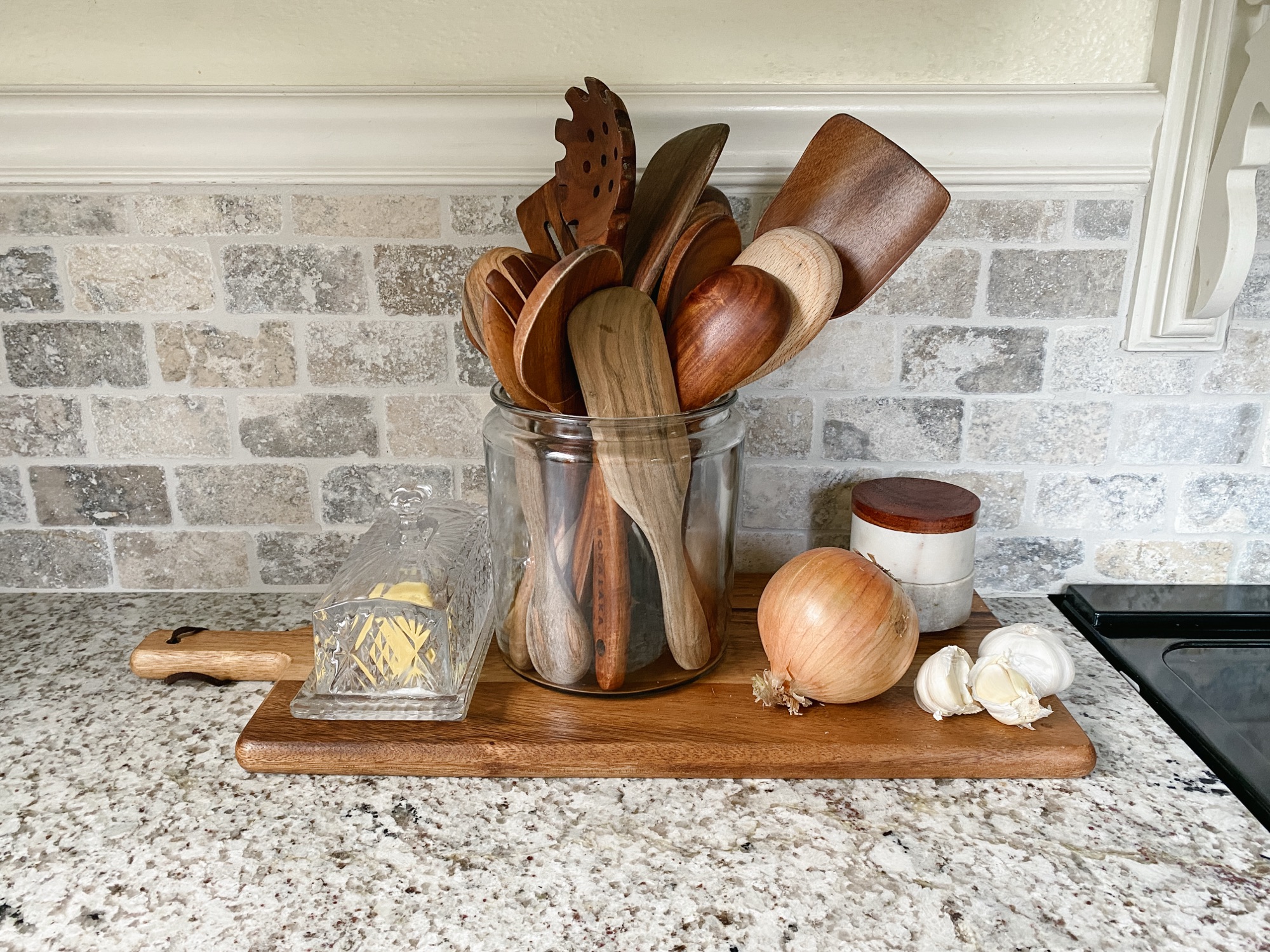
When I look at the crock of wooden utensils next to my stove, I can tell which ones are the most used. My favorite spatula is worn smooth and the wood has lightened from years of washing it. It represents hundreds of meals cooked for family and friends โ€“ random Mondays and special Thanksgivings, nights after winning the game and mornings after being up with a sick baby.

A working kitchen is going to show signs of use, and Iโ€™m wondering when that began to be a source of shame. Why are we worried about being judged for using the most functional room in our homes?

Items I use daily for cooking are kept right next to the stove.

Paint Palette: The Warmth of Neutral Ground

Throughout the Falling for Home series, I have been sharing paint palettes that reflect the theme of each article. The Collected Kitchen inspired me to share a palette with two warm neutral tones for the wall and trim colors, as well as an accent tone that is reminiscent of patinated copper or vintage pantry paint. This gentle palette lets your meaningful pieces take the spotlight.

Shop the Look

Iโ€™m often asked about the vintage and antique pieces in my home. They have truly been collected over the years. You donโ€™t need a full antique collection to create charm, just a few timeless touches that work for your space. If youโ€™re interested in starting your own collection, Iโ€™ve compiled a curated list of timeless kitchen essentials, similar to the ones I own. You can click HERE to explore this list on LTK, or you can click the collage below to shop this style.

An Invitation to Embrace Imperfection

Itโ€™s easy to feel like our kitchens arenโ€™t good enough to invite others into them. Maybe youโ€™re just starting out, or perhaps youโ€™re worried about being judged about functional โ€œclutterโ€ in your kitchen. Have you hidden away Grandmaโ€™s bowl for safekeeping, or are you afraid youโ€™ll scratch your biscuit tin? Maybe youโ€™ve seen the perfect English kitchen on Instagram or the curated collage on Pinterest, and you donโ€™t feel like yours measures up. Whether you have laminate countertops or soapstone (I wish!), your kitchen can be filled with functional and beautiful vintage and antique pieces that are meant to be used and enjoyed daily.

I want to remind you that your kitchen is more than how itโ€™s decorated. It is the most used room in your home, and it holds memories and meaning. Your family and friends arenโ€™t there to judge you by the plates your meals were served on. Theyโ€™re going to remember the flavors they experienced, the conversations they had, and the memories they made. Donโ€™t wait to start making those memories until you feel like your home is show-worthy. Send the invitation. Cook for your family.

Explore More from Falling for Home: A Weekly Autumn Journal

This article is part of my series called Falling for Home: A Weekly Autumn Journal. Be sure to check out these reader favorites:

You can subscribe here to receive new articles, seasonal inspiration, and vintage-style favorites delivered right to your inbox.

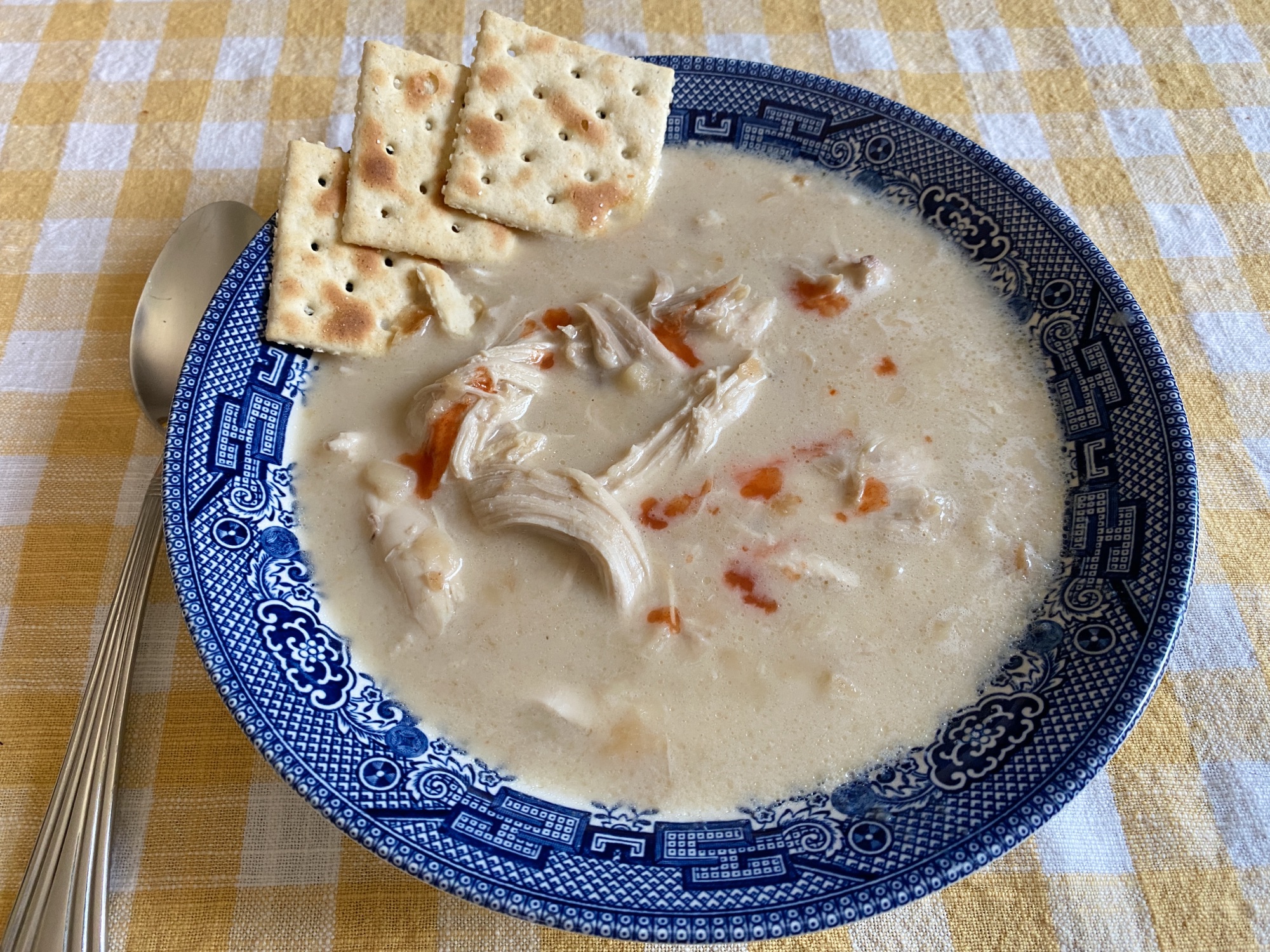
Bowl of creamy Chicken Mull served in white enamelware, garnished with cracked pepper and surrounded by saltine crackers

A Southern Classic for Fall: How to Make Chicken Mull

A Regional Recipe Worth Discovering

Welcome to the fourth installment of my fall series, Falling for Home: A Weekly Autumn Journal. Throughout this weekly Friday series, weโ€™re embracing a slow, intentional rhythm of Southern living rooted in home, heritage, and the kind of traditions that make fall in the South unforgettable.

Todayโ€™s article is all about Chicken Mull. I encourage you to use the ingredients that you already have on hand and your favorite pot, as well as to invite friends and neighbors into your home to share it with you this fall.

What Is Chicken Mull? A Brief Southern History

Although Iโ€™ve lived in Georgia my whole life, I hadnโ€™t heard of Chicken Mull until moving to the greater Athens, Georgia area. One chilly fall afternoon, someone mentioned that it was Chicken Mull season, and Iโ€™ve been intrigued by this creamy, comforting stew ever since.

Chicken Mull is a traditional Southern fall recipe that is usually made with only 3 ingredients: water, chicken, and saltine crackers. The ingredients may be simple, but the flavor is anything but.

Chicken Mull finds its roots in the Carolinas, as well as a very specific region of Northeast Georgia. In fact, Athens, Georgia has often claimed to have invented this Georgia Chicken Mull recipe. (Locals will warn you not to confuse it with Chicken Muddle, which is an entirely different thing.)

Historically, Chicken Mull was more than just a dish. A Chicken Mull was the name of the gathering where the Chicken Mull was eaten. This would have been a church or community event held in the fall, and the Chicken Mull would have fed a large crowd.

Ingredients Youโ€™ll Need

While the basic Chicken Mull recipe uses just three ingredients, today I am using the Southern Living version that includes some herbs, heavy whipping cream, and hot sauce. To make my version of Chicken Mull, Iโ€™m using cast iron Dutch ovens, a fine-mesh strainer, wooden utensils, and sturdy kitchen tongs. This is a fun dish to serve in vintage enamelware dishes or handled soup bowlsโ€ฆ  something that feels as nostalgic as the recipe itself.

Chicken Mull Recipe (Stovetop)

Bowl of creamy Chicken Mull served in white enamelware, garnished with cracked pepper and surrounded by saltine crackers
Abby Smolarsky | Belle Antiquarian

Chicken Mull (A Classic Northeast Georgia Stew)

A creamy, comforting Southern classic, Chicken Mull is a beloved fall tradition in Northeast Georgia. Made with slow-simmered chicken, rich broth, crushed saltines, and a splash of cream, this humble stew is a must-try recipe for chilly evenings. Serve with extra crackers and hot sauce for a taste of Athens heritage in every spoonful.
Prep Time 15 minutes
Cook Time 1 hour 45 minutes
Total Time 2 hours
Servings: 6 people
Course: Main Course
Cuisine: Southern
Calories: 420

Ingredients
  

  • 1 3-4 lb whole chicken
  • 2 large yellow onions unpeeled and quartered
  • 4 celery stalks roughly chopped, about 2 cups
  • 5 cups water
  • 4 cups chicken broth
  • 1 Tbsp kosher salt
  • 1 Tbsp whole black peppercorns
  • 5 fresh thyme sprigs
  • 5 garlic cloves
  • 2 dried bay leaves
  • 1 sleeve saltine crackers crushed, plus more for serving
  • 1 cup heavy whipping cream

Equipment

  • 5.5-quart Dutch oven or large stockpot
  • Fine-mesh strainer
  • Tongs
  • Blender
  • Large wooden spoon
  • Ladle
  • Cutting board

Method
 

  1. In a 5 ยฝ-quart Dutch oven, add the chicken, onions, celery, water, broth, salt, peppercorns, thyme, garlic, and bay leaves.
  2. Bring to a simmer over medium-high heat, then reduce to medium-low and cover. Simmer for about 1 hour, or until the chicken is cooked through and brother is flavorful. Skim fat as needed.
  3. Remove the chicken and let cool slightly. Shred the meat, discarding skin and bones.
  4. Strain the broth through a fine-mesh strainer into a clean Dutch oven. Discard solids.
  5. Bring the strained broth to a simmer over medium-low heat. Stir in crushed cracker and cook for 3 minutes until slightly thickened.
  6. Carefully blend half the broth mixture until smooth (about 20 seconds), then return to the pot.
  7. Stir in the heavy cream and shredded chicken. Cook uncovered over medium-low, stirring occasionally, until heated through (about 10-15 minutes.)
  8. Serve hot with extra crackers and optional hot sauce.

Notes

Donโ€™t Skip the Strain: Straining the broth may seem like an extra step, but it creates the signature smooth base that sets this version apart from other chicken stews. Make-Ahead Friendly: Chicken Mull reheats beautifully the next day. Some even say itโ€™s better after the flavors have had time to meld. Store in an airtight container in the fridge for up to 3 days.

The Palette of Chicken Mull

Thereโ€™s a warmth to Chicken Mull that goes beyond the post. Itโ€™s the colors of autumn comfort. For this weekโ€™s post, Iโ€™ve created a coordinating color palette that captures the creamy whites, golden butter tones, and soft sage of the ingredients and atmosphere. Youโ€™ll find this same palette in everything from vintage kitchen tools to enamel cookware, and Iโ€™ve linked a few timeless pieces below.

Whether youโ€™re styling your kitchen or hosting your own mull supper, these pieces bring the coziness of fall to life.

A Dish That Feels Like Home

I live in an area of the South that has changed rapidly over the last 40 years. Folks from all over the world moved here to call this place home. While we welcome new cultures and diversity, I noticed a while ago that many of our beloved Southern traditions were fading like steam rising from a warm bowl, slowly disappearing into memory. Many researchers will tell you that our accents are disappearing. As we discussed in a previous article, our Southern hospitality that we are known for is starting to dampen. So when I discovered this recipe that neither I, nor anyone in my family had ever heard of, I was really excited to revive this regional recipe from Athens, Georgia cuisine.

Whether you’re a Southern peach or you hail from some other wonderful place on this planet, I hope that you will remember your roots and keep your culture alive for future generations.

So many of you messaged me on Instagram that you loved our summer recipes that we shared. I invite you to make this recipe for Chicken Mull, or to share your version with me! Tag me on Instagram so we can share a virtual bowl of stew together.

Invitation to Return

Thank you for joining me with this weekโ€™s article from my series Falling for Home. Each Friday from August through September, weโ€™ll meet here at BelleAntiquarian.com to reflect on a slow, intentional rhythm of seasonal living, rooted in tradition, home, and memory. Join me next Friday as we explore The Collected Kitchen, a celebration of antique charm, practical warmth, and the soulful heart of the Southern home.


Explore More from Falling for Home: A Weekly Autumn Journal

This article is part of my Falling for Home series. Be sure to check out these reader favorites:


You can subscribe here to receive new articles, seasonal inspiration

The Velvet Season: Using Texture and Rich Tones in Fall Home Decor

A Five-Year-Oldโ€™s Treasure

When I was about five or six years old, I walked a couple of houses down the street to a neighborโ€™s yard sale. The driveway was lined with various unrelated items my neighbor was hoping to sell. One of those things was a harvest-gold crushed velvet throw pillow. To an adult, it was probably a hideous 1960s relic from a musty basement. But when my small fingers touched that fabric- velvet for the first time- I thought it was the most luxurious thing of beauty that I had ever seen.

Being a child, of course I didnโ€™t have any money to buy it, but I returned several times that day to admire the velvet pillow. Finally, at the end of the day when the lady was packing up her unsold items, the pillow remained, and she gave it to me.

Even now, decades later, I still believe that thereโ€™s something decadent and luxurious about a well-placed velvet pillow. It makes the whole room seem more cared for.


This is the third entry in the Falling for Home: A Weekly Autumn Journal, a Friday series dedicated to timeless seasonal living, traditional Southern dรฉcor, and creating a home you love year-round. (Find links to previous entries at the bottom of this post.)

A Season of Layers and Light

During the weeks of late summer to early fall, it feels like a quiet transition. Supple textures like velvet mimic the seasonโ€™s natural softness. The transition to spring is dotted with turbulent thunderstorms, and the starkness of winter jolts us with its biting winds. But the South seems to float imperceptibly from summer to fall. Itโ€™s a soft and gentle glide into the autumn season, like fingertips trailing across velvet.

It’s easy to feel the pressure to head to a big-box store each season to buy the newest dรฉcor available for our homes. However, today I want to talk about intentionally investing in a few timeless, quality pieces that we can layer with our existing, collected dรฉcor to decorate for fall. In this way we will invite calm, rather than clutter, into our homes. Weโ€™ll use our creativity in ways that will repurpose objects we own and love with a few new things that we find along the way.

Touchpoints of Texture โ€“ Decorating the Living Room

When my kids were small they had several beloved โ€œstuffies.โ€ You know, those precious stuffed animals with ears rubbed thin and matted fur that was once fluffy. However, after a few yearsโ€™ worth of birthday parties, I quickly learned that if a family member asked what one of the kids wanted for their birthday, my response included that we didnโ€™t need any more stuffed animals.

Throw pillows are our grown-up version of stuffed animals. They really are! Unfortunately throw pillows take up a lot of storage space in our homes. My solution to this is to invest in some quality pillow inserts and only buy pillow covers. Not only does this save on storage, but itโ€™s far cheaper to buy pillow covers than the whole throw pillow.

This season I traded the navy blue pillow covers that I used throughout summer for some rich, copper colored velvet ones. If youโ€™re looking to switch your pillow covers this fall, aim for saturated tones like copper, plum, or chocolate. If you want to add more texture to your space, consider tactile materials like velvet, raw linen, or boucle.

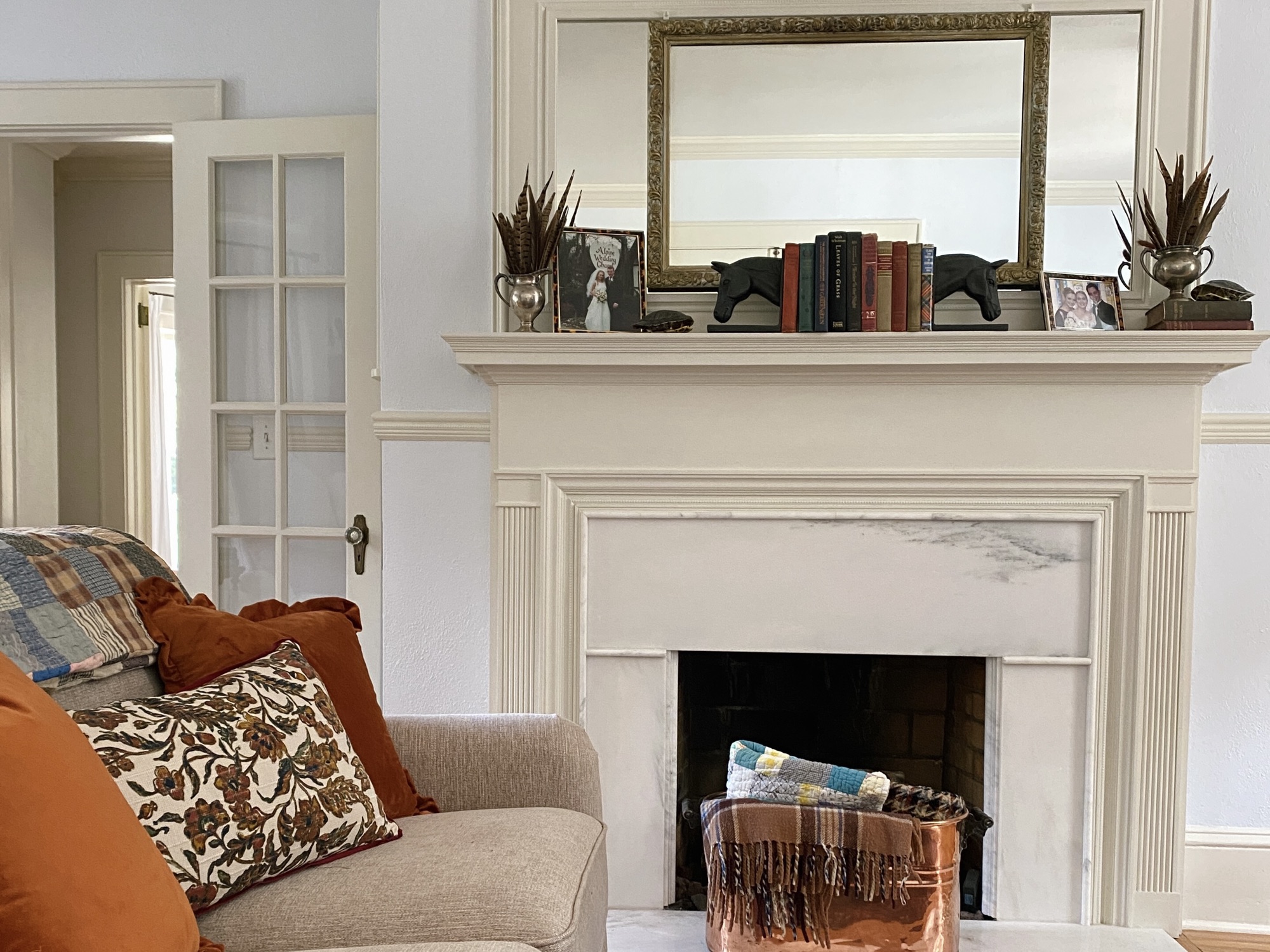
In addition to switching out your throw pillows, another great addition to your fall dรฉcor are copper and brown glass pieces. These are easy things to โ€œhuntโ€ for throughout the year as youโ€™re antiquing. A copper boiler or basin can be used to hold books, magazines, and even throw blankets. A collection of brown and amber vases set in front of a window catches the fading sunrays to cast a magical glow around the room.

As you decorate for fall, donโ€™t overlook lighting. When the daylight grows shorter, we have opportunities in the evening to create a warm, cocooned glow that invites rest with well-placed lamps and even candles. Lighting is a way to add to the rhythm of the season and awaken our senses to calm and comfort. The glow of a lamp in the corner of your living room or the flicker and scent of an autumn candle invites us to the small moments that spark peace within.


Many of my favorite fall items that I used throughout our home this season can be found in this curated grouping on LTK. You can either click HERE to find the complete list, or click the image to be taken directly there.

The Velvet Ribbon Effect โ€“ Small Luxuries

If investing in new dรฉcor isnโ€™t in your budget this year, or you feel like you already own enough of it, there are ways to take your existing dรฉcor up a notch to freshen it up. A budget-friendly fall dรฉcor update is using some velvet ribbon. Taking ordinary objects like a stack of books, a candle, or even a piece of artwork, and tying a length of velvet ribbon around them, will transform the ordinary into a piece of intentional seasonal dรฉcor.

Well placed bits of velvet ribbon transform ordinary objects into decorative pieces fit for the autumn season.

You can find seasonal velvet ribbon at craft stores or online. Look for shades like cinnamon, olive, rust, or plum to layer with your existing palette.

In my home, I used seasonal toned velvet ribbon around a stack of books, a little amber vase, and large brown bottles. It changed them from ordinary objects into objects dโ€™art. Itโ€™s the slightest changesโ€“ a bit of ribbon, a tempered light โ€“ that tell us itโ€™s time to slow down in this next season.

Permission to Linger

Will this be the autumn that you finally allow yourself to linger? I want to gently encourage you to embrace the comfort that you create in your own home without rushing into the chaos of the holidays. Remember, when you invest in your own home this season, that quality is better than quantity, collected is better than consuming, and luxury can be quiet and accessible. I invite you to observe your own home and find ways to soften your dรฉcor this season.

Invitation

Thank you for joining me with this weekโ€™s article from my series Falling for Home. Each Friday from August through September, weโ€™ll meet here at BelleAntiquarian.com to reflect on a slow, intentional rhythm of seasonal living, rooted in tradition, home, and memory. Join me next week for Chicken Mull, a lesser-known Southern heritage recipe.

Never miss a post โ€“ use the box below to receive the latest Belle Antiquarian articles directly in your in-box. Want to see more of our daily lives? Find me HERE on Instagram.

Explore More from Falling for Home: A Weekly Autumn Journal

This article is part of my Falling for Home series. Be sure to check out these reader favorites:


Each week during the Falling for Home series I am featuring a paint color palette inspired by the topic we discussed. The Velvet Season inspired me to create a moody, rich palette that brings velvet textures and antique finishes to mind. Perfect for living rooms, libraries, and layered interiors.

How to Update a 1930s Bathroom Without Losing Its Charm

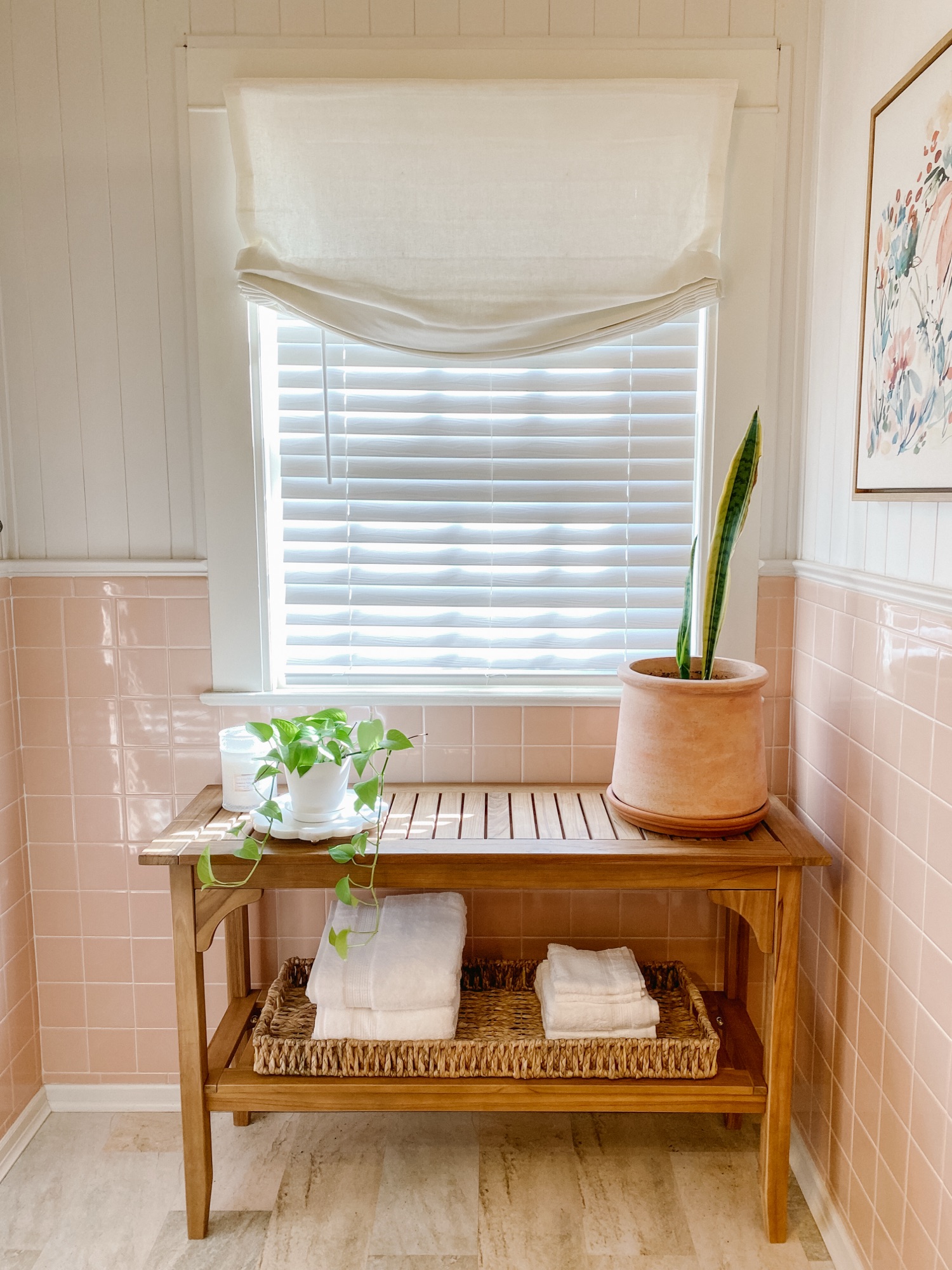
Updating a historic bathroom doesn’t have to mean losing its original charm. Our 1939 bathroom still features the vintage wall tile and fixtures that first caught my heart, but a few thoughtful additions gave the space new life. By keeping the original tile and layering in a teak table, relaxed roman shade, coordinating artwork, and a touch of live greenery, I created a bathroom that feels both timeless and livable. If you’ve ever wondered how to refresh a 1930s bathroom without replacing its historic character, you’ll love this approach. I’ve also included a Benjamin Moore color palette inspired by the original tile, perfect for anyone looking for bathroom design inspiration rooted in history.

Historic Bathroom at First Glance

The first time I saw the main bathroom in our 1939 Colonial Revival Home, I knew it wasn’t living up to its full potential. It’s a rather large bathroom for its era, full of the original soft peach tile on the walls and in the shower. The original bathtub is cast iron with a porcelain enamel finish. It’s very large compared to modern bathtubs. These were elements that I found to be valuable and desirable while looking for a historic home to purchase, and I wanted to honor them in my design.

The bathroom as it looked when toured prior to purchasing the house.

When we viewed our home prior to purchasing it, the large space under the window had a tiny vanity and some wall shelves. After purchasing it, I wanted to update it in a way that made it more functional, while keeping the vintage charm typical in a 1930s and 1940s home. Since nothing was broken, I was able to update without replacing anything major.

The walls in the whole bathroom have peach-colored tile. In this photo you can see a built-in storage cabinet that is set into the wall.

Refreshing a 1930s or 1940s Bathroom

As you might guess, the peach tile was the springboard for the whole design. This color might have been a reason other homeowners would have ripped it out. However, I knew that finding the right paint color to complement the peach would create a better feeling in the space. For the walls above the tile, I went with Benjamin Moore China White OC-141.

Again playing with peach tile, I leaned in a bit to the orange tones, and selected a teak table to place under the window. I also added a relaxed roman shade over the window blinds to soften the edges of the window. A lucky find, the seagrass basket was a clearance rack find, and it fits perfectly on the bottom shelf of the table.

Next, I added a few plants to the space. The live greenery adds a spa-like touch, and brings in green as an accent color. The last selection that I made for this design was the artwork. It’s the only artwork in our whole house that isn’t an original piece, but it brings together all of the colors in this bathroom perfectly.

Best Paint Colors for Bathrooms with Vintage Tile

The color palette for this bathroom is built around the original 1939 bathroom tile. For a similar color in wall paint, use Benjamin Moore Clementine Rose 1219. A complementary neutral trim color is Benjamin Moore China White OC-141. If you’re looking for an accent color that pairs well with the other two colors, try Benjamin Moore Paris Rain 1501.

Adding Modern Comfort to a Historic Bathroom

I hope this inspires you to rethink a total remodel. There are many ways to add modern comfort to a historic bathroom without gutting it. For us, the space functions well and the original tile and fixtures are in fantastic condition. (What you might not be able to tell is that the built-in cabinet is set deep into the wall, so we didn’t have a need to create additional bathroom storage.)

I know there’s a temptation from social media, TV, and Pinterest to “update” every space that isn’t decorated in a modern way. But the best way to truly honor a historic home is to allow it to be what it was built to be. Most historic homeowners will embrace the imperfections and charm of designs from by-gone eras.

The finished design. A 1930s vintage bathroom with modern comfort and classic accessories.

Shop This Look

If you see something you like in this design that you’d like to incorporate into your own space, you can find many of the items linked HERE for shopping.

Click to Shop

While You’re Here…

While you’re here, I hope you’ll take a few minutes to “look around” and read a few of our other articles. We’re currently in a series called Falling for Home: A Weekly Autumn Journal, which is all about falling in love with our own homes again as we meander through the autumn season together.

Let me know what you think of these bathroom colors in the comments below. Would you ever live with peach colored tile?