Finished customized Costco Christmas wreath decorated with magnolia, cedar, pinecones, berries, and a plaid bow on a black door

How to Beautifully Customize a Costco Christmas Wreath

Customize a Costco Christmas Wreath

There’s a day I look forward to every holiday season – the day that the fresh Costco Christmas wreaths arrive in the store. We’ve used artificial Christmas trees in our home for years, but I’ve held onto the tradition of buying fresh Christmas wreaths.

The smell of fresh evergreen branches instantly transports me back to my childhood. My family enjoys the charm of fresh greenery at Christmas as well, and the Costco Christmas wreath is an easy way to bring a bit of holiday joy into our home.

The only thing I don’t love about the Costco Christmas wreath is that because they’re so popular, every house on the street has an identical wreath on the door. Years ago, I decided to “hack” the wreaths and customize them. I wanted a unique wreath that reflected my style. Since the wreaths are so affordable (just $19.99), I began to create a unique wreath unlike anyone else’s.

I have shared a version of this idea in past years, but I wanted to create a more detailed guide for those of you who love simple holiday projects. If you would like to look back at my earlier wreath tutorial, you can find it HERE.

This article contains affiliate links. As an affiliate, I may earn a small commission if you purchase items through my links, at no cost to you. Thank you for supporting Belle Antiquarian.

Costco Christmas wreath before customization with pinecones, berries, and evergreen branches
The wreath straight from Costco before any customization.

Tools and Supplies

There are a few basic tools and supplies that you’ll need to transform your Costco Christmas wreath. When you have the right tools for the job, it will make it easier and more enjoyable.

When I go out onto our property to gather magnolia and holly stems, I always use a pair of strong pruners to make a clean cut. These stems are thick, and using a quality pair of pruners or snips ensures that the plant isn’t damaged when you make the cut.

In order to attach items to your wreath, you’ll need some floral wire, floral tape, and pine wired stems. Along with those things, you’ll need some scissors and wire cutters.

The last items you’ll need are whatever embellishments you decide to include. These can be things like ribbon, premade bows or sashes, bells, or artificial floral picks.

You can find my favorites linked HERE or by clicking on the image below.

Pro tip: Avoid using hot glue to attach items to your wreath. Hot glue doesn’t adhere well over time to fresh greenery. If your wreath will be outdoors, temperature fluctuations make the glue unstable. In addition, hot glue can be more visible than other methods like floral wire and floral tape.

Pinterest graphic titled Customize a Costco Christmas Wreath with all supplies linked, featuring a fresh wreath with pinecones and a red bow.
Click the image to shop my favorite supplies.

Fresh Greenery for Added Texture and Fullness

Sometimes more is more, and that’s my philosophy when customizing my Costco Christmas wreath. The first thing I do whenever I customize a fresh wreath is to see what’s available outdoors. Using natural elements gathered from your yard is not only affordable, but it adds a touch of natural elegance.

During the holiday season, I can find magnolia and holly branches, as well as camellia stems growing on our property. If you don’t have those available to you, chances are that you have pine, spruce, or even Leyland cypress growing nearby. Using different types of greenery to customize a fresh Christmas wreath will layer a variety of textures and shades of green, which creates a luxurious quality.  

When choosing which greenery to add to your Costco wreath, consider things like fragrance and longevity. For example, using olive branches and rosemary adds a layer of scent to the fragrant evergreens already included in the Costco Christmas wreath. In addition to that, be sure to consider selections that won’t wilt in a few days. You’ll want your wreath to appear fresh for weeks throughout the holiday season.

When taking clippings from your yard, be sure to prune small amounts from different areas. You don’t want to misshape the plant or make the yard look untidy. Cutting too much from one area could damage the plant.

Magnolia leaves and holly branches in a basket for customizing a Costco Christmas wreath
Gathered magnolia and holly from the yard add natural charm to a fresh wreath.

Natural Accents That Bring Warmth and Southern Charm

The next step to consider when you customize a fresh wreath are natural wreath decorations. These might be things that you forage from your yard, or they could also be purchased.

If you’ve seen other Costco Christmas wreaths that I’ve customized in the past, you might’ve noticed that each wreath includes pheasant feathers. Here’s a little secret: those are the same pheasant feathers in every one of the wreaths. I purchased a bag of pheasant feathers about fifteen years ago, and I carefully remove them each year to use them again and again.

This year I have included some Magnolia seed pods in my natural wreath decorations. I pruned the seed pods from my Magnolia trees and allowed them to dry. I used them in multiple ways this fall, and now I have wired them into my wreath.

In the past, I used dried orange slices in my wreaths. If you would like to dry your own orange slices at home, I have a simple step-by-step tutorial you can follow. It adds the loveliest touch of old-fashioned charm to your wreath. CLICK HERE for the dried orange tutorial.

Magnolia seed pods, pheasant feathers, and pinecones used to customize a Costco Christmas wreath
Magnolia seed pods, pheasant feathers, and pinecones make beautiful natural accents for a fresh Christmas wreath.

Other items that would look beautiful added to your wreath include:

  • Sweetgum pods
  • Eucalyptus pods
  • Acorns
  • Cedar berries
  • Cotton bolls

Pro tips: Elevate your foraged items with some gold or glitter spray paint. Dried oranges sprayed with glitter or acorns painted gold create festive accents for your wreath. Create a cluster of pheasant feathers by using floral tape around the ends before wiring them into your wreath.

Close-up of customized Costco Christmas wreath with magnolia leaves, holly, berries, pinecones, and pheasant feathers
A close look at the magnolia, holly, and pheasant feather accents that make this Costco Christmas wreath feel collected and personal.

Affordable Add-Ins From the Craft Store or Online

When I customize a fresh wreath, I tend to use what I can find and forage from the outdoors. But don’t miss out on your chance to get creative with embellishments you can find at your local craft store or online. Using quality artificial embellishments can create a designer look that fits your personality.

If you don’t have natural elements in your outdoor space that can be added to your wreath, you can purchase faux greenery and stems. Look for faux magnolia, berries, and even eucalyptus with realistic qualities.

In addition to natural looking items, you can customize your Costco Christmas wreath with a variety of holiday picks and decorative accents. Using your floral wire, attach things like mini ornaments or floral picks with gift boxes on them to create a holiday look. Faux pomegranates and pears are also lovely holiday-themed items to include.

Other items to consider are metallic stems, small bells, velvet poinsettias.

Finishing Touches That Define Your Style

Finished customized Costco Christmas wreath decorated with magnolia, cedar, pinecones, berries, and a plaid bow on a black door
The finished wreath, created with magnolia, cedar, pinecones, berries, and a classic plaid bow.

The last thing you’ll need before you start to customize a fresh wreath is your finishing touch. It’s important to know whether you’ll be hanging your wreath outdoors or indoors. If your wreath is outdoors, you’ll want to know if it’s covered or uncovered.

Once you know where your wreath will be hanging, it’s time to select your finishing touch. Your finishing touch can be a premade bow or a bow that you make yourself. It could be a bow made of velvet, plaid, or even burlap ribbon.

If a bow isn’t the look you’re going for, you may want to consider a simple ribbon tied with long tails trailing. I also love the look of a wreath sash, which can be customized with your monogram and used year after year.

When considering your bow, ribbon, or sash there are a few things to consider. Select something that is in the same scale as your wreath. You don’t want a tiny bow or sash on a big wreath, because it won’t look right. If you’re making your own bow, select a ribbon width that matches the proportions of your wreath.

If your wreath is going to be outdoors, especially if it’s uncovered, choose a bow or ribbon that can withstand the elements. Wired ribbon tends to be better in this case, as it will hold its shape against the weather.

Simple Steps to Transform Your Costco Wreath

Watch the wreath come to life in this short video.

Now that you’ve gathered all the materials that you’ll need to customize your Costco Christmas wreath, it’s time to get started!

  1. Inspect your wreath. If you notice any broken or loose branches, use your floral wire to reattach or tighten them to the wreath frame.
  2. Lay out your materials. Group the items you’ll be adding to your wreath by natural and artificial materials. Lay all your tools in one area. Precut wire so that you have it ready to use.
  3. Start with the largest greenery. Always insert items into your wreath in the same direction. Look at your original wreath and notice if the greenery has been created going clockwise or counterclockwise. Add your stems (and everything else) in the same direction that the original wreath is going. Wire stems like magnolia and cedar into the wreath. This may require longer pieces of wire that can reach to the back of the wreath frame for stability.
  4. Add medium-sized greenery. Look for spaces in your wreath that you can fill with things like holly, camellia, and rosemary. These stems can often be wired to existing stems in the wreath instead of the wreath frame on the back. Layer these under existing greenery and wire them in a way that hides the wire and the ends.
  5. Insert your character pieces. Always add items in odd numbers. It’s more pleasing to the eye when we see things in groups of 3 or 5. Since these items are closer to the surface of the wreath, I like to use alternate between regular floral wire and pine wired garland ties, depending on whether the wire can be seen or not.
  6. Step back and evaluate your wreath. Make sure that items are evenly distributed around the wreath. One side shouldn’t have more added than the other side. If you need to add or remove things, do so now. You’ll also want to check for any visible floral wire. Either reposition branches to hide wires or use your wire cutters to trim it down.
  7. Add your finishing touch. Once your wreath meets your satisfaction, it’s time to attach your bow, ribbon, or sash. Ribbons and sashes can be tied directly around your wreath. A bow can be attached using your floral wire. The most common placements are top-center and bottom-center, but slightly-off center can be charming as well.

Ideas for Styling Your Customized Costco Wreath

If you’re interested in customizing a Costco Christmas wreath, but you’re overwhelmed with the options, try starting with a theme. Here are a few themes to get you started:

  • Southern Traditional – A Southern Traditional wreath will use elements easily gathered from the Southern outdoors, like Magnolia and cedar. Other elements that would be integrated into this theme include pheasant feathers and velvet ribbon.
  • Classic Christmas – This wreath uses traditional Christmas elements used in many Christmas decorations. Holly, berries, pinecones, and plaid bows will create a wreath that fits this theme.
  • Natural Woodland – For this theme, integrate a mixture of forest gatherings like pine, juniper, and acorns with rustic elements like tiny bells and twine.
  • Minimalist – If you want to customize your wreath but still keep it simple, try using a mixture of olive branches, bay leaves, and linen ribbon.
  • Festive and Bright – This wreath will be colorful and cheerful. Customize your Costco Christmas wreath with faux berries, a satin bow, and glittery ornaments.

Care Tips for a Fresh Christmas Wreath

You’ve taken a lot of care to create a beautiful Christmas wreath, so you’ll want it to last all season long. Wreaths that are outdoors will last longer in a covered area where they’ll be out of direct sun and strong weather conditions.

Give your wreath a light misting every few days to refresh the greenery and prevent it from drying out too quickly. Check for loose pieces after wind or rain and re-secure them using floral wire.

After the season is over, use wire cutters to remove elements like pheasant feathers and artificial stems that can be reused. Once you’re sure they’re dry and free from debris, store them in a bin for next year’s wreath.

In Closing

Costco Christmas wreaths are beautiful just as they come. But there’s something charming about taking a cookie-cutter decoration and making it personal. This is one of the most affordable Christmas crafts that you can find. I’ve researched prices online and in-person, and you won’t find another lush wreath like Costco’s this affordably.

I encourage you to explore nature or even your craft bin with spare bits. Use what you have on hand and express your creativity to customize a Christmas wreath that’s one-of-a-kind. I hope you feel inspired to create our own customized Costco Christmas wreath and enjoy the beauty it brings all season long.

Explore More from This Series

If you enjoyed this article on holiday traditions, we invite you to explore more from the series. Each article in this series celebrates the beauty of Southern living through the seasons. You can find the full collection on the homepage under Home for the Holidays: A Southern Season of Charm.

Pin this for Later

Pinterest graphic showing a customized Costco Christmas wreath with plaid bow and magnolia leaves
Pin this tutorial to save these ideas for later.

Thank you for subscribing!

Please check your email to confirming your subscription.
Warning

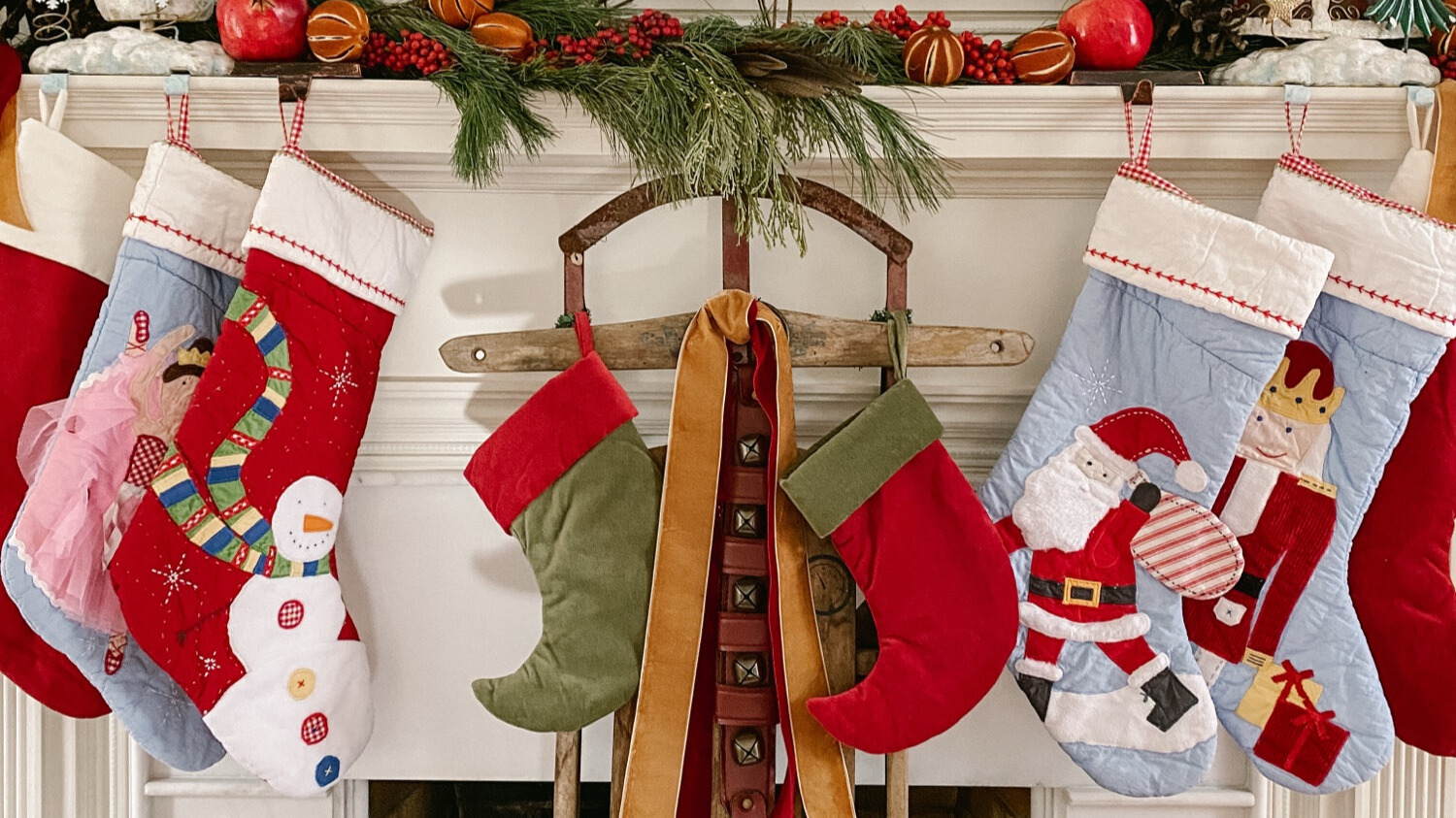
Christmas stockings hanging on a decorated mantel with greenery, bells, and handmade holiday details in a cozy home setting.

Keep the Holiday Magic Alive: Traditions for Every Age

When my kids were small, it seemed like the chaos of December would never end. There were classroom parties, letters to Santa, reindeer food, and late-night baking – all to keep the holiday magic alive for them. The truth is that the years slip by, and suddenly little ones who once tore into wrapping paper have grown, live in their own homes, and are building their own lives.

I’ve never been the type of mom that thought my job was done when the kids were grown. It turns out that I really like the people I raised, and I love spending time with them. So now, I look for new ways to keep the holiday magic alive by creating fresh traditions we can share as adults.

A group of children sitting with an adult during a Christmas gathering, wearing pajamas and costumes, capturing a warm vintage holiday memory.

Can you remember what you did the December you were ten years old? I can’t, and I’m willing to bet that you can’t either. We can’t rely on the magic of Christmas from childhood to provide a lifetime of memories. We need to continually fill the memory banks of our family, so that they’ll have memories to draw from later.

Relationships are built on shared experiences, and if we don’t have any shared experiences, relationships drift apart.

This article contains affiliate links. As an affiliate, I may earn a small commission on qualifying purchases—at no additional cost to you.


Now that my husband and I have been empty nesters for three years, we’ve learned there were things that no one prepared us for. Something we didn’t anticipate was how strange it would be the first time one of our kids wasn’t home on Christmas morning.

That day there was a missing piece of our family puzzle, and we didn’t feel complete for the rest of the day. After that Christmas, we knew that we needed to start planning holidays differently to intentionally create traditions filled with joy for our adult children. We would keep the holiday magic alive to carry us through until the next time we’d all be together again.

If I had to give one recommendation for parents of grown children, it would be that you must be flexible. We have raised these kids to be successful, independent people making their own way through the world. In doing so, they will create their own lives separate from ours. When they start families of their own, they’ll build new traditions, and that’s something to celebrate.

A young family standing beside a decorated Christmas tree, holding a toddler and smiling together during a holiday moment.
The years go by faster than we expect. I’m grateful for every season we’ve shared.

What does it look like to be flexible?

The main way you can be flexible is with the dates that you gather to celebrate the holidays. The holidays can be just as magical, if not more so, even when they’re celebrated on another day. When you’re flexible, your grown kids don’t have to rush off, and they’ll actually want to come.

Another way to be adaptable is letting go of the traditions from their childhood. Gathering around the Christmas tree to open gifts left by Santa was an experience that you got to enjoy when your kids were small. Once grown, that is something for them to experience with their significant other and their own children. This gives us an exciting opportunity to create new traditions! Instead of insisting on your kids being there Christmas morning, why not dedicate one day each year to baking, an ornament or PJ swap, or even Christmas themed games?

We can keep the holiday magic alive by focusing on joyful connections, rather than keeping exact dates and reenacting Christmas scenes from their childhood. Happy shared experiences create happy relationships.

Tips: Christmas fun can happen anytime during the holidays. Draw names and swap holiday pajamas early so they can be worn all season.


Young Adults Starting Your Own Traditions

One thing that I’ve learned from my grown kids is that they still want to have fun. This is especially true for college aged kids and young adults in their 20s. They still want to keep the holiday magic alive throughout the season.

If you fall into the young adult category and find yourself missing a bit of the holiday magic, start small. Here are a few ideas to get you started:

  • A dessert potluck between lunch and dinner or an ornament exchange at Thanksgiving can bring everyone together without overwhelming anyone.
  • If you don’t live close to family, don’t be afraid to ask friends if they want to get together for something festive. A hot chocolate bar, with everyone bringing a different topping, is a fun and inexpensive way to get together. If you’re looking for an inexpensive holiday activity with friends, driving around and looking at Christmas lights is a great idea.
  • If you’re worried about being alone on the holidays, try reaching out to hospitals or nursing homes to see if they need any volunteers.

Traditions are what connect us and give us a sense of belonging. They don’t have to be elaborate, Instagram-worthy spectacles. They’re simply moments that we repeat with intention with the people we care about.

If you’re young, don’t be intimidated by planning a holiday get together. You don’t have to create a perfect gathering to create a sense of belonging. People just want to be seen and included, and that can be done by simply inviting others in. You can be the one to keep the holiday magic alive for those around you.

Tips: For an extra element of fun, invite guests to bring a Christmas mug to swap at a hot chocolate bar. For a dessert potluck, provide to-go containers so guests can exchange leftovers to take home.

Presence over Perfection

Whether you’re an empty nester or you’ve just flown the nest yourself, we all really want the same thing. We yearn to stay connected and belong to a circle of people who share joyful experiences and traditions during the holidays. Kids from two to ninety-two appreciate when others go out of their way to keep the holiday magic alive.

This year, think about ways that you can create new, meaningful ways to connect with the ones you love. It doesn’t have to be elaborate. Gifts don’t have to be exchanged. What matters is that you’re present with the ones you love at a happy, enjoyable gathering.


In Closing

When I was a kid, we used to do this thing called, “Remember when.” When we were driving down the road or sitting around the table, one of us would say, “remember when,” and we would then proceed to tell the story about something that had happened. The stories we usually told involved all of us doing or experiencing something together. We could collectively remember and relive this experience through the re-telling of the story.

This holiday season I encourage you to create some experiences that will one day be “remember whens.” The holidays have always been less about what’s under the tree and more about who’s around it. Keep filling the memory banks. One day, those small, ordinary gatherings will be the treasures that tell your family’s story.

Children dressed in angel and nativity costumes during a Christmas pageant, standing together on stage in a warm vintage holiday scene.
I grew up in a season of simple Christmas programs and handmade costumes. These are the memories that stay with us.

Explore More From this Series

If you enjoyed this article on holiday traditions, we invite you to explore more from the series. Each article in this series celebrates the beauty of Southern living through the seasons. You can find the full collection on the homepage under Home for the Holidays: A Southern Season of Charm.

Thank you for subscribing!

Please check your email to confirming your subscription.
Warning

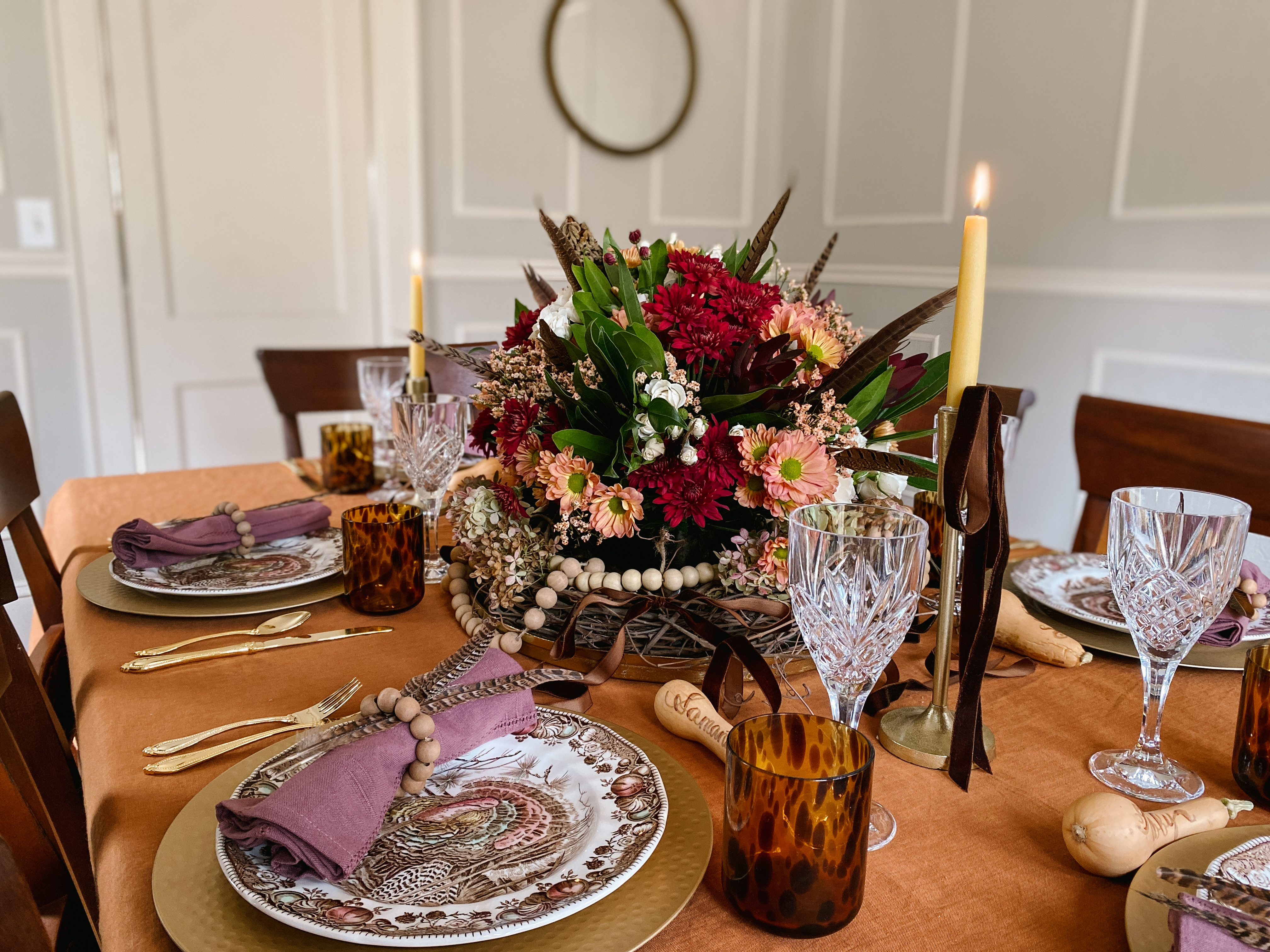
Vintage Thanksgiving table with turkey plates, fall flowers, and amber glassware on a rust-colored tablecloth.

Set a Beautiful Thanksgiving Table with Vintage Turkey Dishes

As I walked around our dining room, setting the Thanksgiving table with vintage turkey dishes, I find myself thinking about the moments yet to come. I smooth the linen tablecloth before placing the next plate down, and I am filled with joy just thinking that my family will soon gather together for Thanksgiving. There’s something special about preparing for the people you love. I’m looking forward to the time we’ll spend time over the Thanksgiving meal catching up with each other’s lives, sharing memories from the past, and talking about our plans for the future.

The plate in front of each person around the table will be filled with our favorite foods: turkey, cornbread dressing, sweet potato casserole, macaroni and cheese, and green beans. For a time, we won’t even be able to see the decorations on the plate. As the meal progresses, we’ll talk and we eat our food, and the familiar turkey design will reappear.

These plates hold more than the food on Thanksgiving. Years from now, the sight of them will help us to remember the memories of people we cherish and the times we spent together over a special meal.

This article contains affiliate links. As an affiliate, I may earn a small commission on qualifying purchases—at no additional cost to you.

Woman holding a vintage Johnson Brothers turkey plate in a Southern dining room decorated for Thanksgiving.
Sharing a favorite from my collection: Johnson Brothers “His Majesty” Thanksgiving china.

The Heart of a Southern Table

Years ago, I found a nearly complete set of vintage turkey dishes at an estate sale. The set was “His Majesty” by Johnson Brothers, and as soon as I saw it, I knew that I wasn’t going to leave the estate sale without it. I spent my entire budget that day to get the set.

Each year since that estate sale, we set our Thanksgiving table with vintage turkey dishes. Yes, they’re festive. But more than that, they’ve become part of our family’s story.

Maybe your family doesn’t set your Thanksgiving table with vintage turkey dishes. Every home has its own heirlooms, whether passed down or recently found. I would guess that there is something that returns to your table each year, whether it’s a familiar platter, a pie dish, or even a favorite casserole pan.

Southern dining room decorated for Thanksgiving with vintage turkey plates, plate wall, and warm candlelight.
A view of the dining room, where vintage and heirloom pieces set the scene for Thanksgiving dinner.

The History and Charm of Turkey China

Thanksgiving has been observed in the United States since the 1600s. It’s interesting to note that sometimes Thanksgiving was observed more than once in a year, and other times it didn’t even occur in autumn.

After Abraham Lincoln declared Thanksgiving a national holiday in 1863, English potteries like Spode and Mason’s began designing special china patterns for the American table, each featuring the proud bird itself.

Hundreds of years before disposable dinner plates began to appear at Thanksgiving gatherings, families were setting their tables with special Thanksgiving china to celebrate their special meal. Traditional Thanksgiving turkey plates endure in popularity even today for the nostalgia they carry and the way they link us to generations who gathered before us.

I wonder if those old English potteries every imagined that turkey dishes would adorn so many American Thanksgiving tables.

How to Set a Heritage-Inspired Table

We often plan the Thanksgiving food well in advance, but neglect to plan how we’ll set the table until it’s time to eat. With a little planning, this can be a simple and enjoyable task that creates a special experience for your guests.

When it’s time to dress the table, here’s how I make it easy but memorable:

  • Start with a Foundation: Choose a tablecloth made of quality materials in a neutral color. Doing so will give you a tablecloth that will last for multiple occasions for years to come. A neutral color will work for different holidays, and it will let the china patterns shine.
  • Layer with Meaning: Consider using a mixture of new and vintage pieces for balance. We want to use and enjoy our vintage pieces, but we don’t want to create an uncomfortable “museum” atmosphere for our guests. If you haven’t found vintage pieces you like or that fit your budget, think about using new pieces that echo vintage motifs, such as transferware-inspired borders or classic harvest scenes. Many of the vintage Thanksgiving turkey patterns are still produced today.
Product collage featuring Johnson Brothers His Majesty turkey plate, pewter charger, tortoise flatware, amber glassware, plaid napkins, and silver turkey serving bowl.
Mixing heirloom china with timeless textures and warm metals creates a collected Southern Thanksgiving table.
  • Bring in Seasonal Touches: Look to nature for ways to make your Thanksgiving table festive. Even when we’re on a budget, nature often gives us just what we need to decorate. Magnolia stems, pears, and dried hydrangeas are traditional Southern accents that can be easily found outdoors. Creating a special table doesn’t have to be about perfection. We can tell a story with gathered and found objects as well.
  • Blend Collections Gracefully: If you’re just starting your turkey plate collection, you may not have a full set of dinnerware to use yet. Don’t be afraid to mix and match your plates with solid dishes. If you have different partial sets, it can also be lovely to use them together.
Product collage showing gold chargers, brown vintage turkey plate, amber glass, wood candlesticks, brown linens, and gold turkey napkin rings.
A classic Thanksgiving table with golden tones, wood accents, and vintage turkey china for a timeless holiday look.

If you’d like to see how I’ve styled our Thanksgiving table through the years, you can revisit two earlier tables I’ve shared. Each one tells a different story:

Thanksgiving place setting with Johnson Brothers turkey plate, plum napkin, gold flatware, and amber glass.
A close-up of a Thanksgiving place setting layered with gold flatware, plum linen, and vintage turkey china.

A Table that Tells a Story

Every good Southerner knows how to spin a tale, and the pieces on our table become conversation starters. The table becomes a living scrapbook with items collected over the years. Perhaps your forks were passed down from a great aunt, or you found your plates on a cross-country road trip. Regardless of its origins, each piece holds a memory worth sharing.

People often tell me things like, “I wish my family did that growing up” or “We never did that at our house.” I’m here to tell you that it’s not too late.

Maybe it’s time for your family to write a new story. We forge new traditions with our families and loved ones by both honoring our heritage and the people present at our tables now. Every tradition starts somewhere; sometimes all it takes is a single plate.

Overhead view of Thanksgiving table with vintage turkey dishes, floral centerpiece, and amber glassware.
An overhead view of the Thanksgiving table layered with vintage plates, gathered florals, and family traditions.

In Closing

The truth about Thanksgiving is that the turkey is usually in the oven longer than it is on the table. Long after the last slice of pie is eaten, the memory of the table and the stories told around it are what propel us forward as a family.

The beauty of a Southern home is that we are united by what endures. The secret is that we get to choose what endures. I hope you’ll take this Thanksgiving as an opportunity to begin a new tradition or continue an old one with love and intention.


Explore More From this Series

If you enjoyed this article on setting your Thanksgiving table with vintage turkey dishes, we invite you to explore more from the series. Each article in this series celebrates the beauty of Southern living through the seasons. You can find the full collection on the homepage under Home for the Holidays: A Southern Season of Charm.


Elegant banner image reading “How to Create a Thanksgiving Floral Arrangement,” featuring orange pumpkins and green botanical accents on a soft cream background.

How to Create a Thanksgiving Floral Arrangement

As an empty nester, I cherish the moments when my family gathers for the holidays. I love decorating our home in meaningful ways, and today I’m sharing how I create a Thanksgiving floral arrangement to make the table feel special.

Over the years we normally had Thanksgiving at home, just the four of us. My husband worked nights and weekends in law enforcement, and he usually only had a few hours on Thanksgiving to sit down with us for a meal.

We didn’t always have fancy heirloom plates or crystal wine glasses. For many years, the most treasured Thanksgiving decorations on the table were placemats that the kids made and brought home from school. During the early years, Thanksgiving simply meant the parade on TV, the smell of onions and celery softening in butter, and the sound of kids playing a board game together while they waited to eat.

Now that they’re older, I’ve started creating a special Thanksgiving floral arrangement to decorate our table. Last year, I shared an arrangement filled with warm fall tones and garden greenery. This season, I’m changing things up a bit and walking you through each step so you can create one, too.

Flowers have a way of making the table feel special, whether it’s set for two or twelve. When my kids come home for Thanksgiving, they share in the excitement of the season. Not only do they enjoy eating the familiar Thanksgiving food that they love, but they can also tell that I’ve gone out of my way to make the table special, just for them.

If you’d like to share some flowers on your table this Thanksgiving, here are the steps you’ll want to take.

This article contains affiliate links. As an Amazon and LTK affiliate, I may earn a small commission from qualifying purchases at no extra cost to you. All opinions are my own.

Step One: Choose Your Vessel

The first thing I like to do when I’m creating a Thanksgiving floral arrangement is to think about what kind of vase or vessel I’ll be using. If the floral arrangement is going to be in the center of the table while we’re eating our Thanksgiving meal, then I’ll select a container that creates a profile that is low enough to be able to see each other’s faces while talking. On the other hand, if the flowers are going to be on a sideboard or entryway, then I might pick something taller to create more of a vertical look.

In my case, I’m creating a floral arrangement for the center of the Thanksgiving table, so I’m going to select something that looks nice in proportion with the length of the table, but it won’t inhibit the conversations.

Another thing to consider when choosing the vessel for your Thanksgiving floral arrangement is whether it suits the occasion. There are many ways to use ordinary objects and turn them into something beautiful to hold your flowers. Things like ironstone tureens, transferware bowls, or vintage silver pieces can be just the right thing to set a festive tone for a table setting with Southern and heirloom aesthetics. Don’t be afraid to repurpose containers in creative ways; they often make the most charming vases.

Vintage silver bowl used as a vessel for a Thanksgiving floral arrangement, sitting on a marble countertop in soft autumn light.
A vintage silver bowl makes a beautiful vessel for a Thanksgiving floral arrangement.

Vessels to consider: Low compotes, ironstone tureens, transferware bowls, vintage silver pieces, or even dough bowls lined with floral foam

Step Two: Build the Foundation

After you have selected your container, the next step is to build the foundation for your floral arrangement. I want to make sure my flowers stay in the positions I’ve arranged them in. In order for them to do this, I’ll use something inside the vessel to secure them. There are a few options to secure your flowers, and the most common are floral foam, chicken wire, or a flower frog. Some people even make a grid over the container by using clear tape. By using one of these methods, the Thanksgiving floral arrangement will be given structure and stability. This is especially important if the flowers are on a table that’s in a busy area or has a lot of movement around it.

Green floral foam soaking in a clear plastic container of water, preparing the base for a Thanksgiving floral arrangement.
Soak floral foam before arranging to help flowers stay fresh longer.

Before I start adding my greenery and flowers, I also want to think about water. You can make your floral arrangements a few days before your Thanksgiving meal, but you’ll want to make sure to take some steps to keep it looking fresh. Some flowers will prefer the water to be very clean. In that case, you’ll need to gently drain and refill the water every other day. If the water looks cloudy, it’s best to drain and refill it.

Other arrangements will have flowers that are “heavy drinkers.” You can simply use a watering can with a narrow spout like the one I use to refill the water in the container as needed. Be sure to check on the water often to prevent the flowers from dying before Thanksgiving Day.

Here are a few of my favorite things to use when I’m arranging flowers. I’m including everything from my favorite containers to my favorite floral snips. Click the image to shop these exact items in my LTK.

Graphic showing Belle Antiquarian’s favorite floral arranging tools and supplies, including vessels, floral snips, wire frogs, and floral foam, styled on a neutral gingham background.
My go-to floral arranging tools and supplies for creating timeless, garden-inspired arrangements.

Three: Select Seasonal Greenery

A lot of people ask me how to get their flowers to look like the ones created by a florist. One of the secrets to a beautiful Thanksgiving floral arrangement is the greenery. After we select our vessel and consider the foundation, the next step is to start adding greenery. For a truly Southern table, greenery often does the heavy lifting.

In the South we’re lucky to have a lot of greenery in our yards that is suitable for flower arrangements. Magnolia and camellia stems are beautiful and easy to find. I’ve also used boxwood and cedar cuttings in my arrangements. If you’re lucky enough to have autumn ferns in your yard, they make a wonderful addition to Thanksgiving floral arrangements.

When you’re thinking about which greenery to use, don’t be afraid to use more than one kind. Some greenery has matte leaves, and others are glossy. Some have big, wide leaves, and others have feathery tips. Layering more than one kind of greenery can create visual interest.

Your greenery sets the shape and volume of your floral arrangement. It’s the quiet structure beneath every bloom. Once we start adding them, your flowers will generally follow the shape that you created with the greenery.

Camellia branches arranged in a silver bowl with floral foam, forming the greenery base for a Thanksgiving floral arrangement.
Camellia branches form the base of this Thanksgiving arrangement. Their glossy leaves add structure and shine.

Lastly, consider the scale of your greenery in proportion to the scale of the vessel you’re using. If you’re using a small vase, large greenery, like Magnolia, will take up more visual space. You may not want as much Magnolia in that case. In a very large container, tiny leaves may get lost in the floral arrangement, so you may need more of them.

When I cut greenery in my yard, I use floral shears, snips, and a gathering basket to gather what I need before bringing it indoors.

Consider: Shape, color, texture, and size of leaves

Step Four: Add Blooms and Accent Elements

It’s finally time to talk about the stars of the show: the flowers themselves. (Are you surprised that there was so much to consider before even adding the flowers?)

Bundles of fall flowers in shades of rust, amber, and cream resting in a kitchen sink before arranging.
Fresh flowers in warm autumn tones, ready to be arranged for Thanksgiving.

If you’ve been following me on Instagram for a while, you know that my favorite place to buy flowers is Trader Joe’s. Trader Joe’s is very accommodating to me when I come in to buy a lot of flowers for floral arrangements. They know that flowers are a big part of entertaining guests, and they expect their floral section to be busy at this time of year. They’ll even send you home with a bucket of water if you’re buying multiple bundles.

Woman arranging fall flowers in a silver vessel near a kitchen window, creating a Thanksgiving floral arrangement.
Arranging flowers at home is one of my favorite holiday traditions.

Ideally, when I go into Trader Joe’s to look for flowers for a Thanksgiving floral arrangement, I like to look for flowers that come in fall colors and will also last a long time. Flowers like this will be Chrysanthemums, roses, marigolds, sedum, and eucalyptus. I’ll look for colors like russet, amber, burnt orange, cream, and blush. I generally stay away from bright whites and bold reds for my Thanksgiving floral arrangements.

Pro Tip: A Florist’s Formula for Balance
When arranging flowers, think in categories:
air (delicate stems that add lightness), filler (connective greens), disks (rounded blooms), spikes (height and rhythm), and focals (your statement flowers).
This simple formula helps every arrangement feel natural and balanced.

Illustrated chart showing five elements of a floral arrangement: Air Stems, Filler, Disks, Spikes, and Focals, on a gingham background with botanical sketches.
The five key elements of a balanced floral arrangement — Air Stems, Filler, Disks, Spikes, and Focals.

Step Five: Arrange for Entertaining

Now that you’ve created your Thanksgiving floral arrangement, there are a few things to keep in mind before you serve the turkey. If you made your floral arrangement ahead of time (and I hope you did), it’s best to keep it away from heat sources. The flowers will stay fresher if they aren’t in a hot kitchen or close to a HVAC vent.

We talked above about keeping the floral arrangement lower on the table so that conversations aren’t inhibited. But sometimes the arrangements turn out bigger than we expected. (This happens to me a lot, actually!) In that case, be sure to move your flowers off to another spot when it’s time to eat. The most important thing is to entertain your guests gracefully, not make your flowers the star of the show. After all, a welcoming table is more about warmth than perfection.

Finally, take some direction from the colors and textures in your flowers when deciding on the table décor. Colors in your napkins and tablecloth should complement or repeat the colors that you selected for flowers. Your Thanksgiving floral arrangement is just part of the table setting that you create for your guests, and it should blend seamlessly with the rest of the design.

Step Six: Finishing Touches

Once your flowers are in place, it’s time for a few finishing touches. Don’t be afraid to get creative and add unique touches to your floral arrangement. There’s artistic expression in how we position each stem, in the quiet rhythm of arranging. Even if we are all given the same exact flowers and tools to use, our arrangements will turn out looking quite different from each other.

Finished Thanksgiving floral arrangement in vintage silver bowl on dining table with vintage brown transferware plates.
The finished Thanksgiving arrangement, filled with autumn blooms and Southern charm.

One way to add your own touch is to think outside the box for items that aren’t commonly used when arranging flowers. I’ve wired some dried Magnolia seed pods to long bamboo skewers and added them into my arrangement as unique accents. Brown velvet ribbon or pheasant feathers would be wonderful additions to a Thanksgiving floral arrangement as well.

Close-up of a Thanksgiving floral arrangement featuring a wired magnolia seed pod, orange alstroemeria, and autumn chrysanthemums.
A dried magnolia seed pod, wired to a bamboo skewer, adds natural texture and Southern charm to the arrangement.

Tip: When the meal is over and your guests have gone, be sure to move your flowers to a spot where you’ll see them. Flowers bring joy and life to our rooms, and you can get the most out of them when you see them.

In Closing

This Thanksgiving, remember that who is gathered around the table is more important than what is on it. Flowers are a wonderful way to celebrate the season, but our friends and family will really remember the ways we embrace them this season through small, meaningful gestures.

Soft petals, inherited bowls, and laughter around the table make a house feel like a home. More importantly, loved ones who gather to share a meal make any place feel like home when they’re together. Be sure to let them know you’re thankful for them.


Explore More from This Series

Each article in this series celebrates the beauty of Southern living through the seasons. You can find the full collection on the homepage under Home for the Holidays: A Southern Season of Charm.

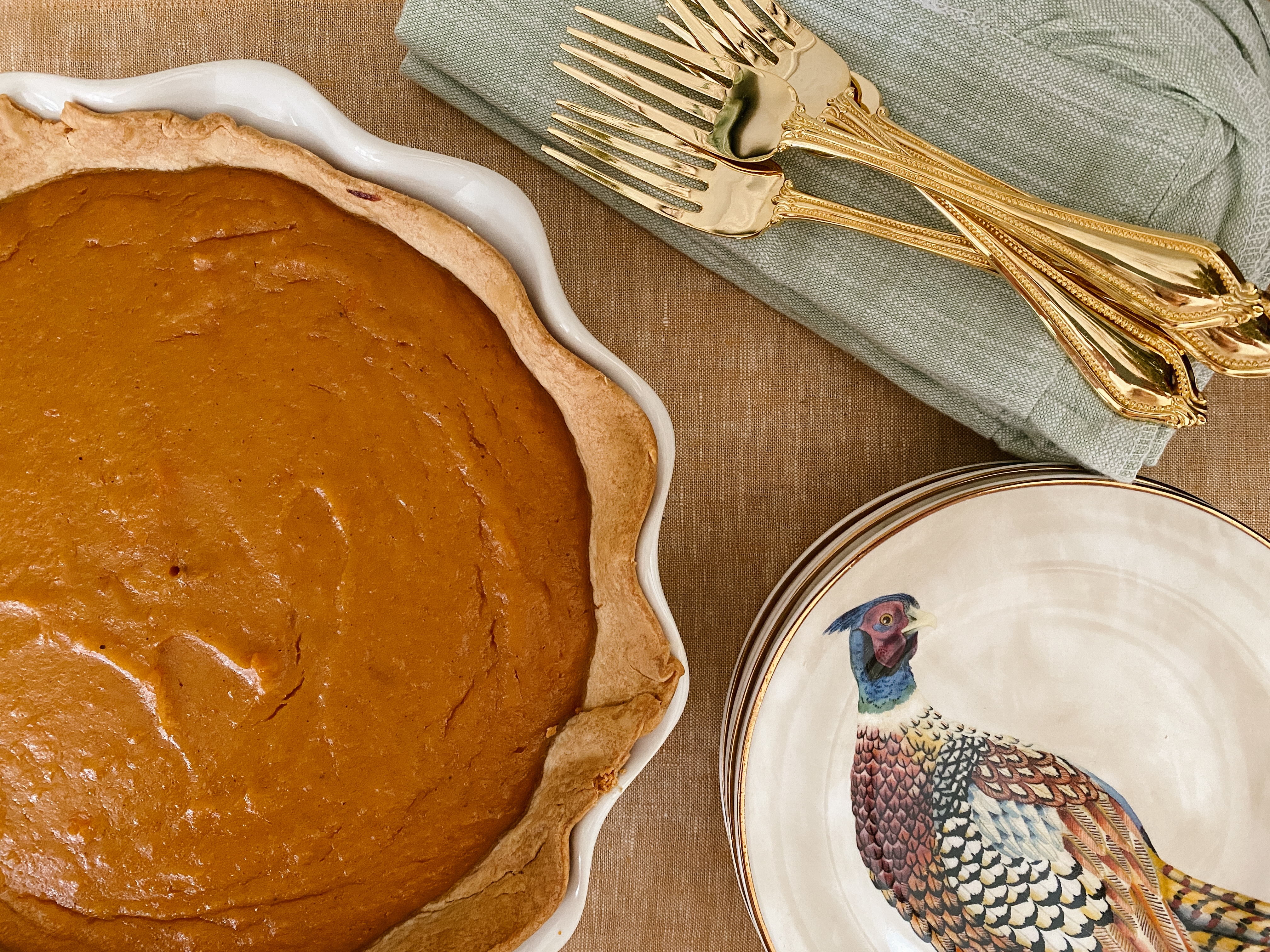
Whole Southern sweet potato pie styled with vintage silverware, linen napkins, and fall table setting.

A Southern Sweet Potato Pie Recipe from a Vintage Southern Cookbook

(Part of the “Home for the Holidays: A Southern Season of Charm” series)

This article contains affiliate links. As an Amazon and LTK affiliate, I may earn a small commission if you make a purchase through my links, at no extra cost to you.

A Taste of Southern Nostalgia

Most people might guess that a typical Southern Thanksgiving meal would include a favorite Southern sweet potato pie recipe. But the truth is, I hadn’t found one that I really liked until now. Today I’m sharing this treasured recipe that I uncovered, just in time for Thanksgiving. It’s part of this year’s Home for the Holidays: A Southern Season of Charm series, where we’re celebrating meaningful traditions and nostalgic Southern flavors.

A few months ago, while I was thrifting, I stumbled across The Deep South Cookbook, by Southern Living in 1976. I mentioned in an earlier article with my Chicken Mull recipe, that it’s important to me that we keep our Southern cultural recipes alive. So, when I found this cookbook that was full of recipes from a by-gone era, I simply couldn’t leave it behind. (And the fact that it was only $1 was icing on the cake!)

Today we’re making a recipe that I discovered on page 55 of The Deep South Cookbook, which is Harvest Sweet Potato Pie. This recipe was submitted by Shirley Wise of Richmond, Virginia.

As the cookbook states, this recipe was “home-tested, so you can be sure of delicious dining!”

Abby Smolarsky holding The Deep South Cookbook by Southern Living, 1976, inspiration for a vintage Southern sweet potato pie recipe.
Abby with The Deep South Cookbook (Southern Living, 1976), the vintage treasure where she found this classic Harvest Sweet Potato Pie recipe.

A Cookbook Worth Keeping

This cookbook is far from beautiful. The cover decoration is an unmistakably mid-century scene with candles and a platter of roasted poultry. By modern standards, it’s almost an unappetizing image. But after opening the cover of the cookbook, it’s a pure delight. Beyond discovering the Southern sweet potato pie recipe, there are hundreds of other traditional recipes to explore.

The book is divided into states in the Deep South. Each section begins with a brief introduction and history of food in that state. Following the introduction, the pages are filled with simple, approachable recipes for home cooks. Each recipe was written and submitted by real Southern women whose names appear beside that recipe.

I won’t be experimenting with “South Georgia Squirrel Stew,” but today we’re going to make the Southern sweet potato pie recipe. After I share the recipe, I’ll also include a few modern changes that you could make to enhance the nostalgic Southern flavors for your pie this Thanksgiving.

Whole Southern sweet potato pie styled with vintage silverware, linen napkins, and fall table setting.
A classic Southern sweet potato pie, styled simply with vintage silverware and linens for a timeless holiday table.

The Original Harvest Sweet Potato Pie

Whole Southern sweet potato pie styled with vintage silverware, linen napkins, and fall table setting.
Belle Antiquarian (adapted from The Deep South Cookbook, 1976)

Harvest Sweet Potato Pie

A classic Southern sweet potato pie inspired by a 1976 recipe from The Deep South Cookbook, a Southern Living publication. This simple and comforting dessert highlights the timeless flavors of sweet potatoes, cinnamon, and milk in a flaky crust. It is a vintage favorite that feels just as welcoming on today’s holiday table as it did generations ago.
Prep Time 20 minutes
Cook Time 45 minutes
Total Time 1 hour 5 minutes
Servings: 8 servings
Course: Dessert
Cuisine: Southern

Ingredients
  

  • 1 ¾ cups mashed sweet potatoes
  • 1 tsp salt
  • 1 ½ cups milk
  • 2 eggs
  • 1 cup sugar
  • 1 tsp cinnamon
  • 1 unbaked pie shell

Method
 

  1. Preheat over to 350 degrees.
  2. Combine all of the filling ingredients in a bowl, then beat until smooth.
  3. Pour into the pie shell.
  4. Place on the center rack and bake at 350°F for about 45 minutes, or until a knife inserted near the center comes out clean and the filling is just set. Begin checking at 30 minutes, as baking times may vary.

Notes

For a richer flavor, substitute part or all of the milk with buttermilk or evaporated milk. If using buttermilk, reduce the salt to ½ teaspoon and use 1¼ cups instead of 1½ cups. You can also replace half of the white sugar with light brown sugar for a hint of molasses. Try adding ¼ teaspoon nutmeg and a splash of vanilla extract for a more aromatic pie. Bake until the center is just set, then cool completely before slicing. Serve with lightly sweetened whipped cream or a sprinkle of cinnamon sugar for a classic Southern finish.
The recipe above is printed exactly as it appeared in The Deep South Cookbook (Southern Living, 1976). Baking times may vary depending on oven type, pie dish material, and the moisture level of your sweet potatoes. Begin checking for doneness at 30 minutes and continue baking until the center is fully set, about 45 minutes total.

Modern Touches for Today’s Kitchen

With only a few ingredients, and even fewer steps to pull this recipe together, I imagine that Mrs. Shirley Wise of Richmond, Virginia, made many of these pies in her time. As much as I love following a recipe exactly as it was written, I also enjoy experimenting with subtle changes that reflect today’s kitchens and ingredients.

To modernize and customize this recipe for my family, I made a few substitutions and additions. The Southern sweet potato pie recipe is delicious just as Mrs. Wise wrote it, but with a few changes, we can introduce a touch of warmth and brightness that is suitable for modern holiday tables.

Here are the ways I updated this Southern sweet potato pie recipe:

  • 1¼ cups buttermilk (instead of milk, reduce salt) – for tang and creaminess.
  • ½ cup white sugar + ½ cup light brown sugar – adds depth and warmth.
  • 1 teaspoon vanilla extract – enhances sweetness naturally.
  • ¼ teaspoon nutmeg – classic holiday spice that pairs well with cinnamon.
  • ½ teaspoon orange zest (optional) – brightens the flavor slightly; use sparingly so it doesn’t overpower the custard.

Optional variation: add 1 tablespoon melted butter to the filling for extra richness.

Slice of Southern sweet potato pie served on a fall plate with vanilla ice cream dusted with cinnamon.
A slice of sweet potato pie served with a scoop of vanilla ice cream and a touch of cinnamon — simple, classic Southern comfort.

Serving and Styling

While this pie is simple enough to throw together for a casual meal with the family, it’s also a thoughtful addition to holiday gatherings. We always set up a dessert buffet in our dining room for Thanksgiving, and this Southern sweet potato pie recipe will be included this year. (I’m already looking forward to enjoying a slice with a hot cup of coffee!)

I served mine in a white ceramic pie dish with some simple linen napkins and vintage silverware that I found at an estate sale. I used some fall themed plates and added a small scoop of high-quality vanilla ice cream on the side.

If you’d like to recreate this setup, here are a few of my favorite pieces and some of the kitchen tools I used while baking.

Southern-style kitchen counter with vintage pie plate, rolling pin, glass prep bowls, and a stand mixer surrounded by baking tools used to make a sweet potato pie.
Timeless kitchen essentials that make holiday baking a pleasure. Simple tools, classic materials, and a touch of Southern charm.

Why These Recipes Still Matter

When is the last time you ate sweet potato pie for dessert? Have your kids ever tasted it? Our country enjoys many different cultures throughout the different regions across our great land. In the North you’d probably expect to find cheesecake. In the Midwest, we would probably eat scotcheroos.

Unless we do something to preserve our traditions, they will continue to meld into one indistinguishable, bland culture that has forgotten the spice and flavors of the people who live in each region.

When I found this cookbook and came up with the idea of sharing one of the recipes, I intentionally looked for one that had very few ingredients. Anyone can make pie recipe, even a beginner home cook.

This holiday season, I hope you’ll slow down, honor the stories behind your favorite recipes, and make a little space in your kitchen for history to live again. Whether you’re baking with family, sharing dessert with friends, or simply enjoying a quiet slice with coffee, this sweet potato pie is a delicious reminder of how good the simplest things can be. And Mrs. Shirley Wise, if you’re out there, I loved your pie.

Explore More from This Series

Each article in this series celebrates the beauty of Southern living through the seasons. You can find the full collection on the homepage under Home for the Holidays: A Southern Season of Charm.

Each article in this series celebrates the beauty of Southern living through the seasons. You can find the full collection on the homepage under Home for the Holidays: A Southern Season of Charm.

fall garden prep: essential tasks for a beautiful start to spring belleantiquarian.com

Fall Garden Prep: Essential Tasks for a Beautiful Start to Spring

If you’re anything like me, fall garden prep is the last thing you want to think about right now. Gardening feels fresh and full of promise in spring and early summer, but somewhere near the end of September, my enthusiasm wanes.

It’s fall, and the daylight is growing shorter, which means I’m spending more time indoors. The air feels softer, and the garden smells faintly of drying leaves and damp soil. I can no longer see bright red tomatoes growing from my kitchen window. And there are no zinnias or cosmos ready to fill vases throughout our home.

This time of year, the Southern garden is quietly in the background asking for attention, while I neglect to give it a passing glance.

Welcome back to the newest installment of Home for the Holidays: A Southern Season of Charm. Today I’m talking about essential tasks for cultivating a healthy garden so that it’s ready for planting when spring arrives. If you’re just joining me from Google, Pinterest, LTK, or Instagram, I invite you to browse the other articles in this series, which can be found linked at the end of this article.

Note: This article contains affiliate links, which help support Belle Antiquarian at no extra cost to you.

Southern Timing: Why Fall Garden Prep Matters

In the South, gardening is often a year-round activity. There’s still plenty of time to grow many cooler weather crops. But for most gardeners, we are putting our garden beds to sleep for the winter. We’re preparing for the beginning of next year’s garden by performing essential fall garden prep.

It’s important to evaluate what your garden needs now in order to have a successful growing season next year. Now that the temperatures have cooled off a bit, it’s the perfect time to spend outside looking at your soil, cleaning tools, preventing diseases from spreading, and planning changes for the next year. It’s even a wonderful time to plant cool-weather crops like garlic and shallots.

If I wait too long to take care of my fall garden prep, the rush of holidays and gatherings will be here. Pretty soon, there will be Christmas cards to address, gifts to wrap, and cookies to bake. If the garden is going to be attended to, it needs to be now. It’s time to prepare the garden for spring.

Hand holding dried zinnia flower heads for seed saving during fall garden prep.
Zinnia blooms at the end of their season — drying beautifully for seed saving and next year’s planting.

Ornamental Garden Care: Peonies and Perennials

Fall is the ideal time to plant many flowering perennials, shrubs, and trees. Planting in the fall allows plants to establish their root systems. The plants won’t be injured or stressed from direct sunlight with high temperatures. The soil is still warm enough to encourage root growth, but less daylight and cooler temperatures prevent the plant from sprouting upwards.

If you’ve been following me for a while, you know that one of my favorite plants to grow is the peony. In the South, the best time to plant peonies is in the fall. Peonies grow from tuberous roots that prefer to settle into cool, well-drained soil. The best place to purchase peony tubers in the fall is from a reputable online retailer. Most big-box stores sell peonies in the spring, which is not their ideal planting time. If you’re looking for quality tubers, I’ve had good success ordering from Eden Brothers.

A few tips for planting peony tubers this fall:

  • Plant shallowly, with eyes no more than 1-2 inches deep.
  • Choose a sunny, well-drained spot.
  • Avoid disturbing roots once established.

If you already have peonies planted, fall is also time to perform routine care for them. Peonies are low maintenance plants, but they do need a little care to keep them healthy and happy.

Peony tubers labeled with garden tags for fall planting.
Peony tubers labeled with garden tags for fall planting. (We recommend copper tags.)

Here are a few recommended fall care tips for peonies:

  • Cut foliage to the ground after frost.
  • Remove debris to prevent fungal issues.
  • Mulch lightly, especially in exposed areas.

If you still have other types of blooms in the garden worth saving, such as hydrangeas, you might enjoy my article on Gathering Baskets & Dried Blooms. It shares simple ways to preserve flowers for use in arrangements and décor.

Pro Tip: When cutting back peonies, always clean your pruners between plants to prevent fungal spread. If you’re planning new roots, mark the spots now with tags like this; once spring foliage emerges, you’ll be glad you did.

Helpful Items:

Kitchen Garden Care: Rest, Mulch, and Plan Ahead

This year we had a successful kitchen garden with tomatoes, cucumbers, beans, squash, pumpkins, and peppers. The summer garden has finished growing, and now it’s time to take care of some essential tasks. I want to make sure next year’s garden is just as bountiful as this year’s was.

I begin by pulling out and removing any remaining plants and weeds. I’ll add compost or aged manure and mix it lightly into the soil. I’ll finish my garden beds off with a layer of leaves that I’ve raked up from the yard. The leaves will act as mulch to help prevent erosion and weeds.

Woman turning soil in raised garden bed during fall garden prep to mix in compost before winter.
Turning the soil to add compost before the raised beds rest for winter.

Now is the time to clean and store your garden tools. Your tools will last for years if you take a little time to oil wooden handles, clean blades, and sharpen edges before storing.

I also use this time to reflect on what worked this year, and what I may want to do differently in the future. I’ll order seed catalogs to peruse over the cold winter days when I’m dreaming of warmer weather. I’ll also start to map out and plan what I want to plant in the spring.

Pro Tip: You can reference an earlier article HERE that I shared on rotating crops in raised beds, one of the simplest ways to keep your garden soil healthy.

Helpful Items:

Fall garden prep checklist for Southern gardens showing essential tasks like mulching, pruning, and tool care — Belle Antiquarian seasonal guide.
A simple fall garden prep checklist for Southern gardeners — BelleAntiquarian.com

For a printable version of this checklist, click the button below.

When the work is done and the tools are set aside, there’s a calm that settles over the garden, a quiet knowing that everything is in its place.

Woman watering peas growing in raised beds during fall garden prep in a Southern garden.
Watering cool-weather peas, one of the easiest fall crops in the South.

Container & Porch Gardens

One last place that I want to give attention to in the gardens this fall will be the garden planters. I use my planters for annuals, and it’s getting too cold for the plants that have spent their summer bringing cheerful color to the porch and deck. I’ll use annuals like pansies, violas, and ornamental cabbage to give them a cool-weather refresh. Be sure to clean your planters and check for cracks before you use them again.

Spruce up your garden planters now so that by the time you host guests for the holidays, the plants have grown and filled in the pots. Take care of your planters now, and you’ll shorten your to-do list before guests arrive.

Autumn porch planter with pansies and ornamental cabbage for fall garden refresh.

Pro Tip: Before the first frost, water container plants deeply and group them together near a wall or porch corner. The shared warmth and protection help them weather sudden cold snaps.

Helpful Items:

A Ritual of Readiness

Fall and winter are slow seasons for gardeners. And thank goodness, because the holidays are filled with a hustle and bustle that can feel chaotic. Now is the perfect time to take care of your fall garden prep. It prevents small stresses from piling up when the holidays get busy. You’ll be happier and able to enjoy the festivities with those around you.

Just as we prepare our hearts and homes to welcome guests inside this holiday season, caring for your garden this fall can be seen in a similar way. When frost glistens on the garden beds, you’ll rest easily knowing your work is done. Your garden, like your heart, is ready for the season ahead. The garden can sleep soundly this winter, and so can you.

Home for the Holidays: A Southern Season of Charm

Be sure to check out these other reader favorites from the series! You can also subscribe here to make sure you never miss a new article.

Previous: How to Roast a Pie Pumpkin (Plus The Best Pumpkin Muffin Recipe)

Next: A Classic Sweet Potato Pie Recipe from a Vintage Southern Cookbook

For the full Home for the Holidays archive, go HERE.

10 Tools to Prep Your Fall Garden - shop these items
10 Tools to Prep Your Fall Garden – Click to shop these items.

how to roast a pie pumpkin plus the best pumpkin muffin recipe

How to Roast a Pie Pumpkin (Plus The Best Pumpkin Muffin Recipe)

Somewhere along the way of making foods convenient, we seem to have overcomplicated the simplest of kitchen tasks. It’s easy to learn how to roast a pie pumpkin (sometimes called a sugar pumpkin) to use in your holiday baking, and you’ll be rewarded with the best tasting pumpkin for your favorite recipes.

Welcome back to the newest installment in our holiday series, Home for the Holidays: A Southern Season of Charm. Today I’m sharing the simple steps to roast your own pie pumpkins, which brings out the sweetest, richest flavors of the season. You’ll learn how to make pumpkin puree, talk about ways to store it, and explore how to cook with it. I’ll also link my family’s favorite pumpkin muffin recipe, and I know you’ll love it as well.

The other articles in this series are linked below. I hope you’ll browse through other reader favorites at your leisure.

What Is a Pie Pumpkin?

When I’m making homemade pumpkin puree, I usually opt for sugar pie pumpkins. Sugar pie pumpkins look just like the kind that you’d buy to carve a jack-0’-lantern, but they are much smaller. Sugar pie pumpkins are easily split into two to fit inside your oven to bake. But if you’re feeling adventurous, there are many varieties of edible pumpkins that provide rich, sweet flesh for cooking. You can see other types of edible pumpkins on the image that I’ve created below, and if you want to research more about edible pumpkins, you may enjoy this book.

There are many varieties of edible pumpkins. Flavors range from mild to savory to sweet.
Sugar pie pumpkins are smaller and sweeter than carving pumpkins — perfect for homemade purée.

How to Roast a Fresh Pie Pumpkin (Step-by-Step Guide)

If you’ve ever wondered how to roast a pie pumpkin at home instead of using canned puree, this simple guide walks you through each step.

Roasting a fresh pumpkin to make puree is a beginner-friendly kitchen task. All you need are a few kitchen tools and a little bit of time. Here you can see all the steps and equipment you’ll need, plus a few tips for storing and using your pumpkin puree. Keep reading for a link to my family’s favorite pumpkin muffin recipe!

how to roast a pie pumpkin plus the best pumpkin muffin recipe
Abby | Belle Antiquarian

Homemade Pumpkin Puree

Rich, smooth, and naturally sweet homemade pumpkin puree. Perfect for pies, muffins, soups, and all your favorite fall recipes.
Prep Time 10 minutes
Cook Time 50 minutes
Servings: 2 cups puree
Course: Side Dish

Ingredients
  

  • 1 Pie pumpkin (also called sugar pumpkin) about 2 ½ to 3 pounds
  • 1-2 tsp Olive or avocado oil. Optional, for lightly brushing the cut sides before roasting
  • 1 pinch Salt. Optional, helps draw out moisture and deepen flavor
  • Water for blending, as needed. Start with 1-2 tablespoons

Equipment

  • 1 Sharp chef's knife for safely cutting the pumpkin in half.
  • 1 Large cutting board sturdy and non-slip to handle round produce.
  • 1 Metal spoon or scoop to remove seeds and stringy pulp.
  • 1 Baking sheet a rimmed sheet pan to catch any caramelized juices while roasting.
  • 1 Parchment paper or silicone baking mat for easy cleanup and even roasting.
  • 1 High-speed blender or food processor to create smooth, creamy puree.
  • 1 Rubber spatula to scrape down the sides while blending.
  • 1 Glass storage containers or freezer-safe bags to portion and store your puree for later use.

Method
 

  1. Preheat the oven to 375*F (190*C). Line a rimmed baking sheet with parchment paper or a silicone baking mat.
  2. Prepare the pumpkin. Using a sharp chef's knife, carefully cut the pie pumpkin in half from top to bottom. Scoop out the seeds and stringy pulp with a spoon. (Save the seeds for roasting later, if desired.)
  3. Roast the pumpkin. Place the halves cut-side down on the prepared baking sheet. Brush lightly with oil, if using. Roast for 45-50 minutes, or until the flesh is tender when pierced with a fork.
  4. Cool slightly. Remove the baking sheet from the oven and let the pumpkin cool until easy to handle, about 10-15 minutes.
  5. Scoop and blend. Scoop the soft pumpkin flesh from the skin and transfer it to a blender or food processor. Blend until smooth, adding water one tablespoon at a time if needed to reach your desired consistency.
  6. Store for later use. Spoon the puree into airtight containers. Refrigerate up to 1 week or freeze in 1-cup portions for up to 3 months.

Notes

  • Storage: Keep fresh pumpkin puree in an airtight container in the refrigerator for up to 1 week, or freeze it in 1-cup portions for up to 3 months. Thaw overnight in the fridge before using.
  • Pumpkin Type: This recipe is best with pie pumpkins (also called sugar pumpkins). Avoid large carving pumpkins; they’re watery and less flavorful.
  • Texture Tip: For extra-smooth puree, blend roasted pumpkin in a high-speed blender or food processor while still slightly warm.
  • How to Use: Substitute homemade puree cup-for-cup for canned pumpkin in pies, breads, muffins, and soups.
  • Tip: Use a sturdy sheet pan, silicone baking mat, and a good immersion blender for effortless roasting and blending.
  • Make-Ahead Idea: Roast multiple pumpkins at once, cool completely, and freeze the extra puree to save time during the holidays.

This post may contain affiliate links. As an Amazon Associate and LTK Creator, I may earn a small commission if you purchase through my links.

Roast until the skins wrinkle and the flesh is fork-tender — that’s when the flavor is at its peak.

Cozy Pumpkin Muffin Recipe

Once your kitchen smells like roasted pumpkin, put that fresh puree to good use in some soft, spiced pumpkin muffins.

It’s not an exaggeration when I say that our kids absolutely adore my pumpkin muffins. They ask for them every fall, and a batch will usually only last us a couple of days. Now that we’re empty-nesters, they still request pumpkin muffins. I recently made a batch and gave them all to my daughter to take back to college.

If you have a big family, hungry teenagers, or you like to meal prep, these pumpkin muffins freeze well. Cool them completely and place them into freezer bags before storing them for future use.

There’s a reason the recipe is called The Best Pumpkin Muffins, because they really are! You can find the recipe linked here.

Serving Suggestions and Variations

Although the pumpkin muffins are perfect just as they are, it’s always fun to play around with fall flavors and different add-ins. We sometimes use chocolate chips, golden raisins, dried cranberries, or a streusel topping.

When you bake these pumpkin muffins with fresh pumpkin puree, the flavor and color will be a little richer than canned pumpkin. This small change makes a huge difference.

If you love pumpkin muffins like we do, try pairing them with a hot cup of cinnamon tea or a cream cheese spread.

In Closing

I hope that you see just how easy it is to make your own pumpkin puree by roasting a small sugar pie pumpkin. Before we get into the hectic holiday rush, take an hour this weekend to make some pumpkin puree for your fall pies, bread, and muffins. (Just pop it in your freezer until you need it!)

This holiday season we’re sharing recipes, traditions, and timeless décor in each of the Home for the Holidays articles. Be sure to bookmark Belle Antiquarian, subscribe below, and follow me on Instagram and Pinterest as we journey Home for the Holidays this season.

Home for the Holidays: A Southern Season of Charm

Previous: Natural Fall Décor: Simple Ways to Bring the Outdoors In

Next: A Classic Sweet Potato Pie Recipe from a Vintage Southern Cookbook

For the full Home for the Holidays archive, go here.

Homemade pumpkin purée — smooth, rich, and ready for your favorite fall baking recipes.

Natural Fall Decor: Simple Ways to Bring the Outdoors In

Welcome to the first installment of my newest series, Home for the Holidays: A Southern Season of Charm. Today we begin by sharing ways to bring the outdoors inside to decorate your home with natural décor for fall.

The holiday season in the South is rich in tradition. It’s a graceful time of the year where we extend hospitality and celebrate the season by adding seasonal touches in gathering spaces. Each week of the Home for the Holidays series will be a celebration of meaningful traditions, nostalgic décor, and cozy inspiration for the heart of the home.

Whether you plan to host a large holiday gathering or your goal is to simply add traditional touches around your home, I hope you’ll come back each week for inspiration and a sense of community.

Autumn charm tucked into a secretary desk — goldenrod in a stoneware crock, bowls of acorns, beeswax candles, and heirloom blue-and-white china.

Why Choose Natural Fall Decor?

Albert Camus is credited with saying, “Autumn is a second spring when every leaf is a flower,” and I can’t hear this quote without thinking of the mighty Southern magnolia.

Truly a Magnolia grandiflora, in the spring she entices us with massive, fragrant flowers in a milky white hue that contrast with her green leaves. Yet, the Magnolia doesn’t stop in spring! In the fall, we are presented with brilliant and strange cones that push out bright red seeds as they ripen. The vivid green leaves of spring have developed their velvety brown undersides, softening as the heat of summer eases into the first chilled autumn evenings of the Deep South.

During the spring and summer, we bring nature’s bounty indoors to eat. When autumn arrives, the growing season has come to an end. But that doesn’t mean we turn our backs on what nature has to offer. For generations Southerners have brought nature inside during autumn to decorate with and enjoy. By taking advantage of what nature has to offer us from the land, garden, and forests, we can decorate our homes in the traditional Southern fashion for little to no cost.

Southern autumn in hand — a magnolia seed pod bursting with brilliant red seeds.

The Three Categories of Natural Fall Decor

To make gathering from nature more approachable, I like to think of natural fall décor in three categories.

The Harvest: Abundance for the table and sideboard

The food we harvest to eat in the fall can also be used to decorate our homes. Apples of all shades from yellow to red to bright green mimic the colors of the leaves. A basket full of apples in the center of a breakfast table becomes edible artwork.

Pumpkins are sometimes overlooked as indoor décor. Most houses will be seen with one next to the front door, waiting for a face to be carved. But pumpkins can be used as indoor décor as well. A large pumpkin can be turned into a centerpiece, and small pumpkins can line a windowsill.

Layered textures of hydrangeas and grapevine wreath frame an heirloom pumpkin for an inviting fall accent.

In the fall we also harvest other growing plants like cotton, wheat, and many types of flowers. Bundles of cotton and wheat can be used in vases or wreaths. Dried hydrangeas and goldenrod are also traditional Southern fall decor.

The Gathered: Treasures from the forest floor

A walk through our natural surroundings will reveal all sorts of treasures if we observe the world around us. These items aren’t necessarily grown to harvest at the end of the season. They’re little gifts that we can find while looking on the forest floor or in the trees. Sometimes a stroll along the shore of an ocean or lake will reveal a prize to bring inside.

A hand-carved wooden dough bowl brimming with acorns adds warmth to a fall mantel styled with grapevine pumpkins.

In my own yard I collected magnolia and pine cones, acorns, and pecans. I filled all kinds of bowls and vessels to use them as natural fall décor. I also cut branches of magnolia to use in floral arrangements.

Other gathered finds are items like feathers, antler sheds, ethically sourced turtle shells, and oyster shells. All of these can be thoughtfully integrated into your fall décor.

Rustic fall touches — pinecones, twine, dried grasses, and terracotta pots flank a vintage dog portrait for cozy seasonal charm.

The Handcrafted: Artisan-made with natural materials

The final category of natural fall décor is the handcrafted. Artisans use natural items to create things that we use on a daily basis. We can thoughtfully incorporate those items in our fall décor to highlight their natural materials and craftsmanship.

Pheasant feathers in ironstone, vintage books tied with velvet ribbon, and a grapevine pumpkin create timeless autumn layers.

Candles made of beeswax perfume the room and add a warm yellow tone to the space even when they’re not burning. Baskets made of local grass and willows are useful all year round, and in the fall they can be used to showcase things like a bunch of gourds.

Other handcrafted items to consider using in your natural fall décor are quilts, pottery, and sculptures made from wood or local rock.

How to Incorporate Natural Decor into Your Home

A common mistake people make when decorating their homes for the holidays is to go overboard with a theme. If every item in your home has a pumpkin motif on it, it will start to look more like a gift shop than a home with decorative touches. The same thing can happen if you go overboard with natural fall décor.

I recommend finding ways to integrate natural fall décor into your existing vignettes. Take one or two natural elements and treat them as “hero pieces” in combination with other groupings of existing décor. Consider things like textures, colors, and size when you’re styling or arranging your spaces.

A cozy fall corner — heirloom pumpkin centerpiece beside a wingback chair and brass lamp, framed by autumn light.

Four Places to Add Natural Fall Decor

A brown transferware bowl filled with moss, seed pods, and a candle rests on a stack of well-loved books for simple fall charm.

Shop the Look

If you like the idea of decorating for fall using natural décor, but you don’t live in an area where you can find it on your own, I’m sharing some links for items that I recommend. I’ve curated a list of items you can use throughout the year, as well as some resources for natural items like shells and dried flowers.

You can find this list by clicking the image below or going directly to my curated LTK shop for fall.

Shop the look: timeless natural finds I recommend for autumn decorating. These pieces can be styled throughout your home and carried into other seasons with ease.

Looking Ahead: A Season of Charm

Throughout this eight-week Home for the Holidays series we’ll explore a few Southern holiday recipes, decorate our tables for special holiday meals, and explore easy ways to show hospitality and care to those around us this season.

I invite you to come back each Saturday for the next installment of Home for the Holidays: A Southern Season of Charm. Be sure to bookmark this website in your browser and follow along on Instagram for updates. Links to the other segments in this series will be added to the bottom of this article as we make our way through the holidays season together.

Closing Thought

When we choose to use natural décor in our homes it honors the environment around us. We’re at a time in history when home décor is being treated as though it is disposable. Walk into any craft store, and you’ll find shelves up to the ceiling that are lined with hundreds of identical decorations that will likely only be used for one season before ending up in the trash.

I want to encourage you to consider buying quality items that can be used in different ways every season, instead of something that can only be used for a couple of weeks. For example: A dough bowl can be filled with eggs in the spring, shells in the summer, acorns in the fall, and ornaments at Christmas.

Investing in quality décor saves money in the long run and decreases mental and physical clutter in our homes. Dante Alighieri said, “Nature is the art of God,” and I hope you have been inspired to bring nature into your décor this fall.  

Autumn elegance in the dining room — antler mounts, brown transferware, cabbage plates, and hydrangeas with velvet ribbon.
Autumn natural decor ideas illustration featuring seasonal elements such as magnolia stems, oak leaves, dried wheat, pumpkins, grapevine, dried hydrangeas, pheasant feathers, cotton stems, acorns, pinecones, dried seed pods, antler sheds, and oyster shells. Styled for fall decorating inspiration with a Southern touch.
Bring the outdoors in this autumn with simple, natural decor. From magnolia stems and acorns to antler sheds and oyster shells, these timeless touches add warmth, charm, and Southern character to any home.

Explore More from This Series

Each article in this series celebrates the beauty of Southern living through the seasons. You can find the full collection on the homepage under Home for the Holidays: A Southern Season of Charm.