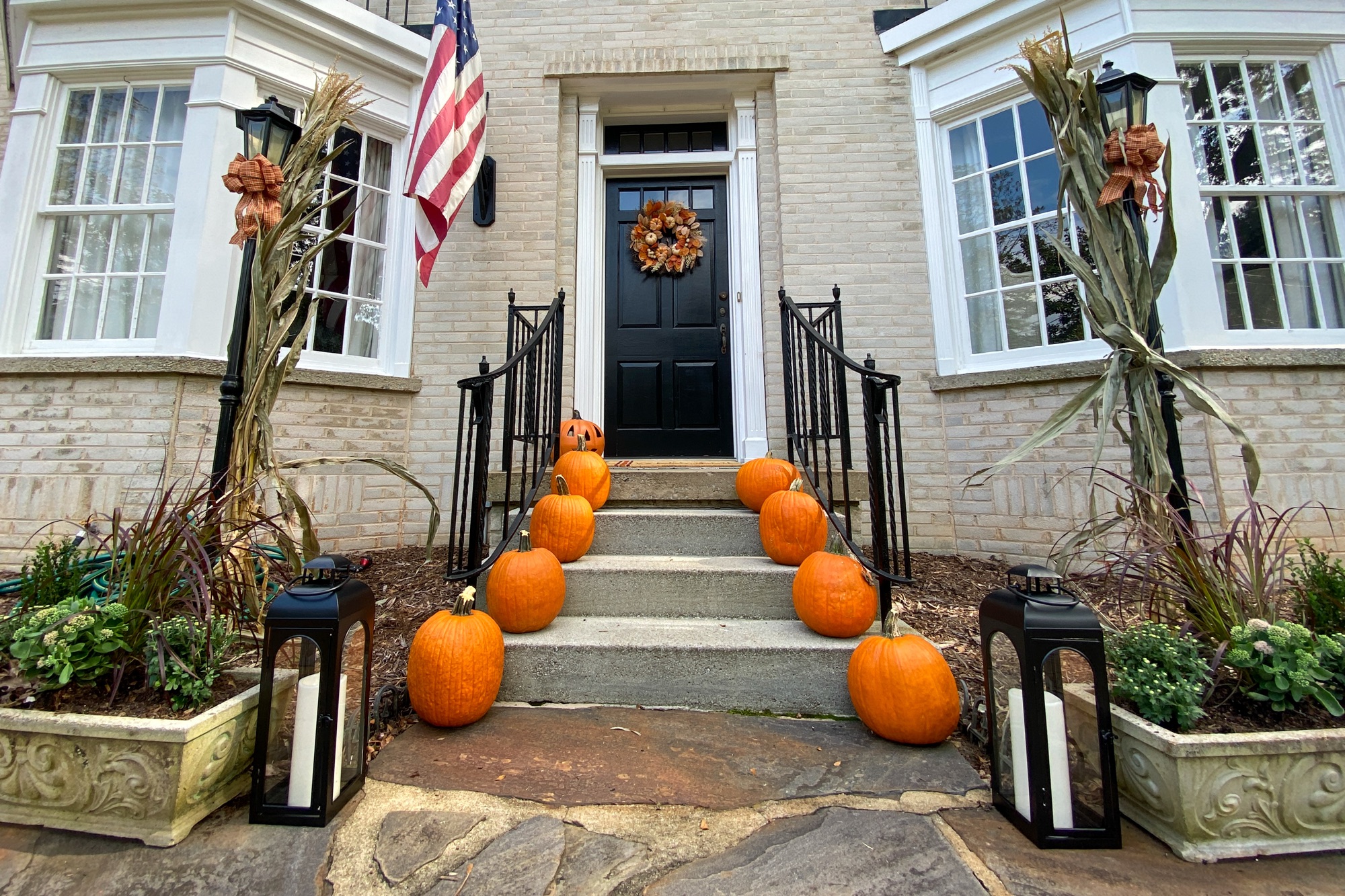
There’s an old English proverb that says, “First impressions are the most lasting.” We usually think of first impressions when we meet someone face-to-face. However, when a visitor arrives at your home for the first time, they come “face-to-face” with your house. We also create a lasting first impression of where we live.
Although we’ve been discussing fall for several weeks now, this week marked the official first day of fall. Today I’m sharing very affordable tips that anyone can use to freshen up their front door area as we transition into the next season.
Welcome back to the final installment of our fall series, Falling for Home: A Weekly Autumn Journal. If you’re just joining us from Google, Pinterest, or Instagram, I invite you to browse through the other articles in this series, which are all linked at the bottom of this article.

Begin with a Clean Slate
If there is nothing else you can do to change the entrance to your home, cleaning and tidying will still make a big difference. Take time to sweep away fallen leaves or other yard debris. If you live in an area with a lot of foot traffic, you may need to pick up some litter. If you have a glass storm door or window at your entrance, be sure to clean off dirt and smudges.
Once your entryway is clean and tidy, we’re ready to layer in some pieces to add warmth and personality.
Start with a Welcoming Wreath
One of the easiest ways to create a warm welcome into your home is by adding a wreath. Since it’s fall, I found a wreath with seasonal colors, like orange and beige. It also has small faux pumpkins, which leaves no question that this is to celebrate the fall season.
Faux flowers have come leaps and bounds in the last ten years. Retailers are now creating wreaths with realistic outdoor faux flowers for fall that are weather resistant. I found my wreath HERE.
Pro Tip: If you’re renting and you can’t install a hook to hang your wreath, there are some quality, affordable options to add a temporary hook. See my favorite temporary wreath hooks on Amazon.


Layer Your Doormats
In last week’s article, Patterns & Patina, we talked about how mixing patterns thoughtfully takes a basic look and turns it into a sophisticated, polished one. We can see an example of this by layering doormats.
I found two affordable doormats (HERE and HERE) for my entryway and layered them to create a layered fall look. If you want to use this technique, make sure the doormat that will be on the bottom is slightly larger than the mat that will go on top.
Pro Tip: Make sure the mats are tied into each other by either being complementary colors or patterns. Mix different textures to create visual interest.


Add Lanterns & Lighting
One of the easiest ways to add a little magical ambiance to your front porch this fall is by adding some lanterns. Don’t be afraid to opt for tall lanterns, rather than shorter ones. This will bring in some height to your design, creating balance and visual interest.

For my lanterns, I found these waterproof flameless candles that come with a remote. They can be operated on a timer, or I can easily turn them off and on by pointing the remote out of the nearby window.
Pro Tip: Add a lantern on each side of the entryway to create symmetry. Our subconscious prefers balance in home décor.

Greenery or Planters
The big-box stores have us trained to buy mums every fall. While they do evoke the fall season, the problem is that they are not low-maintenance additions to your front porch décor. Many of us struggle to keep them alive for the whole season, and we’re left with pots full of dead flowers.
Try swapping fall mums for more low-maintenance plants like fall ornamental grasses and sedums. These are more drought tolerant and won’t require daily watering and regular fertilizer like mums do.
Another option is to go with faux mums in your planters. Like we discussed earlier, faux florals have come a long way. There are some outdoor faux mums that would fool anyone until they closely inspected them.
Pro Tip: When buying plants for your pots this fall, use this formula to create a polished look: 1 thriller (tall or spike plant), 3-5 fillers (bushier, compact plants), 3-5 spillers (trailing, vining plants). Remember: Thriller/Filler/Spiller

Little Details that Count
Don’t underestimate the impact of a small change. One of the easiest and most affordable changes you can make to your front porch is to upgrade your house numbers. This simple change will affect the first impressions of your front door year-round.
Hardware like doorknobs, knockers, and handles can easily be modernized by switching them out with a couple of screws. Say goodbye to peeling polished brass from the 1990s and hello to something more modern like matte black hardware.
Lastly, pick up a few fall-themed outdoor pillows for your front porch. Create an inviting spot for guests to sit on your chairs and benches.
I hope you’ll take the time to check out the things I used to refresh my own front patio. You’ll be pleasantly surprised at how affordable they are. Easy swaps like this make refreshing your front door seasonally, the perfect way to make a good first impression.
You can find the exact products I used linked throughout this article, or you can find them all in one place in my LTK storefront. Click the image below to navigate there.

Next week we begin a new series, Home for the Holidays: A Southern Season of Charm. This series will be a weekly celebration of meaningful traditions, nostalgic décor, and cozy inspiration for the heart of the home.
Explore More from Falling for Home: A Weekly Autumn Journal
This article is part of my series called Falling for Home: A Weekly Autumn Journal. Be sure to check out these reader favorites:
- Gathering Baskets & Dried Blooms
- The Velvet Season
- Chicken Mull
- When Summer Lingers
- Home as a Haven
- Patterns & Patina: How to Layer Like a Southerner
- The Collected Kitchen
You can subscribe here to receive new articles, seasonal inspiration, and vintage-style favorites delivered right to your inbox.